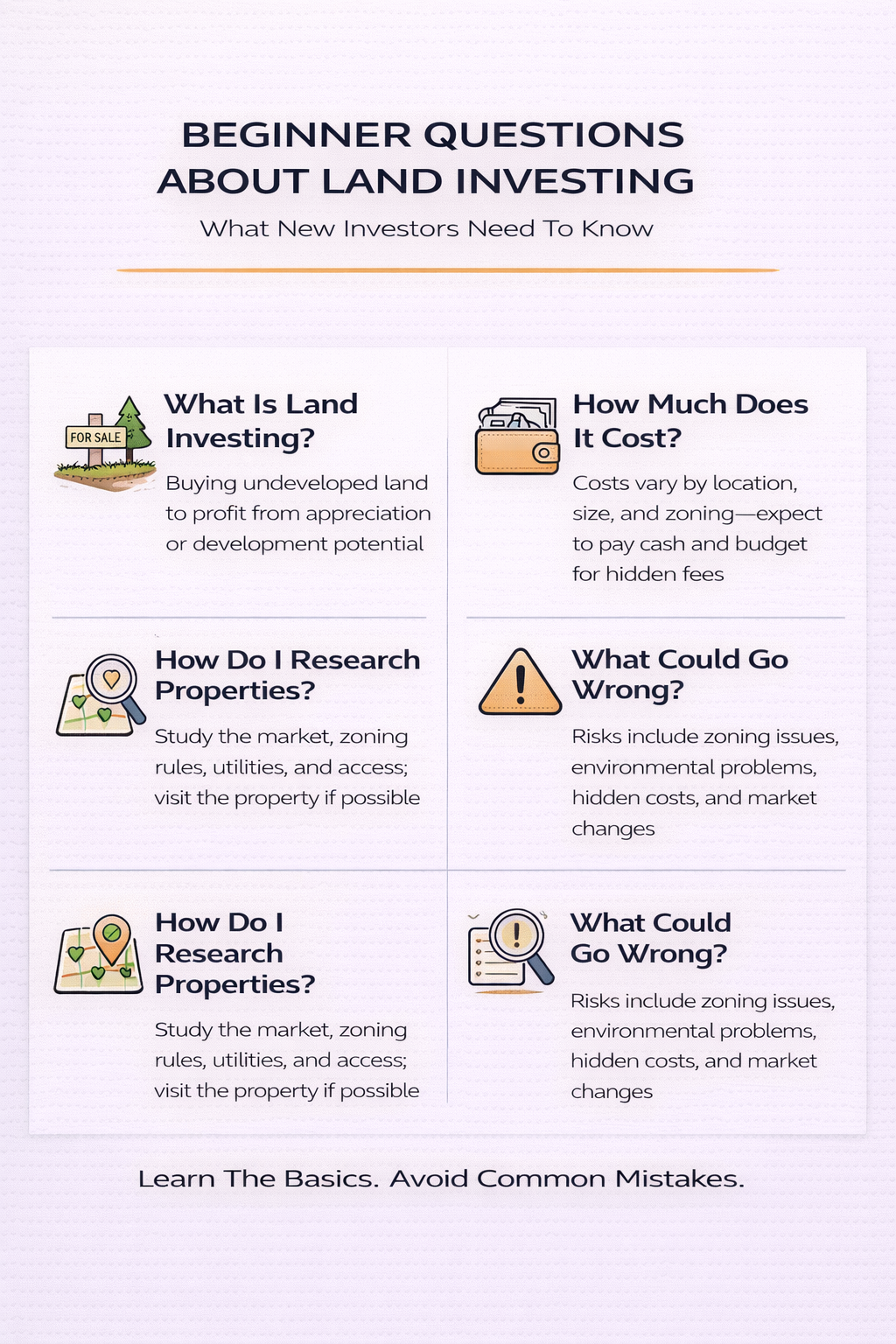
Developing a comprehensive 12-month land investing growth plan is essential for making informed, strategic decisions that build wealth through land ownership. This plan acts as your roadmap, helping you set clear goals, evaluate opportunities, manage risks, and track progress within a manageable timeframe. Whether you’re a new or experienced investor, following a detailed growth plan tailored to your specific objectives and local market realities can enhance your chances of sustainable success in land investing.
In this guide, you will learn exactly how to create and execute a land investing growth plan for the coming year. You will understand the types of land best suited for your goals, key financial and legal checks you must perform, practical acquisition and management strategies, and how to measure your results while mitigating risks effectively.
To deepen your understanding of successful land ownership, explore our detailed guide on investing investing strategies.
The key to profitable land investing lies in disciplined planning, fact-based decision-making, and ongoing adaptability. This article prioritizes actionable steps and critical verification points so you can progress confidently, avoid common pitfalls, and know when to pause or walk away.
What Is a 12-Month Land Investing Growth Plan and Why Does It Matter?
A 12-month land investing growth plan is a strategic document detailing your investment objectives, timelines, financial parameters, and action steps specifically crafted for land acquisition and management within a one-year period.
To deepen your understanding of related strategies, explore our comprehensive guide on growth investing growth investing.
Focusing on a 12-month horizon provides a concrete period to benchmark your progress, make course corrections, and realistically assess what you can achieve without speculative assumptions. It forces you to evaluate tangible market conditions and personal capacity regularly while building toward longer-term vision.
For your 12-month plan to be meaningful, it must include clear investment goals (e.g., portfolio size, cash flow objectives), a detailed budget accounting for all acquisition and holding costs, contingency plans for known risks, scheduled milestones, and criteria to evaluate success or reevaluate strategy.
How Do You Begin Creating a 12-Month Land Investing Growth Plan?
Start by clearly defining your intended use for the land, your investment goals, and assessing your available resources.
Step 1: Identify Your Investment Goals
Decide what you want to accomplish: Are you looking for short-term flips, long-term appreciation, rental income, or development opportunities? These goals will influence what types of land you pursue and how you finance and manage them.
Step 2: Assess Your Financial Position
Review your cash on hand, credit access, and risk tolerance to set realistic acquisition targets. For example, if your budget is limited, focus on smaller parcels or owner-financed deals rather than commercial developments requiring significant capital.
Step 3: Map Out a Timeline with Milestones
Break down the 12 months into specific phases such as property research, due diligence, acquisition, management, and possible resale or development. Assign deadlines for each phase to maintain accountability and momentum.
Step 4: Establish Key Performance Indicators (KPIs)
Decide on measurable metrics like number of parcels acquired, return on investment, and cash flow generated. KPIs will help monitor your growth and adjust tactics if targets are not met.
What Types of Land Should You Consider for Investment?
Selecting the right land type depends on your goals and risk profile. Each category has unique characteristics and verification demands.
| Land Type | Typical Uses | Key Verification Steps | Risks/Trade-Offs |
|---|---|---|---|
| Residential Land | Housing development,single-family lots, multi-family parcels | Verify zoning for residential use; confirm water/sewer access; assess neighborhood growth trends | Subject to zoning changes; development costs; market demand volatility |
| Commercial Land | Retail, office, industrial | Confirm commercial zoning and permits; review infrastructure quality; study economic growth projections | Higher upfront costs; longer holding periods; complex regulatory compliance |
| Agricultural Land | Farming, ranching | Check soil quality, water rights, environmental restrictions; verify compliance with agricultural regulations | Vulnerable to weather/environmental changes; variable commodity prices |
How Do You Research Land Opportunities Effectively?
Start with publicly available data and follow a structured due diligence process that involves: identifying comparable sales, confirming property access and utilities, verifying title status, and checking local zoning and restrictions.
Step 1: Use Public Records and Market Data
Search county assessor and recorder websites for parcel information, ownership, and tax status. Use local MLS and land sale platforms to find comparable properties. Compare recent sales prices of similar parcels nearby to estimate fair market value.
Step 2: Verify Legal Access and Utilities
Confirm the property has legal road access on record. Without legal access, resale or development may be impossible. Check the availability of utilities like water and electricity if relevant to your intended use.
Step 3: Investigate Title and Liens
Obtain a title report from a reputable title company to uncover encumbrances like easements, liens, or disputes. Any unresolved title issues are red flags that should prompt caution or further legal review.
Step 4: Review Zoning and Land Use Restrictions
Contact local planning or zoning departments to verify allowed uses, future land use plans, or restrictions. Restrictions inconsistent with your intended use may drastically reduce or eliminate value.
Decision Rule:
If any step reveals access issues, restrictive zoning, or clouded title, reassess the value and risks before making an offer. Such factors can become walk-away conditions or justification to negotiate better terms.
What Financial Factors Should Shape Your Growth Plan?
Budgeting must include all foreseeable costs and financing options so your plan accounts for real cash flow and profitability.
Budgeting for Acquisition and Holding Costs
Include purchase price plus closing fees (title insurance, recording fees), property taxes, maintenance costs (land clearing, fences), and possible development expenses. Underestimating these can lead to negative returns or forced sales.
Financing Your Purchases
Options include traditional loans, owner financing, or using cash. Understand the terms, interest rates, and risks of each. Owner financing may allow lower upfront capital but involve higher risk if terms are unclear.
Estimating Potential Returns
Calculate projected appreciation, rental income (if any), and resale price after factoring in holding and transaction costs. Conservative assumptions minimize disappointment and enable planning for contingencies.
How Do You Evaluate Land Value Accurately?
Begin with a comparative market analysis (CMA) of recent sales of truly comparable nearby parcels. Adjust the value based on verified differences in legal access, zoning, topography, utilities, and developmental potential.
For insights on finding properties that fit your criteria, explore our comprehensive guide on Buying Land & Deal Sourcing.
Verification Workflow:
- Collect at least three recent sold land parcels with similar size, location, and zoning.
- Adjust for access,parcel with poor or no legal access should have significantly lower value.
- Account for property condition: usable acreage, terrain, and presence/absence of utilities.
- Review any encumbrances or restrictions,easements, conservation, floodplain areas.
- Consolidate this data into a defensible estimate range you can use for your offer.
Failing to conduct this step can result in overpaying or acquiring unsuitable land.
What Risks Should You Be Aware of When Investing in Land?
Major risks include market volatility, title and zoning issues, environmental restrictions, and financing challenges.
- Market Fluctuations: Land values can fluctuate based on demand shifts, economic cycles, or development trends. Always have an exit strategy if market conditions deteriorate.
- Legal Risks: Unclear title or restrictive zoning can block your intended use. Never rely on verbal assurances,verify all legal facts with official sources or qualified professionals.
- Environmental Concerns: Contamination, wetlands, or protected habitats can limit land use. Obtain environmental reports if needed.
- Financing and Liquidity Risks: Land can be harder to finance and slower to sell than developed real estate. Plan holding periods accordingly.
How Can You Mitigate Those Risks?
Mitigate risks through rigorous due diligence, securing clear title insurance, obtaining expert legal and environmental advice, and diversifying holdings.
Due Diligence
Always verify access, title, zoning, and environmental conditions before purchase. Consult with land-use planners, surveyors, or attorneys as needed.
Insurance
Consider title insurance policies to protect against unforeseen ownership claims or other title defects.
Diversification
Spread investments across different locations or land types to reduce exposure to a single market downturn or regulatory change.
What Are Effective Strategies to Acquire Land Profitably?
Successful acquisition strategies include direct negotiation, buying from motivated sellers, purchasing through auctions or foreclosures, and using seller financing.
- Direct Negotiation: Build rapport with sellers and negotiate terms. This often allows more flexibility and better deals, especially if you identify under-market parcels.
- Auctions or Foreclosures: Opportunities for discounted purchases exist but require careful title verification and understanding of auction terms.
- Seller Financing: Useful when conventional financing is limited. Ensure financing contracts are clear and legally binding.
How Should You Finance Your Land Investments?
Choose financing based on your financial capacity, risk tolerance, and investment horizon.
- Traditional Loans: Conventional land loans may have higher rates and stricter approval criteria than residential mortgages; verify lender requirements early.
- Owner Financing: Allows more flexible payment but demands careful contract terms.
- Cash Purchases: Avoid financing risks but require substantial capital upfront.
Verify any financing agreement with a qualified attorney to ensure terms align with your investment goals and protect your interests.
What Are Critical Steps When Closing a Land Deal?
Ensure all legal, financial, and administrative steps are completed to transfer ownership cleanly and avoid post-sale disputes.
- Confirm the title is clear with no liens or claims by ordering a title search from a reputable title company.
- Execute a purchase agreement detailing price, contingencies, and closing date.
- Arrange financing so funds are available at closing.
- Complete any required inspections or surveys per your due diligence.
- Coordinate with the title company or closing agent to finalize documents and disburse funds.
Any unresolved issues in this phase can delay or derail your purchase; prioritize clear communication and thorough documentation.
How Should You Manage Your Land Investments After Purchase?
Land requires ongoing monitoring to protect value and detect opportunities or problems early.
- Monitor Property Value: Periodically check comparable sales and local market conditions to evaluate your holdings.
- Maintain the Property: Ensure upkeep like clearing debris or addressing access issues to maintain usability and aesthetic appeal.
- Maximize Income: If the land can offer rental income (e.g., hunting leases, mineral rights), explore those options responsibly.
Failure to manage land adequately can erode value and liquidity.
What Best Practices Should You Follow When Selling Land?
Successful selling requires strategic marketing, correct pricing, and skilled negotiation.
- Market Effectively: Use high-quality photos, detailed descriptions, and list on appropriate platforms targeting likely buyers.
- Set a Realistic Price: Base your asking price on your CMA analysis, allowing room for negotiation but avoiding pricing yourself out of the market.
- Negotiate Thoughtfully: Understand your minimum acceptable price and be prepared to discuss deal terms flexibly but firmly.
How Can You Scale Your Land Investing Business Over Time?
Scaling requires reinvesting profits strategically, assembling a professional team, and exploring new markets or land types.
- Reinvest Profits: Use gains from sales or income to acquire additional parcels, expanding your portfolio incrementally.
- Build a Team: Engage agents, attorneys, surveyors, and property managers to handle specialized tasks, freeing your time for growth decisions.
- Expand Geographically: Research and invest in emerging or underserved markets where competition and prices may be favorable.
How Do You Stay Informed About Market Trends and Make Data-Driven Decisions?
Subscribe to local market reports, engage with investor groups, and maintain regular contact with knowledgeable real estate professionals to track changes in demand, zoning, and economic drivers affecting land values.
How Should You Handle Property Taxes and Local Regulations?
Property tax rates and regulations vary significantly by location and can materially impact your investment returns.
- Obtain the land’s assessed value and applicable tax rates from the county assessor’s office to budget accurately.
- Stay current on zoning changes and land use policies from local planning departments to avoid surprises.
- Consult professionals if you anticipate complex regulatory issues or if the land has environmental restrictions.
What Should Your 12-Month Growth Plan Timeline Include?
| Time Frame | Key Activities | Purpose |
|---|---|---|
| Monthly | Research properties, network with stakeholders, evaluate leads, conduct due diligence | Maintain consistent deal flow and decision momentum |
| Quarterly | Review financials, assess portfolio performance, adjust budgets and strategies | Stay on track and make tactical adjustments |
| Annual | Evaluate 12-month achievements, set new goals, plan for scaling or diversification | Reflect on performance and set next phase growth roadmap |
How Do You Measure the Success of Your Land Investing Growth Plan?
Establish KPIs such as number of acquisitions closed, average purchase price vs. market value, cash flow, and portfolio appreciation. Regularly tracking financial performance and portfolio quality ensures you can identify what’s working and where to pivot.
What Common Challenges Should You Anticipate?
Economic slowdowns may reduce demand and prices; regulatory changes can restrict use or increase cost; managing multiple properties can become complex without proper systems or team support.
Preparing contingency plans, maintaining liquidity, and continuous education are crucial to overcoming these challenges.
How Can You Adapt Your Growth Plan Over Time?
Periodically revisit your goals and results to ensure they remain realistic and aligned with shifting market or personal financial conditions. Adjust property types, acquisition pace, and exit strategies as necessary based on your learning and experience.
What Are the Most Critical Mistakes to Avoid?
- Ignoring thorough research and verification.
- Underestimating total costs including taxes and maintenance.
- Overpaying due to incomplete market comparison or ignoring title/access issues.
- Ignoring legal and zoning requirements.
- Neglecting portfolio diversification and risk management.
- Under-planning timelines or failing to measure progress.
How Can You Maintain Motivation Throughout the Year?
Set short-term, achievable milestones with rewards, celebrate progress actively, and engage with supportive networks or investor groups. Regularly remind yourself of your broader financial goals and the reasons you chose land investing.
What Should You Do Next to Take Action?
Building a land investing plan is just the first step. To move forward confidently, educate yourself on best practices, avoid common mistakes, and surround yourself with expert resources.
- Dirt Rich book offers a practical foundation for land investing principles and pitfalls to avoid.
- Land investing bootcamp provides hands-on learning, mentorship, and community support to accelerate your progress.