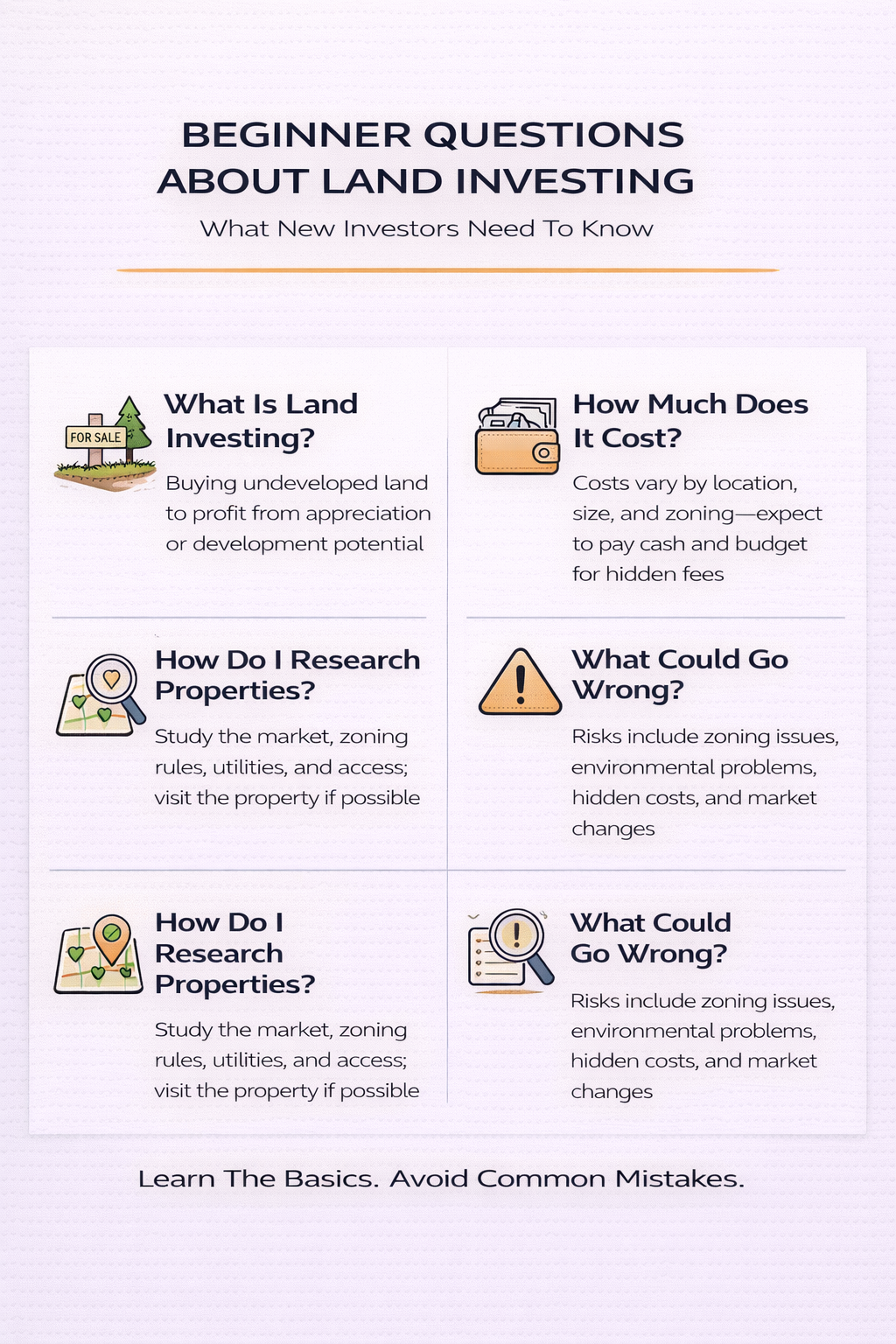
Land investing can offer unique advantages, ranging from portfolio diversification to long-term appreciation. However, investing in land requires a clear understanding of key factors that influence its value, risks, and practical management. This guide provides straightforward answers to the most common beginner questions about land investing in 2026, helping you make informed decisions based on facts and verifiable data.
Whether you are considering buying your first parcel or expanding your investment strategy, you will learn what matters most before purchasing, how to evaluate land, and how to avoid costly mistakes. Each section starts with direct answers, followed by the crucial verifications and decision points necessary for prudent land investing.
What Is Land Investing?
Land investing is the purchase of undeveloped or developed land parcels for profit through holding, leasing, development, or resale. This strategy includes buying raw land, agricultural plots, commercial zoned properties, or subdividing land for sale. The core decision is what you plan to do with the land, which drives your criteria for selection, valuation, and holding period.
Understanding the type of land and its permitted uses is essential. For example, raw land intended for future development requires reviewing zoning and utility access, whereas agricultural land demands soil and water rights verification. Each approach has unique risks and opportunities that impact your expected returns and timeline.
To confirm, check local county property records for parcel classifications and deed restrictions. Engage with zoning offices or land-use planning departments to verify permitted uses. Confirming these facts prevents buying land that does not suit your intended purpose or requires unexpected approvals.
Why Should I Consider Land Investing?
Land investing offers potential for long-term appreciation, little maintenance cost, and portfolio diversification. It does not involve managing tenants or structures, minimizing ongoing management hassles. However, the value depends heavily on location, zoning, and market demand trends driven by population growth and infrastructure development.
Before proceeding, verify planned or current infrastructure projects and demographic trends with local planning agencies or economic development boards. A land parcel near expanding urban boundaries or transport projects might appreciate faster, but only if zoning and legal access support your intended use. Absence of such evidence may signal a buy-and-hold or speculative play requiring patience.
How Do I Start Investing in Land?
Begin by clearly defining your investment goals,whether speculation, development, or leasing,and the budget you can allocate. Research local market conditions using economic data and development plans available from city or county planning departments. Use detailed land listings and work with local experts to identify parcels that match your criteria.
📘 Get Your FREE Land Investing Strategy Guide
Discover how savvy investors build passive income with vacant land.
Once you shortlist parcels, verify critical facts: legal access, zoning compatibility with your intended use, ownership and title clarity, and environmental restrictions. Engage professionals such as surveyors and land planners early in the process to uncover potential deal breakers. A typical workflow follows: identify intended use → verify legal access and zoning → analyze comparable property sales → adjust for physical and regulatory factors → determine a value range → set a walk-away price.
What Are the Risks Involved in Land Investing?
Major risks include market fluctuations, zoning limitations, environmental restrictions, and title or access issues. Land values can be volatile due to economic shifts or changes in local policies. Zoning restrictions can prevent intended development, and environmental contamination or protected areas can severely limit land use.
Always conduct due diligence by obtaining a title report, verifying zoning and land-use regulations with the local planning office, and commissioning environmental assessments if applicable. Lack of clear title or incompatible zoning are red flags that usually justify walking away or renegotiating the deal. Market risks require understanding economic cycles and having an exit plan aligned with your investment horizon.
How Do I Find Land to Invest In?
Use a mix of online property platforms, local real estate agents specializing in land, auctions, and foreclosure listings. Online listings provide broad access but may lack granular local knowledge. Agents often know about off-market deals and nuances affecting land value. Auctions and foreclosures may offer bargains but require thorough review to uncover liens or title issues.
Verify any listing by ordering title reports and inspecting physical access to the property. Visit county clerk offices or register online for property records. If relying on auctions, attend in person to understand terms and conditions. Each channel requires specific verification steps to ensure you do not purchase land tied up in legal or financial disputes.
What Should I Look for When Buying Land?
Focus on location, legal access (roads or easements), zoning compliance, and availability of utilities. The land’s physical features like topography, flood risk, and soil quality are also vital depending on your intended use. Absence of these features or legal impediments can limit development or resale options.
Before buying, confirm road access by inspecting the parcel and consulting county right-of-way maps. Check zoning designations and restrictions with the local zoning office to ensure your plans are allowed. Investigate utility availability by contacting public utility providers or municipal authorities. Discovering inadequate access or restrictive zoning after purchase can necessitate costly adjustments or cause losses.
How Much Money Do I Need to Start Investing in Land?
The upfront investment varies widely by location, parcel size, and land category. Beyond the purchase price, you must budget for closing costs, property taxes, insurance, and potential development or maintenance expenses. Down payments for financed purchases usually range from 20% to 30%, but exact requirements depend on the lender and loan type.
Calculate total costs including escrow fees, title insurance, survey costs, and ongoing expenses to ensure the investment is financially feasible. Obtain concrete estimates from lenders, title companies, and county tax offices. Underestimating these costs can strain finances and jeopardize your ability to hold the property profitably.
Can I Invest in Land with Little or No Money?
Yes, through options like seller financing, partnerships, lease options, and subject-to deals. Seller financing allows you to make payments directly to the seller, often requiring less cash upfront. Partnerships enable pooling resources but require clear agreements to manage risks. Creative financing can open deals unavailable through traditional loans but demands higher due diligence.
For seller financing, ensure you review the promissory note terms and verify the seller’s ownership via title search. In partnerships, draft legal agreements specifying roles, contributions, and exit strategies. Creative financing strategies should be reviewed by legal counsel to ensure they conform to local laws and protect your interests.
What Are the Different Ways to Invest in Land?
Common strategies include buying raw land for speculation, developed land for leasing or resale, and land flipping for quick profit through improvements or marketing. Each has different timelines, risk profiles, and capital requirements.
Raw land may require patience as infrastructure and demand develop. Developed land offers faster income streams but often at higher prices. Land flipping requires detailed local market knowledge to identify undervalued parcels and make cost-effective improvements. Choose the method that aligns with your capital, risk tolerance, and timeframe, confirmed through land condition and market data analysis.
How Do I Finance My Land Purchase?
You can finance land purchases via traditional bank loans, specialized land loans, or alternative lenders. Land loans commonly have higher rates and shorter terms since land is riskier collateral. Hard money lenders may offer quick funding but at a premium. Be prepared to provide detailed information about property and financial standing.
Before applying, consult with lenders about their requirements and compare loan terms. Verify that your down payment capacity and credit profile match lender guidelines. Misunderstanding financing terms can lead to unfavorable conditions or loss of deposits.
What Are the Tax Implications of Land Investing?
Owning land typically involves ongoing property taxes based on local assessments. When selling, capital gains tax may apply depending on holding period and gains realized. Some investment-related expenses like loan interest or legal fees might be deductible, but this varies by jurisdiction and personal circumstances.
Consult with a qualified tax advisor to understand your local property tax obligations and the tax treatment of gains or losses on land transactions. Confirm reported value on tax assessments with county tax offices, and keep detailed records to support any deductions or tax planning strategies. Avoid assuming tax benefits without professional advice, as errors can be costly.
How Do I Assess the Value of a Piece of Land?
Start with a comparative market analysis (CMA) by reviewing recent sales of similar parcels nearby. Then adjust for legal access, zoning, utilities, terrain, and parcel size differences. For complex cases or financing needs, hire a certified appraiser for an independent valuation.
Access county assessor’s databases for sales history and consult local MLS or land listing platforms for competitive prices. Check zoning and access status as these materially affect value. A parcel without legal access or incompatible zoning will be worth less than otherwise similar land. Recognize these variables to avoid overpaying or mispricing your investment.
What Are the Best Practices for Land Management?
Maintain clear boundaries, monitor for encroachments, control vegetation to reduce fire risk, and comply with local land-use regulations. Regular site visits and timely responses to issues preserve value and avoid legal complications.
Keep abreast of changes in zoning, taxation, or environmental legislation affecting your parcel. Use county tax records and planning department updates to stay informed. Poor management can lead to devaluation through fines, liens, or reduced marketability.
How Do I Sell My Land Investment?
Market effectively with clear, accurate information about the land’s features, zoning, and access. Price competitively based on a comparative market analysis. Consider using a real estate agent experienced in land to widen your reach and manage negotiations.
Verify all documentation ahead of listing, such as title clarity and survey maps. Overpricing or poor marketing limits buyer interest, extending sale time. Include high-quality images and highlight key investment features to attract qualified buyers. In some cases, subdividing or improving access can increase sales appeal.
What Are Common Mistakes to Avoid in Land Investing?
Key errors include buying without thorough research, neglecting zoning laws, underestimating holding costs, and overpaying without proper valuation. Each mistake can reduce profitability or increase risk substantially.
Perform due diligence on every major factor before purchase. Validate zoning permits your intended use, confirm title clear of liens, assess market trends for timing your purchase and sale, and calculate all expenses. Recognize your financial limits and resist overbidding emotionally. These precautions help avoid costly errors and frustrated outcomes.
How Does Land Investing Compare to Other Real Estate Investments?
Land investment generally involves lower carrying costs, no tenant management, and often longer holding periods. It may offer significant appreciation potential but usually has lower liquidity than residential or commercial properties.
This difference matters for your exit strategy,land can take longer to sell, so plan your holding period accordingly. It typically requires more upfront research to understand zoning, access, and environmental factors that directly impact value. Align your land investments with your risk tolerance and capital availability relative to other real estate types.
What Is the Role of a Real Estate Agent in Land Investing?
An experienced land real estate agent helps locate suitable parcels, access off-market properties, assist in price negotiation, and navigate local land-use regulations. Their knowledge and contacts can reduce your research burden and uncover opportunities that are otherwise hard to find.
Choose agents with specific expertise in land transactions, as residential-focused agents may miss critical factors affecting land value. Verify their track record and local market knowledge before engaging. Using an agent can add cost but often improves deal terms and reduces risk.
How Can I Use Technology in Land Investing?
Technology aids land investing by providing access to online land marketplaces, aerial surveys using drones, and data analytics tools aggregating market trends and parcel history. These tools enable efficient screening and evaluation but do not replace physical inspections or official record checks.
Use online data as a preliminary filter, then verify access, zoning, and title details via county offices or professionals. Drone imagery can reveal topography and access issues but must be supplemented with on-site visits. Relying solely on technology without field verification risks overlooking critical deal breakers.
What Should I Know About Land Zoning?
Zoning regulates how land may be used and developed, with categories like residential, commercial, agricultural, or industrial. The zoning classification directly affects allowable uses, subdividing options, building permits, and ultimately land value.
Always confirm the current zoning classification and any planned changes with municipal or county planning offices before making an offer. Incompatible zoning is a frequent reason for walking away. Some land may need rezoning to meet your needs, but this process can be costly and uncertain.
How Can I Increase the Value of My Land?
Value can be enhanced through clearing, grading, providing legal access, securing utility hookups, or obtaining permits for specific uses. Marketing the land effectively by highlighting these improvements can attract more buyers and justify a higher price.
Before making improvements, analyze cost versus potential value increase with comparable sales. Do not invest heavily without evidence that improvements will yield a positive return. Confirm utility availability and permits with local authorities to avoid wasted expense.
What Are the Legal Considerations for Land Investing?
Key legal checks include conducting a title search to confirm ownership and liens, reviewing any easements or rights-of-way affecting access or use, and ensuring compliance with environmental regulations. Unresolved legal issues can block development or cause costly disputes.
Work with a title company to obtain a thorough title report. Request copies of any recorded easements. Consult local environmental agencies about restrictions or required assessments. Addressing legal issues upfront avoids surprises that can derail investment plans.
How Do I Handle Disputes or Issues with Land?
Disputes are best resolved initially through negotiation and clear communication. Document all interactions and maintain records. If negotiation fails, legal advice is necessary to understand your rights and potential remedies.
Mediation offers a cost-effective alternative to litigation by involving neutral third parties to facilitate a resolution. Consult an attorney experienced in real estate disputes before escalating. Promptly addressing disputes protects your property rights and investment value.
What Resources Are Available for New Land Investors?
Books, specialized online courses, forums, and local or virtual networking groups provide education and community support. Resources tailored to land investing cover practical steps, financing, legal topics, and market analysis. Engaging in these resources accelerates learning and reduces costly mistakes.
Evaluate resources by reviews or recommendations and focus on those providing actionable advice specific to your target region and land type. Combining education with local expert consultation yields better investment outcomes.
How Do Economic Factors Influence Land Investing?
Local market trends, infrastructure development, population growth, and interest rates significantly affect land demand and pricing. For example, rising interest rates can dampen borrowing power, slowing purchases. Conversely, new highways or business parks can boost local land values.
Track these factors through economic development agencies, regional planning departments, and financial news. Incorporate this information into your timing and pricing decisions. Ignoring economic indicators risks misjudging market cycles or value.
What Are the Best Regions for Land Investing?
The best regions depend on your investment goals. Emerging markets offer growth potential but higher risk and longer waits for appreciation. Established markets provide stability and liquidity but come with higher entry prices. Rural areas may offer low cost but limited demand, while suburban or exurban areas may balance growth and affordability.
Research demographic, infrastructure, and zoning trends for specific regions using local government and planning resources. Weigh these factors against your risk tolerance and timeframe before choosing a market.
How Do I Stay Updated on Land Market Trends?
Stay informed by reviewing market reports from real estate research firms, subscribing to local planning newsletters, and following credible news outlets covering real estate. Participate in social media groups or forums focusing on land investment for peer insights.
Regular monitoring of trends enables proactive investment decisions and timely exit planning. Focus on sources relevant to your target investment regions to avoid misleading generalizations.
What Is the Future of Land Investing?
Land investing will continue to evolve as new technologies, such as blockchain for transparent title records and AI-driven market analytics, advance. Regulatory changes addressing environmental protection and urban growth will influence land use and value. Investors who continuously update their knowledge and flexibility in strategy will be better positioned.
Stay engaged with local planning changes and emerging tech developments related to real estate. Adapt your due diligence and investment techniques accordingly. Ignoring these evolving factors risks missed opportunities or regulatory surprises.
How Can I Network with Other Land Investors?
Join local land investing meetups, attend real estate conferences, and participate in online forums or social media groups dedicated to land investment. Networking fosters knowledge exchange, offers support, and can reveal off-market deals or partnerships.
Evaluate groups based on member activity, expertise level, and focus areas. Active networking expands your resources and helps avoid pitfalls common to beginners.
What Are the Benefits of Joining a Land Investing Group?
Land investing groups provide shared knowledge, pooled resources, and emotional support. Group members exchange insights on market conditions, financing options, and legal matters. Such collaboration can improve deal flow and success rates.
Groups vary in structure and quality; choose those with clear guidelines, experienced members, and a supportive culture. Participation gains you perspective and access beyond what solitary research offers.
Mini FAQ
Q: What is the best way to start investing in land?
Research the market, define your investment purpose, set a budget including all related costs, and conduct thorough due diligence focusing on legal access, zoning, and title clarity.
Q: Can I invest in land with little money?
Yes, through seller financing, partnerships, and creative financing strategies, but each requires careful review of contracts and legal terms.
Q: How do I assess land value?
Use comparative market analysis of recent sales, confirm zoning and access status, and consider professional appraisal when necessary.
Q: What are common mistakes in land investing?
Neglecting research, ignoring zoning, underestimating costs, and failing to verify title or access are frequent errors to avoid.
Q: How can I increase the value of my land?
Improve access, clear land, confirm utilities, obtain permits, and market effectively while validating that improvement costs justify value gains.
Q: What should I know about zoning?
Zoning laws determine permissible land uses. Confirm current classifications and understand the rezoning process if needed before purchase.
Q: How do economic factors influence land investing?
Local economic growth, infrastructure projects, population trends, and interest rates shape land demand and pricing. Monitor these to time purchases and sales effectively.
This content is for informational purposes only. It does not constitute accounting, financial, or legal advice. Please consult a qualified professional before making decisions based on this information.



