Land Investing

What Questions New Land Investors Should Ask Before Buying Anything: Buyer’s Guide (2026)

For new land investors, asking the right questions before buying any parcel is essential to making sound, risk-managed decisions. This guide walks you through the critical inquiries that should shape your land acquisition process in 2026. By focusing on practical verification steps and understanding controlling facts, you gain clarity to decide when to proceed, negotiate adjustments, or walk away from a deal. Let’s break down the key questions every new land investor must answer before purchasing land.

How should I establish my budget for purchasing land?

Start by determining the total amount you are willing and able to invest, including not just the purchase price but all ongoing and one-time costs. This upfront budgeting prevents surprises that can derail your investment.

Beyond the asking price, factor in property taxes, closing costs (title insurance, attorney fees, appraisal), insurance, maintenance, available utilities setup, and potential financing costs. Use your personal financial snapshot,income, savings, current obligations,to set a realistic spending limit. A clear budget narrows your property search and informs your offer strategy.

Verify your budget against actual financing terms and tax rates with lenders and local tax authorities before committing. If additional costs exceed your capacity, adjust the budget or look for lower-cost parcels to avoid financial strain.

What type of land should I invest in to meet my goals?

Define your investment objective to choose the land type that aligns with it. Options include residential, commercial, agricultural, raw (undeveloped), or improved land (with utilities and access ready).

For example, residential land requires confirmation of zoning approval for housing and proximity to services, while commercial land demands compliance with business-use regulations. Raw land is cheaper but often requires substantial investment to develop utility access and roads, so weigh initial costs against your capability and patience for development.

Check local zoning maps and ordinances (zoning regulations) carefully to confirm the land’s use permissions and any overlays restricting development. If you plan agriculture, test soil quality and water rights. Mismatched land type and intended use can cause costly delays or legal issues.

Why does the land’s location matter, and how do I assess it?

Location profoundly impacts land value, usability, and future resale potential. Prioritize areas with signs of population or economic growth, infrastructure upgrades, and amenity access, as these factors tend to support appreciation.

Evaluate if the land is accessible by maintained public roads and its distance from schools, shopping, healthcare, and employment centers. Growth indicators such as new developments or local government plans for infrastructure upgrades can increase the land’s appeal.

Confirm location specifics through county planning offices, local economic development agencies, and recent comparable land sales data (market value). A location in decline or with limited access often signals higher risk or longer hold times.

How can I accurately assess the current market value of the land?

Determine market value by researching recent sales of comparable parcels in size, zoning, access, and topography within the same area. This “comps” analysis forms the baseline for what the land is reasonably worth today.

Supplement comps with local real estate agent insights knowledgeable in land transaction trends to adjust for parcel-specific issues like usability, access roads, or utility availability that affect value positively or negatively.

Check deed records and MLS data from local county offices or platforms. If the asking price is well above comparables without justification, approach cautiously or negotiate down. Accurate valuation avoids overpayment and positions you for profitable exits.

What land use regulations must I verify before buying?

Understand zoning classifications, use restrictions, and permit requirements applicable to the land. These laws dictate legally allowed uses and future development potential.

Request zoning maps and comprehensive plans from the local planning department to verify if your intended use aligns with regulations. Investigate whether overlay districts, environmental constraints, or community covenants impose further limits.

Failure to comply with land use regulations can lead to permit denials or forced land use changes, seriously impairing your investment. Confirm any needed permits and potential costs with local building or land-use authorities before making an offer.

What should I investigate about the land’s history?

Research the history for prior development, past usage, and ownership claims that can affect value and usability. This information flags issues like contamination, unresolved encumbrances, or easements.

Check public records, environmental reports, and title searches for any liens, disputes, or environmental assessments such as Phase I Environmental Site Assessments (ESA). Prior industrial use or dumping can result in costly remediation.

Unclear title, unsettled ownership claims, or environmental liabilities uncovered during due diligence may require reconsidering the offer or walking away.

How do planned future developments affect my investment?

Future infrastructure projects such as new roads, utilities, schools, or commercial centers usually drive land appreciation and usability improvements.

Consult regional planning agencies and attend local government meetings or review agendas to identify upcoming projects and zoning change proposals that might affect your parcel. Positive growth forecasts strengthen investment rationale.

Adverse changes like rezoning away from your intended use or plans for undesirable neighboring land uses should prompt reassessment of your investment strategy.

What property tax obligations should I consider?

Property taxes can be a significant recurring cost that impacts cash flow and long-term holding expenses.

Confirm the land’s assessed value and local tax rates with the county tax assessor’s office. Ask about any special assessments, exemptions (e.g., agricultural or conservation), or payment schedules that apply.

Higher than expected taxes relative to market or usage potential can reduce profitability or require additional budget allocation. Adjust your offer or investment horizon accordingly.

How do I verify accessibility to the land?

Ensure the land has legal, reliable access year-round via public roads or properly recorded easements. Without this, the land’s usability and value diminish considerably.

Confirm access by reviewing title and county records for road maintenance responsibility, highway department maps, and physical inspections. Evaluate seasonal accessibility if the area is prone to flooding or snowfall.

Lack of legal access or difficult terrain may require costly improvements. Such limitations should influence your budget or prompt walking away.

What should I know about the land’s topography?

Topography affects buildability, drainage, erosion risk, and land management feasibility.

Assess whether the parcel is flat, rolling, or steeply sloped, and inspect for any water bodies, wetlands, or flood-prone areas. Request topographic maps or consult local surveys.

Steep or uneven terrain can increase development costs or limit use. Nearby water features may increase value but also flood risk. Soil testing is vital for agricultural use.

Use verified topographic data and site visits to confirm suitability.

Which environmental considerations are critical for land investment?

Identify any protected species, habitats, wetlands, or contamination risks, as these may restrict development or require mitigation.

Obtain environmental reports, consult local environmental agencies, and review floodplain maps. Uncovering contamination or high flood risk can necessitate costly remediation or insurance.

Environmental restrictions can reduce applicable uses and resale value; adequate due diligence helps avoid these pitfalls.

Why is understanding local community dynamics important?

The makeup and values of the local community influence land use approvals, neighborhood desirability, and market demand.

Analyze census data for demographics, income levels, and population trends. Learn community values and organizations by visiting local government offices and civic groups.

Supportive community dynamics can facilitate development and resale, while opposition or declining populations may pose risks.

What utilities should I verify are available on or near the land?

Access to water, electricity, gas, sewage, and internet significantly affects land usability and development costs.

Confirm availability and costs of connecting to utilities with providers and county records. Where utilities aren’t accessible, estimate installation expenses carefully.

Absence or high cost of utilities may delay development or reduce marketability.

How do I confirm the land’s potential uses?

Match potential uses with zoning laws, access, utilities, and physical conditions.

Check if agricultural activities, residential building, or commercial ventures are allowed. Factor in community plans and infrastructure to gauge feasibility.

Selling land without clear permissible uses risks limited buyer interest and value.

What does the land buying process entail?

Expect several key steps: negotiation, purchase agreement, due diligence (title, survey, inspections), financing, and closing.

Prepare all documentation ahead and engage professionals (attorneys, title companies) early.

Understanding timelines, required paperwork, and contingency options can streamline closing and avoid surprises.

Why are land surveys essential?

A survey legally confirms boundaries, easements, and encroachments, which are critical to know before purchase.

Obtain a professional surveyor licensed in the county. A certified survey protects against disputes and supports development and financing.

Unknown or inaccurate boundaries can lead to costly legal conflicts, so verify survey results carefully.

What are some common risks in land investing and how do I manage them?

Risks include market value fluctuations, legal disputes, zoning changes, environmental liabilities, and unforeseen costs.

Minimize risk through thorough due diligence, conservative budgeting, professional consultations, and flexibility in exit strategies.

Develop a decision checklist addressing red flags before commitment to maintain risk control.

How do I find and evaluate a real estate agent for land purchases?

Choose agents with proven experience in land transactions, knowledge of local zoning, and strong negotiation skills.

Interview candidates asking for references, transaction history, and understanding of land-specific issues.

A skilled agent can uncover off-market deals, advise on regulations, and facilitate smoother closings.

What inspections should I have done on the land?

Conduct professional inspections focused on soil quality, environmental hazards, and infrastructure.

If problems arise, use inspection reports to negotiate price reductions or request remediation before closing.

Skipping inspections can lead to costly surprises post-purchase.

What financing options apply to land purchases?

Traditional mortgages may be unavailable for raw land, so investigate owner financing, land loans, or private lenders.

Compare terms, rates, and down payment requirements carefully. Your credit score influences options and cost.

Confirm financing feasibility early to avoid deal collapses.

How important is title insurance for land buyers?

Title insurance protects against undiscovered ownership claims, liens, or fraud after closing.

Obtaining coverage is strongly advisable, though often optional. It provides peace of mind and legal protection.

Obtain through a reputable title company or attorney during closing.

What should I know about easements on the property?

Easements grant third parties use rights over your land, affecting privacy, development, and value.

Research recorded easements via title documents and surveys. Understanding terms and locations of easements prevents unpleasant surprises.

Negotiating easement terms may be necessary if they limit intended use.

Are land leases a viable alternative to purchase?

Leasing land allows use without ownership but limits control and potential appreciation.

Review lease length, renewal options, allowed uses, and rent terms carefully.

Leases suit short-term needs with low upfront costs but are less favorable for long-term investment strategies.

Why investigate neighboring properties?

Neighboring land use and owners impact your property’s value, appeal, and potential conflicts.

Research adjacent properties through public records and site visits to assess compatibility with your plans.

Adverse neighbors or incompatible uses warrant caution and may influence whether you proceed or negotiate different terms.

What seasonal factors affect land investment decisions?

Climate impacts access, usage, and maintenance costs. Flooding, winter snow, or dry seasons can affect viability and expenses.

Investigate seasonal weather patterns and their historical effects on the land’s condition and accessibility.

Seasonal risks may warrant price adjustments or affect timing of purchase and development.

What long-term investment strategies should new land buyers consider?

Decide whether to hold land for appreciation, develop it for higher value, or sell quickly for turnover.

Holding land in growing areas can generate strong long-term returns but requires patience and carrying costs. Developing improves value but involves more investment and risk.

Plan clear exit strategies early and monitor local market and regulatory changes to adapt effectively.

Mini FAQ

What critical questions should I ask before buying land?

Key questions cover budget, land type, location, zoning laws, utilities, and future development prospects. Each determines how well the property fits your goals and risk tolerance.

Why is location crucial in land investments?

Location affects demand, usability, infrastructure access, and resale potential. Verify local growth trends and amenities to gauge suitability.

What are important financing considerations?

Understand loan availability, terms, your credit impact, and all associated costs like taxes and utilities to evaluate affordability.

How do I accurately value a land parcel?

Use recent comparable sales, adjust for local factors and site-specific traits, and verify with professionals for a defendable valuation.

Why is title insurance advised?

It offers protection from hidden liens or ownership disputes that can cause significant financial loss after closing.

How can a real estate agent help me?

A knowledgeable agent navigates local market nuances, zoning, and negotiations, improving your chance of a smooth, economically sound purchase.

How do environmental factors influence land value?

Flood risk, contamination, and protected habitats can restrict use and entail extra costs; verifying these before purchase safeguards your investment.

How To Learn Land Investing Faster With Proven Frameworks: Buyer’s Guide (2026)

Land investing offers a unique pathway within real estate that, when approached with the right knowledge and tested frameworks, allows investors to accelerate learning and make smart purchase decisions. This guide explains what land investing entails, highlights key differences from other real estate investments, and details proven methods to speed up mastery. Investors will gain practical steps to identify profitable land, evaluate offers with a fact-driven approach, conduct thorough due diligence, and structure effective deals for various investment goals.

Understanding these practical elements is essential to navigate the complexities of land investing confidently and avoid costly errors.

What Is Land Investing and Why Should You Consider It?

Land investing means buying and owning land parcels with the intention of making a profit through resale, development, or leasing. Its importance lies in offering distinct advantages such as relatively low maintenance, flexible usage options, and the potential for significant long-term appreciation.

Unlike properties with structures, land typically does not require ongoing tenant management or repairs, reducing operational burdens. This makes it a strategic choice for investors who want exposure to real estate without the complications of houses or commercial properties. However, because land investment returns often accumulate over time, patience and proper evaluation are critical.

Before proceeding with any land purchase, verify how the land fits your intended use and assess local market dynamics. Check zoning restrictions, future area development plans, and environmental conditions through county records or local planning departments. These factors may greatly impact your ability to develop or resell the property profitably.

How Does Land Investing Differ from Other Real Estate Investments?

Land investing differs fundamentally from residential or commercial investing by focusing on raw or undeveloped land with no structures, creating unique risk and reward profiles.

Residential properties typically provide cash flow through rent, but also require landlord duties like maintenance, tenant management, and adherence to rental laws. Land investments usually don’t generate immediate income but offer appreciation potential based on location, zoning, and market trends.

Commercial properties involve higher upfront costs and operational complexities but can yield stable income from business tenants. Land investing, while generally less complex in daily management, exposes investors to risks like zoning changes or environmental restrictions that directly affect usage.

When considering land, verify ownership and deed status carefully, evaluate zoning classifications with county planning officials, and inspect physical characteristics to confirm the land’s suitability for your goals. Understanding these distinctions clarifies what due diligence and preparation steps are necessary before making an offer.

What Principles Should Guide Successful Land Investing?

Successful land investing rests on three pillars: location evaluation, accurate land valuation, and awareness of market conditions.

Location: Prioritize land in areas showing signs of growth such as infrastructure projects, economic expansion, or demographic increases. Verify local development plans and municipal zoning forecasts to gauge future demand.

Land Valuation: Start by comparing recent sales of similar land within the same zoning district, adjusting for differences in acreage, topography, and utility access. Utilize public records and county tax appraisals, but confirm data accuracy with title companies and local appraisers.

Market Trends: Track local economic indicators, changes in zoning laws, and population movements via official planning commission reports and real estate market summaries. These trends help predict where land values may rise or stagnate.

Confirm all these factors through local governmental sources, experts, or experienced investors to avoid reliance on incomplete or outdated information. Changes in zoning or unplanned development can materially alter land value and its investment viability.

Which Proven Frameworks Can Accelerate Your Learning Curve?

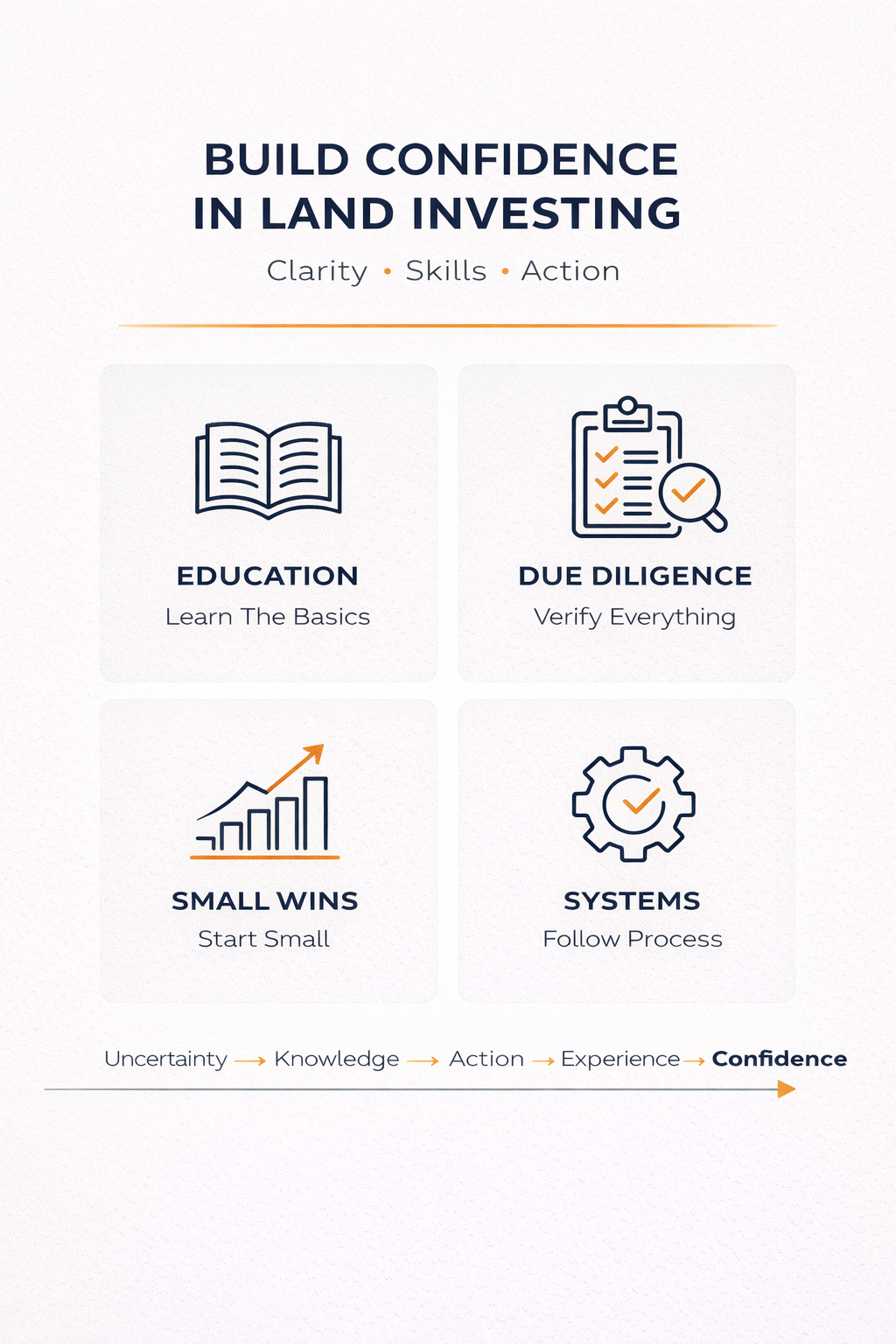
Structured learning approaches reduce mistakes and speed up competency in land investing. Effective frameworks combine stepwise education, practical tools, and mentorship.

Typical frameworks start with foundational knowledge,defining land types, legal considerations, and market mechanics,then progress to deal analysis, offer structuring, and exit planning. This staged learning helps investors internalize principles sequentially.

Use dependable online courses and resources designed specifically for land investing, which often include community support and expert guidance. Combine reading authoritative books covering market research, negotiation, and due diligence with active participation in targeted forums or coaching programs to apply knowledge practically.

Where applicable, engage experienced mentors to review your investment plans and deal evaluations. This hands-on feedback helps avoid early costly errors and builds confidence.

How Do You Identify Profitable Land Investment Opportunities?

Profitable land investments emerge from thorough market research, using digital platforms effectively, and building relationships with knowledgeable investors.

Begin by analyzing local market conditions,check sales history, zoning changes, and planned developments. Visit parcels physically to evaluate access, soil condition, and proximity to utilities. Use digital tools like online land listing sites to filter for properties matching your criteria, but always verify listing accuracy independently.

Networking provides insight beyond listings, uncovering off-market deals or joint ventures. Connect with real estate professionals and local investors through meetups or online groups to learn about opportunities.

If potential land lies in jurisdictions with complex regulations or environmental concerns, consult local planners or attorneys before making offers. Red flags include uncertain access rights, ongoing legal disputes, or contamination risks.

What Should You Consider When Buying Land?

Key factors affecting land acquisition decisions include zoning laws, availability of utilities, and environmental conditions.

Zoning and Regulations: Zoning classifies how land can be used,residential, commercial, agricultural, or restricted. Verifying zoning status with county offices is mandatory to ensure your intended use is permitted. Investigate pending zoning changes that may influence future value or use.

Utilities Access: Presence of water, electricity, sewage, and road access are critical for development or resale. If absent, calculate the costs and feasibility of bringing services to the site. Confirm with utility providers or public works departments.

Environmental Concerns: Check floodplain maps, contamination records, or protected land status to identify risks that may prohibit construction or require remediation. Environmental restrictions can severely limit land usability.

Always request relevant certificates or permits from local authorities and consider professional environmental assessments to avoid surprises after purchase.

How Do You Conduct Due Diligence on a Land Purchase?

Due diligence mitigates risk by confirming ownership, property condition, and market value before buying.

Title Search: Verify clear ownership free of liens or claims by ordering a title search from a reputable company. Confirm there are no easements or encumbrances that restrict access or use.

Physical Inspection: Visit the site to assess terrain, boundaries, and access roads. Note any obstacles such as steep slopes or wetlands that could limit utility.

Market Assessment: Analyze comparable sales and current market demand. Consult with local real estate agents to understand pricing dynamics.

Failing any of these checks,such as discovering title disputes, difficult terrain, or declining local markets,should cause reconsideration or renegotiation of terms.

What Financing Options Can You Use for Land Investments?

Financing options include traditional bank loans, seller financing, private loans, or all-cash purchases.

Banks may impose stricter conditions on raw land loans, often requiring higher down payments or proof of development plans. Seller financing offers flexibility, allowing you to negotiate terms directly with the seller but requires clear contracts. Private investors can fund land deals but typically at higher interest rates.

Any financing solution should be weighed against your investment horizon, cash flow projections, and ability to meet payment terms. Consult lenders or financial advisors familiar with land deals to verify feasibility and costs.

How Can You Build and Scale a Successful Land Portfolio?

Develop a diversified portfolio balancing different land types, locations, and investment timelines to reduce risk and maximize opportunities.

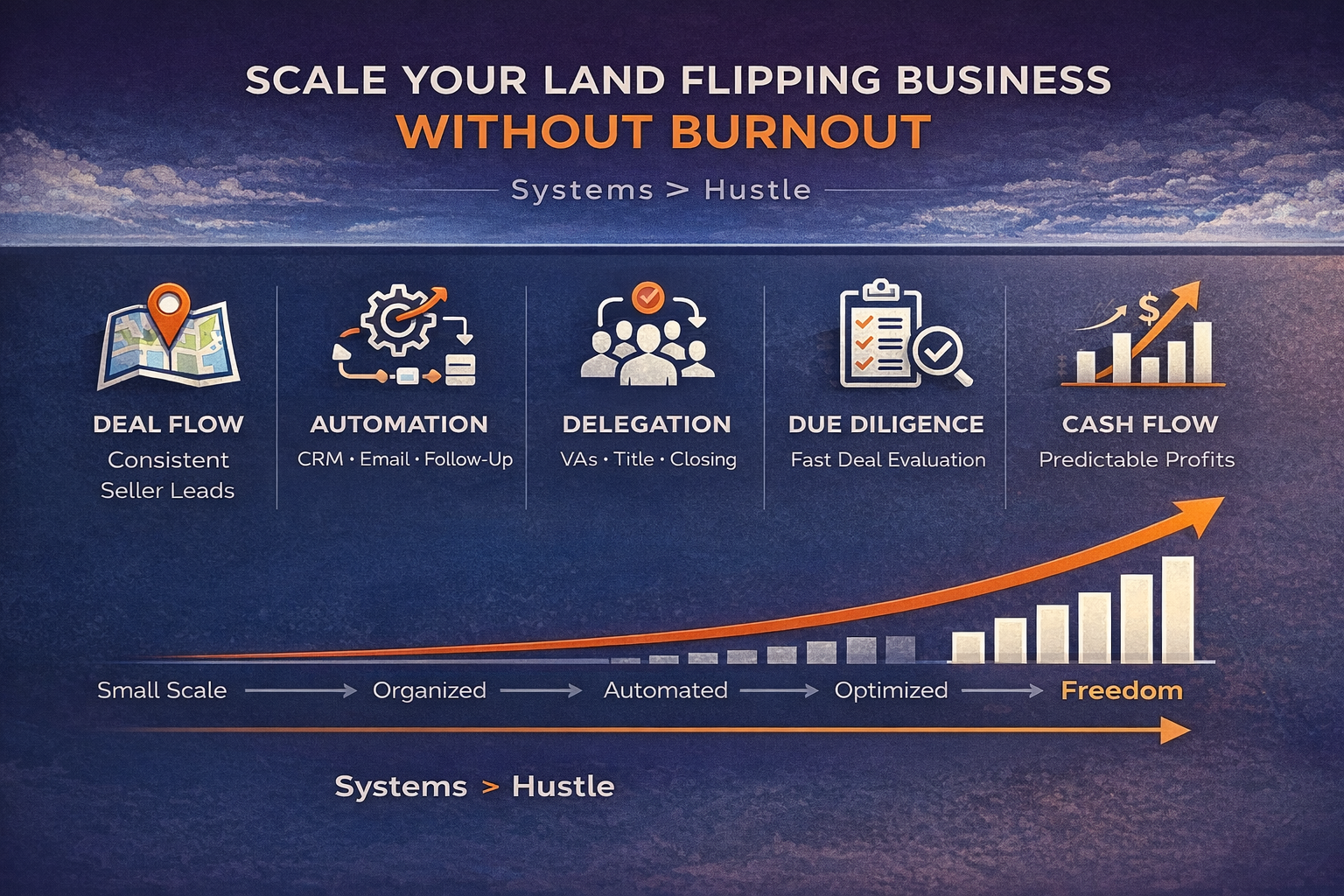
Start with smaller parcels in promising markets to build experience, then scale by reinvesting profits or securing partnerships to acquire larger projects.

Align your portfolio mix with your risk tolerance,combine longer-term holdings expected to appreciate with shorter-term flips to maintain liquidity.

Regularly review each parcel’s performance and market conditions, adjusting your holdings accordingly.

What Common Mistakes Should You Avoid in Land Investing?

Avoid overvaluing properties by relying solely on seller information. Always conduct independent market research and compare comparable sales.

Don’t neglect zoning or access issues; they can unexpectedly limit land use or require costly permits. Confirm these factors with official sources before purchase.

Also, don’t disregard financing alternatives; assuming all deals require cash limits your options. Explore seller financing or partnerships early.

How Can You Use Technology to Improve Your Land Investing?

Tools like GIS mapping help identify land attributes, boundaries, and zoning overlays. Real estate analysis software can model deal scenarios and returns.

Use mobile apps for on-site data capture and quick market updates. These should supplement but never replace hands-on verification or expert consultation.

Why Is Networking Important in Land Investing?

Networking connects you to deal sources, expert advice, and collaboration opportunities. Relationship-building with agents, surveyors, and fellow investors provides timely information and new prospects.

How Can You Stay Updated on Land Market Trends?

Track local planning commission meetings, zoning changes, and infrastructure projects. Subscribe to real estate newsletters and regional market reports for data-driven insights.

What Strategies Help You Sell Land Quickly?

Set a competitive price based on recent sales and properties’ specific conditions. Use high-quality listings with comprehensive descriptions and photos. Collaborate with agents who specialize in land for broader exposure.

How Can Social Media Aid Your Land Investing?

Use platforms to build credibility by sharing expertise, find deals through investment groups, and network with peers. Engage actively and provide useful content to attract potential buyers and partners.

What Tax Considerations Affect Land Investing?

Understand capital gains implications depending on how long you hold the land. Calculate ongoing property taxes based on local rates. Consult a tax professional to clarify deductions related to land loans or development expenses, as these vary by jurisdiction.

How Can Partnerships Benefit Land Investments?

Partnering pools resources and skills, reduces individual risk, and enables larger or more complex projects. Choose partners aligned with your goals and clearly define roles, profits, and exit strategies to avoid conflicts.

What Are Best Practices for Negotiating Land Deals?

Identify seller motivations to tailor offers. Use transparent communication and be ready to adjust terms. Before finalizing, ensure all conditions are met, including clean title and approved financing.

What Creative Financing Options Are Useful for Acquiring Land?

Seller financing allows direct payments to the seller under negotiated terms, often easing qualification hurdles. Lease-purchase agreements let you control land while securing financing later. Seek private investors willing to finance deals when conventional loans aren’t available.

What Should You Know About Land Development?

Development requires permits, planning, and compliance with local regulations, all of which involve costs and potential delays. Work with experienced developers or planners and budget for contingencies to manage risk effectively.

How Can You Assess Future Land Value?

Assess economic trends like job expansion, demographic shifts, and infrastructure projects that improve accessibility. Confirm this information with regional planning documents and economic reports to make informed investment decisions.

What Ethical Practices Should Guide Land Investing?

Negotiate transparently, respect environmental constraints, and consider community impacts. Ethical behavior builds reputation and reduces future legal or relational complications.

How Do You Create a Business Plan for Land Investing?

Define clear investment goals, prepare realistic budgets including acquisition and holding costs, and outline marketing and exit strategies. Regularly review your plan and adjust based on market feedback and results.

What Resources Can Help You Learn Land Investing Faster?

Attend webinars and seminars for expert knowledge, listen to podcasts for diverse perspectives, and seek mentorship to get personalized guidance. Practical learning coupled with expert feedback accelerates competency.

How Can You Measure Success in Land Investing?

Track metrics like return on investment, appreciation, cash flow, and compare your performance against local market trends. Also, consider your growth and satisfaction as indicators of long-term success.

What Future Trends Will Shape Land Investing?

Technology adoption, sustainable investment practices, and opportunities in emerging markets will drive future land investing strategies. Stay adaptable by continuing education and monitoring regulatory and economic changes.

Mini FAQ

What is land investing? It means purchasing land to generate profit through resale, leasing, or development.

How can I learn land investing faster? Use structured learning frameworks, online courses, and mentorship to gain practical knowledge quickly.

What should I consider when buying land? Verify zoning, utility access, and environmental risks specific to the property’s location.

What financing options exist? Traditional loans, seller financing, private investors, or all-cash deals are common methods.

How do I sell land quickly? Price competitively, market effectively online and locally, and work with knowledgeable agents.

Why network in land investing? Networking uncovers opportunities, expert advice, and collaboration possibilities.

What are the tax considerations? Capital gains, property taxes, and deductible expenses vary by location; consult a tax pro.

The Real Reason Coaching Accelerates Success In Land Investing: Complete Guide (2026)


The world of land investing presents unique opportunities and challenges that require specialized knowledge and skills. As more individuals seek to enter this market, the role of coaching has become increasingly vital. Coaches not only provide guidance but also accelerate the learning curve for aspiring investors. By leveraging their expertise, coaching can help you navigate complexities, identify lucrative opportunities, and develop a strategic mindset. This article explores the real reasons coaching accelerates success in land investing, focusing on its benefits, methodologies, and the long-term impact it can have on your investment journey.

What is Land Investing and Why is it Important?

Land investing involves purchasing parcels of land with the intent of generating profit through resale, development, or leasing. It plays a crucial role in real estate markets, driving economic growth and offering diversification for investors.

Definition of Land Investing

Land investing is the practice of acquiring land for various purposes, including residential, commercial, agricultural, or recreational use. Investors may buy land to hold for future appreciation, develop it for specific projects, or lease it for income. Understanding the intricacies of land investing is essential for anyone looking to succeed in this field.

Overview of the Land Market

The land market is often influenced by factors such as location, zoning laws, and economic conditions. With recent trends showing an increase in demand for rural and suburban properties, investors have a unique opportunity to capitalize on changing market dynamics. Moreover, government policies and infrastructure developments can significantly affect land values.

Benefits of Investing in Land

Investing in land offers several advantages, including lower competition compared to residential or commercial properties, potential for high returns, and the ability to leverage appreciation over time. Additionally, land can be a more straightforward investment, as it typically requires less management than developed properties.

How Does Coaching Fit into Land Investing?

Coaching in land investing provides targeted guidance from experienced professionals, helping investors navigate the complexities of the market. It equips investors with the necessary skills and knowledge to make informed decisions and effectively manage their investments.

Definition of Coaching in Real Estate

Coaching in real estate, specifically land investing, involves personalized mentorship where a coach shares insights, strategies, and experiences with the investor. The goal is to help the investor develop a robust understanding of the market and enhance their investment acumen.

Types of Coaching Available

Coaching can take various forms, including one-on-one sessions, group coaching, and online courses. Each format offers unique benefits: one-on-one coaching provides personalized attention, while group coaching fosters networking and shared learning experiences. Online courses can offer flexibility and access to a wider range of Resources.

Coaching vs. Self-Directed Learning

While self-directed learning can be beneficial, it often lacks the structured guidance that coaching provides. Coaches can help identify blind spots, offer accountability, and share real-world insights that can significantly enhance the learning experience and speed up the investor’s success.

What are the Key Benefits of Coaching in Land Investing?

Coaching in land investing offers numerous advantages, including skill enhancement, expert insights, and networking opportunities. These benefits collectively contribute to an investor’s growth and success in navigating the land market effectively.

Enhanced Skill Development

One of the primary benefits of coaching is the development of essential skills needed for land investing. Coaches can provide tailored training programs focused on areas such as market analysis, valuation techniques, and negotiation strategies. This focused skill development allows investors to approach opportunities with greater confidence and competence.

Access to Expert Insights

Coaches bring a wealth of experience and insights that can be invaluable for investors. They can share market trends, investment strategies, and lessons learned from past successes and failures. This access to expert knowledge allows investors to make informed decisions and avoid common pitfalls.

Building a Strong Network

Coaching often facilitates networking opportunities, connecting investors with industry professionals, peers, and potential partners. A strong network can lead to collaborative opportunities, mentorship, and access to off-market deals, significantly enhancing an investor’s potential for success.

How Can a Coach Help You Identify Opportunities?

A coach can assist investors in identifying lucrative land investment opportunities through various techniques and methodologies. By leveraging their expertise, coaches can help investors understand market dynamics and uncover hidden gems.

Market Analysis Techniques

Coaches can teach investors effective market analysis techniques, enabling them to evaluate potential land investments critically. This includes understanding local market conditions, zoning regulations, and comparable sales data to assess the viability of a property. With these skills, investors can make data-driven decisions that enhance their investment potential.

Identifying Undervalued Properties

Coaches often have a keen eye for spotting undervalued properties that may not be immediately apparent to novice investors. They can teach techniques to recognize potential in land that others may overlook, such as emerging neighborhoods or properties with development potential. This skill can significantly increase an investor’s profitability.

Understanding Trends

Staying ahead of market trends is crucial in land investing. Coaches can provide insights into shifting demographics, economic indicators, and emerging investment strategies. By understanding these trends, investors can position themselves advantageously within the market.

What Role Does Accountability Play in Coaching?

Accountability is a critical component of coaching that fosters commitment and motivation. By setting clear goals and tracking progress, coaches help investors stay focused and driven in their land investment journeys.

Setting Realistic Goals

Coaches assist investors in setting achievable and measurable goals, which are essential for maintaining motivation. These goals can range from short-term tasks, such as conducting market research, to long-term objectives, such as closing a property deal. Goal-setting provides a roadmap for success and ensures that investors remain productive.

Tracking Progress Effectively

Regular progress tracking is vital to accountability in coaching. Coaches can implement systems for monitoring milestones and achievements, helping investors recognize their progress over time. This ongoing assessment encourages continuous improvement and fosters a sense of accomplishment.

Maintaining Motivation

Investing in land can be challenging, and maintaining motivation is crucial. Coaches can provide encouragement, celebrate successes, and help investors navigate setbacks. This support can be instrumental in keeping investors engaged and focused on their long-term objectives.

How Can Coaching Improve Your Decision-Making Skills?

Coaching enhances decision-making skills by providing frameworks for analyzing risks and rewards, making informed choices, and avoiding common investing pitfalls. This skill set is vital for successful land investing.

Analyzing Risks and Rewards

Coaches can guide investors in developing a comprehensive understanding of risk assessment. By evaluating potential rewards against risks, investors can make informed decisions that align with their investment strategies. This analytical approach decreases the likelihood of costly mistakes.

Making Informed Choices

Coaching equips investors with the tools to make informed choices based on data and insights. Coaches can teach techniques for evaluating properties, understanding market conditions, and foreseeing potential challenges. This knowledge empowers investors to navigate the complexities of land investing confidently.

Avoiding Common Pitfalls

Many novice investors fall victim to common pitfalls, such as overextending financially or failing to conduct proper due diligence. Coaches can share lessons learned from their experiences, helping investors avoid these mistakes. This proactive approach can save investors time and money in the long run.

What Strategies Do Coaches Use to Teach Negotiation?

Coaches employ various strategies to teach effective negotiation techniques that are crucial for land investing. These strategies can empower investors to secure better deals and enhance their overall investment outcomes.

Role-Playing Scenarios

Role-playing is a powerful tool coaches use to simulate negotiation scenarios. This hands-on approach allows investors to practice their negotiation skills in a safe environment, boosting their confidence and preparing them for real-world situations. Through feedback and adjustment, investors can refine their techniques effectively.

Understanding Buyer Psychology

Coaches often delve into the psychology of buyers and sellers, providing insights into their motivations and behaviors. Understanding these dynamics can give investors a competitive edge during negotiations, enabling them to tailor their approaches to meet the needs of the other party.

Closing Techniques

Effective closing techniques are essential for securing deals in land investing. Coaches can share proven strategies for closing negotiations successfully, including overcoming objections and creating win-win situations. Mastering these techniques can significantly improve an investor’s success rate in closing deals.

How Does Coaching Foster a Growth Mindset?

Coaching fosters a growth mindset by encouraging continuous learning, helping investors overcome challenges, and embracing feedback. This mindset is essential for long-term success in land investing.

Encouraging Continuous Learning

Coaches emphasize the importance of lifelong learning in the ever-evolving landscape of land investing. They can provide resources, recommend courses, and encourage investors to stay updated on industry trends. This commitment to learning ensures that investors remain competitive and informed.

Overcoming Challenges

Investors will inevitably face challenges throughout their investing journey. Coaches can provide support and strategies for overcoming these obstacles, helping investors build resilience and adaptability. This skill is crucial for navigating the ups and downs of the land market.

Embracing Feedback

Feedback is vital for personal and professional development. Coaches create a safe environment for investors to receive constructive feedback, allowing them to identify areas for improvement. Embracing feedback fosters growth and helps investors refine their strategies and approaches.

What Tools and Resources Do Coaches Provide?

Coaches offer a variety of tools and resources that enhance the learning experience for investors. These resources can streamline processes and improve overall investment efficacy.

Market Research Tools

Coaches often provide access to market research tools that help investors analyze data and make informed decisions. These tools can include software for assessing property values, market trends, and demographic information. Utilizing these resources can significantly enhance an investor’s analytical capabilities.

Investment Calculators

Investment calculators are essential tools that coaches may provide to help investors evaluate the potential profitability of land investments. These calculators can assist with analyzing cash flow, return on investment (ROI), and other financial metrics. This data-driven approach aids in making sound investment decisions.

Networking Opportunities

Coaching often opens doors to networking opportunities that can be invaluable for investors. Coaches may facilitate introductions to industry professionals, potential partners, or other investors. Building a strong network can lead to collaborative opportunities and enhance an investor’s success in the land market.

How Can Coaching Help You Build a Brand in Land Investing?

Coaching can significantly aid investors in establishing a personal brand in land investing. A well-defined brand can enhance credibility and attract potential clients or partners.

Establishing Your Unique Selling Proposition

Coaches can assist investors in identifying their unique selling proposition (USP), which differentiates them from competitors. A strong USP is essential for building a brand that resonates with clients and stakeholders. This clarity can lead to more effective marketing and networking efforts.

Creating an Online Presence

In today’s digital age, a robust online presence is critical. Coaches can provide guidance on building a professional website, utilizing social media, and engaging in online communities. These strategies help investors establish authority and reach a broader audience.

Networking with Other Investors

Networking is a vital component of brand building. Coaches can facilitate connections with other investors, industry professionals, and potential clients, helping investors expand their influence and reach within the land investing community. A strong network can enhance brand visibility and credibility.

What are the Psychological Benefits of Having a Coach?

Having a coach offers several psychological benefits that can enhance an investor’s performance. These benefits include increased confidence, reduced anxiety, and improved focus.

Increased Confidence

Working with a coach can significantly boost an investor’s confidence in their abilities. Through guidance and support, investors gain a clearer understanding of the market and their own potential, which empowers them to take calculated risks and make bold investment decisions.

Reduced Anxiety

Investing in land can be daunting, leading to anxiety for many investors. Coaches provide reassurance and strategies to manage stress and uncertainty. By equipping investors with knowledge and skills, coaches can help alleviate fears and promote a more positive investment experience.

Improved Focus

Coaches can help investors maintain focus on their goals, reducing distractions and enhancing productivity. By providing accountability and structured learning paths, coaches enable investors to prioritize tasks effectively and remain committed to their investment strategies.

How Does Coaching Influence Your Financial Literacy?

Coaching plays a crucial role in enhancing financial literacy among land investors. It equips them with essential knowledge about financial metrics, budgeting, and return on investment evaluations.

Understanding Financial Metrics

Coaches often focus on teaching investors how to interpret financial metrics critical for evaluating land investments. This includes understanding concepts such as cash flow, net present value, and cap rates. A solid grasp of these metrics enables investors to assess the viability of their investment choices effectively.

Budgeting for Investments

Budgeting is a fundamental aspect of successful investing. Coaches can guide investors in creating realistic budgets that account for acquisition costs, ongoing expenses, and contingency funds. This financial foresight is crucial for maintaining control over investments and ensuring long-term sustainability.

Evaluating ROI

Return on investment (ROI) is a key performance indicator for any investor. Coaches can teach investors how to calculate and analyze ROI for their land investments, helping them understand the potential profitability of their endeavors. This knowledge empowers investors to make informed financial decisions.

What are the Common Misconceptions About Coaching?

Several misconceptions about coaching can deter potential investors from seeking guidance. Understanding these myths is crucial for recognizing the true value of coaching in land investing.

Coaching is Only for Beginners

One common misconception is that coaching is only beneficial for novice investors. In reality, experienced investors can also gain valuable insights and strategies from coaches. Continuous learning is essential in any investment field, and coaching can provide advanced techniques for seasoned investors.

Coaching is Too Expensive

Another misconception is that coaching is prohibitively costly. While some coaching programs may have a significant fee, many options are available at various price points. Investing in coaching can yield substantial returns, making it a worthwhile expense for serious investors.

Coaching Guarantees Success

Some individuals believe that coaching guarantees success in investing. While coaching provides valuable guidance and resources, success ultimately depends on the investor’s commitment and execution. Coaches can aid in skill development and decision-making, but individual effort remains crucial.

How Do You Choose the Right Coach for Land Investing?

Selecting the right coach is essential for maximizing the benefits of coaching in land investing. Considering qualifications, coaching styles, and references can ensure a good match.

Assessing Qualifications

When choosing a coach, it’s important to assess their qualifications and experience in land investing. Look for coaches with a proven track record, relevant certifications, and industry expertise. A qualified coach can provide valuable insights and guidance tailored to your investment goals.

Evaluating Coaching Styles

Different coaches have varying styles and approaches. Some may be more directive, while others adopt a collaborative approach. It’s essential to find a coach whose style resonates with your learning preferences and aligns with your investment objectives. A good fit can enhance the coaching experience.

Checking References and Reviews

Before committing to a coach, it’s wise to check references and read reviews from previous clients. This feedback can provide insight into the coach’s effectiveness, communication style, and overall impact. A thorough evaluation can help you make an informed decision.

What Are the Long-Term Benefits of Coaching?

Engaging in coaching can lead to several long-term benefits for land investors, including sustained success, legacy building, and increased financial independence.

Sustained Success in Investing

Coaching can help investors establish a strong foundation for sustained success. By developing essential skills, strategies, and a growth mindset, investors are better equipped to navigate the challenges of the land market over time. This long-term perspective fosters resilience and adaptability.

Building a Legacy

For many investors, creating a legacy is an important goal. Coaching can guide investors in developing strategies that not only achieve personal financial success but also contribute positively to their communities and future generations. This holistic approach enhances the investor’s impact beyond mere profit.

Increased Financial Independence

Investing in land can lead to increased financial independence, a significant long-term benefit of coaching. By providing the knowledge and tools necessary for successful investing, coaches empower investors to achieve financial freedom and autonomy, allowing them to pursue their passions and goals.

How Can Group Coaching Compare to One-on-One Coaching?

Group coaching and one-on-one coaching each offer unique advantages and disadvantages for land investors. Understanding these differences can help individuals choose the right format for their needs.

Benefits of Group Dynamics

Group coaching fosters a collaborative environment where investors can share insights, experiences, and resources. This dynamic can lead to collective learning and networking opportunities, enhancing the overall coaching experience. Group discussions can also provide diverse perspectives on investing strategies.

Cost-Effectiveness

Group coaching is often more affordable than one-on-one coaching, making it accessible to a wider range of investors. This cost-effectiveness allows individuals to benefit from coaching without a significant financial commitment. For those starting out, group coaching can be an excellent way to gain foundational knowledge.

Personal Attention vs. Networking

While one-on-one coaching provides personalized attention and tailored guidance, it may lack the networking opportunities found in group settings. Conversely, group coaching offers valuable connections with peers but may not address individual concerns as deeply. Investors should consider their priorities when choosing a coaching format.

What Role Does Technology Play in Coaching?

Technology plays an integral role in modern coaching, enhancing accessibility, communication, and learning opportunities for land investors. It allows for flexible coaching solutions that cater to diverse learning preferences.

Online Coaching Platforms

Online coaching platforms enable investors to access coaching resources and sessions from anywhere. This flexibility allows individuals to engage in coaching regardless of their location, making it easier to find the right coach. Virtual sessions can also accommodate busy schedules and provide convenience.

Utilizing Apps for Progress Tracking

Many coaches use apps and software to help investors track their progress and manage their goals. These tools can facilitate accountability and provide real-time feedback, making it easier for investors to stay on course. Technology enhances the coaching experience by offering structured tracking mechanisms.

Virtual Networking Opportunities

Technology has revolutionized networking, allowing investors to connect with peers and industry professionals through virtual events and forums. Coaches can facilitate these opportunities, enabling investors to expand their networks and learn from a broader range of experiences. Virtual networking can enhance collaboration and support among investors.

How Can Coaching Accelerate Your Learning Curve?

Coaching can significantly accelerate the learning curve for land investors by providing focused learning paths, access to real-world case studies, and immediate feedback. This expedited learning process is essential for achieving success in a competitive market.

Focused Learning Paths

Coaches can create customized learning paths that address the specific needs and goals of each investor. This targeted approach ensures that investors focus on the most relevant topics, maximizing their learning efficiency. By streamlining the learning process, coaches help investors grasp concepts more quickly.

Access to Real-World Case Studies

Real-world case studies provide practical examples of successful land investments, allowing investors to learn from actual experiences. Coaches often use these case studies to illustrate key concepts and strategies, enhancing understanding and retention. This experiential learning approach is vital for bridging the gap between theory and practice.

Immediate Feedback

Coaches provide immediate feedback on an investor’s performance, allowing for quick adjustments and improvements. This real-time guidance helps investors refine their strategies and decision-making processes, accelerating their growth and development. Immediate feedback fosters a more dynamic learning environment.

What are the Most Effective Coaching Techniques?

Effective coaching techniques can significantly enhance the learning experience for land investors. Some of the most impactful methods include mentorship pairing, goal-setting frameworks, and interactive workshops.

Mentorship Pairing

Mentorship pairing is a technique where coaches connect investors with experienced mentors in the field. This relationship allows investors to gain insights, advice, and support from seasoned professionals. Mentorship can enhance the learning experience by providing real-world perspectives and guidance.

Goal-Setting Frameworks

Implementing structured goal-setting frameworks is crucial for effective coaching. Coaches can help investors establish clear, measurable goals that align with their investment objectives. This structured approach ensures that investors remain focused and accountable throughout their coaching journey.

Interactive Workshops

Interactive workshops provide hands-on learning experiences that encourage active participation. Coaches can facilitate group discussions, role-playing activities, and case study analyses to engage investors fully. This interactive approach fosters collaboration and enhances the retention of knowledge.

How Does Accountability Change Your Investment Approach?

Accountability significantly alters an investor’s approach by creating structured check-ins, setting milestones, and celebrating successes. This framework encourages commitment and drives progress in the land investing journey.

Structured Check-Ins

Regular check-ins with a coach provide opportunities for investors to review their progress and adjust their strategies. These structured sessions foster accountability and ensure that investors remain on track towards their goals. This ongoing support is crucial for maintaining motivation and focus.

Setting Milestones

Establishing milestones helps investors break down their goals into manageable tasks. Coaches can assist in defining these milestones, making the investment process less overwhelming. Recognizing and celebrating these achievements fosters a sense of accomplishment and encourages continued effort.

Celebrating Successes

Coaches encourage investors to celebrate their successes, no matter how small. Acknowledging achievements reinforces positive behaviors and motivates investors to maintain momentum. This recognition is vital for building confidence and fostering a positive investment mindset.

What Success Stories Highlight the Impact of Coaching?

Success stories can illustrate the transformative impact of coaching on land investors. Real-life examples of individuals who have benefited from coaching can provide inspiration and insight.

Case Studies of Successful Investors

Numerous case studies highlight how coaching has propelled investors to success in land investing. These stories often detail the challenges faced, the strategies employed, and the outcomes achieved. Analyzing these examples can provide valuable lessons for aspiring investors.

Testimonials from Coached Individuals

Testimonials from individuals who have undergone coaching can offer firsthand accounts of the benefits experienced. These personal narratives can highlight the specific skills gained, the challenges overcome, and the overall impact on their investing journey. Such testimonials can serve as motivation for prospective investors.

Before and After Comparisons

Before and after comparisons can illustrate the tangible differences coaching can make in an investor’s approach and success. These comparisons can showcase changes in mindset, skill level, and overall performance, reinforcing the value of coaching in land investing.

How Can You Maximize Your Coaching Experience?

Maximizing your coaching experience involves being open to feedback, setting clear expectations, and engaging actively in sessions. These practices can enhance the effectiveness of coaching and lead to greater success.

Being Open to Feedback

Embracing feedback is crucial for growth during the coaching process. Investors should approach feedback with a receptive mindset, viewing it as an opportunity for improvement rather than criticism. This openness fosters a more productive coaching relationship and accelerates learning.

Setting Clear Expectations

Establishing clear expectations from the outset is essential for a successful coaching experience. Investors should communicate their goals, preferred learning styles, and any specific challenges they face. This clarity enables coaches to tailor their approaches and ensure alignment with the investor’s objectives.

Engaging Actively in Sessions

Active engagement during coaching sessions enhances the learning experience. Investors should participate in discussions, ask questions, and contribute their insights. This level of involvement fosters a collaborative environment and maximizes the benefits of coaching.

What Future Trends Might Affect Coaching in Land Investing?

Future trends are likely to shape the coaching landscape in land investing, including the increased use of AI, a shift toward remote coaching, and emerging investment strategies. Staying abreast of these trends can enhance the coaching experience.

Increased Use of AI

Artificial intelligence (AI) is poised to transform coaching by providing personalized learning experiences and data-driven insights. AI tools can analyze investor behavior and preferences, tailoring coaching to individual needs. This technological advancement can enhance efficiency and effectiveness in coaching.

Shift Towards Remote Coaching

The trend toward remote coaching is likely to continue, offering flexibility and convenience for investors. Virtual coaching platforms enable individuals to connect with coaches across geographical boundaries, expanding access to quality coaching resources. This shift can democratize coaching and reach a broader audience.

Emerging Investment Strategies

As the land market evolves, new investment strategies will emerge, necessitating adaptive coaching approaches. Coaches will need to stay informed about these trends to provide relevant guidance. Investors should be prepared to embrace innovative strategies and integrate them into their investment plans.

How Does Coaching Impact Your Risk Management in Investing?

Coaching plays a significant role in enhancing risk management strategies for land investors. It helps in identifying risks early, developing contingency plans, and learning from failures.

Identifying Risks Early

Coaches can help investors recognize potential risks associated with land investments before they escalate. By conducting thorough analyses and evaluations, investors can proactively address issues and mitigate risks. This foresight is crucial for safeguarding investments and ensuring long-term success.

Developing Contingency Plans

Having contingency plans in place is essential for effective risk management. Coaches can guide investors in creating robust plans that outline steps to take in case of unforeseen challenges. This preparedness enhances an investor’s resilience and ability to navigate obstacles.

Learning from Failures

Failure is an inevitable part of investing, but it can be a valuable learning opportunity. Coaches can help investors analyze their mistakes, extract lessons, and adjust their strategies accordingly. This reflective approach fosters growth and reduces the likelihood of repeating past errors.

What Are the Financial Implications of Investing in Coaching?

Investing in coaching has financial implications that require careful consideration. Analyzing cost versus value, determining return on investment (ROI), and budgeting for coaching are essential steps.

Cost vs. Value Analysis

Evaluating the cost of coaching against the potential value it brings is crucial for investors. While coaching may require an upfront financial commitment, the long-term benefits often outweigh the costs. Investors should consider the impact coaching can have on their investment success and overall financial growth.

Return on Investment

Calculating the return on investment (ROI) for coaching can help investors understand its financial impact. By assessing the increase in profits or efficiency resulting from coaching, investors can justify the expense. This analysis is vital for making informed decisions about coaching investments.

Budgeting for Coaching

Budgeting for coaching expenses is essential for maintaining financial control. Investors should allocate funds for coaching as part of their overall investment strategy. This proactive approach ensures that coaching remains an integral component of their growth and development.

How Can You Apply What You Learn from Coaching?

Applying what you learn from coaching is critical for maximizing its benefits. Implementing strategies in real-time, committing to continual learning, and sharing knowledge with peers are effective methods for applying coaching insights.

Implementing Strategies in Real-Time

Investors should strive to apply coaching strategies as soon as possible. Real-time implementation allows for immediate feedback and adjustments, reinforcing learning. This hands-on approach ensures that investors can integrate new techniques into their investment practices effectively.

Continual Learning Post-Coaching

The learning process should not end with coaching. Investors should commit to continual learning by seeking additional resources, attending workshops, and staying updated on market trends. This dedication to learning ensures ongoing growth and adaptability in the investing landscape.

Sharing Knowledge with Peers

Sharing insights and knowledge gained from coaching with peers can enhance the learning experience for both parties. By engaging in discussions and collaborative learning, investors can reinforce their understanding and contribute to the growth of their investing community. This knowledge-sharing fosters a culture of continuous improvement.

What Are the Limitations of Coaching in Land Investing?

While coaching offers numerous benefits, it is essential to recognize its limitations. Coaching should not be viewed as a substitute for experience, personal accountability is necessary, and there may be potential mismatches in coaching styles.

Not a Substitute for Experience

Coaching provides valuable guidance, but it cannot replace the hands-on experience gained through investing. Investors must actively engage in the market to develop practical skills and insights. Coaching should complement, not replace, real-world experience.

Personal Accountability Required

Coaching relies on the investor’s commitment and accountability to achieve success. Coaches can provide guidance, but ultimately, the investor must take action and implement strategies. This personal accountability is crucial for making meaningful progress in land investing.

Potential Mismatches in Coaching Styles

Different coaches have varying styles, and not every coach will be the right fit for every investor. It’s essential for investors to assess compatibility and ensure that their coach’s approach aligns with their learning preferences. Finding the right match can significantly impact the coaching experience.

How Can You Assess the Effectiveness of Your Coach?

Assessing the effectiveness of your coach is essential for ensuring that you receive valuable guidance. Regular performance reviews, feedback mechanisms, and evaluating goal achievement can provide insight into the coaching relationship.

Regular Performance Reviews

Conducting regular performance reviews can help investors evaluate their progress and the effectiveness of their coach. These reviews should focus on goal achievement, skill development, and overall satisfaction with the coaching experience. Honest assessments foster open communication and improvement.

Feedback Mechanisms

Implementing feedback mechanisms allows investors to provide input on their coaching experience. This feedback can help coaches adjust their approaches to better meet the investor’s needs. Constructive feedback fosters a collaborative environment and enhances the effectiveness of coaching.

Evaluating Goal Achievement

Tracking goal achievement is a critical component of assessing coaching effectiveness. Investors should regularly review their goals and the progress made toward achieving them. This evaluation provides insight into the coaching relationship and highlights areas for further development.

What Are the Ethical Considerations in Coaching?

Ethical considerations in coaching are essential for maintaining professionalism and integrity. Transparency in advice, avoiding conflicts of interest, and maintaining professional standards are vital components of ethical coaching practices.

Transparency in Advice

Coaches must maintain transparency in their advice and recommendations. This includes disclosing potential conflicts of interest and ensuring that investors are fully informed about the coaching process. Transparency fosters trust and strengthens the coaching relationship.

Avoiding Conflicts of Interest

Coaches should be vigilant in avoiding conflicts of interest that could compromise their objectivity. This includes disclosing any relationships or financial interests that may influence their guidance. Ethical coaching practices prioritize the investor’s best interests above all else.

Maintaining Professional Standards

Coaches should adhere to professional standards and ethical guidelines within the coaching industry. This includes ongoing education, professional development, and commitment to best practices. Upholding high standards enhances the credibility and effectiveness of coaching.

How Do You Transition from Coaching to Independent Investing?

Transitioning from coaching to independent investing involves gradual independence, developing personal strategies, and leveraging ongoing support networks. These steps can facilitate a smooth transition and ensure continued success.

Gradual Independence

Investors should aim for gradual independence as they transition from coaching. This can involve taking on more responsibility in decision-making and gradually implementing strategies learned during coaching. This gradual approach builds confidence and prepares investors for independent investing.

Developing Personal Strategies

As investors gain experience, they should focus on developing their own investment strategies. Coaches can assist in this process by encouraging critical thinking and self-reflection. Creating personalized strategies empowers investors to take ownership of their investment journeys.

Ongoing Support Networks

Maintaining connections with coaches and peers can provide valuable ongoing support as investors transition to independence. Networking with other investors allows for the exchange of ideas and resources, fostering a continued sense of community and collaboration. These support networks can be instrumental in navigating the challenges of independent investing.

Mini FAQ

Q: What is land investing?
A: Land investing involves purchasing land with the intent of generating profit through resale, development, or leasing.

Q: How can coaching benefit land investors?
A: Coaching enhances skill development, provides expert insights, and helps build a strong network.

Q: What should I look for in a land investing coach?
A: Assess qualifications, coaching styles, and check references and reviews to find the right fit.

Q: Can coaching guarantee success in land investing?
A: While coaching provides valuable guidance, success ultimately depends on the investor’s commitment and execution.

Q: How does coaching affect financial literacy?
A: Coaching enhances financial literacy by teaching investors about financial metrics, budgeting, and evaluating ROI.

Q: What are the limitations of coaching?
A: Coaching is not a substitute for experience, requires personal accountability, and may have mismatches in coaching styles.

Q: How can I apply what I learn from coaching?
A: Implement strategies in real-time, commit to continual learning, and share knowledge with peers to maximize coaching benefits.


The Real Reason Coaching Accelerates Success In Land Investing: Complete Guide (2026)

Land investing represents a unique niche within the real estate market, offering significant potential for wealth accumulation. However, navigating this landscape requires a blend of knowledge, strategy, and resilience. Coaching emerges as a powerful tool to enhance skills, foster decision-making, and accelerate success in this domain. By providing tailored guidance and insights, effective coaching can significantly reduce the learning curve and help investors identify valuable opportunities. This article delves into the real reasons coaching is instrumental for success in land investing, exploring its various dimensions and benefits.

What is Land Investing and Why is it Important?

Land investing involves purchasing parcels of land for potential appreciation, development, or resale. It’s essential because it offers investors a tangible asset that can diversify their portfolios and generate substantial returns, especially in growing markets.

Definition of Land Investing

Land investing refers to the acquisition of land with the intention of holding, developing, or selling it for profit. Unlike traditional real estate investments, which often involve structures, land investments focus solely on the value of the land itself. Investors typically look for land in areas with growth potential, where demand for property is expected to increase. This investment strategy can be an excellent way to generate passive income or capitalize on future development opportunities.

Overview of the Land Market

The land market is influenced by a variety of factors, including economic trends, population growth, and zoning regulations. In regions experiencing urban expansion, demand for land can skyrocket, making it a lucrative investment option. Additionally, the market can vary significantly between rural and urban areas, with each offering unique opportunities and challenges. Understanding these dynamics is crucial for investors aiming to make informed decisions in land investing.

Benefits of Investing in Land

Investing in land has several advantages, including lower maintenance costs compared to developed properties, potential for high appreciation, and flexibility in usage. Land can be held for long-term appreciation or developed for residential, commercial, or agricultural purposes. Furthermore, land investments often carry lower risks than other real estate investments, as they are less susceptible to market fluctuations and changes in rental demand.

How Does Coaching Fit into Land Investing?

Coaching in land investing involves guidance from experienced professionals who provide insights, strategies, and support tailored to individual investor needs. This structured approach enhances learning and accelerates success by leveraging the coach’s expertise and network.

Definition of Coaching in Real Estate

Coaching in real estate, specifically in land investing, is a personalized approach where a coach mentors clients through the intricacies of the market. Coaches often employ structured programs that address various aspects of land investing, from market analysis to negotiation strategies. The goal is to equip investors with the tools and knowledge needed to make informed decisions and achieve their investment goals efficiently.

Types of Coaching Available

There are various coaching formats available, including one-on-one coaching, group coaching, and online courses. One-on-one coaching provides personalized attention and tailored strategies, while group coaching fosters collaboration and networking among peers. Online coaching offers flexibility and accessibility, allowing investors to learn at their own pace. Each format has its merits, depending on the investor’s needs and learning style.

Coaching vs. Self-Directed Learning

While self-directed learning allows investors to explore at their own pace, coaching provides structured guidance and accountability. Self-learning can sometimes lead to misinformation or gaps in knowledge, whereas coaching ensures that investors receive accurate insights tailored to their specific circumstances. Moreover, coaches can offer real-time feedback and adjustments, which enhances the learning experience compared to independent study.

What are the Key Benefits of Coaching in Land Investing?

Coaching in land investing offers numerous benefits, including enhanced skill development, access to expert insights, and the opportunity to build a strong professional network. These elements combine to create a robust foundation for successful investing.

Enhanced Skill Development

Coaching facilitates accelerated skill development by providing targeted training in essential areas such as market analysis, negotiation, and property valuation. Coaches utilize various teaching methods, including case studies and practical exercises, to reinforce learning. This focused approach allows investors to quickly acquire and apply skills that would take significantly longer to develop independently.

Access to Expert Insights

Coaches often have extensive experience and knowledge of the land investing market, providing clients with insights that can lead to informed decisions. They can share market trends, investment strategies, and potential pitfalls, which are invaluable for investors looking to navigate the complexities of land investing. This access to expert advice helps clients avoid common mistakes and make strategic choices that align with their goals.

Building a Strong Network

Coaching also offers opportunities to connect with other investors and industry professionals, fostering a strong network that can be beneficial for future investments. Networking can lead to collaborative opportunities, partnerships, and access to exclusive deals that may not be available to solo investors. A robust professional network is crucial in land investing, where relationships can significantly impact success.

How Can a Coach Help You Identify Opportunities?

A coach can assist in identifying lucrative land investment opportunities through market analysis techniques, insights on undervalued properties, and an understanding of emerging trends. This expertise is essential for maximizing investment potential.

Market Analysis Techniques

Coaches teach various market analysis techniques that help investors evaluate potential land purchases. This includes understanding local market dynamics, analyzing historical price trends, and assessing demand indicators. By applying these techniques, investors can make data-driven decisions on where to invest, ultimately increasing their chances of success.

Identifying Undervalued Properties

One of the key roles of a coach is to help investors identify undervalued properties that may not be apparent to the average buyer. Coaches utilize their experience to spot hidden gems in the market, often leveraging data and analytical tools to uncover opportunities. This skill is particularly valuable, as purchasing undervalued land can lead to significant returns on investment when the property appreciates or is developed.

Understanding Trends

Coaches keep abreast of industry trends and can provide insights on how these affect land investing. By understanding shifts in demographics, economic conditions, and urban development patterns, investors can position themselves to capitalize on future opportunities. A coach’s ability to interpret these trends can give investors a competitive edge in making judicious investment decisions.

What Role Does Accountability Play in Coaching?

Accountability in coaching is crucial for setting realistic goals, tracking progress effectively, and maintaining motivation throughout the land investing journey. It helps investors stay focused and committed to their objectives.

Setting Realistic Goals

A coach helps investors set achievable and realistic goals by assessing their current skills, Resources, and market conditions. This process involves creating a roadmap that outlines short-term and long-term objectives, ensuring that investors have a clear direction. Realistic goal-setting fosters confidence and provides a sense of purpose, which is essential for sustained motivation and progress.

Tracking Progress Effectively

Regular check-ins with a coach facilitate effective tracking of progress towards set goals. Coaches often employ structured methods to evaluate outcomes, providing feedback and making necessary adjustments to strategies. This ongoing evaluation process ensures that investors remain aligned with their objectives and can adapt to changes in the market or personal circumstances.

Maintaining Motivation

Coaching plays a vital role in maintaining motivation by providing encouragement and celebrating successes, no matter how small. The journey of land investing can be challenging, and having a coach who supports and motivates can make a significant difference. This emotional support helps investors overcome setbacks and stay committed to their investment strategies.

How Can Coaching Improve Your Decision-Making Skills?

Coaching enhances decision-making skills by teaching investors how to analyze risks and rewards, make informed choices, and avoid common pitfalls. This training is essential for successful land investing.

Analyzing Risks and Rewards

Coaches equip investors with the tools and frameworks necessary for analyzing risks and rewards associated with land investments. By understanding potential downsides and weighing them against possible benefits, investors can make more informed decisions. This critical thinking approach is essential in mitigating risks and maximizing returns, allowing investors to navigate the complexities of the market more effectively.

Making Informed Choices

Informed decision-making is crucial in land investing, where the stakes can be high. Coaches provide insights into market dynamics, property evaluations, and investment strategies, empowering investors to make choices based on data rather than emotion. This analytical approach leads to better investment outcomes and reduces the likelihood of costly mistakes.

Avoiding Common Pitfalls

Every investor faces common pitfalls, such as overpaying for land or failing to conduct thorough due diligence. Coaches help investors recognize these pitfalls and provide strategies to avoid them. By learning from the mistakes of others and understanding the typical traps in land investing, clients can position themselves for success.

What Strategies Do Coaches Use to Teach Negotiation?

Coaches employ various strategies to teach negotiation skills, including role-playing scenarios, understanding buyer psychology, and mastering closing techniques. These skills are vital for securing favorable deals in land investing.

Role-Playing Scenarios

Role-playing is a powerful tool used by coaches to simulate real negotiation situations. By practicing negotiations in a controlled environment, investors can develop their skills and gain confidence. This experiential learning approach allows investors to explore different strategies and responses, better preparing them for actual negotiations in the field.

Understanding Buyer Psychology

Coaches emphasize the importance of understanding buyer psychology in negotiations. By grasping what motivates buyers, investors can tailor their negotiation tactics to appeal to their interests and needs. This psychological insight can lead to more successful negotiations and ultimately better deals.

Closing Techniques

Effective closing techniques are essential for finalizing land deals. Coaches teach investors various methods for closing negotiations, including how to create urgency and address objections. Mastering these techniques can significantly impact an investor’s ability to secure profitable land transactions.

How Does Coaching Foster a Growth Mindset?

Coaching fosters a growth mindset by encouraging continuous learning, helping investors overcome challenges, and embracing feedback. This mindset is crucial for long-term success in land investing.

Encouraging Continuous Learning

Coaches promote a culture of continuous learning by encouraging investors to seek new knowledge and skills regularly. This proactive approach helps investors stay updated on market trends and investment strategies, ensuring that they remain competitive. By viewing challenges as opportunities for growth, investors can adapt and thrive in the ever-changing landscape of land investing.

Overcoming Challenges

Challenges are inherent in land investing, and coaching provides the support needed to overcome them. Coaches help investors reframe challenges as learning experiences, fostering resilience and problem-solving abilities. This mindset shift is essential for navigating setbacks and maintaining motivation throughout the investing journey.

Embracing Feedback

Receiving and embracing feedback is a critical component of personal and professional growth. Coaches create a safe environment for investors to receive constructive criticism, helping them identify areas for improvement. By valuing feedback, investors can refine their strategies and enhance their performance in land investing.

What Tools and Resources Do Coaches Provide?

Coaches offer various tools and resources, including market research tools, investment calculators, and networking opportunities, to support investors in their land investing journey. These resources are essential for informed decision-making.

Market Research Tools

Coaches provide access to market research tools that enable investors to analyze market trends, property values, and demographic data. These tools help investors make data-driven decisions and identify promising investment opportunities. By leveraging accurate market data, investors can position themselves for success in land investing.

Investment Calculators

Investment calculators are invaluable tools that help investors evaluate potential returns on their land investments. Coaches often introduce clients to various calculators that can assess cash flow, ROI, and other financial metrics. These tools aid in making informed investment decisions and understanding the financial implications of purchasing land.

Networking Opportunities

Coaching programs often facilitate networking opportunities, connecting investors with industry professionals and fellow investors. These connections can lead to collaborations, partnerships, and access to exclusive deals. Building a strong professional network is crucial for success in land investing, and coaches play a vital role in fostering these relationships.

How Can Coaching Help You Build a Brand in Land Investing?

Coaching helps investors build a brand in land investing by establishing a unique selling proposition, creating an online presence, and networking with other investors. A strong brand enhances visibility and credibility in the market.

Establishing Your Unique Selling Proposition

Coaches guide investors in identifying and establishing a unique selling proposition (USP) that differentiates them from competitors. This involves understanding personal strengths, values, and target audiences. A clearly defined USP is essential for attracting clients and partnerships in the competitive land investing market.

Creating an Online Presence

In today’s digital age, having a robust online presence is crucial for land investors. Coaches advise on creating professional websites, leveraging social media, and utilizing content marketing strategies to build visibility. A strong online presence not only enhances credibility but also connects investors with potential clients and partners.

Networking with Other Investors

Coaching facilitates networking opportunities among investors, allowing them to share experiences, strategies, and resources. This collaboration can lead to joint ventures, partnerships, and access to new markets. A strong network is invaluable in land investing, as relationships often influence success.

What are the Psychological Benefits of Having a Coach?

Having a coach provides various psychological benefits, including increased confidence, reduced anxiety, and improved focus. These factors significantly impact an investor’s ability to succeed in land investing.

Increased Confidence

Coaching boosts investor confidence by providing support, encouragement, and validation. When investors feel supported in their decisions and strategies, they are more likely to take calculated risks and pursue opportunities. This increased confidence can lead to improved performance and greater success in land investing.

Reduced Anxiety

Land investing can be stressful, but having a coach can alleviate anxiety by providing guidance and reassurance. Coaches help investors navigate uncertainties and develop strategies to mitigate risks. This support fosters a sense of security and peace of mind, allowing investors to focus on their goals without overwhelming stress.

Improved Focus

Coaching helps investors maintain focus on their objectives by establishing clear goals and accountability. Coaches assist in prioritizing tasks and strategies, ensuring that investors remain aligned with their long-term vision. This improved focus is essential for making consistent progress and achieving success in land investing.

How Does Coaching Influence Your Financial Literacy?

Coaching enhances financial literacy by educating investors on understanding financial metrics, budgeting for investments, and evaluating ROI. This knowledge is crucial for making informed investment decisions.

Understanding Financial Metrics

Coaches provide insights into key financial metrics that are vital for evaluating land investments. This includes understanding cash flow, net present value, and capitalization rates. By grasping these concepts, investors can make informed financial decisions that align with their investment goals.

Budgeting for Investments

Effective budgeting is essential for successful land investing. Coaches guide investors on how to budget for purchases, ongoing expenses, and potential unexpected costs. A well-structured budget helps investors manage their finances effectively and avoid overextending themselves financially.

Evaluating ROI

Understanding return on investment (ROI) is crucial for assessing the success of land investments. Coaches teach investors how to calculate and interpret ROI, enabling them to evaluate potential investments critically. This knowledge empowers investors to make informed decisions based on expected returns and risks.

What are the Common Misconceptions About Coaching?

Common misconceptions about coaching include the belief that it is only for beginners, too expensive, or guarantees success. Clarifying these myths is essential for understanding the true value of coaching.

Coaching is Only for Beginners

Many believe that coaching is only beneficial for novice investors, but this is far from the truth. Experienced investors can also gain significant value from coaching through advanced strategies, market insights, and accountability. Coaches provide tailored guidance that meets investors at their current skill level, facilitating continuous growth.

Coaching is Too Expensive

While coaching can represent a financial investment, the value it provides often outweighs the costs. Many investors find that the knowledge, skills, and accountability gained through coaching lead to greater returns on their investments. Essentially, coaching can be viewed as a strategic investment in one’s future success.

Coaching Guarantees Success

It’s a common misconception that coaching guarantees success; however, it is important to recognize that coaching provides tools and guidance but does not ensure outcomes. Success in land investing ultimately depends on the investor’s commitment, effort, and ability to apply what they learn. Coaches can facilitate success, but individual action is critical.

How Do You Choose the Right Coach for Land Investing?

Choosing the right coach involves assessing qualifications, evaluating coaching styles, and checking references and reviews. This careful selection process ensures that investors find a coach who aligns with their goals and needs.

Assessing Qualifications

When selecting a coach, it’s important to assess their qualifications and experience in land investing. Look for coaches with a proven track record, relevant certifications, and industry recognition. Understanding their background helps ensure that they possess the expertise needed to guide investors effectively.

Evaluating Coaching Styles

Coaching styles can vary significantly, so it’s essential to find a coach whose approach aligns with your learning preferences. Some coaches may focus on structured programs, while others may adopt a more flexible, mentorship-style approach. Assessing how a coach communicates and interacts with clients is crucial for a productive coaching relationship.

Checking References and Reviews

Before committing to a coach, it’s wise to check references and reviews from previous clients. This feedback provides insight into the coach’s effectiveness, style, and overall client satisfaction. Speaking with former clients can also clarify what to expect from the coaching experience.

What Are the Long-Term Benefits of Coaching?

Long-term benefits of coaching include sustained success in investing, building a legacy, and increased financial independence. These outcomes are essential for investors looking to thrive in the land investment market.

Sustained Success in Investing

Coaching fosters sustainable success by equipping investors with skills and strategies that extend beyond initial investments. As clients continue to learn and grow, they can adapt to changing market conditions and maintain profitability over time. This sustained success is a hallmark of effective coaching, leading to long-term wealth accumulation.

Building a Legacy

Many investors aspire to build a legacy that can be passed down through generations. Coaching can support this goal by teaching investors how to create and manage wealth effectively. By instilling sound investment principles and strategies, coaches help clients establish a foundation for long-term financial security that benefits future generations.

Increased Financial Independence

Coaching promotes financial independence by empowering investors to make informed decisions and take control of their financial futures. As investors gain confidence and expertise through coaching, they can develop their investment strategies and achieve greater autonomy in their financial lives. This independence is a key benefit of investing in coaching.

How Can Group Coaching Compare to One-on-One Coaching?

Group coaching offers benefits such as shared learning experiences, cost-effectiveness, and networking opportunities, whereas one-on-one coaching provides personalized attention and tailored strategies. Choosing between the two depends on individual preferences and goals.

Benefits of Group Dynamics

Group coaching facilitates shared learning experiences, allowing participants to learn from each other’s successes and challenges. This collaborative environment fosters camaraderie and can lead to valuable insights that individual coaching may not provide. Participants often feel motivated by the collective progress of the group, enhancing the overall learning experience.

Cost-Effectiveness

Group coaching is often more cost-effective than one-on-one coaching, making it accessible to a broader audience. While individual coaching may offer personalized strategies, group coaching allows investors to benefit from expert guidance at a lower cost. This affordability can be a significant advantage for new investors looking to gain knowledge without a substantial financial commitment.

Personal Attention vs. Networking

One-on-one coaching provides personalized attention tailored to the individual’s specific needs, which can lead to deeper insights and customized strategies. In contrast, group coaching emphasizes networking and collaboration among participants. Depending on an investor’s learning style and goals, they may prefer the focused guidance of one-on-one coaching or the dynamic interactions of group settings.

What Role Does Technology Play in Coaching?

Technology plays a significant role in coaching through online coaching platforms, apps for progress tracking, and virtual networking opportunities. These tools enhance accessibility and convenience for investors.

Online Coaching Platforms

Online coaching platforms provide a convenient way for investors to access coaching services remotely. These platforms often include video conferencing, resource libraries, and communication tools that facilitate interaction between coaches and clients. The flexibility of online coaching allows investors to learn from anywhere, making it an attractive option for busy professionals.

Utilizing Apps for Progress Tracking

Many coaches use apps and software to help clients track their progress and manage their investments. These tools can provide real-time data on investment performance, market trends, and personal goals. Utilizing technology in this way enhances accountability and supports informed decision-making for investors.

Virtual Networking Opportunities

Technology enables virtual networking opportunities through online forums, webinars, and social media groups. Coaches often facilitate these connections, allowing investors to build relationships and collaborate with peers and industry professionals. Virtual networking is essential in today’s digital landscape, providing investors with access to a broader range of resources and insights.

How Can Coaching Accelerate Your Learning Curve?

Coaching accelerates the learning curve by providing focused learning paths, access to real-world case studies, and immediate feedback on performance. This structured approach enhances the speed and effectiveness of learning.

Focused Learning Paths

Coaches create focused learning paths tailored to individual investor needs and goals. These structured programs help clients acquire essential knowledge and skills systematically, allowing them to progress more rapidly than through self-directed learning. This targeted approach ensures that investors spend their time on the most relevant topics and strategies.

Access to Real-World Case Studies

Coaches often incorporate real-world case studies into their training, providing practical examples that enhance understanding. Analyzing successful (and unsuccessful) investments allows clients to learn from real experiences, fostering deeper insights into the land investing process. This practical application of knowledge significantly accelerates learning and skill development.

Immediate Feedback

One of the key advantages of coaching is the ability to receive immediate feedback on performance and strategies. Coaches provide constructive criticism and guidance that help investors refine their approaches in real-time. This feedback loop fosters continuous improvement and accelerates the learning process, enabling investors to implement effective strategies more quickly.

What are the Most Effective Coaching Techniques?

Effective coaching techniques include mentorship pairing, goal-setting frameworks, and interactive workshops. These strategies enhance learning and engagement for investors in land investing.

Mentorship Pairing

Mentorship pairing involves connecting investors with experienced mentors who provide guidance and support. This technique fosters knowledge transfer and helps investors navigate challenges more effectively. Mentors can share their experiences, insights, and strategies, enriching the learning experience for mentees.

Goal-Setting Frameworks

Coaches often use structured goal-setting frameworks to help clients define specific, measurable, achievable, relevant, and time-bound (SMART) goals. This approach ensures that investors have clear objectives to work towards and facilitates accountability. By setting and tracking progress on these goals, investors can maintain focus and motivation.

Interactive Workshops

Interactive workshops provide hands-on learning experiences where investors can practice skills in a collaborative environment. These workshops often include group activities, discussions, and role-playing scenarios that enhance engagement and retention. By participating in interactive sessions, investors can apply what they learn in real-time, solidifying their understanding of land investing concepts.

How Does Accountability Change Your Investment Approach?

Accountability transforms the investment approach by establishing structured check-ins, setting milestones, and celebrating successes. This structured environment encourages commitment and progress among investors.

Structured Check-Ins

Regular check-ins with a coach create a structured environment where investors can discuss progress, challenges, and strategies. These meetings foster accountability and ensure that investors remain focused on their goals. By having scheduled discussions, clients are more likely to stay committed to their investment plans and take proactive steps toward success.

Setting Milestones

Setting milestones allows investors to break down their long-term goals into manageable, short-term objectives. This approach creates a roadmap for success and helps clients track their progress. Achieving these milestones provides a sense of accomplishment and motivation to continue pursuing larger goals.

Celebrating Successes

Celebrating successes, no matter how small, is an important aspect of accountability in coaching. Acknowledging achievements fosters a positive mindset and reinforces the behaviors that lead to success. This practice keeps investors motivated and encourages them to maintain focus on their investment strategies.

What Success Stories Highlight the Impact of Coaching?

Success stories from coached individuals illustrate the transformative impact of coaching on land investing careers. These narratives often detail significant achievements and personal growth resulting from coaching experiences.

Case Studies of Successful Investors

Many successful investors attribute their achievements to the guidance they received from coaches. These case studies often highlight specific strategies that led to profitable investments, showcasing the practical benefits of coaching. By examining these success stories, aspiring investors can gain inspiration and insight into the potential outcomes of effective coaching.

Testimonials from Coached Individuals

Testimonials from individuals who have undergone coaching often emphasize the positive changes in their investment approaches and decision-making skills. These firsthand accounts highlight the value of personalized guidance and support, reinforcing the effectiveness of coaching in land investing. Such testimonials provide credibility and encourage others to consider coaching as a viable option.

Before and After Comparisons

Before and after comparisons illustrate the tangible benefits of coaching, showcasing how clients have improved their investment strategies and outcomes. These comparisons often highlight specific metrics, such as increased ROI or successful negotiations, providing a clear picture of the coaching impact. By reflecting on these transformations, potential clients can better understand the value of coaching in their investment journeys.

How Can You Maximize Your Coaching Experience?

Maximizing your coaching experience involves being open to feedback, setting clear expectations, and engaging actively in sessions. These practices enhance the effectiveness of coaching and contribute to successful outcomes.

Being Open to Feedback

Being receptive to feedback is crucial for maximizing the coaching experience. Clients who embrace constructive criticism and apply it to their strategies can achieve significant growth. This openness fosters a collaborative relationship between the coach and client, enhancing the overall effectiveness of the coaching process.

Setting Clear Expectations

Setting clear expectations at the outset of the coaching relationship ensures that both the coach and client are aligned on goals and objectives. This clarity helps avoid misunderstandings and fosters a productive coaching environment. By establishing mutual expectations, clients can better gauge their progress and the effectiveness of the coaching they receive.

Engaging Actively in Sessions

Active engagement during coaching sessions is essential for maximizing learning and progress. This involves asking questions, participating in discussions, and being involved in exercises. Clients who actively engage are more likely to absorb information and apply it effectively in their investing endeavors.

What Future Trends Might Affect Coaching in Land Investing?

Future trends affecting coaching in land investing include the increased use of AI, a shift towards remote coaching, and emerging investment strategies. Staying informed about these trends is crucial for adapting coaching practices to meet evolving market demands.

Increased Use of AI

The integration of artificial intelligence (AI) in coaching can enhance personalized learning experiences. AI-driven tools can analyze individual investor behaviors and preferences, allowing coaches to tailor their guidance more effectively. This technology can streamline the coaching process and make it more efficient, benefiting clients seeking quick insights and strategies.

Shift Towards Remote Coaching

The trend towards remote coaching is likely to continue as more investors seek flexible learning options. Remote coaching allows clients to connect with coaches from around the world, broadening their access to expertise. This shift enhances convenience and accessibility, making coaching available to a wider audience.

Emerging Investment Strategies

As the land investing landscape evolves, new investment strategies are likely to emerge. Coaches must stay updated on these strategies and incorporate them into their training programs. By adapting to changing market conditions and strategies, coaches can provide relevant guidance that aligns with current investment trends.

How Does Coaching Impact Your Risk Management in Investing?

Coaching impacts risk management by helping investors identify risks early, develop contingency plans, and learn from failures. This proactive approach is crucial for minimizing potential losses in land investing.

Identifying Risks Early

Coaches assist investors in identifying potential risks associated with land investments at an early stage. By conducting thorough due diligence and evaluating market conditions, coaches help clients recognize red flags that may indicate potential pitfalls. Early identification of risks is essential for mitigating negative impacts on investments.

Developing Contingency Plans

Developing contingency plans is a vital aspect of effective risk management. Coaches guide investors in creating strategies to address potential setbacks, ensuring that they are prepared for unforeseen circumstances. These plans can provide a safety net, helping investors navigate challenges without significant financial losses.

Learning from Failures

Coaching encourages a mindset of learning from failures rather than fearing them. Coaches teach clients to analyze mistakes and extract valuable lessons that can inform future decisions. This approach fosters resilience and adaptability, essential traits for successful land investing in a dynamic market.

What Are the Financial Implications of Investing in Coaching?

Investing in coaching has various financial implications, including cost vs. value analysis, return on investment, and budgeting for coaching. Understanding these factors is crucial for making informed decisions about coaching services.

Cost vs. Value Analysis

Conducting a cost vs. value analysis helps investors evaluate the potential return on investment from coaching. While there may be upfront costs associated with coaching, the long-term benefits often outweigh these expenses. By assessing the value gained through enhanced skills and knowledge, investors can justify the investment in coaching.

Return on Investment

Return on investment (ROI) is a critical consideration when evaluating the financial implications of coaching. Investors should assess how coaching can lead to increased profitability in their land investments. By measuring the outcomes of coaching against the costs, clients can determine the effectiveness of their investment in coaching services.

Budgeting for Coaching

Budgeting for coaching involves allocating funds to ensure that investors can access the guidance they need. This budgeting process requires careful consideration of financial goals and current resources. By planning for coaching expenses, investors can make informed choices about how best to invest in their growth and success.

How Can You Apply What You Learn from Coaching?

Applying what you learn from coaching involves implementing strategies in real-time, engaging in continual learning post-coaching, and sharing knowledge with peers. These actions reinforce the value of coaching and contribute to ongoing success.

Implementing Strategies in Real-Time

Investors should strive to apply the strategies and insights gained from coaching immediately. This real-time implementation helps reinforce learning and allows for adjustments based on actual experiences. By actively applying knowledge, investors can see the impact of their coaching sessions on their investment outcomes.

Continual Learning Post-Coaching

The learning process should not end with coaching sessions. Investors are encouraged to engage in continual learning by seeking additional resources, attending workshops, and networking with peers. This commitment to ongoing education ensures that investors remain informed and adapt to changing market conditions.

Sharing Knowledge with Peers

Sharing knowledge with peers fosters a collaborative environment and reinforces what investors have learned. By discussing insights and strategies with others, investors can gain new perspectives and refine their approaches. This practice contributes to a culture of learning and growth, benefiting the entire investment community.

What Are the Limitations of Coaching in Land Investing?

Coaching has limitations, including its inability to substitute for real-world experience, the necessity for personal accountability, and potential mismatches in coaching styles. Understanding these limitations is essential for setting realistic expectations.

Not a Substitute for Experience

While coaching provides valuable insights and guidance, it cannot replace the experience gained through actual investing. Real-world exposure is necessary for developing a deep understanding of market dynamics and investment strategies. Investors should view coaching as a complement to their experiences rather than a substitute.

Personal Accountability Required

Coaching requires personal accountability from investors, as success ultimately depends on their commitment and actions. Without a willingness to apply what they learn and take responsibility for their decisions, the effectiveness of coaching diminishes. Investors must be proactive in their learning and growth to maximize the benefits of coaching.

Potential Mismatches in Coaching Styles

Every coach has a unique style, and there may be mismatches between a coach’s approach and an investor’s learning preferences. It’s essential for investors to assess whether their coach’s methods resonate with them. A lack of compatibility can hinder the effectiveness of the coaching relationship and limit the potential for growth.

How Can You Assess the Effectiveness of Your Coach?

Assessing the effectiveness of your coach involves regular performance reviews, implementing feedback mechanisms, and evaluating goal achievement. These practices help ensure that coaching remains aligned with your investment objectives.

Regular Performance Reviews

Conducting regular performance reviews allows investors to evaluate their progress and the effectiveness of their coaching sessions. This approach facilitates open discussions about what is working and what may need adjustment. Regular reviews help maintain accountability and ensure that clients are on track to meet their investment goals.

Feedback Mechanisms

Implementing feedback mechanisms, such as surveys or informal check-ins, helps gauge client satisfaction and the effectiveness of coaching. This feedback is crucial for identifying areas of improvement for both the coach and the client. By fostering an open dialogue, clients can ensure their coaching experience is productive and valuable.

Evaluating Goal Achievement

Evaluating goal achievement is a critical component of assessing coaching effectiveness. Investors should regularly review their progress toward the goals set at the beginning of the coaching relationship. By measuring outcomes against these goals, clients can determine the value of their coaching experience and make informed decisions about continuing or adjusting their coaching journey.

What Are the Ethical Considerations in Coaching?

Ethical considerations in coaching include transparency in advice, avoiding conflicts of interest, and maintaining professional standards. Adhering to these principles is essential for fostering trust and integrity in the coaching relationship.

Transparency in Advice

Coaches must provide transparent advice to ensure that clients understand the rationale behind their recommendations. This transparency fosters trust and allows clients to make informed decisions based on accurate information. Clear communication is crucial for building a productive coaching relationship.

Avoiding Conflicts of Interest

Coaches should actively avoid conflicts of interest that may compromise their objectivity. This includes disclosing any relationships or financial interests that could influence their advice. Maintaining ethical boundaries is essential for ensuring that coaching remains focused on the client’s best interests.

Maintaining Professional Standards

Coaches are expected to uphold professional standards and ethical guidelines in their practice. This includes ongoing education, adhering to industry best practices, and demonstrating integrity in all interactions. Upholding these standards is essential for building credibility and trust within the coaching relationship.

How Do You Transition from Coaching to Independent Investing?

Transitioning from coaching to independent investing involves gradual independence, developing personal strategies, and leveraging ongoing support networks. This process ensures that investors can continue to thrive after formal coaching ends.

Gradual Independence

Investors should aim for gradual independence by slowly taking on more responsibility for their investment decisions. This approach allows clients to build confidence and apply what they have learned in coaching. Gradually increasing independence ensures a smoother transition and reduces the risk of making uninformed decisions.

Developing Personal Strategies

Developing personal investment strategies is essential for independent investing. Clients should reflect on their coaching experiences and tailor strategies that align with their unique goals and risk tolerance. A personalized approach empowers investors to make informed decisions and fosters long-term success.

Ongoing Support Networks

Maintaining ongoing support networks is crucial for continued growth and success in independent investing. Investors should seek out peers, mentors, and industry professionals who can provide guidance and share insights. These support networks can offer valuable resources and encouragement, helping investors navigate the challenges of land investing independently.

Mini FAQ

What is land investing? Land investing involves purchasing parcels of land with the intent of appreciation, development, or resale.

How does coaching help in land investing? Coaching provides guidance, accountability, and strategies that enhance investors’ skills and decision-making.

What are the benefits of coaching? Benefits include skill enhancement, expert insights, networking opportunities, and improved accountability.

How do I choose the right coach? Assess qualifications, evaluate coaching styles, and check references and reviews.

What are the long-term benefits of coaching? Long-term benefits include sustained success, financial independence, and legacy building.

How does coaching impact risk management? Coaches help identify risks early, develop contingency plans, and learn from failures.

What are common misconceptions about coaching? Misconceptions include that coaching is only for beginners, too expensive, or guarantees success.


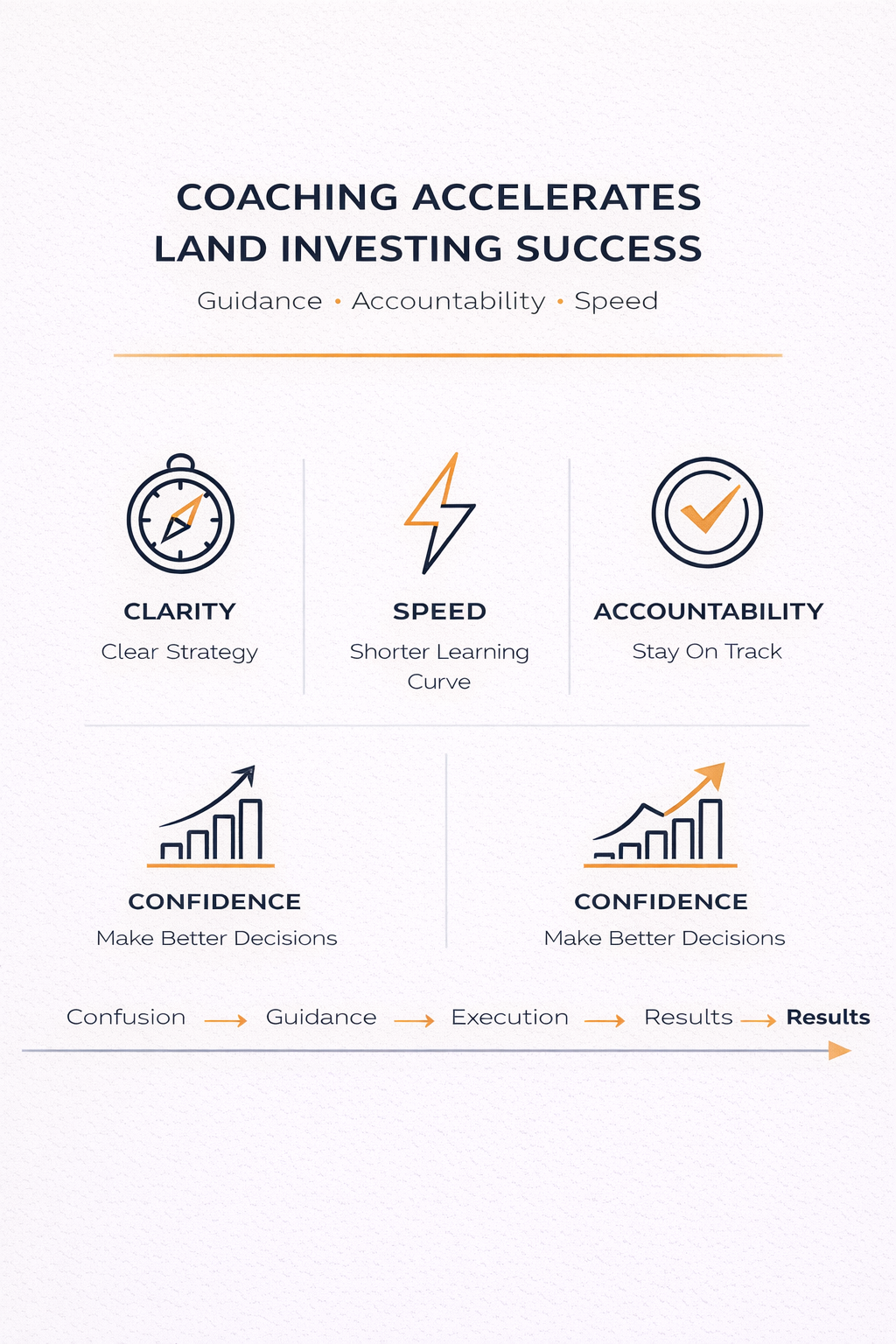
How To Build Confidence In Land Investing When You Are Just Starting Out: Buyer’s Guide (2026)

Building confidence in land investing as a beginner requires more than general knowledge,it demands a clear, step-by-step approach tailored to your goals and backed by thorough verification. This guide provides practical, actionable advice to help you confidently evaluate, acquire, and manage land investments in 2026.

Understanding how to verify critical facts and navigate common pitfalls will prepare you to make sound investment decisions. Whether your goal is to flip property, hold land for appreciation, or use it personally, this guide offers a dependable framework to build confidence and reduce uncertainty from the outset.

What Is Land Investing and Why Should You Consider It?

Land investing means buying plots of land without structures, aiming to profit through resale, development, or long-term appreciation.

This matters because land can require less upfront capital and maintenance than developed real estate but carries unique considerations in terms of zoning, access, and market demand. Your decision to invest hinges on how the land fits your intended use and financial goals.

Before proceeding, verify the property’s title, legal access, and zoning restrictions with the county recorder or planning department. These factors directly affect your ability to develop or resell and can be deal-breakers.

How Do You Start Your Journey in Land Investing?

Begin by clearly defining your investment goals (short-term flip, long-term hold, recreational use) and setting a realistic budget that includes purchase price plus taxes and maintenance.

This grounding guides where and what type of land to target and prevents overextending financially. Conduct market research focusing on property sales data, zoning trends, and local economic drivers.

Use county websites and real estate databases to compare recent sales of similar parcels. Confirm access rights, zoning, and restrictions with local authorities to avoid costly surprises.

What Skills Are Essential to Build Confidence in Land Investing?

Core skills include analytical thinking to evaluate deals, negotiation to secure favorable terms, and market research to identify opportunities.

Analytical skills help assess comparable sales and land characteristics; negotiation skills improve pricing and contract terms; market research ensures you target properties aligned with your goals.

Practice each skill by reviewing actual listings, simulating offers, and analyzing zoning maps. Consider teaming with an experienced real estate agent specialized in land for practical insights and deal flow.

How Can You Educate Yourself About Land Investing Effectively?

Focus on education that teaches how to perform due diligence, analyze deals, and navigate legal and zoning complexities in your target markets.

Enroll in specialized courses or workshops, read authoritative land investment books, and engage actively in investor communities online and locally. Their practical experience combined with your research builds competence.

Importantly, verify specifics locally since land rules and market conditions vary widely by county and state.

What Common Risks Should You Anticipate in Land Investing?

Key risks include market fluctuations lowering land values, legal issues like title defects or zoning violations, and environmental problems such as contamination or access limitations.

Ignoring these risks can lead to financial losses or inability to use the property as intended.

Verify title history through a title company, confirm zoning and land use restrictions with local planning offices, and consider environmental assessments by qualified professionals especially for land in industrial or previously developed areas.

How Do You Mitigate Risks in Land Investing?

Mitigate risks first by performing thorough due diligence including title, zoning, access, and environmental checks before purchase.

Consider title insurance to protect against unknown liens or disputes.

Diversify your land holdings by location or property type to reduce concentration risk. Consult local experts for nuances in regulations and market characteristics before finalizing offers.

What Is Due Diligence and Why Is It Critical?

Due diligence is systematically verifying all material facts about a land parcel before purchase, including legal title, zoning, access, environmental, and physical conditions.

This process ensures you identify deal breakers and hidden costs early, enabling informed offers or a walk-away decision.

Steps include ordering a title report, reviewing county zoning codes, conducting a site visit, confirming legal access via public roads or easements, and assessing environmental risks.

Failing to conduct adequate due diligence is a common beginner mistake with costly consequences.

How Do You Find the Right Land Deals?

To find suitable land deals, use a combination of online platforms, relationships with local real estate agents specializing in land, and attendance at county land auctions.

Set clear property criteria rooted in your investment goals and verify properties against these before considering offers.

Real estate agents can provide inside knowledge and help identify motivated sellers; auction properties may offer below-market prices but require careful research.

What Factors Should You Consider When Evaluating Land?

Evaluate location relative to infrastructure and growth prospects; zoning rules that permit your intended use; physical access (legal roads or recorded easements); utility availability; and parcel topography and environmental constraints.

Each factor affects usability, development costs, and resale potential.

Confirm zoning with the municipality, request utility availability from providers, and obtain survey or plat maps to verify access and boundaries.

How Can You Analyze the Value of a Land Investment?

Start by performing a comparative market analysis (CMA) reviewing recent sales of similar properties considering size, location, and zoning.

Adjust for usable acreage, access constraints, and any special encumbrances or improvements.

Assess development potential by analyzing zoning codes, planned public projects, and market demand.

Use multiple evaluation methods to triangulate a fair market value and establish a firm walk-away price.

What Financing Options Are Available for Land Investment?

Traditional mortgages are less common and often challenging for raw land. Land loans from specialized lenders or banks may be available but usually require higher down payments and stricter underwriting.

Seller financing or lease-to-own arrangements can offer flexible terms, especially for smaller parcels or private sellers.

Thoroughly verify financing terms with lenders and consider your cash flow and exit strategy before committing.

How Can You Build a Network in the Land Investing Community?

Join local real estate investment clubs, attend land investing conferences, and participate in online forums focused on land deals.

Networking provides access to deal flow, market insights, and mentorship opportunities,critical for new investors.

Engage genuinely and contribute knowledge to build trust and long-term connections.

What Role Does Mentorship Play in Building Confidence?

Mentorship accelerates learning by providing practical guidance, personalized feedback, and experience-based advice.

Finding a mentor involves identifying experienced investors you respect and respectfully requesting their guidance.

Mentors can help you avoid common mistakes, navigate challenges, and build your confidence more quickly.

How Can You Track Your Progress in Land Investing?

Set specific, measurable goals like number of parcels acquired or net investment returns.

Use spreadsheets or investment tracking software to monitor expenses, income, and portfolio performance.

Regularly review your portfolio against your goals, adjusting strategies as needed to stay aligned with your investment plan.

What Are Best Practices for Negotiating Land Deals?

Understand the seller’s motivation to tailor your approach,whether seeking quick sale or maximum price.

Make offers based on market comps and clearly communicate contingencies that protect you but remain reasonable.

Know your maximum price and be ready to walk away if terms do not meet your criteria, preserving capital and confidence.

How Do You Handle Rejection in Land Investing?

Rejection is inevitable and provides learning opportunities.

Analyze rejections to understand why deals didn’t close and adjust your approach accordingly.

Maintain persistence while seeking peer feedback and mentorship to improve continuously.

What Resources Can Help You Stay Informed About Market Trends?

Use reliable real estate blogs, industry newsletters, county planning office updates, and market reports for data on pricing, zoning changes, and development plans.

Engage local government websites for official updates impacting land value and use.

Regularly checking credible sources helps you anticipate shifts that affect investment decisions.

How Can You Leverage Technology in Land Investing?

Mapping software and Geographic Information Systems (GIS) help visualize parcel boundaries, zoning, and environmental overlays.

Online marketplaces aggregate listings and allow filtering by criteria important to you.

Investment analysis tools assist in evaluating financial viability by calculating estimated costs, holding expenses, and resale values.

Use technology to screen and organize deals, but always confirm key facts through authoritative records and professional inspection.

What Are the Legal Considerations in Land Investing?

Understand property ownership laws, zoning regulations, easements, and restrictions that govern land use in the target area.

Title insurance is advisable to protect against undisclosed liens or competing claims.

Consult qualified real estate attorneys and title companies for all legal verifications before purchasing.

How Can You Build a Personal Brand in Land Investing?

Create a professional website showcasing your land investments, goals, and expertise.

Use social media to share insights and connect with the investing community, enhancing your credibility.

Demonstrate reliability and professionalism through consistent communication and ethical practices.

What Strategies Can You Use to Increase Your Confidence?

Practice visualization of successful investments, set achievable milestones, and commit to continuous learning.

Breaking down goals into manageable steps builds momentum and reinforces your decision-making ability.

Seeking feedback regularly helps identify blind spots and strengthens your approach.

How Important Is Patience in Land Investing?

Patience is essential as land values typically appreciate over time and market conditions fluctuate.

Rushing can lead to poor purchases; waiting for the right opportunity aligned with your strategy produces better outcomes.

Set realistic expectations for timelines and be prepared for market cycles when holding land investments.

How Do You Know When to Make Your First Investment?

Make your first investment once you’ve defined clear goals, completed due diligence, and identified a property that meets your criteria with verified legal access and zoning.

Trust your research combined with intuition,pause or walk away if critical facts can’t be confirmed or if the deal doesn’t fit your goals.

What Should You Do After Making Your First Land Investment?

Reflect on your experience to identify lessons learned, document outcomes, and adjust your strategy accordingly.

Continue your education, stay engaged with the investing community, and plan subsequent investments with an informed perspective.

How Can You Use Feedback to Improve Your Land Investing Skills?

Actively seek feedback from mentors, peers, and professionals, and apply constructive criticism to enhance your decision-making.

View mistakes as growth opportunities and be willing to adapt your investment approach based on insights gained.

What Are Some Success Stories in Land Investing?

Study investor case studies focusing on how they identified profitable deals, overcame challenges, and applied due diligence.

Identify key lessons such as the importance of patience, thorough research, and flexibility in strategy.

How Can You Stay Motivated in Your Land Investing Journey?

Set attainable short-term goals to generate frequent wins, connect with inspiring investors for support, and celebrate milestones no matter how small.

This steady progress helps maintain focus and confidence over the long term.

What Are the Next Steps After Gaining Confidence in Land Investing?

Leverage your confidence to scale investments by acquiring more parcels or exploring new markets with growth potential.

Continue deepening your knowledge and refining your strategies to adapt as markets evolve.

Mini FAQ

Q: What is the best way to start land investing?
A: Begin with clear goals, a defined budget, and comprehensive market and property-specific research to build a reliable foundation.

Q: How can I mitigate risks in land investing?
A: Perform due diligence, obtain title insurance, verify zoning and access, and diversify your portfolio geographically and by property type.

Q: What skills are essential?
A: Analytical evaluation, negotiation, and market research skills are critical for confident decision-making.

Q: How do I find good land deals?
A: Use online platforms, engage land-focused real estate agents, and attend auctions while verifying all property details.

Q: Why is mentorship important?
A: It provides practical experience-based guidance, helping you learn faster and avoid common mistakes.

Q: What mistakes should I avoid?
A: Neglecting due diligence, overlooking zoning restrictions, and rushing into purchases without verified data.

Q: How do I stay motivated?
A: Set measurable goals, find inspiration from others, and celebrate incremental achievements.

Through disciplined research, verification, skill development, and strategic action, confidence in land investing grows logically and sustainably. Use this guide as your compass to navigate the complexities of land purchases and build a rewarding investment portfolio.

The Smart Way To Scale A Land Flipping Business Without Burnout: Complete Guide (2026)

Scaling a land flipping business successfully without burnout requires a strategic approach centered on sustainable growth, efficient operations, and clear decision-making at each step. This comprehensive guide walks you through the essential questions and practical actions needed to expand your land investing venture while preserving your time, energy, and financial health.

By understanding when and how to scale, building reliable systems and teams, employing focused marketing, and continuously monitoring key financial and operational metrics, you can grow your land flipping business confidently and responsibly. This guide prioritizes what you must verify in your local context to make informed decisions that protect your capital and well-being.

What is Land Flipping and How Does It Work?

Land flipping means buying undervalued land parcels and reselling them at a higher price, often without extensive renovations but with strategic improvements like title clearing, permitting, or enhanced marketing. The core of this business is acquiring land where you see upside potential based on local trends and regulations.

To identify profitable land, start by verifying zoning classifications, legal access rights, and local planned infrastructure changes at the county recorder’s and planning department offices. Cross-check comparable sales data from recent transactions in the area to establish a realistic value range. A big red flag is unclear title or restricted access,these can derail sales or reduce marketability.

Executing a successful flip involves several steps: locate promising parcels with potential buyers in mind; perform due diligence on ownership, liens, and access; purchase with contingencies to protect yourself; add value through permitted improvements or marketing; finally, list and negotiate sales effectively. Each step requires careful verification from county records and sometimes a title company review before proceeding.

Why is Scaling Important in a Land Flipping Business?

Scaling lets you increase profits reliably by expanding your portfolio and streamlining processes, but it must be done smartly to avoid overextension. Growth unlocks buying power, wider market reach, brand recognition, and operational improvements that reduce costs per flip.

Before scaling, verify your current business health by tracking key financial metrics like profit margins and cash flow, ensuring you have capital reserves. Assess whether you can handle increased transaction volume without quality loss,this means reviewing your time commitments and operational bottlenecks. If you rush scaling without these checks, you risk cash flow problems or burnout.

Gradual growth that confirms your capacity to handle more deals without compromising diligence maximizes your ability to negotiate better deals and reinvest profits efficiently. Sustainable scaling also buffers against market downturns by diversifying your portfolio.

What Are the Signs You’re Experiencing Burnout?

Burnout manifests as physical exhaustion, low motivation, irritability, and detachment from your business tasks. For a land flipper, this may mean missed deadlines, sloppy due diligence, or poor decision-making that reduces profitability or increases risk.

To monitor burnout, schedule regular self-assessments focusing on energy levels, emotional response to work tasks, and productivity. If you notice persistent fatigue or decline in focus, that’s a warning sign. Ignoring these symptoms can cause costly mistakes in land evaluation or negotiation.

Combat burnout by delegating tasks, establishing routine breaks, and setting clear boundaries between work and personal time. Recognizing burnout early enables timely adjustments to workflow and staffing that preserve your health and business integrity.

How Can You Create a Sustainable Business Model?

A sustainable business model in land flipping clearly defines your target market, sets realistic goals, and allocates budget based on verified cost structures. It incorporates flexibility to adapt to market changes while maintaining disciplined financial management.

Start by setting SMART goals,specific, measurable, achievable, relevant, and time-bound,such as a target number of flips or revenue within a year. Next, map your monthly and per-deal budgets to include purchase costs, closing fees, marketing expenses, and holding costs. Verify typical fees and property taxes with local county offices as these vary widely.

Understanding market trends requires regularly checking recent sales reports, planned county infrastructure projects, and zoning changes that influence land desirability. Use verified public data sources such as the county assessor and planning websites to avoid assumptions. This groundwork informs your acquisition and resale pricing models, aligning expectations with realities on the ground.

What Tools and Technologies Can Help You Scale?

While specific technology options won’t replace due diligence, real estate transaction management software and Customer Relationship Management (CRM) tools can support scaling by organizing leads, tracking deals, and automating marketing outreach.

Choose software that integrates title, contract, and lead tracking for land-centric processes, then verify it supports your local jurisdictions and document requirements. For marketing, use platforms enabling targeted email campaigns and social media management to maintain consistent buyer engagement without increasing manual workload.

Data analytics tools can help monitor campaign performance and market trends but cross-validate insights against local transaction records and county databases before acting. No tool substitutes for verifying legal access, zoning, and title through official local records.

How to Build a Reliable Team for Your Land Flipping Business?

Scaling without burnout means assembling a team that shares responsibility and expertise relevant to land investing. Key roles may include acquisition specialists, title researchers, marketing coordinators, and sales support.

Hire team members with proven experience in land real estate or related fields, verifying credentials and past work. Delegate tasks based on individual strengths: for example, assign title work to those detail-oriented in paperwork, while marketers focus on lead generation.

Foster a positive culture by communicating clear goals, acknowledging contributions, and providing training to align processes. Verify team performance regularly through key role-specific metrics and adjust roles or workflows as needed to maintain quality control.

What Marketing Strategies Are Effective for Land Flipping?

Effective marketing focuses on targeting the right buyers with consistent messaging through social media, email marketing, and SEO-driven content that answers common buyer questions.

Prioritize local social media groups where land buyers congregate and create posts highlighting parcel features with clear calls to action. Segment email lists by buyer interest or location and send tailored property updates. Create website content optimized for search terms prospective buyers use, focusing on helping them evaluate land deals, zoning, and purchase logistics.

Validate marketing ROI by tracking lead sources and conversion rates, then adjust campaigns based on data rather than assumptions. Avoid generic marketing,local buyer preferences and property specifics must guide your strategy.

How to Find and Acquire New Properties Efficiently?

Efficient property acquisition leans on focused local networking, diligent use of verified online listings, and strategic attendance at auctions or foreclosure sales.

Build long-term relationships with local real estate agents, title companies, and investors who can tip you off to off-market deals. Verify property details with county records before making offers. Use listing sites that specialize in land and set up filters for desired parameters to quickly spot bargains.

Attend auctions only after researching parcel histories, title status, and auction terms. Be prepared to act fast but cautiously, with clarity on your maximum bid and walk-away points based on verified estimated property value and resale potential.

What Role Does Networking Play in Scaling Your Business?

Networking opens doors to partnerships, off-market deals, mentorship, and shared resources critical for scaling efficiently. It brings market intelligence not always available publicly and expands your opportunities beyond what online searches reveal.

Focus on building authentic relationships with other land investors, local government officials familiar with zoning, and professionals involved in land transactions. Verify any referrals or leads through your due diligence process before reliance.

Joining industry groups or local real estate associations gives access to vetted resources and collective knowledge. Always assess the credibility of new connections by checking their track record and reputation before joint ventures or large commitments.

How Can You Optimize Your Workflow for Better Efficiency?

Workflow optimization depends on clearly documented SOPs (standard operating procedures), the disciplined use of checklists, and robust time-management techniques to ensure repeatable success and prevent errors.

Create detailed step-by-step guides for property evaluation, contract processing, and marketing workflows. Use checklists to confirm tasks such as title verification, zoning confirmation, and marketing deadlines are complete before advancing.

Implement time-blocking to allocate focused periods for high-concentration tasks like due diligence or proposal drafting, minimizing distractions. Regularly review your workflows to identify and eliminate bottlenecks, using measurable KPIs such as average days to close or cost per lead for ongoing improvement.

What Financial Strategies Can Help You Scale Without Debt?

Sustainable scaling without debt relies on reinvesting profits, exploring partnerships for capital, and diligent cash flow management.

Reinvest a fixed portion of earnings from each sale back into acquiring new properties, but keep reserves for unexpected costs. Before taking on partners or investors, verify their terms align with your risk tolerance, and structure agreements clearly with legal advice.

Maintain a rolling cash flow forecast that accounts for acquisition costs, holding expenses, and expected sale proceeds. Identify potential shortfalls early and prioritize deals with positive cash flow implications. Avoid over-leveraging against projected profits, as delays or market changes can expose you to financial pressure.

How to Set Realistic Goals for Your Business Growth?

Set realistic goals using the SMART framework,specific, measurable, achievable, relevant, and time-bound,tied to tangible outputs like the number of flips, revenue targets, or profit margins.

Document your goals and track progress monthly with KPIs such as deals sourced, contracts signed, and net profits. Adjust goals proactively based on ongoing performance data and market conditions.

Be flexible; if acquisition timelines lengthen or holding costs increase, recalibrate goals to prevent operational stress or diminishing returns. Clear goal-setting creates accountability and focus needed to guide scaling decisions responsibly.

What Are the Risks Involved in Scaling a Land Flipping Business?

Primary risks include market volatility reducing resale prices, overextending operational capacity leading to poor due diligence, and potential legal obstacles affecting property titles or zoning compliance.

To mitigate these risks, continuously monitor local real estate trends and economic indicators through county and industry reports. Avoid overcommitting capital or deals beyond your verified business capability. Conduct thorough legal checks using title companies and county zoning offices.

Watch for red flags such as rapid price drops, rising holding costs, or ambiguous title documentation. Address these promptly or consider walking away from deals that introduce excessive uncertainty.

How Can You Maintain Work-Life Balance While Scaling?

Maintain balance by clearly separating work hours from personal time, prioritizing self-care practices, and scheduling regular downtime to recharge.

Set firm boundaries, such as defined office hours and no-work zones at home. Engage in activities promoting physical and mental well-being, like exercise and mindfulness. Schedule vacations or breaks proactively to prevent burnout, essential for sustained sharpness in your investing decisions.

A healthy balance supports clearer judgment, better relationships with your team, and reduces the risk of costly mistakes caused by fatigue or stress.

What Are the Best Practices for Property Evaluation?

Evaluate properties by thoroughly researching recent comparable sales, understanding zoning and land-use restrictions, and assessing physical limitations such as terrain or access.

Obtain sales data from county records or MLS databases and verify by visiting properties where possible. Check zoning designations with planning departments to confirm allowable uses and potential future changes. Physically inspect parcels or hire local contractors to assess topography and easements affecting usability.

Use a weighted assessment of these factors to estimate potential resale value and profitability before making an offer. Avoid properties with unresolved title issues, inaccessible boundaries, or zoning that conflicts with your resale strategy.

How to Leverage Technology for Property Management?

Use specialized software designed for real estate transactions and land management to track property details, pending deals, and communications.

Implement CRM tools to manage leads systematically, automating follow-ups and organizing buyer information. For properties held longer-term, property management platforms can help track taxes, legal deadlines, and maintenance needs if applicable.

Ensure all technology solutions align with your specific land investing workflow and jurisdictional requirements. Regular audits of data accuracy can prevent mistakes such as missed tax payments or overlooked contract terms.

What Are the Key Financial Metrics to Monitor?

Track profit margins (gross and net), ROI per deal, and cash flow regularly to understand financial health and growth capacity.

Calculate profit margins by subtracting all purchase, holding, improvement, and selling costs from sale prices. Use ROI to compare efficiency across deals, informing where to focus efforts. Cash flow analysis ensures you maintain liquidity to fund ongoing acquisitions without shortfalls.

Monitor these metrics monthly and adjust your business model or deal selection criteria to strengthen weak points and enhance overall profitability.

How Can You Use Social Proof to Build Trust?

Social proof builds credibility by sharing verified testimonials, successful case studies, and maintaining an engaging, professional online presence.

Request feedback from clients after transactions and prominently display positive reviews on your website and marketing materials, ensuring authenticity. Share detailed case studies that discuss challenges and successful resolutions to illustrate competence.

Actively manage your social media channels and respond promptly to inquiries or reviews to build rapport with prospective buyers. Trust developed through social proof can accelerate sales and improve your brand reputation.

What Are the Common Mistakes to Avoid When Scaling?

Mistake Effect Verification/Prevention
Underestimating costs Leads to cash flow crunch and project delays Consult county tax records and vendor quotes; build contingency buffers
Neglecting marketing Reduces lead generation and prolongs sale times Track marketing ROI monthly; adjust channels based on lead quality
Ignoring customer feedback Missed opportunities for improving services and reputation Collect feedback systematically; act on recurring issues quickly

How to Stay Motivated During the Scaling Process?

Maintain motivation by setting clear milestones, celebrating incremental achievements, and seeking experienced mentorship.

Break large goals into smaller, manageable targets with deadlines. Recognize and reward progress to sustain momentum. A mentor can offer perspective, accountability, and strategies to overcome obstacles, helping you navigate the ups and downs of growth without losing focus.

What Role Does Continuous Learning Play in Growth?

Continuous learning helps you adapt to changing market conditions, refine skills, and avoid repeating past mistakes.

Dedicate time regularly to review industry publications, attend relevant seminars, and participate in professional groups. Analyze deals that did not meet expectations to pinpoint causes and implement lessons. This commitment to growth enhances decision-making and operational effectiveness.

How Can You Develop a Strong Brand Identity?

Craft a unique value proposition that clearly states what differentiates your land flipping business, supported by professional branding and consistent engagement with your audience.

Create branding materials,logo, website, and marketing collateral,reflecting your expertise and values. Engage your audience through authentic communication and provide educational content that answers common buyer questions. This builds loyalty and attracts repeat and referral business.

What Are the Benefits of Joining a Land Flipping Community?

Joining a community gives access to vetted resources, peer support, and expanded networking, all essential for sharing knowledge and finding opportunities.

These groups often share local market intelligence and tips for avoiding pitfalls. They provide emotional support to counter isolation and burnout that can accompany solo ventures. Networking within the community can lead to partnerships, funding sources, and deal flow beyond publicly available listings.

How Can You Use Customer Feedback to Improve Your Business?

Collect feedback actively using surveys or direct conversations after transactions. Analyze responses for patterns such as complaints or suggestions.

Prioritize common issues and implement corrective actions promptly. Communicate these improvements back to your customers to demonstrate commitment to service, boosting satisfaction and referral rates.

What Strategies Can Help You Scale While Minimizing Stress?

Minimize stress by prioritizing high-impact tasks, scheduling dedicated time blocks, and practising stress-reduction techniques like mindfulness or exercise.

Focus resources on activities directly linked to growth and profitability, delegating or postponing low-value work. Structured schedules reduce decision fatigue and promote effective workload management. Incorporating stress management into your routine preserves your mental resilience throughout scaling.

How Do You Know When It’s Time to Scale Your Business?

Use consistent positive financial performance, increasing deal flow, and personal readiness as indicators that your business is ready to scale.

Confirm profitability trends by reviewing financials quarterly. Assess workflow efficiency and team capability to handle growth. Evaluate your energy and availability to manage expanded operations without burnout. If these align, develop a clear scaling plan with milestones and risk management.

What Are the Long-Term Benefits of Scaling Sustainably?

Sustainable scaling builds a stable, reputable land flipping business capable of weathering market cycles and providing lasting income.

It creates employment opportunities, contributes positively to local economies, and fosters goodwill through community engagement. A business built on responsible growth can adapt, innovate, and maintain competitive advantage over time.

Mini FAQ

  • What is land flipping? Purchasing undervalued land, adding value legally or through marketing, then reselling for profit.
  • Why is scaling important for a land flipping business? To increase profits sustainably, access better deals, and reduce costs per transaction.
  • What are the signs of burnout? Chronic tiredness, loss of motivation, irritability, and detachment from work tasks.
  • How can technology assist in scaling? By organizing deals, automating marketing, and tracking buyer interactions to streamline operations.
  • What financial strategies support growth without debt? Reinvest profits carefully, partner strategically, and maintain disciplined cash flow oversight.
  • How can networking benefit a land flipping business? It provides deal leads, mentorship, joint ventures, and market insights.
  • What are effective marketing strategies for land flipping? Targeted social media, segmented email marketing, and SEO-rich content that addresses buyer questions.

How Experienced Investors Evaluate Land Deals In Minutes: Buyer’s Guide (2026)

Experienced land investors need to quickly evaluate land deals to capitalize on opportunities in fast-moving markets. They rely on a blend of streamlined processes, targeted facts, and practical tools that enable rapid yet reliable assessments. This guide lays out the key factors, verification steps, financial considerations, and common pitfalls that seasoned investors use to decide confidently within minutes whether to proceed, negotiate, or walk away from a land purchase.

By mastering this approach, you will learn how to focus on what truly matters for your intended land use, how to verify critical information with the appropriate records or professionals, and how to set clear decision boundaries at every stage of the process.

Understanding these strategies is essential because land deals involve unique risks and variables that can make or break investment returns. Quick decisions supported by thorough verification help experienced investors avoid costly mistakes and seize advantageous deals efficiently.

What Key Factors Do Experienced Investors Consider in Land Deals?

Experienced investors prioritize location, zoning regulations, market conditions, and physical and legal characteristics that impact land utility and value.

Location affects accessibility, demand, and future appreciation potential. Investors assess proximity to urban centers, infrastructure, and amenities relevant to the intended use. Checking local zoning rules confirms whether planned development is allowed or feasible. Market trends indicate demand and price direction, influencing timing and offer strategies.

To verify these factors:

  • Location: Use county GIS maps or online tools to identify parcel location relative to infrastructure and growth corridors.
  • Zoning Regulations: Consult the local planning or zoning office websites or staff to confirm permitted uses and restrictions. See zoning regulations for more.
  • Market Conditions: Review recent comparable sales through the county assessor or real estate portals to detect pricing trends.

Red flags include restrictive zoning, lack of legal access, or unfavorable market trends, prompting a pause or offer adjustment.

How Do Investors Assess the Value of Land?

To assess land value, investors primarily use comparative market analysis (CMA), professional appraisals, and evaluation of land use potential considering legal and physical constraints.

CMA involves comparing the subject parcel against recently sold similar-sized properties with comparable zoning and accessibility. This provides a baseline fair market value range. If an appraisal is available, it offers an expert assessment using cost, sales, and income approaches to validate or refine CMA findings.

Land use potential analysis evaluates whether zoning, utilities, or terrain limitations affect how the land can be developed, revealing value beyond raw acreage.

Verification steps include:

  • Obtain recent comparable sales records via the county recorder or real estate databases.
  • Request or order a licensed appraisal when considering larger or complex parcels.
  • Review county zoning maps and utility availability reports to understand usability.

If the property’s legal or physical limitations significantly restrict development, this may reduce value and warrant a lower offer or walk-away decision.

What Role Does Due Diligence Play in Evaluating Land Deals?

Due diligence is indispensable, ensuring facts match representations and uncovering risks before closing.

Key due diligence items include verifying title ownership and liens, confirming zoning and land use permits, conducting environmental site assessments, and obtaining a property survey to verify boundaries and easements.

Verification checklist:

  • Perform a title search with the county recorder or title company to confirm clear ownership and check for encumbrances.
  • Review local permitting and land use records for compliance issues or pending restrictions. Find more at due diligence.
  • Order environmental reports if contamination, wetlands, or protected species could affect development.
  • Get a recent property survey to confirm exact boundaries and detect easement or encroachment issues.

Failing any of these checks is a red flag that needs resolution before proceeding or may warrant walking away.

How Do Investors Determine the Best Use of Land?

Investors identify the land’s highest and best use by evaluating zoning permissions, market demand, physical site characteristics, and profitability.

This analysis ensures the intended use maximizes value within legal and physical constraints. For example, a parcel zoned residential in a growing suburb may be more valuable subdivided for homes rather than agricultural use.

Steps to verify and decide:

  • Confirm zoning and potential for change with local officials or online resources.
  • Analyze local market demand for residential, commercial, or other uses through comparable sales and developments.
  • Assess physical suitability,topography, soil, drainage, and access,that may limit development types.

If highest and best use aligns with your investment strategy and regulatory rules, proceed. Otherwise, reconsider or negotiate better terms.

See highest and best use for detailed insights.

What Financial Metrics Are Used to Evaluate Land Deals?

Financial metrics such as return on investment (ROI), cash flow projections, and cost-benefit analysis inform whether a deal fits an investor’s goals.

ROI compares expected profit to initial costs, guiding offer pricing and prioritization. Cash flow projections estimate income against expenses over time and apply primarily to income-producing or developed land. Cost-benefit analysis weighs acquisition and development costs against achievable returns, factoring in risks and holding costs.

To apply these metrics:

  • Calculate ROI using conservative projections of sale price or income less all costs, including acquisition, development, and holding expenses.
  • Develop cash flow projections if the property generates rental income or installment payments. See cash flow projections for examples.
  • Conduct a cost-benefit analysis to compare required capital outlay with projected outcomes.

Metrics that fall short of your minimum thresholds or expose excessive risk should prompt recalibration or walk-away decisions.

How Do Market Conditions Affect Land Deal Evaluations?

Market conditions such as economic indicators, supply and demand balance, and interest rates heavily influence land deal value and timing.

Strong economic growth, low supply relative to demand, and favorable lending terms typically support higher land prices. Conversely, recessionary pressures, oversupply, or rising interest rates can depress values.

Verification and impact:

  • Monitor local economic data for employment, population growth, and development activity via government or industry reports.
  • Analyze local land inventory levels and turnover rates to determine supply-demand dynamics.
  • Keep updated on interest rates which affect financing costs and buyer capacity.

Unfavorable conditions may suggest delaying a purchase or negotiating lower prices.

What Tools Do Investors Use to Analyze Land Deals Quickly?

Investors use a combination of GIS mapping, property data platforms, and financial calculators to speed up deal filtering and valuation.

GIS tools help visualize location, zoning boundaries, topography, and infrastructure quickly. Property data portals aggregate listings, sales history, and tax information in one place for rapid comparison. Financial calculators enable swift ROI and cash flow analyses.

To act:

  • Use county GIS or trusted online mapping sites to review parcel details.
  • Leverage online real estate marketplaces for comparable sales and pricing data.
  • Employ spreadsheet or app-based calculators for quick profitability assessments.

These tools provide early screening signals but do not replace county records, title searches, or physical inspections needed for firm decisions.

How Can Investors Spot Red Flags in Land Deals?

Red flags include unclear or complicated ownership history, inconsistent pricing compared to comps, environmental hazards, and access or utility issues that jeopardize development potential.

To spot trouble:

  • Perform thorough title searches to identify past legal disputes or liens.
  • Evaluate pricing against multiple comparable sales for anomalies.
  • Order environmental due diligence especially if property history or location suggests possible contamination.
  • Confirm legal and physical access; lack of easements or road frontage is a deal breaker for many uses.

Presence of these warning signs typically requires deeper investigation or reevaluation of deal viability.

What Are the Common Mistakes Investors Make When Evaluating Land Deals?

Common mistakes include inadequate verification of zoning and access, ignoring market trends, overestimating property value without comparables, and underestimating due diligence costs.

For example, failing to confirm zoning that allows your intended use can result in a worthless property for your goals. Similarly, skipping title searches can cause unexpected ownership disputes.

To avoid these errors:

  • Always obtain zoning confirmation directly from local officials.
  • Review multiple recent comparable sales to gauge realistic market prices.
  • Conduct formal title and survey reviews before offers.
  • Factor all due diligence, transaction, holding, and development expenses into your financial models.

Proper verification prevents surprises and protects your capital.

How Important Is Networking in Evaluating Land Deals?

Networking is vital for accessing insider information, off-market deals, and expert advice.

Building relationships with local agents, other investors, and industry professionals expands your knowledge base and opportunity pipeline.

Practical networking activities include:

  • Engaging local real estate agents who know recent and upcoming listings.
  • Joining investor groups to share market intelligence and co-investment possibilities.
  • Attending industry conferences to hear trend insights and local market developments.

Leveraging strong networks leads to faster, better-informed evaluations and competitive advantage.

What Role Does Experience Play in Evaluating Land Deals?

Experience sharpens an investor’s judgment in weighing facts, anticipating pitfalls, and reading market cycles.

Experienced investors learn from past mistakes to avoid repeating them, improve timing based on nuanced market understanding, and develop gut instincts to filter deals quickly.

While data drives decisions, seasoned intuition helps interpret information in context, aiding rapid yet sound evaluation.

How Do Investors Leverage Technology in Land Deal Evaluations?

Technology supplements traditional analysis through GIS mapping, data analytics, and remote property tours to accelerate data gathering and insight generation.

GIS maps visualize zoning, environmental constraints, and infrastructure, helping identify opportunities or red flags. Analytics reveal price trends and risk factors from large datasets. Virtual tours enable preliminary property inspections without field visits, saving time.

However, investors understand that technology signals require verification via county records, legal reviews, and onsite inspections to make firm decisions.

What Are the Legal Considerations in Land Deal Evaluations?

Legal considerations center on zoning compliance, easements, rights of way, and liability risks that can restrict use or impose costs.

Verification includes:

  • Confirming zoning classifications and any conditional use permits needed.
  • Reviewing deed and title records for easements or encumbrances that limit development or access.
  • Identifying potential liabilities such as environmental clean-up responsibilities or unpaid taxes.

Unresolved legal encumbrances represent major risk and often justify renegotiation or withdrawal.

How Do Geographic Factors Influence Land Value?

Geographic factors like proximity to urban centers, natural resources, and climate risks directly affect land demand and usability.

For example, parcels near urban growth corridors often appreciate faster due to development pressure. Land rich in water or timber may offer additional value, while floodplain or wildfire-prone locations may limit use or increase costs.

Investors verify these by consulting county maps, environmental data, and local planning offices to weigh benefits against risks for their intended use.

What Impact Do Infrastructure Developments Have on Land Deals?

Infrastructure improvements such as new roads, utilities, or planned community amenities enhance land value by improving access and development feasibility.

Investors research current utility connections and planned projects through utility providers and regional planning agencies.

Properties without nearby utilities or access require costly investments that reduce initial ROI and increase risk.

How Do Investors Evaluate Land for Commercial vs. Residential Use?

Evaluation criteria differ because commercial and residential uses involve distinct zoning, market dynamics, and return expectations.

Investors examining commercial land focus on accessibility, traffic patterns, zoning for business uses, and proximity to consumer bases or industrial zones. Residential land evaluation prioritizes neighborhood quality, school districts, infrastructure, and market demand for housing.

Verification steps involve reviewing zoning ordinances and assessing local market reports specific to each property type to ensure intended use aligns with regulatory and market realities.

What Are the Best Resources for Market Research on Land Deals?

Top resources include county property records, local government planning websites, real estate market reports, and targeted local market analyses.

These provide crucial data on zoning, sales, taxes, and development plans. Using official government databases ensures accuracy and up-to-date compliance information.

See Resources for curated tools and reports helpful for land investors.

How Can Investors Quickly Calculate Potential Profit Margins?

Investors estimate profit margins by projecting total acquisition plus development and holding costs against expected sale or income proceeds.

This requires:

  • Accurate cost estimates from contractors, permit offices, and tax authorities.
  • Price projections based on comparable sales and market conditions.
  • Accounting for holding costs like taxes, insurance, and maintenance during ownership.

Margins below target benchmarks or those sensitive to small cost overruns typically merit renegotiation or passing.’,

What Are the Benefits of Partnering with Other Investors?

Collaborative investing pools capital and expertise, potentially enabling access to larger deals, shared risk, and diversified strategies.

Partners bring complementary skills, improve due diligence, and can provide faster capital deployment. However, clear agreements and aligned goals are essential to avoid conflicts.

How Do Investors Use Historical Data in Evaluating Land Deals?

Historical sales, appreciation rates, and market trend analysis help investors forecast land performance and time transactions optimally.

They consult county records and market reports to analyze long-term price movements and validate current valuations.

What Role Does Emotional Intelligence Play in Land Deal Evaluations?

Emotional intelligence aids negotiation by helping investors understand seller motivations, tailor offers accordingly, and maintain positive relationships that facilitate smoother transactions.

Investors skilled in communication and emotional awareness often achieve better deal terms and avoid conflicts.

How Can Investors Stay Updated on Land Market Trends?

Regularly reviewing industry news, subscribing to market reports, and actively networking keeps investors informed of new opportunities and risks.

Proactive information gathering supports timely decisions and competitive positioning.

What Strategies Do Investors Use for Quick Decision-Making?

Successful investors set clear investment criteria, use detailed evaluation checklists, and apply time limits per deal review to avoid paralysis by analysis.

This structured approach balances speed with thoroughness and reduces risk of overlooking critical factors.

How Do Investors Handle Competition in the Land Market?

Investors differentiate themselves by building strong reputations, maintaining ready capital, offering fair but competitive deals, and leveraging networks to access off-market opportunities.

This increases chances of winning desired properties efficiently.

What Is the Importance of Exit Strategies in Land Deals?

Having an exit plan helps investors set realistic purchase prices, market timelines, and negotiate terms suited to resale or development.

Options include selling raw land, developing then selling, or selling to developers. Understanding these routes informs evaluation and risk management.

How Can Investors Use Online Platforms to Evaluate Land Deals?

Online platforms provide access to comparative listings, user feedback, and analytical tools that speed up preliminary screening.

However, investors confirm data accuracy with official records and field verification before finalizing offers.

What Are the Long-Term Considerations for Land Investment?

Investors account for future development trends, land appreciation potential, and possible regulatory changes, which may increase or limit property value.

Ongoing monitoring and flexibility in strategy enable adaptation to these long-term factors.

How Do Investors Balance Risk and Reward in Land Deals?

Balancing requires thorough risk assessments, portfolio diversification, and setting realistic expectations aligned with market realities and personal goals.

This disciplined approach supports sustainable investing and mitigates costly errors.

How Can New Investors Learn from Experienced Investors?

Newcomers benefit from mentorship programs, studying well-documented case studies, and attending focused workshops and seminars to gain practical insights and avoid common pitfalls.

Direct learning accelerates confidence and skill development.

Mini FAQ

Q: What are the most critical factors for evaluating land deals?
A: Location, zoning compliance, market conditions, and financial metrics are essential for rapid and reliable assessment.

Q: How do investors assess land value?
A: Through comparative market analysis, professional appraisals, and evaluation of land use potential and restrictions.

Q: Why is due diligence important in land deals?
A: It verifies ownership, legal compliance, and environmental conditions to reduce risks before purchase.

Q: What role does technology play in land evaluations?
A: Tools like GIS maps and online marketplaces speed early screening, but official records and inspections remain necessary.

Q: How can investors avoid common mistakes?
A: By verifying zoning and titles, staying updated on local market trends, and including all related costs in evaluations.

Q: What are the benefits of networking in real estate?
A: Networking opens access to insider knowledge, off-market deals, and expert advice, enhancing evaluation quality.

Q: How can new investors gain knowledge from experienced investors?
A: Through mentorship, analyzing case studies, and attending targeted educational events.

What Makes Vacant Land Easier To Manage Than Rental Properties: Buyer’s Guide (2026)

When deciding between investing in vacant land or rental properties, many buyers find that vacant land is easier to manage. The key factors include fewer maintenance demands, minimal tenant involvement, and simpler regulatory requirements. Understanding these distinctions enables buyers to make smart investment choices aligned with their goals and resources.

This guide details why vacant land generally requires less management effort than rental properties. You will learn about management activities, financial implications, legal considerations, income prospects, and key risks. With this knowledge, you can evaluate how each option fits your investment strategy and what facts to verify before proceeding.

Knowing the operational differences helps you anticipate what managing a vacant parcel entails versus handling rental units, empowering you to set realistic expectations and avoid common pitfalls.

What Is Vacant Land and How Does It Differ from Rental Properties?

Vacant land is undeveloped property with no buildings or improvements, while rental properties are developed with structures designed for tenants. This fundamental difference shapes management needs, income sources, and regulatory obligations.

Definition of Vacant Land

Vacant land includes parcels that are currently unused for residential, commercial, or industrial purposes. It may be raw land with no infrastructure or partially prepared for development. Investors value it for flexibility and potential appreciation without the burden of ongoing operational management.

Characteristics of Rental Properties

Rental properties have buildings leased to tenants, generating regular income through rent. They require active management to maintain buildings, address tenant needs, and comply with complex landlord-tenant laws. This creates substantial ongoing time and cost commitments.

Key Differences

The primary distinction lies in management: vacant land requires minimal maintenance and no tenant relations, whereas rental properties demand constant attention and legal compliance. Financially, rental properties provide cash flow but involve higher operational costs. For vacant land, income mainly depends on price appreciation or land leasing, with fewer recurring expenses.

Why Is Vacant Land Considered Easier to Manage?

Vacant land is easier to manage mainly due to significantly lower maintenance, no tenant interaction, and reduced regulatory oversight compared to rental properties.

Lower Maintenance Requirements

Vacant land typically requires infrequent maintenance like clearing debris or controlling vegetation. There are no plumbing, electrical, or structural repairs, which drastically reduces time and out-of-pocket costs. This simplicity appeals to investors wanting a low-effort holding.

What to Verify: Check local ordinances for vegetation or fire-hazard regulations that could require periodic maintenance. Ensure you understand any upkeep responsibilities to avoid fines. A county zoning or land department can confirm these rules.

Minimal Tenant Interaction

Vacant land involves no tenants, so there are no leases to manage, no rent collection, and no emergency calls. This eliminates tenant-related stress and administrative work, making the investment largely hands-off.

Decision Rule: If avoiding tenant headaches and time-consuming management is a priority, vacant land offers clear benefits. If dependable monthly cash flow matters more, rental properties might be appropriate despite added complexity.

Less Regulatory Oversight

The regulatory environment for vacant land focuses on zoning and land use rather than housing codes or landlord-tenant laws. While zoning must be verified for permissible uses, vacant land owners avoid the complexities of tenant protections, habitability standards, or eviction procedures.

Verification Step: Confirm zoning status and restrictions at the local planning department to ensure intended uses are allowed and to anticipate approvals needed for any improvements.

What Are the Financial Implications of Owning Vacant Land?

Vacant land often requires a lower upfront investment and has reduced ongoing expenses compared to rental properties, but typically produces income differently and often relies on appreciation.

Lower Initial Investment

Vacant land usually costs less than developed rental properties, making it more accessible to new investors or those with limited capital. This smaller initial outlay allows entry into real estate with less financial risk.

What to Check: Get recent sales comparables to assess fair market value. Evaluate parcel size, access, utilities, and topography to understand true usability and cost implications.

Reduced Ongoing Costs

Absent tenants and buildings, ongoing costs are usually limited to property taxes, minimal maintenance, and possible insurance. There are no utility bills or management fees unless voluntarily hired.

Verification: Obtain tax assessments from the county tax assessor. Inquire about any mandatory fees or special assessments that could increase holding costs.

Potential for Appreciation

Vacant land can appreciate steadily if located near growing areas, but returns are mostly realized on sale or through leasing rather than periodic income streams like rent.

Decision Implication: If relying on short-term cash flow is critical, rental properties are better suited. Vacant land favors long-term patient capital seeking value growth.

How Does Property Management Differ for Vacant Land Versus Rental Properties?

Property management for vacant land centers on oversight and compliance rather than tenant services and building maintenance.

Aspect Vacant Land Rental Properties
Management Tasks Occasional inspections, vegetation control, ensuring legal compliance Regular tenant communication, rent collection, maintenance, emergency repairs
Frequency Infrequent, often seasonal or as-needed Ongoing monthly and as-needed responses
Cost Low, often self-managed Higher, may require professional property management fees

Verification: Assess your willingness and capacity to manage frequent tenant requests and maintenance. Property managers for rentals can be costly, impacting profitability.

What Legal Considerations Should Vacant Land Owners Know?

Vacant land ownership involves zoning compliance, permitting considerations, and liability exposure, which differ from rental landlord-tenant laws but remain important.

Zoning and Land Use Regulations

Understanding zoning restrictions is essential to confirm permitted uses and future development potential. Not verifying this can cause costly surprises or limit investment options.

What to Do: Consult local planning or zoning offices for parcel zoning status and any pending changes. Review any restrictive covenants.

Permitting Requirements

Building, environmental, or utility connection permits must be secured before improvements. Ignoring permitting leads to delays or penalties.

Verification: Contact local building departments about permits related to your intended use.

Liability Issues

Owners bear responsibility for injuries or damages on their land. Maintaining reasonable safety and considering insurance coverage reduce legal exposure.

Advice: Obtain liability insurance appropriate for vacant land and keep the property safe from hazards.

How Does Vacant Land Generate Income Compared to Rental Properties?

Vacant land generates income primarily through sales profits, leasing, or flipping, while rental properties rely on steady rental income.

Selling vs. Renting

Vacant land investors often buy with a resale goal to capture appreciation gains. Rental properties generate regular monthly cash flow from tenants.

Decision Trade-off: If immediate passive income is required, rental properties hold an advantage. If growth and capital gains are prioritized, vacant land investing fits better.

Land Leasing

Leasing vacant land for agricultural, commercial, or recreational use offers income without tenant complexities, but income streams are less predictable than rental income.

Verification: Research local demand for land leases and understand lease terms commonly used.

Flipping Vacant Land

Flipping involves buying underpriced parcels, enhancing value (e.g., clearing, securing access), then reselling. This strategy requires market savvy and upfront investment with inherent risks.

Advice: Conduct thorough due diligence on market trends and property condition before attempting land flips.

What Maintenance Does Vacant Land Require?

Maintenance needs are comparatively low but still necessary to preserve land value and comply with regulations.

  • Land Clearing and Debris Removal: Periodic clearing prevents overgrowth and fire hazards.
  • Environmental Care: Monitoring for erosion, invasive species, or contamination safeguards ecological health and liability.
  • Boundary Management: Ensuring clear, marked property lines prevents disputes.

Verification: Schedule occasional inspections and consult environmental specialists as needed.

How Does Time Commitment for Vacant Land Compare to Rental Properties?

Vacant land management requires substantially less time than rental properties. There are no tenant communications or emergency repairs, allowing for a hands-off ownership experience.

  • Management Time: Mostly infrequent site visits and administration.
  • Tenant Interaction: None with vacant land; significant with rentals.
  • Emergency Response: Rental owners may need urgent attention for property issues, landowners usually do not.

Outcome: Investors seeking minimal time investment should prefer vacant land. Those who want active income generation must prepare for rental property management.

What Are the Risks of Owning Vacant Land?

Vacant land carries risks such as market volatility, environmental issues, and legal complications, which buyers should assess carefully.

  • Market Risk: Property values may fluctuate with local economic changes or development trends, leading to slow sales or losses.
  • Environmental Risks: Contamination or physical hazards may require costly remediation.
  • Legal Risks: Zoning disputes, boundary conflicts, or compliance failures can impair use and value.

Due Diligence: Perform environmental assessments, title searches, and market studies before purchase. Seek professional advice on complex issues.

How Do Location and Accessibility Affect Vacant Land Management?

The location and ease of property access directly impact land value, management requirements, and usage options.

Impact of Location

Land near urban centers or growing communities tends to have higher value and development potential, improving long-term returns.

Accessibility

Accessibility by road and utilities influences usability and attractiveness to buyers or renters. Poor access may reduce value and complicate management.

Verification:

Confirm legal access by reviewing recorded easements or right-of-ways with the county recorder. Evaluate proximity to utility connections if development is planned.

What Should Buyers Consider When Choosing Between Vacant Land and Rental Properties?

Key considerations include your investment goals, risk tolerance, available time for management, and the type of income desired.

  • Investment Goals: Need for steady income favors rentals; long-term appreciation or development potential aligns with land.
  • Market Research: Analyze local demand, pricing trends, and regulatory environment for both options.
  • Lifestyle Fit: Willingness to manage tenants and maintenance versus preferring passive ownership.

Action: Prioritize these criteria and verify property-specific conditions such as zoning, condition, and access. Adjust your decision as the facts dictate.

How Can Technology Simplify Vacant Land Management?

Technology tools can help track expenses, monitor property conditions, and reach buyers through online marketplaces.

  • Land management software assists with recordkeeping and planning.
  • Online platforms expand visibility when selling or leasing.
  • Drones enable affordable aerial inspections to detect issues or verify boundaries.

Reminder: Technology supports but does not replace site visits and local record checks necessary for sound land management.

What Are the Best Practices for Managing Vacant Land?

Effective land management involves regular inspections, creating a management plan, and staying current on local regulations and market trends.

  • Conduct periodic site visits to detect hazards or encroachments.
  • Develop a plan outlining maintenance schedules, goals, and legal compliance strategies.
  • Engage local planning agencies to stay informed about zoning and development changes.

Following these practices helps investors protect and enhance their vacant land investment over time.

Mini FAQ

1. Why is vacant land easier to manage than rental properties? It requires less maintenance, no tenant interaction, and involves fewer regulatory complexities.

2. What ongoing costs should I expect with vacant land? Mainly property taxes and occasional maintenance; no utilities or tenant-related expenses.

3. Can vacant land generate income without selling? Yes, through leasing for agricultural or recreational purposes.

4. What should I verify before buying vacant land? Confirm legal access, zoning compliance, environmental condition, and market demand using county records, planning offices, and title professionals.

5. Is financing vacant land different from rental properties? Financing vacant land may require larger down payments and carry higher interest rates because of perceived risk; verify available options locally.

6. How much time should I expect to spend managing vacant land? Typically minimal,occasional inspections and compliance checks,much less than managing rentals.

Understanding these distinctions helps you decide whether vacant land’s simplicity fits your investment style better than rental properties’ active management and income generation.

How To Know If Land Investing Is Right For You Before You Start: Buyer’s Guide (2026)

Deciding whether land investing is right for you requires more than enthusiasm,it demands a clear understanding of your goals, risk tolerance, and the practical realities involved. This guide walks you through the critical questions and verification steps needed before committing to a land purchase, enabling you to make confident, informed decisions aligned with your investment objectives in 2026.

From defining your financial aims to understanding local zoning laws and planning your exit strategy, each consideration here ties directly to actions that affect your offer, ownership, or resale potential. This approach ensures you don’t just learn land investing concepts but apply them effectively to your specific situation.

What Is Land Investing and How Does It Fit Your Goals?

Land investing involves purchasing parcels of land with intentions like resale, development, or holding for appreciation. Whether it suits you depends primarily on what you want to achieve financially and how actively you want to manage the investment.

Verify your financial goals first: Are you targeting quick returns through flipping, or do you plan to hold land long-term for gradual value growth? Each goal dictates the type of land to pursue,raw, infill, or agricultural,and influences your budget, risk exposure, and timelines. Confirming these upfront will guide every later step.

How Can You Clarify Your Financial Goals for Land Investing?

Start by defining whether your focus is short-term profit or long-term wealth accumulation. Short-term strategies might involve buying undervalued parcels, making minor improvements, and selling within months, whereas long-term plans often mean holding for several years, banking on appreciation and potential development.

Budget carefully not only for the purchase price but also for closing costs, taxes, maintenance, and possible improvements. Your full financial plan needs to be aligned with your goal to avoid surprise expenses that erode profits.

To verify, draft a detailed financial plan and run projections under different scenarios. Consult local market data from tax assessor websites or county records to confirm potential property price trends and tax rates reflect your assumptions. Red flags include unrealistic ROI expectations or budgets that overlook carrying costs.

How Should You Assess Your Risk Tolerance in Land Investing?

Land investing involves risks such as price volatility, zoning restrictions, environmental issues, and illiquidity. Understanding your comfort with these risks will help you tailor your investment approach and avoid decisions you’ll later regret.

Assess risk by analyzing the local market’s stability, zoning certainty, and property-specific conditions. Look at others’ recent sales activity, monitor local government planning updates, and perform environmental checks where applicable.

You can verify risk factors by reviewing public records at municipal planning offices and through title companies for liens or encumbrances. If zoning changes are pending, that’s a red flag requiring reconsideration or a price adjustment.

What Research Skills Are Critical Before Buying Land?

Thorough research is indispensable. Successful investors gather and analyze data on comparable sales, local infrastructure plans, zoning laws, and environmental conditions to form a realistic value estimate and investment plan.

Use online databases, local tax assessor offices, and official county GIS maps to compile your information. Confirm these details with on-the-ground inspections and professional consults where needed.

Failing to verify facts about access rights or local regulations often leads to costly mistakes. Therefore, create a checklist for every parcel reviewed to ensure no critical aspect is overlooked.

Why Is Understanding Zoning Laws Vital, and How Do You Research Them?

Knowing what zoning permits and prohibits on your prospective land directly affects what you can do with the property,and thus its value. Zoning may limit residential development, commercial use, or agricultural activities, impacting your profit and risk.

Visit municipal planning departments or view local government websites to access zoning maps and ordinances. Ask about any pending changes or variances requested for the area.

If you find the land’s zoning does not align with your intended use, that is a strong red flag to either reconsider the purchase or negotiate terms reflecting these limits.

How Should Location Influence Your Land Investment Decision?

Location affects land’s usability, market demand, and future appreciation potential. Factors like proximity to urban centers, transportation infrastructure, schools, and amenities matter considerably.

Differentiate between emerging areas with growth potential and established markets that tend to be less risky but offer slower appreciation.

Verify location factors by reviewing local government development plans and speaking with municipal officials. Confirm legal access to land and check for any easements or restrictions that could affect usability.

What Investment Timeline Fits Your Land Strategy?

Your timeline will determine your approach. Short-term investors seek quick flips with minimal holding costs, while long-term investors plan to hold land for appreciation or development.

Understand the local market cycle phases,growth, peak, recession, recovery,to time your purchase and sale better.

Check recent sales history and consult with local real estate professionals to gauge where the cycle currently stands in your target market.

Are You Ready for the Maintenance and Upkeep Land Requires?

Owning land entails costs for property taxes, upkeep like clearing brush, fencing, or access road maintenance, plus compliance with local laws.

Budget annually for these expenses and factor them into your expected carrying costs.

If the land requires specialized maintenance or has environmental liabilities, consider hiring qualified professionals to inspect and manage the property. Skipping this can lead to unforeseen costly repairs or legal issues.

What Financing Options Should You Explore for Buying Land?

Traditional bank loans, while common, often have strict requirements for raw land. Alternative financing such as private loans, seller financing, or partnerships may offer more flexibility.

Verify financing eligibility by consulting multiple lenders and comparing terms.

When considering seller financing, review the contract carefully and confirm terms with a legal expert, since different arrangements carry their own risks and responsibilities.

How Do You Develop a Clear Exit Strategy?

Having a planned exit is essential for realizing value. Options include resale to investors, development and sale, leasing, or long-term holding for appreciation.

Your exit plan should match your initial goals and adjust to market conditions. Review market trends regularly to decide the optimal sale timing.

Be prepared to pivot your exit strategy if zoning or market changes occur. Without a clear exit, you risk prolonged holding with capital tied up unproductively.

How Should You Approach Taxes on Land Investments?

Property taxes vary by location and can significantly affect your carrying costs.

Understand your local tax assessment methods and confirm rates with county tax offices before purchase. Prepare to keep detailed records of expenses for potential deductions.

Consult a tax professional knowledgeable about real estate to understand how land ownership affects your overall tax position. Never rely solely on general information,get advice specific to your jurisdiction and situation.

What Are the Key Pros and Cons of Land Investing to Consider?

Land investing can offer low maintenance, appreciation potential, and flexible exit options. However, it lacks immediate cash flow and can involve zoning and environmental risks.

Weigh these factors against your financial goals and risk tolerance.

If the downsides,such as illiquidity or uncertain development potential,outweigh your appetite or timeline, it may be prudent to explore alternative investments.

How Will You Market Your Land to Find Buyers?

Marketing is crucial for resale success. Effective strategies include professional listings on land-specialized platforms, targeted social media promotion, and networking within real estate investment groups.

Prepare high-quality photos, accurate property descriptions, and clear title information to attract serious buyers.

Establish relationships with local agents or investors to tap into existing buyer networks, improving your chances of quick and profitable sales.

Which Common Mistakes Should You Avoid in Land Investing?

Common pitfalls include insufficient due diligence, underestimating ongoing expenses, and neglecting verification of property access or zoning.

Learn from experienced investors by attending workshops or reading detailed case studies to understand challenges encountered and how they were overcome.

Always verify key property facts through official sources before making an offer to prevent costly surprises post-purchase.

How Well Do You Understand the Land Closing Process?

The closing process for land purchases involves verifying title, conducting surveys, finalizing financing, and signing documents to transfer ownership legally.

Expect closing costs like title insurance, recording fees, and possibly attorney fees, which vary by location.

Work closely with a reputable title company or real estate attorney to ensure all documents are accurate and complete. Any issues uncovered at this stage could delay or derail your purchase.

What Is the Best Way to Evaluate Land Value?

Begin with a Comparative Market Analysis (CMA) by examining recent sales of similar parcels in the same area, adjusting for differences in size, topography, and access.

Consider hiring a professional appraiser for an unbiased valuation, especially for larger or more complex properties.

Check zoning, utility availability, and land use restrictions, as these directly influence the usability and therefore the market value.

Do You Have a Practical Plan for Land Development?

If development is your objective, first assess whether zoning and environmental regulations support your intended use.

Calculate realistic development costs including site prep, permitting, utility installation, and construction.

Obtain necessary permits early in the process to avoid wasted expenses. Engage local planning officials and professionals to navigate regulatory requirements.

How Will You Keep Up With Market Trends Affecting Land Value?

Monitor your local real estate market regularly via trusted real estate websites, governmental reports, and industry publications.

Attend local real estate investment meetings and network with peers to gain insights and early warnings about market shifts.

Stay proactive in adjusting your investment or exit strategy based on current data rather than outdated assumptions.

What Should You Know About Land Use Restrictions?

Land use restrictions like easements, conservation requirements, or deed covenants can limit your property rights and reduce value or usage options.

Check local government files, deed records, and consult title companies to uncover all restrictions before closing.

Discovering unexpected restrictions late often forces costly modifications to your plans or even withdrawal from the deal.

Are You Prepared to Build and Leverage a Network of Land Investors?

Networks provide deal flow, partnership opportunities, and shared knowledge that can become invaluable to your success.

Join local real estate investor groups or online communities to build relationships and access resources.

Engaging actively can open doorways to off-market deals and expert advice you won’t find in public listings or general research.

What Costs Should You Expect Beyond the Purchase Price?

Cost Category Description Impact on Investment
Purchase Price The agreed sale price of the land parcel. Majority of initial investment; must align with market value.
Closing Costs Title insurance, recording fees, attorney fees, and miscellaneous expenses. Generally adds 2–5% to purchase price; budget accordingly.
Property Taxes Annual taxes levied by local government based on assessed land value. Carrying cost; affects cash flow and holding decisions.
Maintenance & Upkeep Costs for brush clearing, fencing, access roads, or environmental compliance. Ongoing expense impacting net returns.
Professional Services Surveyors, appraisers, attorneys, and consultants needed for due diligence and development. Essential for mitigating risks; reduces chances of unforeseen liabilities.
Development Costs Expenses to prepare and improve land for building or leasing. Significant if planning development; must be estimated and included in feasibility studies.
Unexpected Costs Environmental remediation, legal disputes, or property damage repair. Potential investment hazards; warrant contingency budgeting.

How Should You Manage Your Land Investment Effectively?

Decide whether to self-manage or hire professionals based on your expertise, time, and investment scale. Self-management saves money but requires hands-on effort.

Employ management software or financial tools to track expenses and schedules precisely.

If hiring a manager, vet candidates carefully and ensure their services align with your investment strategy.

What Are the Critical Legal Considerations Before Buying Land?

Legal factors include confirming clear title, understanding property laws, reviewing purchase contracts, and recognizing local regulations.

Work with qualified attorneys to review all documents and resolve title issues before closing.

Legal complexities may arise from easements, mineral rights, or boundary disputes; professional review prevents costly future challenges.

How Can You Protect Your Land Investment Long-Term?

Protection strategies include purchasing suitable insurance (liability, hazard), legal structures holding property for liability protection, and proactive risk management through diversification and careful due diligence.

Engage insurance and legal professionals to tailor protection plans specific to your investment scenario.

What Are Your Long-Term Plans for the Land, and How Do They Affect Your Strategy?

Define whether you plan to hold for appreciation, develop the property, or flip to another investor. Your plan shapes your buying criteria, holding period, and exit approach.

Each path requires different verification steps: for development, focus on zoning and permits; for flipping, evaluate market demand; for holding, plan for ongoing costs and market monitoring.

How Should You Prepare for Economic Changes that Affect Your Land Investment?

Anticipate and plan for market downturns by diversifying holdings, maintaining sufficient liquidity, and keeping abreast of economic indicators and local market reports.

Regularly revisit your investment assumptions and adjust your strategy in response to new economic realities to preserve capital and opportunity.

What Can You Do If the Market Declines?

Options include holding until recovery, improving the property to increase attractiveness, or selling to cut losses depending on your financial position and goals.

Reassess your exit strategy and financial capacity regularly. Do not rush to sell without evaluating alternatives, but also avoid holding indefinitely without a plan.

Mini FAQ

Q: What is land investing?
A: Buying land to resell, develop, or hold for appreciation, with decisions guided by market and property facts.

Q: How do I set my financial goals for land investing?
A: Determine if you want short-term gains or long-term growth and budget for purchase plus holding costs.

Q: What are risks in land investing?
A: Market shifts, zoning rules, and property-specific issues; assess and verify these before buying.

Q: Which financing options exist?
A: Banks, private lenders, and seller financing; each requires careful understanding and suitability assessment.

Q: How to evaluate land value?
A: Use comparables, professional appraisals, and zoning research tailored to the parcel’s specifics.

Q: What mistakes to avoid?
A: Inadequate research, ignoring ongoing costs, and underestimating legal or zoning restrictions.

Q: How do I protect my investment?
A: Through insurance, legal structures, and risk management vetted by professionals.

Dirt Rich Book

Get Your FREE Copy of Dirt Rich Book!
Just cover for the cost of shipping.

YES, SEND ME THE BOOK

DIRT RICH SUMMIT | OCTOBER 1–3, 2026 | AUSTIN, TX

DIRT RICH SUMMIT

OCTOBER 1–3, 2026 | AUSTIN, TX

land-investing-archives-page-150-of-350-the-land-geek