Land Investing

Property Survey Cost In Florida: Complete Guide (2026)

Understanding the cost of a property survey in Florida is crucial for anyone considering land investment or property transactions in the state. Property surveys identify exact boundaries and features of land parcels, playing a key role in purchase decisions, development plans, and dispute prevention. This guide unpacks the key factors behind survey costs, the types of surveys available, the hiring process for qualified surveyors, and specific considerations unique to Florida’s land market. With this knowledge, you can make informed choices that protect your investment and reduce risk.

Because property survey costs vary widely depending on property size, survey complexity, and local conditions, start by clarifying your intended use for the land. Then, confirm your situation with professional surveyors familiar with your county or municipality to avoid surprises. This targeted approach helps you budget properly and decide whether a survey is indispensable for your land transaction.

What is a property survey and why is it important in Florida?

A property survey is a professional assessment that precisely determines the boundaries, dimensions, and relevant physical features of a parcel of land. In Florida, surveys provide essential legal documentation to verify property lines, avoid boundary disputes, assist in land development, and comply with zoning laws. Given Florida’s diverse landscapes,from dense urban areas to wetlands,accurate surveys are crucial to understanding what you truly own and what limitations may apply.

For a deeper understanding of evaluating land before purchase, consider exploring our comprehensive Land Due Diligence guide.

For land investors, a reliable property survey prevents costly mistakes such as building on a neighbor’s land or violating setback requirements. Before making a purchase offer or starting construction, confirm with a licensed Florida surveyor that the survey meets your intended use, whether title insurance, financing, or development plans.

What factors most influence property survey costs in Florida?

Several factors combine to determine the cost of a property survey in Florida. These include property size, survey type, property accessibility, and complexity of the land.

  • Property size: Larger parcels require more measurement time and data processing, increasing costs. A 1-acre lot will usually cost less to survey than 100 acres due to the scope of work involved.
  • Type of survey: Basic boundary surveys cost less than detailed ALTA/NSPS or topographic surveys, which demand advanced methods and equipment.
  • Location and accessibility: Remote or challenging terrain (wetlands, dense vegetation, or rough topography common in Florida) will add labor and equipment needs, raising the survey fee.
  • Property complexity: Features like easements, encroachments, unclear deed descriptions, or existing disputes require additional research and fieldwork, impacting cost.
  • Regulatory requirements: If a survey is needed for permits or lender requirements, those rules may specify the survey scope and format, affecting pricing.

Before proceeding, verify which type of survey your transaction or project requires and clarify any special site conditions with local surveyors to get reliable cost estimates.

How much does a property survey typically cost in Florida?

Property survey costs in Florida can vary widely, typically ranging from a few hundred dollars for straightforward boundary surveys on small lots to several thousand dollars for large or complex parcels requiring detailed ALTA/NSPS or topographic surveys. The specific cost depends heavily on your property’s size, location, and required survey type.

Within how much does a property survey typically cost in florida, it may also help to review land survey cost in florida.

When budgeting, expect that simple boundary surveys may be more affordable, but if your land involves wetlands, irregular boundaries, or will be used for commercial purposes, costs will be higher. The only way to get an accurate cost expectation is to request quotes from surveyors familiar with your property’s county and intended use. Avoid assuming a flat rate or relying solely on general online figures.

Are there additional fees to consider beyond the base survey cost?

Yes. Be aware of ancillary expenses that might increase the total price for your property survey in Florida:

  • Rush fees: Expedited processing for urgent surveys commonly incurs extra charges.
  • Travel costs: Surveyors may bill for mileage and time when accessing remote or difficult properties.
  • Permitting or recording fees: Local governments may charge fees to file survey plats or issue permits based on survey data.
  • Title research fees: If additional deed or title history research is necessary due to discrepancies or disputes, expect added costs.

Ask surveyors upfront about potential extra fees related to your property’s condition or local requirements so there are no surprises when you receive the final invoice.

What types of property surveys are common in Florida and how should you choose?

Property surveys come in several types, each suited for distinct purposes:

Survey Type Purpose Considerations
Boundary Survey Confirms exact property lines and corners. Best for most residential purchases or resolving basic boundary issues.
Topographic Survey Maps land elevations, contours, and features. Essential for development planning and construction permitting.
ALTA/NSPS Survey Detailed survey meeting national standards, showing boundaries, easements, encumbrances, and improvements. Often required for commercial transactions or lender underwriting.

Choose a survey type aligned with your intended use: for a quick residential purchase, a boundary survey may suffice; for building or commercial lending, more comprehensive surveys are advisable. Confirm requirements with lenders, title companies, and local planning departments before selecting a survey type.

How long does it take to complete a property survey in Florida?

Survey durations typically range from a few days to several weeks, depending on size, complexity, and the survey type. Simple boundary surveys on small, accessible properties can be completed in a few days, while large, remote, or complex commercial surveys often take weeks.

Delays can arise due to weather, need for additional research, or coordination with local authorities. Clarify expected timelines with your surveyor early and factor this into your closing or development schedules.

Is it advisable to perform a property survey yourself?

Attempting a DIY survey is not recommended when making land investment decisions in Florida. Professional surveys require specialized equipment, knowledge of legal property descriptions, and adherence to state licensing standards.

DIY methods like online maps or measuring tapes often lack precision and legal standing, creating risks of disputes, boundary confusion, or loan denial. Hiring a licensed Florida surveyor ensures accuracy, compliance, and defensible property documentation.

What qualifications should you look for in a Florida surveyor?

Choose a surveyor who holds a current Florida Professional Surveyor and Mapper (PSM) license. Confirm their experience with the property type you intend to survey,residential, commercial, or rural land. Check for positive customer feedback or referrals from trusted real estate professionals.

Verifying credentials with the Florida Board of Professional Surveyors and Mappers ensures compliance with state laws. Prefer a surveyor with local expertise to navigate county-specific regulations and terrain challenges effectively.

What is the typical process to request and complete a property survey?

  1. Initial consultation: Discuss your needs, property details, and any special requirements with the surveyor.
  2. Document preparation: Provide deeds, prior surveys, and any available property information.
  3. Site visit: The surveyor measures boundary markers, terrain, and features on-site.
  4. Research phase: Surveyor examines title records and historical data to confirm boundaries.
  5. Drafting report: The surveyor creates detailed maps and reports reflecting findings.
  6. Delivery: You receive the survey documents for review and use.

Maintain clear communication throughout and verify that the deliverables meet your intended use and local requirements.

What documents should you provide for an accurate property survey?

Prepare to supply your property deed, previous surveys if any, and tax parcel maps. These documents give the surveyor a starting point to verify legal descriptions and identify gaps or conflicts.

Understanding the role of a survey can clarify whether purchasing land without one is feasible can you buy land without a survey.

Also, check local zoning and land use regulations to understand any constraints that may influence the survey scope or outcomes. Accurate records help avoid delays and extra charges.

How should you prepare your property for a survey?

Clear brush, debris, or obstacles that could obstruct access to boundary markers or terrain features. Mark known corners or boundary lines with flags or stakes if possible, but confirm this with your surveyor beforehand.

Notify neighbors about the survey if it involves boundary stakes adjoining their properties. Effective communication helps prevent misunderstandings or complaints during site work.

What steps should you take after receiving your property survey?

Review the survey report carefully for boundary lines, easements, and potential issues. If discrepancies appear, consult with the surveyor and consider a legal review to resolve conflicts.

File the survey documents with your county property or land records office to formalize the documentation. This helps protect your property rights and assists future transactions.

Use the survey data to guide development, improvements, or financing decisions confidently.

Are property surveys required when refinancing in Florida?

Whether a survey is required during refinancing depends on your lender and property status. Many lenders require a current survey to confirm property boundaries align with the loan collateral.

Confirm survey requirements with your lender early to avoid closing delays. If a recent, compliant survey exists, you may be able to reuse it.

When is it necessary to update a property survey?

Conduct updated surveys when the property undergoes significant changes such as new construction, subdivision, or boundary disputes. Ownership transfers or zoning changes may also warrant new surveys to ensure records accurately reflect current conditions.

Regularly updating surveys safeguards your investment and reduces risks related to unclear boundaries or non-compliance with regulations.

What are the essential legal implications of owning a property survey in Florida?

A licensed property survey offers evidence of legal boundaries essential in resolving disputes, confirming easements and rights-of-way, and ensuring zoning compliance. In legal challenges, survey documents serve as authoritative proof of where your property starts and ends.

Failing to obtain or maintain accurate surveys can expose landowners to boundary litigation, encroachment issues, and regulatory penalties. Always verify survey validity before relying on it in transactions or development projects.

Do property surveys affect property taxes in Florida?

Surveys can impact property tax assessments by clarifying land area, structures, and easements that affect assessed value. Property owners contesting tax assessments may use survey evidence to support appeals or qualify for tax exemptions based on accurate property descriptions.

Confirm with local property appraisers whether updating or obtaining a survey might influence your property’s tax status before initiating the process.

How can property surveys help prevent future disputes?

Surveys establish unambiguous boundaries and document changes, helping avoid neighbor disputes and legal conflicts. Accurate survey records provide legal backing if disagreements arise, often resolving issues without costly litigation.

Property investors should prioritize obtaining surveys to protect their interests proactively and clarify ownership rights to third parties like lenders or buyers.

What role does technology play in modern Florida property surveys?

Modern surveyors use GPS, total stations, drones, and advanced software to improve accuracy, efficiency, and detail. In Florida, where terrain can include wetlands and irregular features, these technologies help surveyors map properties thoroughly and reduce survey time.

While technology enhances results, always verify that surveyors comply with Florida licensing and reporting standards to ensure legal defensibility.

How do property surveys impact real estate transactions in Florida?

Surveys are critical in transactions for confirming exactly what is being bought or sold, reducing surprises related to boundaries or easements. Accurate surveys help buyers negotiate fair terms and help sellers provide validated property information.

Lenders commonly require surveys before loan approval. Ensure your chosen surveyor provides reports meeting lender and title company standards to avoid closing delays.

What distinguishes a property survey from a property appraisal?

While a property survey delineates land boundaries and features, a property appraisal estimates market value based on comparables, usage, and condition. Both serve distinct purposes; surveys help legally define the land, and appraisals assist in financial evaluation.

Understanding this distinction guides you in ordering the appropriate service for your investment or financing goals.

What practical steps should you take to estimate property survey costs?

Begin by identifying the survey type you need based on your intended use (purchase, development, refinancing). Then:

  • Contact multiple licensed local surveyors for quotes, providing property size, location, and complexity details.
  • Ask about extra fees such as for travel, rush work, or filing with county offices.
  • Check with lenders or local government if specific survey standards or forms are required.

This preparation ensures accurate budgeting and avoids surprises that might derail your land investment.

Summary

Determining property survey costs in Florida requires understanding your land’s size, complexity, and intended use. Surveys are a necessary step to verify boundaries, support financing, comply with regulations, and prevent disputes. Hiring a properly licensed, experienced Florida surveyor familiar with your area is crucial. Always confirm with local professionals and government offices regarding survey scope, costs, and legal implications before proceeding. By following this approach, you can confidently incorporate property surveys into your land investment decisions and protect your ownership rights.

Boundary Survey Price In Florida: Complete Guide (2026)

Understanding the cost and process of a boundary survey in Florida is essential for land buyers, investors, and property owners. A boundary survey determines the precise legal boundaries of a property, which can directly impact ownership rights, development plans, and dispute resolution. This guide explains what affects boundary survey prices in Florida, how the survey process works, and what buyers should verify before making decisions involving land.

Boundary surveys are not one-size-fits-all services; their price depends on several property-specific and location-based factors. By clearly understanding these, you can approach your land-investing decisions informed and prepared to verify key details with licensed surveyors and county records.

What Is a Boundary Survey and Why Is It Important in Florida?

A boundary survey establishes the official property lines and dimensions by pinpointing exact corners and boundaries on the land. In Florida, this survey is crucial for confirming what land you own, resolving disputes, and meeting requirements for development or sales. Without an accurate boundary survey, you risk legal conflicts or errors in land use planning.

For land investors, the practical outcome is clear: a boundary survey can make or break a deal by ensuring you know exactly what parcel you are buying or selling. Verify with local county property records and hire a licensed surveyor to confirm legal boundaries before committing to any transaction. Any discrepancy or ambiguity is a red flag that may require negotiation, delay, or walk-away consideration.

What Factors Affect Boundary Survey Prices in Florida?

Several key factors influence boundary survey costs in Florida:

  • Property Size: Larger acreage generally means higher fees. Surveyors price work partly by acreage because more ground requires more time and equipment.
  • Location and Accessibility: Properties in remote or difficult-to-access areas may incur travel or special equipment fees. Urban properties might require permits or compliance checks adding to costs.
  • Survey Complexity: Complex properties with irregular shapes, multiple structures, or past disputes add more time and research, increasing the cost.
  • County Regulations: Different Florida counties have varied permitting and surveying rules which can affect total price.

When planning a boundary survey, ask surveyors detailed questions about what influences their quote based on your specific property. Make sure to confirm applicable local regulations with the county building or planning department since additional permits or approvals can affect the final cost.

What Is the Typical Cost Range for Boundary Surveys in Florida?

Pricing for boundary surveys in Florida typically ranges from several hundred to over a thousand dollars. Expect more modest pricing for standard residential lots and higher fees for rural, large, or complex properties. Specific amounts should never be assumed beforehand because the seller, buyer, and lender requirements, location, and property conditions all vary widely.

The best approach is to obtain multiple detailed quotes, ensuring each includes the scope of work, number of corners to be determined, and any additional fees for consultation or permits. Comparing these can provide a practical budget range tailored to your property. Cost differences by county or property type can be significant and should factor into your decision.

Are There Additional Costs Beyond the Basic Boundary Survey Fee?

Yes. Besides the survey fee itself, common additional costs include:

  • Permit or Filing Fees: Some counties require permits or filing fees to record survey plats or authorize the survey work.
  • Consultation Fees: Surveyors may charge for initial site visits or consultations before the actual survey begins.
  • Re-Surveys or Corrections: If the initial results reveal disputes, encroachments, or inaccuracies, you may need a follow-up survey with extra charges.

Always confirm in advance what is included in the quoted price and which services incur extra fees. Verifying with the surveyor and county offices helps avoid unexpected expenses that can impact your overall land budget.

How Is a Boundary Survey Performed in Florida?

The boundary survey process generally follows these steps:

  1. Initial Consultation: The surveyor gathers property documentation such as deeds, prior surveys, and plats to understand the property history and issues.
  2. Field Measurement: Surveyors visit the property, use GPS, total stations, or traditional tools to locate markers and record boundary points.
  3. Research and Analysis: They cross-check field data with public records and title documents to confirm boundaries.
  4. Report and Plat Preparation: The surveyor delivers a detailed map and report outlining property lines, encroachments, and legal descriptions.

Check the credentials of your chosen surveyor to verify they are licensed in Florida and familiar with local regulations. Ask upfront how long similar surveys in your area typically take. Knowing this can help you schedule transactions or developments accordingly.

How Long Do Boundary Surveys Usually Take in Florida?

Boundary surveys in Florida can take from a few days to several weeks. Timeframes depend on property size, complexity, site conditions, and workload of the surveyor. A standard residential lot survey might be completed in under two weeks, while large, complex parcels or those with disputed boundaries might require more time.

Red flags include open-ended timelines or significantly delayed communications from the surveyor. Always clarify expected turnaround before hiring and maintain regular contact throughout the process.

Who Is Qualified to Conduct Boundary Surveys in Florida?

Only licensed Florida surveyors can legally conduct boundary surveys. Licensing ensures they have met state requirements for education, experience, and exams, and are subject to professional standards and oversight.

When selecting a surveyor, confirm their Florida license status through the state’s licensing board, check client reviews or references, and discuss your specific property needs. Licensed surveyors provide legal reliability to the survey report, which is critical for real estate, legal, or development purposes.

How Do Boundary Surveys Affect Property Development and Use?

Boundary surveys are foundational for land development projects. They ensure compliance with local zoning setbacks, easements, and land use rules. Without an accurate survey, developers risk building in restricted areas or on neighboring land.

Before making development plans or applying for building permits, verify your property’s boundary survey details with trusted professionals and consult local planning authorities. Survey results influence site design, permit approvals, and final investment decisions.

What Risks Do You Face Without a Boundary Survey in Florida?

Purchasing or developing land without a current, accurate boundary survey exposes you to:

  • Legal Disputes: Conflicts with neighbors over boundaries that may require costly litigation.
  • Encroachments: Unintentional trespasses that may require moving structures or paying damages.
  • Financial Losses: Reduced property value and difficulties in resale due to unclear boundaries.

To screen this risk, insist on a recent survey or obtain one before closing any land deal. Check the title company’s report and local records for any known boundary issues. If issues arise, be prepared to renegotiate or walk away based on your risk tolerance.

How Can You Prepare for a Boundary Survey?

To prepare:

  • Gather all available property documents such as deeds, prior surveys, and plats.
  • Clear access to boundary lines by trimming vegetation or obstacles.
  • Notify neighbors if possible, especially if access or boundary lines are shared.
  • Discuss expectations clearly with your surveyor, including timeline and scope.

Proper preparation reduces delays and potential costs. Confirm your surveyor’s requirements during the initial consultation phase.

What Should You Do if You Disagree with a Boundary Survey Result?

If you believe a survey contains inaccuracies, start by:

  • Reviewing the survey report with your surveyor and requesting clarifications.
  • Gathering any conflicting evidence such as previous surveys, deeds, or title documents.
  • If necessary, hiring a second licensed surveyor for an independent opinion.
  • Consulting a qualified real estate attorney if disputes escalate towards legal action.

Disputing a survey result without proper documentation or professional advice can be costly or ineffective. Your approach should be fact-based and systematic.

How Can You Find Affordable and Reliable Boundary Surveys in Florida?

To find a quality survey at a fair price:

  • Request at least three detailed quotes from licensed surveyors specifying scope, fees, and timeline.
  • Ask about bundled services or volume discounts if you own multiple parcels.
  • Check reviews and references to ensure you are not sacrificing quality for cost.
  • Discuss your budget openly with surveyors to explore options and negotiate.

Avoid selecting surveyors solely on the lowest price, as accuracy and legal compliance are critical.

What Technologies Are Commonly Used in Boundary Surveys?

Florida surveyors use a mix of traditional tools (like total stations and steel tapes) and modern technologies:

  • GPS and GIS: Enables precise location mapping and data analysis.
  • Drones: Aerial imaging to survey difficult terrain and large properties faster.
  • Computer-Aided Design (CAD): For accurate plat and map creation.

Technology can improve accuracy and efficiency but cannot replace professional expertise. Always confirm your surveyor’s technology capabilities and experience.

In Summary

When considering boundary survey prices in Florida, understand that costs vary widely based on property size, location, complexity, and local regulations. The key is to verify all these factors with a licensed surveyor and local officials before relying on any quote or survey result.

Boundary surveys have significant value: they define your property rights, support lawful development, and prevent costly disputes. Approaching boundary surveying with clear verification steps,document review, professional licensing checks, multiple quotes, and understanding the process timeline,will help you make confident decisions in your land investments.

For details on related topics, consider exploring comprehensive guides about boundary surveys and selecting licensed surveyors to strengthen your due diligence.

Land Survey Cost in Florida: Prices, Survey Types & Buyer Guide (2026

A land survey in Florida commonly costs several hundred dollars to more than $1,000 for a straightforward residential or boundary survey. Larger acreage, difficult terrain, waterfront property, topographic work, elevation certificates, commercial projects, and ALTA/NSPS surveys can cost substantially more.

There is no single statewide survey price. What you pay depends on the survey type, property size, boundary complexity, available records, number of corners, terrain, vegetation, accessibility, flood-zone considerations, and the amount of research and fieldwork required.

For a Florida land buyer, the survey should not be viewed as just another closing expense. It can help confirm what you are actually buying before a boundary, access, acreage, flood, easement, or development issue becomes your problem.

A cheap parcel can become an expensive mistake when the physical property does not match your assumptions.

How Much Does a Land Survey Cost in Florida?

For budgeting purposes, many straightforward Florida residential or boundary surveys can fall within roughly $500 to $1,500, while simple assignments may cost less and complicated projects can cost several thousand dollars.

Do not treat that range as a guaranteed statewide fee. Surveyors price individual projects based on the work required.

A small subdivision lot with reliable records and identifiable monuments may be relatively straightforward. A wooded rural parcel, waterfront lot, irregular tract, or property with conflicting deed information can require considerably more professional time.

For a broader comparison by acreage, see our land survey cost per acre guide.

Why Can Two Florida Surveyors Quote Different Prices?

Two surveyors may anticipate different amounts of research, fieldwork, monument recovery, boundary retracement, travel, drafting, calculations, or additional services.

Before comparing quotes, ask exactly what each proposal includes. A lower quote may not be the better value if another includes corner setting, staking, a detailed survey plat, elevation work, or other services you will eventually need.

Is Land Surveying Priced Per Acre in Florida?

Not necessarily. Acreage affects workload, but professional land surveying is not simply a fixed price multiplied by the number of acres.

A 20-acre parcel with four identifiable corners, good access, and reliable records may be easier to retrace than a much smaller parcel with multiple boundary turns, missing monuments, dense vegetation, or conflicting documents.

Can You Get an Exact Florida Survey Price Online?

Usually not. A professional surveyor typically needs information about the specific property and the survey you require before providing a reliable estimate.

When asking for quotes, provide the address, parcel number, acreage, deed or legal description, previous survey or plat if available, and the reason you need the work.

What Factors Affect Land Survey Costs in Florida?

The main factors include survey type, acreage, parcel shape, available records, location, terrain, vegetation, accessibility, number of corners, waterfront conditions, existing monuments, and the amount of research and fieldwork necessary.

Florida also presents some property-specific considerations that can make certain surveys more complicated, particularly flood exposure, coastal development, wetlands, canals, and waterfront boundaries.

Property Size and Boundary Complexity

Larger properties generally require more fieldwork, but the shape and number of boundary segments matter too.

A simple rectangular parcel is very different from a smaller property with multiple turns, conflicting descriptions, or adjoining improvements near the property line.

Terrain and Vegetation

Dense vegetation, wetlands, standing water, canals, uneven terrain, and difficult physical access can increase the time needed in the field.

This is especially important when evaluating inexpensive rural Florida acreage.

Existing Deeds, Plats and Monuments

Surveyors evaluate deeds, plats, maps, monuments, and physical evidence to determine or retrace the relevant property boundaries.

Good records may simplify the assignment, while missing or conflicting evidence can increase complexity and cost.

Who Can Legally Perform a Land Survey in Florida?

Florida regulates the practice of surveying and mapping under Chapter 472 of the Florida Statutes.

Florida law prohibits a person from practicing or offering to practice surveying and mapping unless properly registered under the state’s professional requirements. You can review the official rule in Florida Statute §472.031.

For important boundary work, use a properly registered Florida professional surveyor and mapper rather than relying on informal measurements or consumer GPS equipment.

Why Does Professional Registration Matter?

Boundary surveying can affect ownership, development, access, construction, title, and neighboring property rights.

Florida regulates the profession to help ensure competent and defensible surveying work.

Does Florida Have Professional Survey Standards?

Yes. Florida Statute §472.027 directs the state’s Board of Professional Surveyors and Mappers to establish standards of practice intended to assure competence, accuracy, completeness, quality, and defensible real-property boundary locations.

You can review the statutory framework in Florida Statute §472.027.

What Types of Land Surveys Are Available in Florida?

The correct survey depends on what you need to accomplish. A land buyer confirming boundaries may need a different service from a developer, engineer, lender, title company, or commercial buyer.

Explain your purpose before ordering the work.

What Is a Boundary Survey?

A boundary survey establishes or retraces the location of property lines.

For vacant-land buyers, this is often one of the most important survey types because it can help establish where the parcel begins and ends and identify relevant monuments or boundary evidence.

What Is a Topographic Survey?

A topographic survey documents elevations and physical features across the property.

Depending on the scope, it may include contours, roads, drainage features, buildings, utilities, and other site conditions.

Topographic surveys are commonly relevant to development, drainage, engineering, grading, and construction planning.

What Is an ALTA/NSPS Land Title Survey?

An ALTA/NSPS Land Title Survey follows nationally recognized standards and is commonly used in commercial real estate and title-related due diligence.

Because it is typically more detailed than a simple residential boundary survey, it can cost substantially more.

Confirm with your lender, title company, attorney, or other professional exactly what survey is required.

What Is an Elevation Certificate in Florida?

An elevation certificate is a FEMA form used to document important elevation information for a property.

This can be particularly relevant in Florida because flood-zone and floodplain considerations can affect development, insurance, and property risk.

Florida law requires surveyors and mappers who complete elevation certificates to submit a digital copy to the Florida Division of Emergency Management within 30 days after completion. The requirement is set out in Florida Statute §472.0366.

Is an Elevation Certificate the Same as a Boundary Survey?

No. They answer different questions.

A boundary survey focuses primarily on property boundaries, while an elevation certificate documents elevation information relevant to floodplain management.

Does Every Florida Property Need an Elevation Certificate?

No. Whether one is needed depends on the property, flood conditions, insurance or lending requirements, development plans, and other circumstances.

If flood risk is material to your transaction, investigate it separately from ordinary boundary due diligence.

Do You Need a Land Survey Before Buying Property in Florida?

Not every Florida land purchase automatically requires a new survey, but a survey can be extremely valuable when boundaries, acreage, access, improvements, easements, waterfront conditions, or development plans affect your decision.

The practical question is not merely whether a survey is mandatory. It is whether uncertainty about the property creates enough financial risk to justify professional verification.

If you’re new to land acquisition, our complete guide to buying land covers the broader research you should complete before committing to a property.

When Should a Buyer Strongly Consider a Survey?

Consider professional surveying when property corners are unclear, acreage is uncertain, access is questionable, neighboring improvements appear close to the boundary, the legal description is difficult to understand, or you intend to build, fence, subdivide, or develop the land.

A survey may also be valuable when the property is waterfront, subject to flood concerns, or hasn’t been surveyed recently.

Does a Survey Replace Other Due Diligence?

No. Surveying is one piece of the broader land-investigation process.

It does not automatically resolve title, zoning, taxes, wetlands, flood conditions, utilities, septic feasibility, environmental concerns, or market value.

Can a Survey Identify Easements?

A survey may depict relevant easements depending on the records provided and the scope of work.

However, surveying and title research address different issues.

Do not assume that ordering a boundary survey eliminates the need for appropriate title due diligence.

Why Do Easements Matter to Florida Land Buyers?

Utility, drainage, access, conservation, or other easements can affect where structures can be located and how the property can be used.

That can directly affect usable acreage and value.

Does a Survey Confirm Legal Access?

A survey can help show the physical and recorded configuration of roads, rights-of-way, and access routes, but legal access can also depend on deeds, easements, and title documents.

Investigate both the physical route and the legal right to use it.

If access is uncertain, see our guide to buying land without road access.

Why Is Access So Important?

Land can lose substantial practical and market value if there is no reliable way to reach it.

Access affects usability, construction, financing, resale demand, and the property’s overall investment value.

Why Are Surveys Especially Important for Florida Vacant Land?

Vacant Florida land can look simple on a listing while hiding issues involving boundaries, wetlands, flood zones, access, drainage, utilities, title, or development feasibility.

A survey will not answer every one of those questions, but accurate boundary and site information can be an important part of the investigation.

Can You Buy Vacant Land Without a Survey?

Sometimes, depending on the transaction, existing records, property value, intended use, and other requirements.

That does not mean skipping professional surveying is always a good decision.

Should Investors Survey Every Cheap Parcel?

Not necessarily. Due-diligence spending should make sense relative to the property value and the risk involved.

Investors can begin with deeds, assessor records, plats, county GIS, satellite imagery, title research, access research, flood information, and other preliminary checks.

When exact ownership lines materially affect the deal, professional surveying becomes much more important.

Are Florida County GIS Property Lines the Same as a Survey?

No. County GIS and property-appraiser maps are useful research tools, but displayed parcel lines should not automatically be treated as precise legal boundaries.

GIS can help you understand parcel shape, approximate location, neighboring ownership, roads, and other property information.

When exact property lines matter for a purchase, dispute, fence, construction project, or subdivision, rely on appropriate records and professional surveying.

How Do Flood Zones Affect Land Surveys in Florida?

Flood risk is a major Florida due-diligence issue and can affect how property is developed, insured, financed, and valued.

A standard boundary survey does not automatically answer every flood-related question.

Depending on the property, you may need additional elevation information, floodplain research, or an elevation certificate.

Does Residential Zoning Mean the Property Is Safe From Flooding?

No. Zoning and flood risk are separate issues.

A property can have residential zoning and still face substantial flood exposure or development requirements.

Can Flood Conditions Increase Development Costs?

Yes. Elevation requirements, drainage, foundations, access, insurance, and other flood-related considerations can materially affect the economics of developing the parcel.

Can Wetlands Affect a Florida Land Survey?

Wetlands can affect the practical usability of a parcel, but a conventional boundary survey should not automatically be assumed to determine wetland boundaries.

If wetlands matter to your development or investment plan, additional environmental or jurisdictional work may be necessary.

Can a Parcel Be Mostly Wetlands Even If It Has Clear Boundaries?

Yes. A survey can establish property boundaries without making every part of the property usable for development.

Always distinguish total acreage from usable acreage.

What Does a Florida Boundary Survey Usually Include?

The exact scope depends on the survey ordered.

A boundary survey commonly includes record research, field measurements, analysis of boundary evidence, and preparation of survey documentation.

Ask exactly what is included before comparing proposals.

Will the Surveyor Mark the Property Corners?

Possibly, depending on the scope.

If you specifically need corners located, monumented, or visibly marked for fencing or construction, tell the surveyor before the quote is prepared.

Will You Receive a Survey Map?

Many survey assignments produce a signed survey drawing or map showing the professional’s findings.

Ask what final documentation you will receive and retain it with your permanent property records.

How Much Does a Survey Cost for Vacant Land in Florida?

Vacant land does not automatically mean a cheap survey.

A rural parcel may contain no buildings but still require substantial record research and fieldwork because of acreage, vegetation, wetlands, canals, missing monuments, difficult access, or old legal descriptions.

For investors, these due-diligence costs should be considered before determining the maximum purchase price.

How Much Does a Survey Cost for a Small Residential Lot?

A conventional subdivision lot with reliable records and identifiable boundary evidence may fall toward the lower end of survey pricing.

However, even a small Florida lot can become complicated when monuments are missing, neighboring structures create uncertainty, or historical records conflict.

Always request a parcel-specific quote.

How Much Does It Cost to Survey Several Acres in Florida?

There is no dependable statewide price-per-acre formula.

Surveying five, ten, twenty, or forty acres does not simply mean multiplying a one-acre rate.

Shape, number of corners, access, vegetation, wetlands, canals, terrain, monuments, and record quality all matter.

How Long Does a Land Survey Take in Florida?

There is no universal turnaround time.

A straightforward parcel may move relatively quickly, while complicated research, difficult site conditions, weather, large acreage, specialized services, or a busy surveyor schedule can extend the process.

Can a Survey Delay Closing?

Yes, especially if ordered late.

If a lender, title company, attorney, municipality, or your own due-diligence process requires surveying, begin early enough to allow for unexpected issues.

Can You Use an Old Survey in Florida?

An existing survey can be useful, but whether it is adequate depends on its age, accuracy, changes to the property, and the purpose for which it is being used.

New structures, fences, roads, easements, subdivisions, lot-line adjustments, or other changes can make older information less useful.

Should You Give an Old Survey to a New Surveyor?

Yes. Previous surveys, deeds, plats, and related documents can provide useful background evidence.

Let the professional determine how much reliance can appropriately be placed on them.

How Do You Choose a Land Surveyor in Florida?

Start by making sure the surveyor is properly registered to practice in Florida.

Then compare experience, scope, turnaround time, communication, and deliverables rather than choosing solely by price.

Florida law expressly prohibits unregistered individuals from practicing or offering to practice surveying and mapping. See Florida Statute §472.031.

What Should You Ask Before Hiring a Surveyor?

  1. What type of survey do I actually need?
  2. What exactly does your quote include?
  3. Will property corners be located or marked?
  4. Will I receive a survey drawing?
  5. Are deed and record research included?
  6. Does the property require elevation or flood-related work?
  7. Are travel expenses included?
  8. What circumstances could increase the price?
  9. What is the estimated turnaround time?
  10. Do you regularly work in this Florida county?

How Can You Reduce Land Survey Costs in Florida?

Provide complete information, order the correct survey for your actual needs, and obtain comparable quotes when appropriate.

Gather the deed, parcel number, legal description, previous survey, plat, and any information you have about existing monuments or access.

Most importantly, compare the scope rather than simply selecting the lowest number.

What Other Due Diligence Should You Do Before Buying Florida Land?

A survey is only one component of land due diligence.

Before purchasing vacant Florida land, investigate:

  • Ownership and title
  • Legal and physical access
  • Property taxes
  • Liens
  • Zoning and permitted use
  • Easements
  • Utilities
  • Water availability
  • Septic or sewer feasibility
  • Flood zones
  • Elevation
  • Wetlands
  • Drainage
  • Environmental conditions
  • HOA or deed restrictions
  • Comparable sales
  • Local buyer demand
  • Your intended use and exit strategy

Use our land due diligence checklist to organize the broader investigation before you commit capital.

Is a Land Survey Worth the Cost in Florida?

A professional survey can be worth the expense when uncertainty about boundaries, acreage, access, waterfront conditions, or development creates meaningful financial risk.

The purpose is not simply to obtain another document. It is to understand what you are buying.

For land investors, good due diligence means spending money where uncertainty creates meaningful downside.

How Does a Survey Fit Into a Florida Land Investment?

A survey is one potential due-diligence expense within the larger investment decision.

You still need to understand comparable sales, buyer demand, flood exposure, wetlands, zoning, utilities, holding costs, access, and your eventual exit strategy.

Our complete land investing guide explains how acquisition price, due diligence, market demand, and the exit strategy fit together.

Frequently Asked Questions About Land Survey Costs in Florida

How much is a boundary survey in Florida?

A straightforward Florida boundary survey may cost roughly $500 to $1,500, although simple assignments can cost less and complex properties can cost several thousand dollars. Acreage, terrain, vegetation, records, access, waterfront conditions, and missing monuments can all affect the price.

Who pays for a land survey in Florida?

Who pays depends on the transaction and agreement between the parties. Buyers frequently order surveys as part of their own due diligence, while other transactions may allocate the expense differently.

Is a survey required to buy land in Florida?

Not every Florida purchase automatically requires a new survey. Requirements can depend on the property, lender, title company, transaction, municipality, and intended use. Even when not mandatory, surveying may still be advisable.

Can I survey my own property?

You can take informal measurements for general reference, but those measurements do not replace professional boundary surveying. Florida regulates who may practice surveying and mapping professionally.

How much does it cost to survey 10 acres in Florida?

There is no reliable cost based solely on acreage. Ten acres with clear records and easy access can require much less work than ten acres involving dense vegetation, wetlands, canals, missing monuments, or complicated boundaries.

How much does it cost to survey 50 acres in Florida?

Expect a custom quote. Larger acreage generally requires more fieldwork, but parcel configuration, records, access, vegetation, water conditions, and the survey type can materially affect the final cost.

Does a survey show flood zones?

A boundary survey should not automatically be assumed to provide all flood-related information. Depending on the property and purpose, an elevation certificate, floodplain research, or other specialized work may be required.

Does a survey show wetlands?

Not necessarily. Wetland identification and jurisdictional delineation can require separate environmental expertise. Confirm the scope before assuming a standard survey answers wetland questions.

Does a survey show easements?

A survey may depict relevant easements depending on the records reviewed and the agreed scope of work. Title research should also be completed where recorded rights are important.

How long is a land survey good for?

A survey does not have one universal expiration date, but property conditions, improvements, easements, legal records, and transaction requirements can change. An older survey may not always be sufficient for a current purpose.

The Bottom Line

Land survey cost in Florida depends on much more than acreage.

For budgeting, many straightforward residential or boundary surveys may fall around $500 to $1,500, while large, complex, waterfront, commercial, topographic, elevation, or specialized projects can cost considerably more.

The survey type, records, boundaries, access, terrain, vegetation, flood conditions, monuments, and amount of professional work required all influence the final quote.

But do not evaluate a survey solely as another expense.

When you’re buying Florida land, ask a better question:

What could it cost me if my assumptions about this property are wrong?

Verify the boundaries, access, title, flood conditions, wetlands, zoning, utilities, and market before closing.

That is how surveying becomes part of smart land due diligence rather than just another line item.

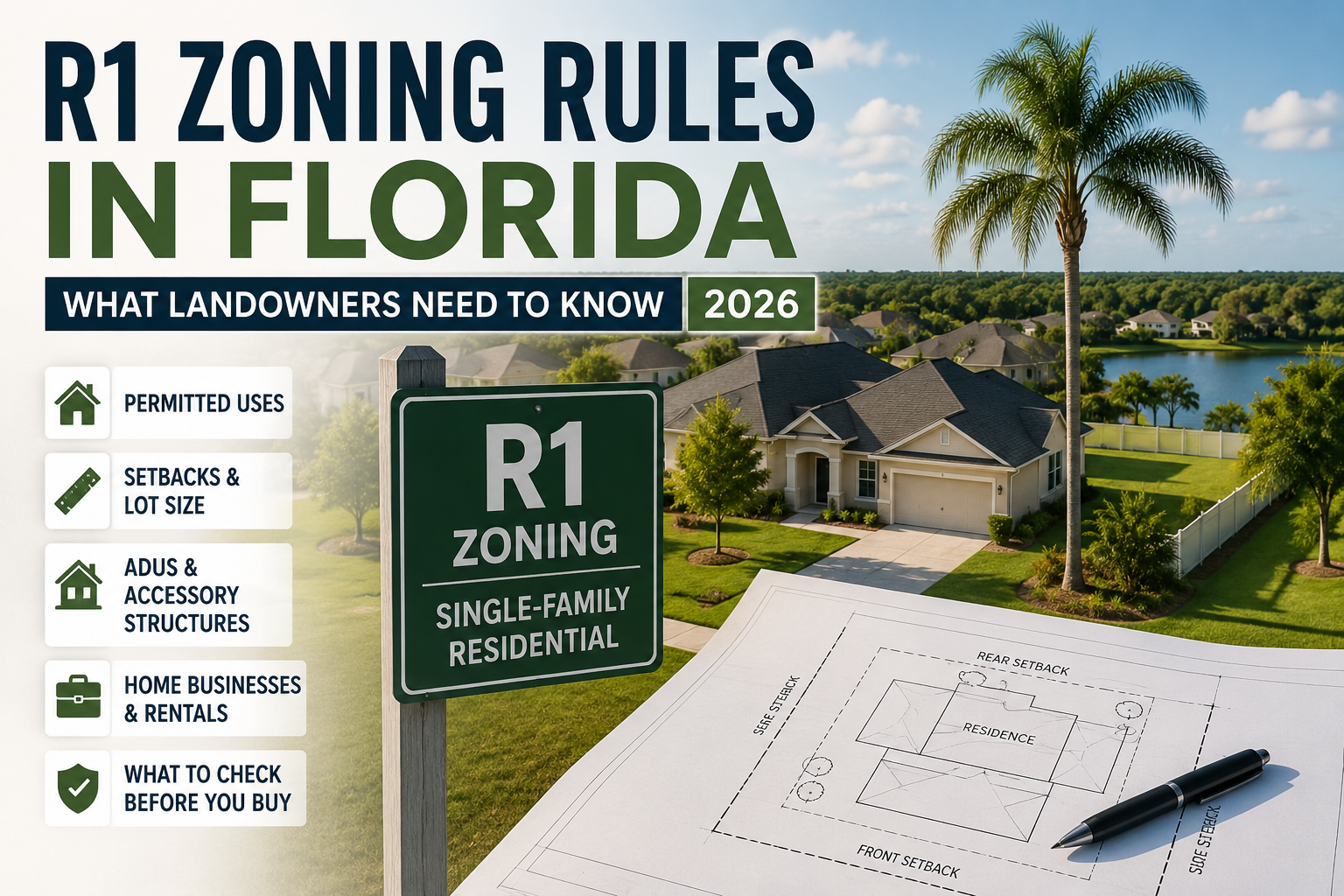
R1 Zoning Rules in Florida: What Landowners Need to Know (2026)

R1 zoning in Florida generally refers to land intended primarily for low-density residential use, usually centered on detached homes. But there is no single statewide R1 rulebook that gives every R1 parcel in Florida the same minimum lot size, setbacks, building height, accessory uses, or development rights.

Florida counties and municipalities establish their own land-development regulations. That means an R1 property in Miami-Dade County can have very different requirements from an R1 parcel in another Florida county or city.

So if you’re buying R1-zoned land in Florida, don’t stop when the listing says “R1.” Identify the exact jurisdiction, verify the complete zoning designation, read the current local code, and confirm whether your intended use is actually permitted on that specific parcel.

For land buyers and investors, that distinction can materially affect what the property is worth.

What Does R1 Zoning Mean in Florida?

R1 zoning generally describes a low-density residential district where detached residential development is a principal use. However, the exact meaning of R1 depends on the Florida city or county responsible for the property.

Local regulations may establish minimum lot area, lot width, setbacks, building height, lot coverage, parking requirements, accessory structures, home occupations, and other development standards.

Florida law requires counties and municipalities to adopt land-development regulations consistent with their comprehensive plans, including regulations governing land use, subdivision, flooding, environmental protection, infrastructure, and other development issues.

You can review the statewide framework in Florida Statute §163.3202 on land-development regulations.

Does R1 Mean the Same Thing Everywhere in Florida?

No. R1 is a local zoning designation, not one universal statewide development standard.

Different jurisdictions may use R-1, R1, RS-1, RS, or other classifications for forms of low-density residential development. Even where two jurisdictions both use the label R1, their dimensional standards and permitted uses can differ.

Always research the actual jurisdiction controlling the parcel.

Is R1 Usually Residential?

Yes. R1 is generally associated with residential development, particularly detached homes and related residential uses.

However, residential zoning doesn’t necessarily mean only one structure or one possible use. Accessory structures, home occupations, ADUs, and other uses may be permitted depending on applicable state and local rules.

Can R1 Zoning Affect Land Value?

Absolutely. Zoning affects what buyers can legally do with a property, which directly affects demand and value.

A parcel that supports a buyer’s intended home and accessory uses may be more valuable than an apparently similar property where setbacks, access, flood conditions, utilities, wetlands, or other restrictions make development difficult.

What Can You Usually Build on R1 Land in Florida?

A detached residence is commonly the principal use associated with R1 zoning, but additional structures or residential uses may be possible depending on the local code.

Potential uses can include a primary residence, garage, shed, pool, accessory structures, home occupation, and in some jurisdictions an accessory dwelling unit.

Never assume that all of these are automatically permitted on every R1 parcel.

Can You Build a Single-Family Home on R1 Land?

Generally, detached residential development is the core use associated with an R1 district.

But zoning alone doesn’t guarantee that a vacant R1 lot is buildable.

The parcel may still need adequate legal access, compliant lot dimensions, water and wastewater solutions, appropriate setbacks, flood compliance, environmental approvals, building permits, and other requirements.

Can You Build a Garage or Shed?

Accessory structures such as garages and sheds are commonly addressed in local residential zoning codes, but their size, location, height, setbacks, and relationship to the principal dwelling can be regulated.

Some jurisdictions may also restrict whether an accessory structure can be built before the principal residence.

If you’re purchasing vacant land with the intention of building only a garage, workshop, or storage structure first, verify that plan before closing.

Can You Have More Than One Dwelling?

Possibly, but R1 zoning alone doesn’t answer that question.

Local regulations and Florida laws affecting accessory dwelling units can create additional possibilities in some jurisdictions.

Check the exact local ordinance rather than assuming a second dwelling is either automatically allowed or automatically prohibited.

Can You Build an ADU on R1 Property in Florida?

Potentially. Florida law expressly provides a framework allowing local governments to adopt ordinances permitting accessory dwelling units in areas zoned for single-family residential use.

Florida defines an accessory dwelling unit as an ancillary or secondary living unit with a separate kitchen, bathroom, and sleeping area that exists either within the primary structure or on the same lot.

The official requirements can be reviewed in Florida Statute §163.31771 on accessory dwelling units.

Does Florida Require Every City to Allow ADUs?

No. The Florida statute provides that a local government may adopt an ordinance allowing ADUs in areas zoned for single-family residential use.

That distinction matters. You shouldn’t assume that every R1 property in Florida automatically has the same ADU rights.

Check the current ordinance for the city or county controlling the parcel.

Can an ADU Be Detached?

Florida’s statutory definition recognizes an accessory dwelling unit as a secondary living unit that may exist within the same structure or on the same lot as the primary dwelling.

The actual design, size, placement, parking, setbacks, occupancy, permitting, and other requirements will depend on the applicable local ordinance and building requirements.

Can You Rent an ADU?

Rental rules can depend on the local ordinance and the circumstances under which the ADU is permitted.

Florida’s statutory ADU framework is tied to affordable-housing objectives and contains specific provisions concerning qualifying affordable rentals.

If rental income is central to your investment strategy, verify the current local requirements before buying.

What Are the Setback Rules for R1 Zoning in Florida?

There is no single statewide R1 setback requirement for every Florida property.

Front, side, and rear setbacks are normally established by the local zoning code and can differ substantially between jurisdictions and zoning classifications.

Never use another Florida city’s setback numbers for the parcel you’re evaluating.

What Is a Setback?

A setback is the required distance between a building or other improvement and a property line, street, waterbody, or another defined feature.

Setbacks determine where structures can be placed on the lot.

On small, narrow, or unusually shaped parcels, setbacks can substantially reduce the practical building area.

Why Do Setbacks Matter to Land Buyers?

A parcel can contain enough total square footage and still have a very limited buildable envelope.

For example, front and rear setbacks combined with side-yard requirements may leave much less usable space than the acreage or lot dimensions initially suggest.

This is why you should evaluate the buildable area rather than simply the gross lot size.

Can Setbacks Change for Corner Lots?

Yes. Local codes may apply different street-yard or setback requirements to corner lots, through lots, waterfront properties, irregular parcels, and other configurations.

Confirm the actual parcel-specific requirements before designing or valuing a development plan.

What Is the Minimum Lot Size for R1 Zoning in Florida?

There is no universal Florida R1 minimum lot size.

Minimum lot area, width, frontage, depth, and other dimensional standards are established locally and can vary substantially.

Generic online statements claiming that all Florida R1 lots require one specific number of square feet should not be relied upon.

Why Does Minimum Lot Size Matter?

Minimum lot standards can affect whether a parcel qualifies as a conventional building lot and whether it can be subdivided.

However, lot size is only part of buildability.

Access, setbacks, flood zones, wetlands, easements, utilities, septic requirements, drainage, and other constraints can also affect development.

What If the Lot Is Smaller Than Today’s Minimum?

Some older parcels were legally created before current zoning standards and may be treated as nonconforming lots or lots of record.

Whether such a lot remains buildable depends on the local code and the property’s circumstances.

Don’t assume an undersized parcel is either worthless or automatically grandfathered. Ask the local planning department how the parcel is treated.

Does a Large R1 Lot Automatically Mean You Can Split It?

No. Having twice the minimum lot area doesn’t necessarily mean you can simply divide the property into two lots.

Subdivision requirements can involve frontage, access, utilities, drainage, surveys, platting, infrastructure, and other standards.

If subdivision is part of your investment strategy, verify feasibility before paying a premium for that potential.

Can You Put a Manufactured Home on R1 Land in Florida?

Whether a manufactured home is permitted on an R1 parcel depends on the applicable zoning district and local regulations.

Some residential districts permit qualifying manufactured housing while others distinguish between conventional site-built homes and manufactured or mobile homes.

Don’t rely on the fact that neighboring properties contain manufactured homes. Those properties may have different zoning, legal nonconforming status, or other approvals.

Is a Manufactured Home the Same as a Mobile Home for Zoning?

Terminology can matter because building standards, age of the structure, installation requirements, and local zoning definitions can affect how the unit is regulated.

Ask the local planning and building departments about the exact type of home you intend to install.

Can You Put a Modular Home on R1 Land?

A modular home may be regulated differently from a manufactured home because of how it is constructed and certified.

Again, verify the individual jurisdiction’s requirements rather than assuming all factory-built housing is treated identically.

What Should You Verify Before Buying?

Provide the planning department with the parcel number and details about the proposed home.

Ask about zoning, minimum dwelling size, foundation requirements, architectural restrictions, permitting, utility connections, septic, flood requirements, and any private deed restrictions.

Can You Put a Tiny Home on R1 Land in Florida?

Possibly, but “tiny home” doesn’t describe one universal legal category.

A small permanent dwelling, modular home, manufactured home, park model, and tiny home on wheels can be regulated differently.

Whether a particular tiny home can legally be occupied on an R1 parcel depends on its classification and the applicable zoning, building, utility, and health regulations.

Can a Tiny Home Be the Primary Residence?

Potentially, if the structure qualifies as an allowed dwelling and meets applicable local and state requirements.

Minimum dwelling size, building-code compliance, foundations, utilities, and wastewater requirements may affect feasibility.

Can a Tiny Home Be an ADU?

Potentially, if the jurisdiction permits ADUs and the proposed structure satisfies the applicable requirements.

Don’t assume that calling a structure a “tiny house” bypasses normal zoning or building rules.

Can You Live in a Tiny Home on Wheels?

A tiny home on wheels may be treated differently from a permanent residential dwelling.

If permanent occupancy is part of your plan, obtain a clear answer from the local jurisdiction before purchasing the property.

Can You Live in an RV on R1 Land in Florida?

R1 zoning does not create a statewide right to permanently live in an RV on residential land.

Local governments may regulate RV storage, temporary occupancy, parking, connections to utilities, and use during construction.

If living in an RV is essential to your plan, ask specifically whether occupancy is permitted and under what circumstances.

Can You Stay in an RV While Building a House?

Some jurisdictions may permit temporary RV occupancy during active construction subject to permits and time limits, while others may restrict it.

Never assume that owning the land gives you an unrestricted right to occupy an RV while building.

Can You Store an RV on R1 Property?

Storage rules can differ from occupancy rules.

Local codes may regulate where recreational vehicles can be parked, including front yards, side yards, driveways, and screened areas.

Can You Rent an RV on Residential Land?

Potentially applicable zoning, short-term rental, occupancy, health, and other rules make this highly jurisdiction-specific.

Verify the exact intended use before treating RV rental income as part of the property’s value.

Can You Run a Business From R1 Property in Florida?

Florida law provides protections for qualifying home-based businesses operating from residential property, but that doesn’t mean every commercial activity can be conducted without restrictions.

The state’s home-based-business statute establishes conditions affecting how local governments may regulate qualifying businesses.

You can review the current requirements in Florida Statute §559.955 on home-based businesses.

Can You Have a Home Office?

A qualifying home-based business may operate from residential property under Florida law, subject to statutory requirements.

The practical question is whether your specific operation qualifies and complies with applicable standards.

Can Customers Visit the Property?

Traffic, parking, employees, signage, outdoor activity, equipment, and impacts on the residential character of the property can matter.

Review the state statute and applicable local requirements before operating the business.

Can You Operate a Warehouse From R1 Land?

Conventional warehouse and industrial uses generally don’t fit the purpose of low-density residential zoning.

Don’t assume Florida’s home-based-business protections convert residential land into unrestricted commercial property.

Can You Use R1 Property as a Short-Term Rental?

R1 zoning by itself doesn’t tell you whether short-term rental use is permitted.

Vacation rentals can be affected by state law, local ordinances, licensing, taxes, HOA restrictions, condominium rules, and other requirements.

If Airbnb or another short-term rental strategy is essential to the purchase, investigate it independently before closing.

Does Residential Zoning Automatically Allow Airbnb?

No. Residential use and short-term rental permission are not necessarily the same thing.

Check the property’s local jurisdiction and any private restrictions.

Can an HOA Restrict Short-Term Rentals?

Private covenants and HOA rules can impose restrictions separate from public zoning.

A use that may be permissible under government regulations can still face enforceable private restrictions.

Should Investors Assume Future Rental Rules Will Stay the Same?

No. Regulations can change.

If your investment only works under one particular rental strategy, understand the regulatory risk as part of your underwriting.

Can You Keep Animals on R1 Land in Florida?

Whether animals are permitted depends heavily on the local zoning code, parcel size, animal type, and applicable private restrictions.

Household pets are different from chickens, goats, horses, livestock, kennels, or commercial breeding operations.

A large residential parcel doesn’t automatically carry agricultural rights.

Can You Keep Chickens?

Many Florida jurisdictions have specific ordinances governing backyard chickens, including numbers, setbacks, enclosures, and whether roosters are permitted.

Check the local ordinance.

Can You Keep Horses?

Horse keeping often requires appropriate zoning, minimum acreage, setbacks, or other standards.

Don’t assume a one-acre or multi-acre R1 parcel automatically permits horses.

Can You Farm R1 Land?

Gardening for personal use and operating a commercial agricultural enterprise are very different activities.

If farming is central to your intended use, verify whether agricultural activity is permitted under the parcel’s zoning.

How Do Flood Zones Affect R1 Property in Florida?

Flood risk is particularly important when evaluating Florida land.

A parcel can have appropriate residential zoning but still face substantial development costs or limitations because of flood elevation, drainage, wetlands, coastal conditions, or insurance requirements.

Zoning should therefore never be used as a substitute for physical and environmental due diligence.

Does R1 Zoning Mean the Property Is Safe From Flooding?

No. Zoning and flood risk address different issues.

Check current flood information and investigate site-specific conditions before buying.

Can Flood Requirements Increase Construction Costs?

Yes. Elevation, foundation design, drainage, access, insurance, and other requirements can materially affect development economics.

Should Cheap Flood-Prone Land Be Avoided?

Not automatically, but the price should reflect the property’s actual usability, risk, development costs, and buyer demand.

A low asking price doesn’t eliminate those costs.

Can Wetlands Affect R1-Zoned Land?

Yes. Residential zoning does not mean every square foot of a parcel can be developed.

Wetlands and other environmental conditions can affect usable acreage, permitting, access, septic placement, and construction.

This is particularly important when buying inexpensive undeveloped Florida acreage.

Can a Parcel Be R1 and Mostly Wetlands?

Potentially. The zoning classification describes permitted land use. It doesn’t guarantee that the property’s physical conditions support development across the entire parcel.

Should You Inspect Wetlands Before Buying?

If wetlands may materially affect your intended use, investigate them before closing and obtain appropriate professional guidance where necessary.

Does Usable Acreage Matter More Than Total Acreage?

Often, yes.

Ten acres on paper can be less valuable for your intended use than two highly usable acres with good access, utilities, and development feasibility.

What Other Rules Can Restrict R1 Land in Florida?

Zoning is only one layer of property regulation.

R1 property may also be affected by building codes, subdivision rules, flood regulations, wetlands, environmental requirements, easements, deed restrictions, HOA covenants, utility requirements, septic regulations, road standards, and other rules.

That’s why professional land due diligence considers the entire property rather than only the zoning label.

Can an HOA Be More Restrictive Than R1 Zoning?

Yes. Private covenants can impose restrictions separate from government zoning.

Always review recorded restrictions when they’re relevant to the property.

Can Deed Restrictions Affect What You Build?

Yes. Private restrictions may regulate building size, architectural features, animals, rentals, accessory structures, and other property uses.

Can Easements Reduce the Buildable Area?

Potentially. Utility, drainage, access, conservation, and other easements can affect where improvements can be located.

Review title and survey information as part of due diligence.

How Do You Check the Zoning of Florida Land Before Buying?

Start with the property’s address and parcel identification number, then identify the city or county responsible for zoning.

Use the jurisdiction’s official zoning map and land-development code to confirm the complete designation.

If you’re new to the acquisition process, our complete guide to buying land explains the broader research buyers should perform.

Step 1: Find the Parcel Number

Use the county property appraiser or other official property records to identify the exact parcel.

Don’t research zoning using only a nearby address.

Step 2: Determine the Correct Jurisdiction

Find out whether the property is inside an incorporated municipality or an unincorporated county area.

This determines which zoning code you need.

Step 3: Verify the Full Zoning Designation

Record the complete designation rather than simply noting that the parcel is “residential.”

Also investigate overlays, planned developments, special districts, future land-use designations, and other classifications that may affect development.

What Should You Ask the Florida Planning Department?

Give the planner the parcel number and explain your actual intended use.

Asking “What can I do with R1?” is less useful than asking whether a specific project is permitted on a specific parcel.

Ask What You Can Build

Explain whether you want to build a detached house, manufactured home, modular home, tiny house, ADU, garage, workshop, or another structure.

Ask About Development Standards

Confirm:

  • Minimum lot area
  • Minimum lot width
  • Front setback
  • Side setbacks
  • Rear setback
  • Maximum building height
  • Lot coverage
  • Parking requirements
  • Accessory structure rules
  • ADU requirements

Ask About Parcel-Specific Constraints

Ask whether the parcel is affected by:

  • Flood zones
  • Wetlands
  • Coastal requirements
  • Environmental restrictions
  • Overlay districts
  • Road standards
  • Utility requirements
  • Septic requirements
  • Subdivision restrictions
  • Other development conditions

What Should Land Investors Check Before Buying R1 Property?

For investors, R1 zoning should be evaluated as part of the entire deal.

What matters is whether the parcel can legally and practically support the use that creates buyer demand.

That requires checking zoning alongside access, utilities, physical conditions, market value, holding costs, and your exit strategy.

Confirm Legal Access

Residential zoning doesn’t solve an access problem.

If road access is uncertain, read our guide to buying land without road access before assuming the parcel is usable.

Verify Water and Wastewater

Determine whether public water and sewer are available or whether the property requires a well and septic system.

For undeveloped land, wastewater feasibility can materially affect buildability.

Check Comparable Sales

Compare the property with similar parcels that have comparable zoning, acreage, access, utilities, flood characteristics, location, and development potential.

Don’t value a difficult R1 parcel as though it were a fully buildable residential lot.

Can You Rezone R1 Property in Florida?

Rezoning may be possible, but it is generally a local approval process and shouldn’t be assumed.

Applications can involve consistency with the comprehensive plan, surrounding uses, infrastructure, public hearings, staff review, and other local requirements.

Approval isn’t guaranteed.

Should You Buy Land Assuming You Can Rezone It?

That can be a risky strategy.

Unless you’ve thoroughly investigated the approval path, value the property primarily based on what can reasonably be done under its current legal framework.

Is a Variance the Same as Rezoning?

No. A variance generally provides relief from particular development standards under specific circumstances, while rezoning changes the zoning classification.

Local requirements govern both processes.

What Is a Comprehensive Plan Amendment?

A comprehensive plan amendment changes part of the local government’s comprehensive planning framework and is distinct from simply changing a zoning classification.

Some development proposals can require both land-use and zoning changes.

What Are the Biggest R1 Zoning Mistakes Florida Land Buyers Make?

The biggest mistake is assuming that “R1” tells you everything you need to know.

It doesn’t.

The designation identifies a broad residential zoning category, but the property’s actual development potential depends on local rules and parcel-specific conditions.

Mistake 1: Assuming R1 Means Buildable

A parcel can be residentially zoned and still face access, flood, wetlands, septic, dimensional, title, or infrastructure problems.

Mistake 2: Using Another County’s R1 Rules

Florida zoning standards are local.

Never apply one jurisdiction’s setbacks, lot sizes, or permitted uses to another jurisdiction without verification.

Mistake 3: Ignoring Private Restrictions

Zoning approval doesn’t automatically override HOA covenants, deed restrictions, easements, or other private property limitations.

Is R1-Zoned Land a Good Investment in Florida?

R1 land can be a good investment when the purchase price, permitted uses, development feasibility, location, buyer demand, and exit strategy make sense together.

The zoning designation alone doesn’t make a parcel a good deal.

An inexpensive property with severe flood, access, wetland, utility, or development problems may be less attractive than a more expensive parcel that is clearly usable.

If you’re purchasing for profit rather than personal use, our land investing guide explains how acquisition price, due diligence, demand, and exit strategy work together.

What Due Diligence Should You Complete Before Buying R1 Land?

Before purchasing R1 land in Florida, verify the property’s zoning and its legal, physical, environmental, financial, and market characteristics.

At minimum, investigate:

  • Exact zoning designation
  • Future land-use designation
  • Permitted primary uses
  • ADU rules
  • Minimum lot requirements
  • Setbacks
  • Lot coverage
  • Building height
  • Legal access
  • Road standards
  • Water availability
  • Sewer or septic feasibility
  • Utilities
  • Title
  • Easements
  • Property taxes
  • Flood risk
  • Wetlands
  • Environmental constraints
  • HOA or deed restrictions
  • Comparable sales
  • Buyer demand

Use our land due diligence checklist to organize the broader property investigation before committing capital.

Frequently Asked Questions About R1 Zoning in Florida

What does R1 zoning mean in Florida?

R1 generally describes a low-density residential zoning district associated with detached residential development. Exact permitted uses, setbacks, lot sizes, accessory uses, and development standards vary by Florida city or county.

Can you build two houses on R1 land in Florida?

Possibly, depending on the jurisdiction, parcel, and applicable accessory dwelling or other residential-development rules. R1 zoning alone doesn’t establish a statewide right to construct two primary houses.

Can you build an ADU on R1 property in Florida?

Potentially. Florida law allows local governments to adopt ordinances permitting accessory dwelling units in areas zoned for single-family residential use. Check the local ordinance for the individual parcel.

What is the minimum lot size for R1 zoning in Florida?

There is no single statewide minimum lot size for all R1 property. Minimum lot area, width, frontage, and other dimensional standards are established by the applicable local zoning code.

What are the setbacks for R1 property in Florida?

Front, side, and rear setbacks vary by jurisdiction and zoning district. Verify the current local code and any parcel-specific requirements before planning construction.

Can you put a mobile or manufactured home on R1 land?

It depends on the local zoning classification and regulations. Some residential districts permit qualifying manufactured housing while others restrict it. Verify the exact type of structure with the local planning department.

Can you put a tiny home on R1 property?

Possibly, depending on how the structure is legally classified and whether it meets zoning, building, utility, wastewater, and other requirements. Tiny homes on wheels may be treated differently from permanent dwellings.

Can you live in an RV on R1 land?

R1 zoning doesn’t provide a statewide right to permanently occupy an RV. Local ordinances can regulate RV occupancy, storage, parking, and temporary use during construction.

Can you run a business from R1 property?

Qualifying home-based businesses receive protections under Florida law, but the business must satisfy applicable statutory requirements. Residential zoning does not permit unrestricted commercial or industrial activity.

Does R1 zoning mean a Florida property is buildable?

No. Zoning is only one part of buildability. Access, lot dimensions, flood conditions, wetlands, utilities, septic feasibility, easements, environmental constraints, private restrictions, and permitting can all affect whether development is practical.

The Bottom Line

R1 zoning in Florida generally means low-density residential land, but there is no single statewide R1 rulebook.

Florida cities and counties establish local zoning and development standards, which means minimum lot sizes, setbacks, accessory uses, building requirements, and other rules can vary significantly from one jurisdiction to another.

Florida law also affects some residential uses, including accessory dwelling units and qualifying home-based businesses, but those laws don’t make every use automatically permissible on every R1 parcel.

If you’re buying R1 land, don’t rely solely on the listing description.

Confirm the exact parcel and jurisdiction. Read the current zoning code. Verify the intended use with the planning department. Investigate access, utilities, wastewater, flood risk, wetlands, title, easements, and private restrictions.

Then ask the question that matters most:

Can this specific property legally and practically support the use that gives it value?

If you answer that question before buying, you’re in a much stronger position than someone who simply saw “R1” in a listing and assumed the rest.
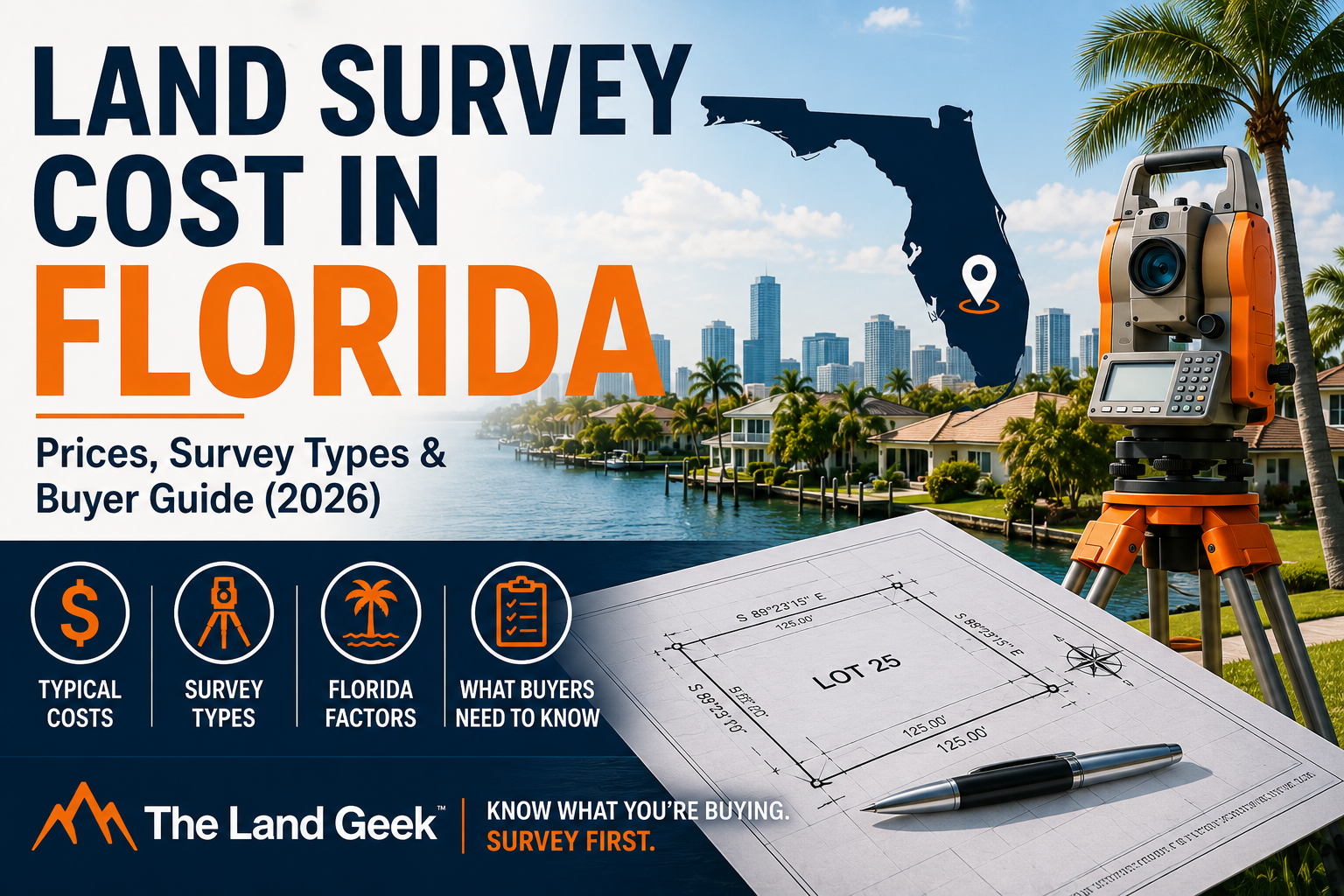


Building Restrictions In Florida: Complete Guide (2026)

Building restrictions in Florida are a set of regulations imposed by local, state, and federal authorities that control how landowners can construct, modify, or use structures on their property. These rules protect safety, environmental quality, and community character while guiding orderly growth across Florida’s diverse regions. For land investors, homeowners, and developers considering projects in Florida, understanding and verifying applicable building restrictions before purchase is essential. Failure to do so can lead to unexpected costs, delays, or forced project changes that impact feasibility and resale value.

This guide explains key aspects of building restrictions in Florida, focusing on what you must verify to make confident land-investing decisions. You will learn about restrictions like zoning laws, setback and height limits, flood zone rules, historic preservation regulations, and the local government’s role. We also cover practical strategies for navigating permits, managing compliance risks, and understanding the consequences of violations.

What Are Building Restrictions in Florida and Why Do They Matter?

Building restrictions in Florida are legal requirements that regulate how you can develop or alter land and structures. They exist to ensure construction safety, protect sensitive environments, maintain neighborhood standards, and manage growth responsibly. For a land investor or buyer, these restrictions directly influence what you can build, how large or tall structures can be, where you can place buildings, and whether your planned use fits local zoning.

Before relying on the land’s usability, confirm which specific building restrictions apply to the parcel by reviewing county or city records and consulting local building or planning departments. Identifying these rules early helps set realistic project plans and avoid costly surprises.

Understanding building restrictions is important, and reviewing details about Taxes, Ownership & Legal can provide a more complete picture of land ownership.

What Types of Building Restrictions Are Most Common in Florida?

Florida implements several major types of building restrictions that affect land use and construction:

  • Zoning Laws: Define allowed land uses (residential, commercial, agricultural, etc.), density limits, and what structures or activities are permissible.
  • Setback Requirements: Mandate minimum distances between structures and property lines, roads, or environmentally protected areas to preserve safety, privacy, and aesthetics.
  • Height Restrictions: Limit building heights based on factors like zoning district, proximity to airports, or local design guidelines.
  • Flood Zone Regulations: Impose elevation and construction requirements in areas prone to flooding to reduce damage during storms.
  • Historic Preservation Rules: Apply in designated historic districts or on listed properties,regulating alterations to preserve historical character.
  • Building Codes: Set safety and construction standards, including structural integrity, fire protection, and energy efficiency per state-adopted codes.

The exact restrictions vary by county, municipality, and even neighborhood, so pinpoint the parcel’s location and obtain zoning maps, local ordinances, and code documents. This verification will uncover any zoning categories, overlays, conservation zones, or historic designations that restrict your intended use.

How Does Zoning Affect What You Can Build?

Zoning laws in Florida directly control land use and allowable structures. For example, a parcel zoned residential may permit single-family homes but restrict commercial or industrial development. Zoning also regulates lot size, building coverage, parking, and accessory uses. Confirm the zoning classification for the property through the county or city planning department, as it dictates the feasibility of your development ideas.

If your intended use conflicts with zoning, inquire about building codes or whether you can apply for a variance or conditional use permit that allows deviation under specific conditions. These exceptions require formal approval and public notice and are not guaranteed.

What Are Setback Requirements and How Do They Impact Construction?

Setback requirements establish minimum distances your buildings must maintain from property boundaries, roads, wetlands, or other protected features. For example, you might need to position your home at least 15 feet from the front property line and 10 feet from the side lines, depending on local codes.

The practical effect is on your building footprint and lot planning; setbacks reduce buildable land area. Before making an offer, obtain the zoning ordinance or site plan requirements from the local planning office. Check if there is flexibility through variance applications, but expect a formal process and possible rejection if setbacks are waived without strong justification.

For more details on how setbacks relate to your property, consult related articles such as setback requirements.

What Determines Height Restrictions in Florida?

Height restrictions depend on zoning district, environmental considerations, and proximity to air traffic or flood zones. Coastal or flood-prone areas often require buildings to be elevated or capped in height to minimize storm damage risks.

Checking local zoning ordinances reveals specific height limits. Also, contact the local building department to understand if additional elevation for flood protection applies. Remember that exceptions like chimneys or architectural features may be subject to special approval.

Height restrictions affect your design, usable space, and resale appeal, especially in neighborhoods with uniform building heights. To explore regional differences, see related coverage on height restrictions.

What Are Florida’s Flood Zone Building Restrictions?

Florida’s flood zones are areas identified by FEMA based on flood risk and are subject to stricter building requirements to protect lives and property. These requirements often include elevating structures above the base flood elevation, using flood-resistant materials, and adhering to special construction techniques.

Before purchasing or planning construction, obtain the FEMA Flood Insurance Rate Map (FIRM) for the parcel from local government or online FEMA resources. Check whether your property lies within a flood zone and what specific construction standards apply.

Permits for development in flood zones involve more scrutiny, so early consultation with the local building department and possibly an engineer is critical to design compliant, insurable structures.

Understanding flood zone restrictions land investing zoning can also inform decisions when exploring land investing zoning regulations.

How Do Historic Preservation Laws Influence Building on Properties in Florida?

If the land or building is within a designated historic district or is a listed historic property, additional regulations apply to protect cultural heritage. These laws control alterations, additions, and new construction to preserve architectural character.

Before investing in such a property, consult the local historic preservation board or commission for guidelines and approval processes. You may need to submit plans demonstrating that your project complies with preservation standards, which can affect scope, materials, and timeline.

Understanding these rules can prevent denial of permits and costly redesigns. For further guidance, see the article on Historic Preservation Laws.

What Is the Local Government’s Role in Enforcing Building Restrictions?

The local government,through its planning, building, and code enforcement departments,administers and enforces building restrictions. They issue permits, conduct inspections, enforce compliance, and impose penalties for violations.

Counties and municipalities may have differing rules and enforcement rigor, so verify which local agency governs your parcel. Before starting construction or purchase, contact these departments to request all applicable zoning designations, building codes, and permitting requirements that affect your intended project.

Engaging early with local officials can clarify expectations, identify required permits, and surface potential issues that could affect your timeline or budget.

How Should You Navigate Building Restrictions Before Buying or Developing Land in Florida?

The key workflow is:

  1. Identify your intended use: Define what you want to build or do with the land.
  2. Verify zoning and restrictions: Obtain zoning maps and local ordinances, confirm setback and height limits, council flood zone requirements, historic preservation status, and environmental overlays.
  3. Consult local authorities or professionals: Speak with the county or city planning and building departments, or hire planners, architects, or real estate attorneys to interpret regulations and permit feasibility.
  4. Obtain permits and required approvals: Prepare and submit building plans for permits, adhering strictly to codes and conditions.
  5. Apply variance or conditional use permits if necessary: If your intended use is not fully allowed, assess if applying for exceptions is viable and understand the risk of denial.
  6. Adjust plans or walk away: If restrictions severely limit your project or require costly remediation, reconsider the investment or negotiate with the seller.

Due diligence in this workflow avoids costly surprises, ensures your project complies from the start, and protects your investment’s value and marketability.

What Are the Consequences of Violating Building Restrictions in Florida?

Violations of building restrictions can lead to significant penalties, including fines, stop-work orders, legal actions, and mandates to remediate or remove noncompliant structures.

These consequences can delay your project, escalate costs, reduce property value, and complicate resale or refinancing. Some violations may impact insurance coverage or financing eligibility.

Verifying all applicable restrictions and obtaining required permits before construction is the best way to avoid these costly outcomes.

How Do Building Restrictions Affect Property Values and Marketability?

Building restrictions influence property values by shaping neighborhood quality, aesthetics, and growth potential. Well-enforced, reasonable restrictions can preserve community character and attract buyers, potentially supporting higher values.

Conversely, overly restrictive or ambiguous regulations may discourage buyers or investors due to limited development options or complex compliance. Properties with outstanding violations or hard-to-navigate regulations may be harder to sell or refinance.

Before purchase, assess whether restrictions align with your investment or use goals and whether you can justify any trade-offs.

What Are Conditional Use Permits and When Are They Needed?

Conditional use permits (CUPs) allow uses or structures not typically permitted within a zone but considered acceptable under certain conditions. These permits enable flexibility while protecting neighborhood interests.

A CUP application requires detailed plans and justification and is subject to public hearings and approval by local planning authorities. This process can be lengthy and uncertain.

Verify with local zoning offices if your intended land use requires a CUP and evaluate the likelihood of approval before finalizing offers.

How Can You Stay Informed and Ensure Compliance with Building Restrictions?

To stay informed:

  • Regularly check local government websites and contact planning or building departments for updates.
  • Use online zoning maps and building ordinance databases to research parcels.
  • Engage qualified professionals,architects, engineers, land use attorneys,when planning or purchasing.
  • Attend public hearings or community meetings on zoning changes or developments.

This ongoing engagement helps you anticipate rule changes and maintain compliance, protecting your investment.

How Do You Obtain a Building Permit in Florida?

Obtaining a building permit involves submitting detailed construction plans, showing compliance with zoning, setbacks, flood requirements, and building codes to the local building department. The department reviews the application and may require amendments or additional documentation before approval.

Preparation includes ensuring plan accuracy, meeting all regulatory criteria, and accounting for timelines. Delays are common due to incomplete applications or noncompliance.

Determining the permitting requirements and processes early eliminates costly pauses and ensures timely project starts.

What Special Considerations Apply to Renovations and Older Homes?

Renovations in Florida usually require permits, especially for structural changes, electrical or plumbing updates, or modifications affecting safety. Renovation work must comply with current building codes, which may be more stringent than those in place when the home was built.

Older homes may face special challenges like legacy code requirements and historic preservation rules. It’s important to verify applicable codes and permitting procedures before beginning work.

Summary Checklist: What to Verify Before Your Land or Building Project in Florida

Verification Item Responsible Source Red Flag or Trade-Off
Property Zoning Classification County or City Planning Department Incompatible zoning with intended use; may require costly rezoning or CUP
Setback and Height Requirements Local Zoning Ordinance Limits on building footprint or height affect design and feasibility
Flood Zone Status and Requirements FEMA Maps, Local Building Dept. Floodplain building restrictions increase construction costs and risks
Historic Preservation Designation Local Historic Preservation Board Restrictions on alterations may limit renovations or add approval time
Building Code Compliance Local Building Department Non-compliance risks penalties, insurance issues
Permit Process and Timelines Building Department Unanticipated delays or re-submissions can derail project schedules
Conditional Use or Variance Necessity Zoning Board or Local Government Uncertainty and potential denial affect project viability

Final Takeaway

Building restrictions in Florida play a central role in determining what and how you can build or develop land. For land investors and owners, the priority is to confirm the exact rules applying to a parcel before investing or designing projects. Start by defining your intended use, then verify zoning, setbacks, height limits, flood zone status, historic designations, and local building codes with official sources. Engage authorities or professionals early to understand permit requirements and potential exceptions like variances or conditional use permits. Awareness and proactive compliance reduce risks of fines, project delays, or forced modifications, preserving your investment’s value and success.

Zoning Laws In Florida: Complete Guide (2026)

Zoning laws in Florida are critical regulations that dictate how land can be used and developed within specific local jurisdictions. For land investors, understanding these laws before making a purchase is essential because zoning directly impacts what you can build or do with a property, affects its value, influences future resale potential, and can either enable or restrict your intended plans.

This guide explains what zoning laws in Florida mean for land buyers and investors, how to verify zoning details for a parcel, and how to navigate the practical implications for ownership and development decisions.

By focusing on the specific verifications and decision-making points, you can confidently assess whether a property fits your investment goals or when you should reconsider or adjust your offer.

What Are Zoning Laws in Florida?

Zoning laws in Florida are local government regulations that define permitted land uses for specific parcels to manage growth and organize community development. These laws categorize land by use types,such as residential, commercial, agricultural, or industrial,and impose rules on what can be built and how the land can be utilized.

For a land buyer, zoning laws are more than legal language; they are a framework that shapes your options and risks. Before buying, verify the zoning designation through county property or planning department records. Confirm the zoning category (e.g., residential single-family, commercial retail), what uses it permits, and any restrictions tied to that zoning.

Understanding zoning is essential before exploring Taxes, Ownership & Legal related to taxes, ownership, and legal responsibilities.

A red flag is if the zoning does not match or support your intended use, as non-compliant uses often require costly variances or re-zoning processes. Contact the local zoning authority directly or access official zoning maps online for the most current, authoritative information.

How Do Zoning Laws Affect Property Use and Value?

Zoning laws determine exactly what activities can legally take place on a property and under what conditions. For example, some zones restrict land to single-family homes while others allow multiple residential units or commercial activities.

This impacts your land purchase decision in two main ways: first, the use,whether you can build a home, run a business, farm, or subdivide; second, value,zoning influences market demand and resale. For instance, residentially zoned land in a growing area may have higher demand and appreciation potential than agricultural land strictly limited to farming.

Before you buy, confirm the zoning classification and permitted uses with the local planning department. If your intended use requires rezoning or a variance, evaluate the likelihood and timeline for approval, as these can add uncertainty and cost.

For insights on navigating zoning complexities in land investing, see our guide on land investing zoning.

A mismatch between use goals and zoning can be a walk-away condition unless you are prepared for the added complexity of zoning changes.

What Are Typical Zoning Categories in Florida and Why Do They Matter?

Florida zoning categories generally include:

  • Residential: single-family homes, multifamily units, mixed-use residential
  • Commercial: retail, office, lodging, industrial uses
  • Agricultural: farming, ranching, limited rural residential
  • Industrial: manufacturing, warehousing, heavy uses

Each category has specific rules on density, building size, setbacks, and permitted land uses. Knowing which category applies affects your expectations on what you can build and what permits you will need.

Verify the exact zoning map for your parcel and review the zoning code for its definitions and rules. For example, a “residential” zone in one county might allow a detached guest cottage, while another may prohibit it. This variability means local verification is essential.

How Are Zoning Laws Enforced in Florida, and Why Should That Matter to You?

Local zoning authorities enforce zoning by reviewing proposed developments, issuing permits, conducting inspections, and investigating violations. Non-compliance can result in fines, stop-work orders, or legal action.

For a buyer, zoning enforcement means you must either comply with current zoning or negotiate solutions if you find discrepancies. Before closing a deal, ask about any open violations on the property, past enforcement actions, or legal disputes tied to zoning.

This information is usually available through the county zoning or code enforcement office. A persistent zoning violation can reveal risks that might delay or derail your development plans.

How Can You Change Zoning Laws or Obtain Special Exceptions?

Changing zoning laws (rezoning) or obtaining special exceptions requires filing applications with the local zoning authority, attending public hearings, and obtaining approval from community boards or governing bodies.

This process can be time-consuming, may require hiring professionals, and is not guaranteed. If your intended use is not permitted by the existing zoning, factor the rezoning timeline and likelihood into your offer or investment plan.

Before you buy, inquire about local zoning board policies, past rezoning approvals, and community sentiment toward changes. These insights help you judge the feasibility of changing zoning or obtaining special exceptions, which can be critical for your land’s usability.

Where Can You Find Accurate Zoning Laws and Maps for Your Property?

For Florida properties, zoning information is best obtained from the local county or city planning department websites, which often host up-to-date zoning maps and ordinance documents.

Some counties provide GIS mapping tools where you can look up zoning by parcel address or ID. Contacting the planning or zoning office directly can clarify ambiguous cases or recent amendments not yet posted online.

Professional help, such as land use attorneys or land surveyors familiar with local zoning, may be worthwhile if your intended uses are complex or on the border of zoning districts.

Verify that the zoning information you rely on is the latest version confirmed by the appropriate public authority because informal or outdated sources can mislead your investment decision.

What Are Common Zoning Regulations That Affect Development and Use?

Key zoning regulations to verify include setback requirements (how far structures must be from property lines), height limits, density restrictions (units or structures per acre), and permissible uses.

For example, if you plan to build a residence, confirm minimum setbacks to avoid unexpected design changes. Height restrictions matter if your project includes multi-story buildings.

These details affect design costs, feasibility, and how much you can develop the land, and shifts in these rules can happen locally. Consult the zoning ordinance specific to your parcel’s jurisdiction to understand these constraints clearly.

How Do Zoning Laws Impact Homeowners and Small Investors?

Homeowners and small investors face zoning effects in permitting processes, running home businesses, and property improvements. Zoning laws may restrict the ability to build accessory structures, limit business operations at home, or regulate landscaping and signage.

Confirm what permits are required for your plans and whether home-based businesses are allowed by right, by special exception, or outright prohibited. Failure to verify can lead to costly enforcement actions or devaluation.

If you plan to hold-to-resell, understand zoning’s impact on nearby development that could affect neighborhood character and property value.

What Role Do Zoning Boards Play in Florida, and How Can You Leverage Them?

Zoning boards review variance requests, hears appeals on zoning decisions, and approve special exceptions. Engaging early with zoning boards and attending public hearings can provide insights and influence outcomes.

If you need a variance or wish to challenge a zoning decision detrimental to your use, the zoning board is the venue for filing appeals. Prepare detailed justifications and engage neighbors to bolster support.

Understanding board procedures and criteria for decisions can improve your chances, but also be realistic: boards balance individual interests against community plans, so outcomes vary.

How Do Zoning Laws Affect Larger Development Projects?

For development projects, zoning affects site planning, permitting timelines, required environmental and traffic impact assessments, and the scale of approved uses.

Projects conflicting with zoning may face costly delays or be denied. Anticipate the need for comprehensive applications that address zoning compliance and community concerns.

Before investing, verify the zoning category, review site-specific regulations, and check if the project triggers special review processes, such as planned unit developments or conditional uses. Consulting with local planners or land use consultants can clarify these requirements.

How Do Environmental Regulations Intersect with Zoning?

Environmental regulations often overlay zoning rules, especially where wetlands, protected habitats, flood zones, or coastal protections apply.

Wetlands or conservation zones may restrict development or require environmental assessments that delay or limit land use.

Verify environmental overlays with local zoning codes and environmental agencies to fully assess a parcel’s development potential and compliance obligations before purchase.

What Happens if You Violate Zoning Laws,What Are the Risks?

Violating zoning laws can trigger fines, injunctions to halt construction or use, and legal battles. Some violations require costly modifications or demolitions.

Always confirm that the property complies with existing zoning before purchase and obtain all required permits when developing.

If existing violations exist, investigate how they were or will be resolved, as unresolved issues impact ownership risk and resale value.

How Do Zoning Laws Differ Across Florida’s Counties?

Zoning regulations vary widely among Florida counties and municipalities depending on local priorities, population density, and geographic factors.

For example, urban counties may have dense mixed-use zoning, whereas rural counties emphasize agricultural zoning with large minimum lot sizes.

Always verify zoning specifics for the county where your parcel resides rather than assuming uniform rules. Local planning department websites and offices are the best sources.

What Is the Difference Between Zoning Laws and Building Codes?

Zoning laws govern land use and allowable activities on the property. Building codes regulate how structures are constructed to meet safety and quality standards.

Both must be complied with independently. Passing zoning does not guarantee building permits, and buildings must meet code regardless of zoning.

Prior to buying or building, confirm that your plans meet both zoning and building code requirements by consulting respective departments.

How Do Zoning Laws Impact Affordable Housing in Florida?

Zoning laws can facilitate or limit affordable housing by controlling density, lot sizes, and permitted housing types. Restrictive zoning can reduce affordable housing supply, while inclusive or flexible zoning supports it.

Check if the parcel’s zoning allows for the housing density and type you intend, especially if your plan involves affordable or multi-family units.

Familiarize yourself with local initiatives or overlays encouraging affordable housing, which may affect development options and incentives.

How Should Businesses Navigate Florida’s Zoning Regulations?

Businesses must first identify the zoning designation of the property and confirm that the proposed business activity is permitted or allowed with a special exception or variance.

Securing necessary permits and maintaining communication with local zoning officials helps prevent violations and penalties.

For land investors considering business uses, this due diligence avoids wasted investment on properties unsuitable for intended commercial purposes.

What Are the Steps to Start a Zoning Change or Variance Application?

To initiate a zoning change or apply for a variance, start by gathering detailed documentation about your parcel and intended use, including site plans and impact descriptions.

Consult with local planners or land use attorneys for guidance on preparing a strong application.

Submit the application to the appropriate local zoning authority and participate in required public hearings.

Understanding the process, timelines, and community input requirements upfront helps set realistic expectations before you commit to acquisition or development.

How Can Zoning Laws Support Sustainable Development Efforts?

Zoning laws can promote sustainability by encouraging compact, mixed-use developments, protecting green spaces, and requiring environmentally sensitive building practices.

Some counties incorporate green zoning principles that incentivize low-impact development or renewable energy use.

If sustainability is a priority for your project or investment, research local zoning initiatives that support these goals. Confirm how these might add value or create compliance requirements.

Summary: What Should You Verify Before Buying Land in Florida?

  • Zoning designation: Confirm the exact zoning classification and permitted uses via county records or planning offices.
  • Compatibility with intended use: Assess whether your planned use complies or requires rezoning or variances.
  • Local zoning regulations: Understand setbacks, height limits, density, and environmental overlays impacting the property.
  • Pending violations or legal issues: Check for zoning code enforcement history on the parcel.
  • Zoning change feasibility: Investigate local procedures, timelines, and success rates for rezoning or special exceptions if needed.
  • Building code compliance: Remember that zoning approval is separate from building permits and codes.
  • Environmental factors: Verify environmental restrictions that might limit development despite zoning.
  • Local zoning authority contact: Establish a communication line early for clarifications and updates.

These verifications form the backbone of prudent due diligence that shapes your offer, exit strategy, and development expectations.

Mini FAQ

What are zoning laws? Legally binding local rules that control land use and development.

How do zoning laws affect property value? By limiting or permitting uses, zoning can increase or decrease a property’s desirability and price.

Can I appeal a zoning decision? Yes, through local zoning boards or courts, following set procedures.

What is a special exception? Permission to use land in a way not normally allowed under current zoning.

How do zoning laws impact affordable housing? They can enable or restrict affordable housing through density and use regulations.

What to do if I violate zoning laws? Contact local authorities promptly and take corrective measures to avoid penalties.

How to find zoning laws for my property? Check county planning websites, GIS maps, or speak directly with zoning officials.

Vacant Land Investing Guide For Delaware: Complete Guide (2026)

Vacant land investing in Delaware offers investors a unique opportunity to acquire undeveloped property with potential for appreciation, development, or resale. This comprehensive guide provides practical, step-by-step insights to help you evaluate, purchase, and manage vacant land in Delaware,ensuring you understand what to verify before committing your resources.

To expand your knowledge, explore our detailed guide on key considerations for land investing California land investing California.

Whether you’re aiming for a quick flip, long-term hold, or development project, understanding Delaware’s market nuances, legal framework, and economic drivers is key to making informed decisions and avoiding common pitfalls.

This guide equips you with concrete verification steps, decision criteria, and local considerations essential to navigating Delaware’s vacant land market successfully.

What Is Vacant Land Investing and Why Does It Matter in Delaware?

Vacant land investing means purchasing undeveloped land parcels with the intent to hold for future appreciation, develop, or resell. In Delaware, this process requires assessing a property’s zoning, physical characteristics, and market position since these factors directly influence what you can do with the land and its long-term value.

Understanding how to approach buying land and deal sourcing Buying Land & Deal Sourcing is essential after grasping the basics of vacant land investing in Delaware.

Delaware’s varied real estate market,from coastal areas to inland counties,offers different opportunities and restrictions. Understanding these is vital to ensuring your intended use aligns with local land-use regulations and market demand.

Verification: Before making an offer, verify the land’s zoning classification and allowable uses through the local county zoning office or municipal planning department. Confirm current and planned infrastructure projects with local authorities, as these can impact value significantly. If zoning or physical limitations conflict with your goals, reconsider or adjust your investment plan.

How Do You Identify Which Vacant Land in Delaware to Invest In?

Selecting the right vacant land involves clarifying your intended use,residential, commercial, agricultural, or recreational,then verifying that the property supports it legally, physically, and economically.

Type of Vacant Land Key Considerations Verification Sources When to Walk Away or Adjust
Residential Zoning for housing, access to utilities, neighborhood growth trends Local zoning department, utility providers, recent comparable sales Zoning disallowing housing, no feasible utility access, declining neighborhood
Commercial Commercial zoning, proximity to customers, traffic flow Planning department, traffic studies, commercial sales comps Zoning restrictions, poor access, low commercial demand
Agricultural Soil quality, water rights, agricultural easements Agricultural extension office, soil surveys, water resource agencies Poor soil, restricted water use, conservation easements
Recreational Accessibility, local demand, environmental restrictions County land records, environmental reviews, tourism studies Limited access, protected land designations

The key here is matching your intended use with verified zoning, physical feasibility (topography, flood zones), and market dynamics specific to Delaware’s counties, such as New Castle, Kent, and Sussex.

What Are the Essential Steps to Start Vacant Land Investing in Delaware?

Begin with clearly setting your investment goals: Are you seeking appreciation, income generation via leasing, or development opportunities? Your goal determines your research and offers.

Next, conduct focused market research: obtain recent sales data from county records or a comparative market analysis, verify zoning restrictions through local offices, and check utility availability and access roads.

Verification Workflow:

  1. Define intended use and budget.
  2. Use county GIS systems or planning offices to verify zoning and parcel boundaries.
  3. Confirm legal and physical access,ensure public road access or verify private easements documented in title records.
  4. Check environmental risks, such as floodplains or wetlands, with Delaware’s Department of Natural Resources and Environmental Control.
  5. Review recent sales of comparable land to establish a defensible offer price.

If any verification step flags issues that block your intended use or add unmanageable costs, pause or walk away.

How Do Zoning, Utilities, and Environmental Restrictions Impact Your Delaware Land Purchase?

Zoning laws rigidly define what activities the land can support, from residential homes to commercial or agricultural use. In Delaware, zoning maps and ordinances vary by county and municipality, directly influencing land usability and value.

Access to utilities is a crucial factor. Many Delaware parcels, particularly in rural Sussex County, lack sewer, water, or electric services. Confirming existing or feasible utility connections can prevent costly surprises.

Environmental restrictions,wetlands, flood zones, protected habitats,may limit development or require expensive mitigation. Delaware enforces stringent environmental protections, making early environmental due diligence critical.

Verification: Check zoning through county planning websites or offices and review the official land use plan. Contact local utility providers to assess connection costs and feasibility. Use environmental maps and, if possible, order formal environmental assessments. If zoning or restrictions conflict with your plans, renegotiate terms or reconsider.

For more detailed zoning guidance, refer to Delaware zoning laws.

What Costs Should You Expect When Investing in Delaware Vacant Land?

Beyond the purchase price, plan for closing costs,including title insurance and recording fees,property taxes, maintenance, insurance, and potential development expenses.

Property taxes vary by county and often differ between land classifications. Sussex County rates differ significantly from New Castle, so confirm the current tax rates in the local assessor’s office.

Maintenance on vacant land might include clearing brush, fencing, or pest control. These costs vary with property size and location.

Verification: Request a property tax estimate from the county assessor and discuss expected maintenance costs with local land managers or neighbors. Confirm any impact fees or special assessments that might apply if you plan to develop.

Which Financing Options Are Common for Vacant Land in Delaware and What Should You Verify?

Vacant land financing differs from residential properties. Banks often require larger down payments and offer shorter terms, viewing land as higher risk. Private lenders and owner financing are common alternatives but may carry higher interest rates.

Verification: Talk directly to lenders to understand their specific requirements, including down payment size, interest rates, and qualification criteria. Be cautious of financing terms that may strain your cash flow or flexibility.

How Do You Conduct Due Diligence on Vacant Land in Delaware?

Due diligence is the cornerstone of a safe land purchase. Key steps include:

  • Title Search: Identify property ownership, liens, easements, and encumbrances via the county recorder’s office or a title company. Unknown liens or disputed claims are red flags requiring resolution before closing.
  • Land Survey: Confirm property boundaries, check for encroachments, and verify legal access. Surveys from licensed Delaware surveyors provide critical clarity.
  • Environmental Assessment: Investigate environmental hazards, protected zones, or contamination risks. Consult Delaware DNREC resources and consider professional assessments if hazards are suspected.

If any due diligence item reveals unresolved legal issues, access problems, or environmental liabilities, strongly consider walking away or negotiating protections.

What Risks Are Particular to Vacant Land Investing in Delaware?

Risks include market volatility, uncertain zoning or future land use restrictions, and unexpected costs for development or maintenance. Delaware’s coastal zones carry specific environmental risks such as floodplain impacts and stricter building codes.

Investors should be proactive in assessing legal and environmental risks and budgeting conservatively for holding and improvement costs.

How Can Investors Profit From Vacant Land in Delaware?

Common profit methods include holding for appreciation, subdividing for sale, developing the land, or leasing it for agriculture or recreational use.

Success depends on purchasing land at or below its current market value and understanding factors like zoning, access, and demand that influence resale or development potential.

What Is a Practical Workflow to Evaluate Delaware Vacant Land Worthiness?

  1. Define your intended use clearly (e.g., build a home, lease to farmers, hold long-term).
  2. Verify zoning and allowable uses with the county planner.
  3. Confirm legal access via recorded easements or public roads.
  4. Review utility access and costs with providers.
  5. Conduct a title search to identify liens or restrictions.
  6. Acquire a land survey to establish boundaries and encroachments.
  7. Check for environmental concerns using state resources.
  8. Analyze comparable recent sales for price benchmarking.
  9. Estimate ongoing costs: taxes, maintenance, insurance.
  10. Review financing options and confirm affordability.
  11. If all checks satisfy your criteria, proceed with offer and closing.

Where Can You Find Vacant Land for Sale in Delaware?

Vacant land listings are available through online platforms, specialized land brokers, county auctions, and local real estate agents with land expertise. Each source should be used as part of a wider research process that includes visiting the property and soliciting professional advice.

Avoid relying solely on online listings without physically verifying land conditions and confirming title status through official records.

What Are Delaware’s Land Use Regulations You Must Know?

Delaware enforces land use through a combination of state and local regulations with governing bodies at the county level. Planning departments control zoning changes and development permits, so early communication with officials in New Castle, Kent, or Sussex County is vital.

Understanding the permitting process, impact fees, and zoning overlays,such as wetlands protection or historic districts,is essential before you plan construction or significant changes.

How Can You Avoid Common Mistakes in Delaware Vacant Land Investing?

The top mistakes include insufficient due diligence, ignoring zoning restrictions, underestimating development costs, and poor timing in market cycles.

To avoid these: Always verify zoning and utilities; conduct a comprehensive title and environmental search; budget for taxes and future infrastructure connections; and cautiously evaluate market conditions before buying.

How Does Location Affect Delaware Vacant Land Value and Use?

Location influences access to urban centers (e.g., Wilmington, Dover), proximity to amenities, and susceptibility to environmental risks like flooding.

Understanding different locations and market selection can provide deeper insight into Delaware vacant land opportunities Locations & Market Selection.

Land near urban areas or major highways command different demand compared to rural or coastal land, influencing your resale and development options.

What Resources Are Available to Help Delaware Vacant Land Investors?

Investors can access county planning offices, the Delaware Department of Natural Resources and Environmental Control (DNREC), local real estate agents specializing in land, and resources from The Land Geek such as guides on zoning and financing specific to Delaware.

Professional advice from title companies, surveyors, and attorneys is essential to verify critical facts and reduce risk.

How Should You Set Realistic Expectations for Vacant Land Investing in Delaware?

Expect a longer holding period to realize value appreciation, especially if developing land. Understand that restrictions, market fluctuations, and carrying costs can slow returns. Align your timeline and financial resources with these realities to avoid pressure-driven sales.

Mini FAQ

What is vacant land investing?
Purchasing undeveloped land to hold, develop, lease, or resell for gain.

Why invest in vacant land in Delaware?
Delaware offers diverse locations, from rural to growing urban areas, combined with business-friendly conditions.

How do I verify zoning?
Contact the local county planning or zoning department for official zoning maps and permitted uses.

What costs are involved beyond purchase price?
Expect closing fees, property taxes, maintenance, insurance, and possible development or utility connection expenses.

How do I find reputable land listings?
Use online land sale platforms, local real estate agents who specialize in vacant land, and attend county auctions or sales.

What is the key to avoiding bad land investments?
Thorough due diligence: title review, zoning confirmation, environmental assessment, and physical site inspection.

By following these practical steps and verification processes tailored to Delaware’s legal and market environment, you can make confident, informed decisions in vacant land investing.

Is Buying Land Good In Delaware: Buyer’s Guide (2026)

Buying land in Delaware can be a sound investment depending on your goals, location, and due diligence. Delaware’s moderate property taxes, strategic location near major markets, and a variety of land types make it attractive for investors, developers, and personal-use buyers. However, the value and suitability of land vary widely by county, zoning, environmental factors, and future developments. To make a confident decision, you must clearly identify your intended use, verify all controlling facts with local records or professionals, and weigh the risks and trade-offs unique to Delaware’s market.

Is buying land good in Delaware?

Buying land in Delaware can be a good choice if the property’s location, zoning, and condition match your intended use and risk tolerance. The state offers relatively low property taxes and diversified land types, which can support investment or personal projects. Still, successful purchase outcomes depend on careful screening of local regulations, market trends, and environmental conditions.

For those considering other regions, exploring the fundamentals of land investing California offers valuable context for land investing.

For your specific land-buying decision, start by defining the intended use,residential, commercial, agricultural, or recreational. Then verify three critical factors: legal access and zoning compliance with the county planning office, environmental conditions from a Phase I environmental site assessment if relevant, and recent comparable sales data from the county assessor or local real estate databases. A mismatch in any of these areas is a significant red flag that should cause you to pause or adjust your offer.

What are the advantages of buying land in Delaware?

Delaware’s main advantages are its low property taxes, favorable location near northeastern metropolitan areas, and flexible land-use options across counties. The state’s tax structure, including exemptions for agricultural use, can lower holding costs and improve investment potential.

  • Tax Benefits: Delaware has no sales tax and comparatively low property tax rates. Confirm the exact property tax burden with the county assessor’s office before purchase, as rates vary by county and use type. Agricultural exemptions may apply but require qualification.
  • Diverse Land Types: You can purchase residential, commercial, or farmland depending on your goals. Each type has distinct zoning and usage restrictions verified through local planning departments.
  • Strategic Location: Proximity to hubs like Wilmington and Dover enhances resale potential and access to infrastructure. Evaluate how your land’s location relates to urban growth corridors to estimate appreciation.

Before finalizing any deal, verify tax status, zoning classifications, and access to utilities or roads. Ignoring any of these could reduce expected advantages.

What are the risks associated with purchasing land in Delaware?

Risks include zoning restrictions that limit land use, environmental constraints such as flood zones, market volatility, and potential hidden legal encumbrances like easements or covenants. Each risk can materially impact your intended use and investment security.

  • Zoning Restrictions: Check zoning regulations with the county or municipality prior to purchase. A parcel zoned for agriculture cannot be developed for housing without a variance. Failure to confirm compliance is a common mistake leading to costly delays or unusable land.
  • Environmental Challenges: Delaware’s coastal location exposes some properties to flood risks. Use FEMA flood maps and conduct environmental due diligence to identify any contamination or protected habitats that could restrict development.
  • Market Fluctuations: While generally stable, local market demand can shift with economic conditions. Avoid overpaying by basing offers on verifiable recent comparables.
  • Legal Encumbrances: Review title documents carefully for easements, covenants, or liens that limit your usage rights. Hire a qualified title company or attorney for thorough review.

Approach these risks systematically to decide whether they warrant renegotiating, structuring contingencies, or walking away.

How does Delaware’s real estate market compare to other states?

Delaware’s land market typically offers more affordable options compared to neighboring states like Maryland and Pennsylvania, with generally lower property taxes and stable growth. However, price and demand vary significantly among Delaware’s three counties.

For a deeper understanding of choosing the best property, explore our guide on Locations & Market Selection.

  • Price Competitiveness: Analyze recent sales in your target county relative to comparable lands in nearby states. Properties near large metro areas may carry a premium, while rural parcels offer lower entry prices.
  • Market Stability: Delaware’s economy supports moderate, steady price appreciation, which can be preferable for conservative investors. Avoid speculative purchases based purely on anticipated rapid growth.
  • Growth Potential: Infrastructure improvements, residential development trends, and economic factors can drive demand. Consult local government growth plans and economic forecasts to verify.

Use this comparison to decide if Delaware land meets your timeline and return expectations better than lands across the border.

What types of land can be purchased in Delaware?

Delaware offers primarily residential, commercial, and agricultural land. Understanding each type’s zoning and market dynamics is crucial.

  • Residential Land: Suitable for building homes or subdivisions. Confirm local zoning for lot size minimums, road access, and utilities.
  • Commercial Land: Used for retail, offices, or industrial facilities. Buyers should evaluate market demand and zoning compliance with economic development offices.
  • Agricultural Land: Often eligible for tax exemptions, but check soil quality, water access, and current farm-use qualifications.

Verify zoning in your chosen county and assess if utilities and access meet your intended development needs.

How does location impact land value in Delaware?

Location is a primary driver of land value in Delaware. Proximity to urban centers, access to amenities, and local school districts significantly affect both current usability and future appreciation potential.

  • Near Urban Centers: Properties near Wilmington or Dover generally command higher prices due to demand for housing and commercial space.
  • Amenities: Land close to shopping, healthcare, and recreational facilities is typically more valuable. Buyers should verify accessibility and infrastructure quality.
  • School Districts: For residential land, being in a highly rated school district can increase demand.

Research county records and neighborhood data to assess these location factors, then incorporate the findings into your valuation and offer strategy.

What are the zoning laws in Delaware?

Zoning laws in Delaware differ by county and municipality, regulating land use, density, building size, and permissible activities. Understanding your parcel’s zoning classification is essential before committing.

Counties typically classify land as residential, commercial, agricultural, industrial, or mixed-use. Each category has specific codes affecting your intended use. The practical step is to obtain and review the official zoning map and text from the local planning department. If your plan conflicts with current zoning, explore whether variances or rezoning requests are feasible.

Also, confirm subdivision rules and whether any overlays or special districts impose additional restrictions.

What is the process for buying land in Delaware?

Purchasing land in Delaware follows standardized steps, with a few land-specific considerations:

  1. Property Search: Identify parcels matching your criteria via online listings, agents, or county records.
  2. Due Diligence: Screen title, zoning, environmental status, and access rights with professional assistance.
  3. Offer and Negotiation: Submit a written offer including contingencies for inspections and financing.
  4. Contract and Title Review: Engage a title company or attorney to review encumbrances and prepare closing documents.
  5. Financing: Secure financing or arrange cash payment, mindful of land loan nuances.
  6. Closing: Complete all paperwork, transfer funds, and record the deed.

Throughout, verify facts via the county recorder’s office, zoning authority, environmental consultants, and licensed professionals to prevent surprises.

What financing options are available for land purchases in Delaware?

Financing land in Delaware can be more challenging than home mortgages, with options including traditional mortgages, land loans, or cash purchases. Each has implications for cost, approval, and terms.

  • Traditional Mortgages: Usually limited to parcels with immediate plans for residential construction and existing utilities. Qualification standards are stricter than home loans.
  • Land Loans: Designed specifically for raw or undeveloped land, they often require higher down payments, carry higher interest rates, and shorter terms. Evaluate lender options carefully.
  • Cash Purchases: Paying cash streamlines acquisition, offering negotiating leverage and simplified closing.

Confirm loan eligibility and terms directly with lenders familiar with Delaware land loans. Factor in all associated costs before deciding your financing path.

Are there any grants or incentives for buying land in Delaware?

Delaware offers state and federal programs mainly focused on agricultural, conservation, and rural land purchases. These can reduce costs but require meeting specific criteria.

  • State Grants: Available for conservation easements and sustainable agriculture projects. Check with Delaware Department of Agriculture and local conservation agencies.
  • Federal Programs: USDA Rural Development offers loans and grants for rural land buyers. Eligibility depends on location and land use.
  • Local Incentives: Some counties may offer property tax incentives or assistance for certain land uses.

Contact state and local agencies early in your research to identify available incentives and their qualification steps.

What should buyers know about land appraisal in Delaware?

Land appraisal in Delaware determines fair market value based on comparable sales, location, zoning, size, and environmental factors. A professional appraisal helps ensure your offer is realistic and supports financing applications.

During appraisal, factors like flood risk, soil conditions, and legal restrictions impact value. Buyers should hire certified appraisers familiar with Delaware’s market and rural land nuances. Request a copy of the appraisal report and use it to confirm or renegotiate your offer as needed.

How does land size affect buying decisions in Delaware?

Land size impacts development potential, maintenance, and financing feasibility in Delaware. Small residential lots may be easier to finance and maintain, whereas larger parcels suit agricultural or commercial purposes but entail higher holding costs and regulatory requirements.

Consider your capacity for maintenance, taxes, and development complexity relative to size. Verify minimum lot sizes and subdivision regulations with local planning authorities. Avoid overextending on large parcels without a clear use plan.

What are the property taxes like in Delaware?

Delaware generally has low property taxes relative to other states, which benefits land buyers by reducing holding costs. However, tax rates vary by county and land classification. Agricultural land may qualify for tax reductions, but owners must comply with use requirements verified through the county assessor.

Confirm current tax rates and assessment practices with the local assessor’s office. Understand the process for appealing assessments if values or tax bills seem excessive. Accurate tax knowledge is critical in financial planning for land ownership.

What environmental factors should be considered when buying land?

Key environmental factors in Delaware include flood zones, soil quality, and protected habitats. Each can limit land use and impose additional expenses.

  • Flood Zones: Use FEMA flood maps to confirm if the property lies in a floodplain, which can increase insurance costs and restrict building permits.
  • Soil Quality: Conduct soil testing if farming or building is planned. Poor soil may require costly remediation or limit agricultural uses.
  • Conservation Restrictions: Land adjacent to protected areas may be subject to use limitations. Consult environmental agencies to verify applicable restrictions.

Environmental due diligence mitigates downstream issues affecting usability and resale.

How do future developments affect land value in Delaware?

Future infrastructure, commercial, or residential developments can significantly increase land value by improving access, utilities, and demand. Stay informed about municipal and county planning initiatives, public works projects, and zoning changes.

Reach out to local planning offices for development plans and public notices. A parcel near planned highways or utilities may justify a higher offer. Conversely, plans for undesirable uses nearby could reduce value, warranting caution.

What are the best counties in Delaware for land investment?

New Castle, Kent, and Sussex counties each present distinct opportunities:

County Characteristics Best for Verification Points
New Castle Most populous, urbanized, close to Wilmington and Philadelphia Residential and commercial development Zoning for high density, infrastructure availability, market demand
Kent Rural with agriculture focus, moderate population growth Agriculture, rural homes, recreational land Soil quality, agricultural zoning, local market trends
Sussex Coastal, vacation homes, growing retirement communities Recreational, residential, retirement developments Flood zone status, development restrictions, tourism demand

Tailor your search and due diligence to county-specific factors to align with your goals.

What should buyers know about land use restrictions?

Land use restrictions in Delaware include easements, covenants, and building codes. Each can limit your ability to develop or use the land freely.

  • Easements: Review title records for easements granting others use of parts of the property (e.g., utilities or access roads). These can reduce usable acreage or impose maintenance obligations.
  • Covenants: Often found in subdivisions, covenants can restrict types of structures, activities, or land improvements. Obtain copies from the seller or homeowners’ associations and assess their impact on your plans.
  • Building Codes: Compliance with local construction standards is mandatory. Confirm codes with local building departments to avoid unexpected costs or denials.

Failure to account for these restrictions can result in legal disputes or curtailed use. Always include their review as part of your pre-purchase checklist.

How can buyers assess the potential for land appreciation in Delaware?

To estimate appreciation potential, buyers should analyze recent sales data, monitor local economic trends, and consult with real estate experts. Key steps include:

  1. Obtain historical sale prices for comparable parcels in your target area from county records.
  2. Review population growth, infrastructure plans, and employment trends from local economic development offices.
  3. Speak with licensed local real estate agents who specialize in land.

Use this combination of data to form realistic expectations. Beware of speculative price spikes without supporting fundamentals.

What role do real estate agents play in land purchases?

Real estate agents knowledgeable in Delaware land can provide crucial assistance in locating properties, understanding local zoning and permitting, negotiating terms, and coordinating closing activities. Their local expertise can identify red flags and uncover valuable market intel.

Opt for agents specifically experienced in land transactions rather than general home sales. Confirm their familiarity with county-specific regulations and common land-use issues.

What are common mistakes to avoid when buying land in Delaware?

Common mistakes include insufficient due diligence on zoning and environmental factors, underestimating carrying costs, ignoring legal encumbrances, and assuming financing terms equal home mortgages.

  • Verify all property information and restrictions yourself via public records and professionals rather than relying solely on seller statements.
  • Get a clear estimate of property taxes, maintenance, insurance, and development costs before purchase.
  • Consult legal and title experts to uncover easements, liens, or use covenants early.
  • Understand financing requirements and secure pre-approval if using loans.

How can buyers ensure they are making a sound investment?

A sound land investment in Delaware requires thorough due diligence, realistic market analysis, and prudent financial planning. Follow this workflow:

  1. Define your primary objective (investment, development, personal use).
  2. Verify zoning, access, and environmental conditions with local county offices and consultants.
  3. Obtain a professional land appraisal.
  4. Analyze recent comparable sales and local economic trends.
  5. Calculate all ownership costs, including taxes, maintenance, and financing.
  6. Work with qualified professionals,real estate agents, attorneys, lenders,to structure your offer and closing.

Stop or renegotiate if any verification step reveals issues beyond your risk tolerance or budget.

What are the long-term benefits of owning land in Delaware?

Long-term land ownership can build wealth through appreciation and provide a perpetual asset with flexibility for personal use, rental income, or legacy planning. Delaware’s relative property tax advantages and location near regional markets enhance these benefits.

Additionally, owning land offers lifestyle options such as farming, recreation, or developing your dream property. Understand maintenance responsibilities and market dynamics to sustain these benefits over time.

Are there any community resources for land buyers in Delaware?

Delaware offers several community resources including:

  • Local real estate investor groups and land forums where you can network and share knowledge.
  • State and county government departments providing zoning maps, tax information, and grant program details.
  • Online resources such as [Delaware’s official portals](/resources/) that aggregate property data and relevant regulations.

Engage these resources to supplement your professional advisors and increase confidence in your land decisions.

What is the impact of Delaware’s economy on land buying decisions?

Delaware’s economy affects land demand and value, with job growth and infrastructure investment leading to increased land interest, especially near urban and suburban areas.

Track employment trends and economic forecasts through local government publications or chambers of commerce. Strong economic indicators may justify paying a premium for land poised to benefit from growth, while slower areas might require more cautious offers.

How can technology assist in the land buying process?

Technology provides tools like online property listings, virtual land tours, and market analysis platforms to streamline property searches and comparative valuation. Use these tools to initially screen options but always verify information through official county records, site visits, and professionals before offer.

Technology is an aid, not a replacement for thorough localized due diligence.

What are the common financing pitfalls when buying land?

Common pitfalls include facing higher interest rates for land loans than home mortgages, unexpected fees not disclosed upfront, and challenges qualifying due to stricter lender requirements for land.

Prevent these by:

  • Comparing multiple lenders specializing in land financing.
  • Requesting a full disclosure of all fees and costs early.
  • Assessing your credit profile and financials to confirm eligibility before applying.

How does the seasonal market affect buying land in Delaware?

Delaware’s land market typically sees heightened activity and inventory in spring and summer, with potentially lower prices or negotiating power in fall and winter. Time your search and offers accordingly.

Monitor local real estate cycles with agents to identify optimal windows for purchase relative to inventory and competition.

What should first-time buyers know about land purchasing in Delaware?

First-time buyers should focus on understanding local zoning laws, securing appropriate financing, and conducting comprehensive due diligence on title and environment. Rely on experienced professionals and community resources for guidance.

Common misconceptions include assuming land loans mirror home loans and overlooking ongoing ownership costs like taxes and maintenance. Prepare by creating a detailed budget and investing time in education before buying.

Mini FAQ

Q: What are the tax benefits of buying land in Delaware?
A: Delaware offers comparatively low property taxes and potential exemptions for agricultural land, but these benefits vary by county and land use. Verify with the local assessor before purchase.

Q: How can location affect land value?
A: Proximity to urban areas, access to amenities, and quality of school districts significantly influence land value and demand in Delaware.

Q: What financing options are available for land purchases?
A: Buyers can choose traditional mortgages (often for lots with planned construction), specialized land loans with stricter terms, or cash purchases to simplify transactions.

Q: Are there grants for buying land in Delaware?
A: Yes, especially for agricultural and conservation projects, through state and federal programs. Eligibility and application details can be obtained from local agencies.

Q: What role do real estate agents play?
A: Agents help locate properties, navigate local regulations, negotiate offers, and guide buyers through closing, providing valuable expertise especially for complex land deals.

Q: What common mistakes should buyers avoid?
A: Avoid insufficient due diligence on zoning and environmental issues, overlooking legal encumbrances, and underestimating carrying costs.

Q: How can technology help in buying land?
A: Technology offers convenience through online listings and market data but should not replace verifying facts via official records and professional advice.

Land Investing In Delaware: Complete Guide (2026)

Land investing in Delaware involves purchasing, holding, and potentially developing or reselling parcels of land across the state. Whether your goal is residential development, commercial use, agriculture, or long-term appreciation, understanding Delaware’s unique market conditions, laws, and practical decision points is key to success. This guide walks you through the essential steps, risks, regulations, and strategies you’ll need to confidently evaluate and execute land investments in Delaware.

For insights on identifying and acquiring suitable properties, explore our guide on Buying Land & Deal Sourcing.

For insights on land investing in a different market, explore our detailed guide on land investing California land investing California.

By mastering what to verify at each stage,from selecting the right type and location of land, through legal compliance and financing options, to exit strategies,you’ll be equipped to make sound decisions and avoid common pitfalls that can turn promising opportunities into costly mistakes.

What Does Land Investing in Delaware Entail?

Land investing in Delaware means acquiring undeveloped or lightly developed land with an intent to profit through resale, development, or income-generating activities like leasing. This can include residential plots for future homes, commercial parcels for businesses, or agricultural land for farming and timber.

The core decision is identifying your intended use early,your investment criteria for location, land type, and holding horizon,then verifying each property’s suitability against those criteria. Different land types have unique factors affecting value and risk, so understanding what type of land fits your plan is foundational.

Why Consider Investing in Delaware Land?

Delaware offers a stable economic environment with business-friendly policies and steadily growing infrastructure, which influences land demand.

Before buying, verify local economic indicators such as job growth or major business developments relevant to the county of interest. This can often be researched through Delaware’s state economic development offices or local chambers of commerce. A strong local economy can support rising land values but fluctuates by region.

Also, consider demographic trends like population growth. Areas experiencing expansion often see land appreciation and greater development opportunities, whereas stagnant or declining regions carry higher risk.

What Types of Land Are Available for Investment in Delaware?

Type Primary Use Key Factors to Verify Typical Risk
Residential Single/multi-family homes, subdivisions Zoning compliance, access to utilities, local housing demand Zoning changes, infrastructure delays
Commercial Retail, offices, industrial Location near transport, zoning, environmental permits Longer permitting, market volatility
Agricultural Farming, leasing for crops or livestock Soil quality, water rights, environmental restrictions Price volatility, regulatory restrictions

Verify zoning directly with local or county planning departments, and confirm permitted land use matches your intended plan. A mismatch here is a red flag that can derail use or resale potentials.

How Do You Begin Land Investing in Delaware?

Start by clearly defining your investment goals, such as long-term appreciation, income from leasing, or immediate development. Next, systematically research available parcels matching your criteria.

To screen potential properties:

  • Use county tax records to identify ownership and lien status.
  • Check zoning and subdivision restrictions with planning offices.
  • Assess physical access by visiting the site or reviewing plat maps and deed records.

After initial screening, proceed to detailed due diligence including title searches and environmental assessments. If any red flags appear,such as disputed access, zoning conflicts, or environmental concerns,be prepared to change your offer or walk away.

What Are Delaware’s Key Land Investment Regulations?

Land use in Delaware is primarily governed by county and municipal zoning codes, which dictate what type of structures or uses are allowed on a parcel.

Verify applicable zoning designations with the county zoning office; zoning violations or non-conforming uses can restrict your intended use or resale options. It is also crucial to confirm legal access roads or easements exist to avoid encumbrances.

Environmental regulations affect wetlands, floodplains, and protected habitats. Delaware requires site-specific assessments for properties in sensitive areas. Contact the Delaware Department of Natural Resources and Environmental Control to confirm applicable restrictions and required permits.

What Financing Options Exist for Delaware Land Purchases?

Traditional bank loans are generally available for residential land but often require higher down payments and stricter credit conditions compared to developed property loans.

Specialized land loans may offer tailored terms for undeveloped parcels, but loan conditions vary widely. Confirm lender requirements and loan terms before making an offer to avoid financing surprises.

Consider creative or seller financing when conventional terms are restrictive. Always verify the legitimacy and terms of such arrangements with legal counsel and ensure clear title transfer conditions.

How Do You Accurately Value Land in Delaware?

Begin with a comparative market analysis (CMA) focusing on recent sales of land parcels that match your target property’s size, zoning, location, and condition.

Adjust valuations for factors like:

  • Legal access and road frontage
  • Topography and soil quality (especially for agriculture)
  • Utility availability and infrastructure proximity
  • Any development or zoning restrictions

Site-specific inspections and consulting local real estate professionals help validate market assumptions. A significant deviation from recent comparable sales is cause for caution or revised offer terms.

What Are the Main Risks of Land Investing in Delaware?

  • Market Risk: Land values are subject to economic cycles and local market supply-demand shifts. Verify local trends to anticipate volatility.
  • Environmental Risk: Contamination, wetlands, flood risks, or inaccessible terrain can restrict use and lead to expensive remediation or permit denials.
  • Legal Risk: Title defects, disputed boundaries, or unclear access easements can halt development or resale.

Overlooking risks can cause unexpected costs or losses. Always conduct thorough due diligence and engage professional services as needed.

How Can You Mitigate Land Investment Risks?

Use a stepwise verification process:

  1. Confirm property ownership and title status through a title company.
  2. Secure zoning and environmental information from official county and state agencies.
  3. Hire qualified surveyors and inspectors to assess physical and environmental conditions.
  4. Evaluate financing options carefully, including contingencies for failed inspections or permit delays.
  5. Diversify investments across property types and locations to reduce market exposure.

Working with experienced real estate agents and legal counsel specialized in Delaware land transactions greatly strengthens risk management.

What Are the Tax Considerations for Delaware Land Investors?

Property taxes vary by county and are based on assessed land value. Confirm current tax rates with the county assessor’s office and factor these ongoing costs into your investment evaluation.

Capital gains tax treatment depends on the holding period and individual circumstances. Consult a tax advisor to understand how any sale proceeds will be taxed and whether strategies like a 1031 exchange could apply.

Keep meticulous records of expenses related to the land to support any potential deductible costs, but seek professional guidance on how deductions apply.

How Can You Increase the Value of Your Delaware Land Investment?

Common ways to enhance land value include:

  • Obtaining necessary permits to improve development readiness.
  • Improving physical access through road upgrades or easements.
  • Installing or confirming availability of utilities like water, electric, and sewer where feasible.
  • Clearing, grading, or landscaping to make the land more appealing.
  • Partnering with local developers or promoting uses aligned with market demand.

Each improvement must be weighed against cost and expected return; securing local permits and complying with regulations beforehand prevents wasted effort.

Where Are the Best Locations for Land Investing in Delaware?

Land near growing urban centers like Wilmington and Dover generally has higher demand for residential and commercial development but at a premium price and competition level.

Understanding key considerations in Locations & Market Selection can help navigate Delaware’s diverse land opportunities.

Rural counties may offer more affordable agricultural or recreational land with less immediate demand but could hold long-term value if regional growth expands.

Investigate county land-use plans, population trends, and infrastructure investments by contacting local planning offices to pinpoint areas with favorable future prospects aligned with your investment type.

How Do You Sell Land in Delaware?

Selling effectively involves:

  • Accurately pricing using recent comparable land sales.
  • Marketing through specialized land listing services or with experienced land-focused agents.
  • Providing potential buyers with full disclosure on zoning, access, environmental status, and title condition.
  • Negotiating offers based on verified information and clear understanding of contingencies.

Partnering with a knowledgeable agent ensures your property receives targeted exposure and smooth transaction handling, reducing your time on market and improving net proceeds.

How Can Technology Support Your Delaware Land Investment?

Use online databases for preliminary listings and recent sale prices. Tools like GIS mapping and virtual tours can identify land features remotely and assess surroundings.

However, always verify digital findings with on-ground inspections and official county records to avoid relying solely on incomplete or outdated online data.

What Are Current Trends Impacting Delaware Land Investment?

Population growth in urban corridors drives residential demand, while state initiatives to attract businesses may create commercial opportunities. Increasing awareness of sustainability encourages eco-friendly developments.

Track official updates from local planning and economic development offices regularly, as these affect zoning and infrastructure priorities that influence land value.

How Do You Connect with Other Land Investors in Delaware?

Participate in local real estate investment groups, attend land-focused seminars, and join industry forums online. Networking provides access to off-market deals, shared due diligence insights, and partnership opportunities.

Focus on building relationships with investors experienced in Delaware land investing for region-specific knowledge and collaboration.

What Common Mistakes Should New Delaware Land Investors Avoid?

  • Neglecting detailed due diligence on title, zoning, and environmental status.
  • Failing to verify legal access or road easements before purchase.
  • Underestimating ongoing costs such as property taxes and insurance.
  • Ignoring market trends leading to poor timing or location choice.
  • Overpaying by not properly comparing recent comparable sales or ignoring development constraints.

Avoid these pitfalls by methodically verifying all critical facts from official records and using professional expertise when needed.

How Can Real Estate Agents Help You in Delaware Land Investing?

Specialized land agents bring local market knowledge, access to listings, and expertise in negotiating land transactions. Choosing an agent with a proven track record in Delaware land sales ensures they understand unique regulatory aspects.

Clarify commission structures before engagement and establish clear communication on your investment goals. A good agent will guide you through due diligence steps and negotiation to protect your interests.

Frequently Asked Questions About Land Investing in Delaware

Q1: What is the first step in land investing?
A1: Begin by conducting detailed market research and defining your investment goals clearly to guide property selection.

Q2: Are there specific regulations for land use?
A2: Yes, Delaware’s zoning and environmental laws vary by county and must be confirmed with local planning offices before purchase.

For details on how these regulations apply to mobile homes and RVs, see our guide on rv laws in delaware.

Q3: What financing options exist?
A3: Options include traditional mortgages, specialized land loans, and creative financing such as seller financing,but terms vary and require careful verification.

Q4: How to improve land value?
A4: Through development permits, access improvements, utility connections, and enhancing aesthetics,always starting with regulatory compliance checks.

Q5: What common mistakes should I avoid?
A5: Skipping due diligence, misjudging zoning rules, overlooking costs, and underestimating market trends are the primary risks.

Land investing in Delaware can be rewarding, but success depends on disciplined research, strict due diligence, and strategic planning tailored to the state’s regulatory and market environment. Use this guide as your operational framework to verify critical facts at each stage, build a knowledgeable team, and make investment decisions with confidence.

Dirt Rich Book

Get Your FREE Copy of Dirt Rich Book!
Just cover for the cost of shipping.

YES, SEND ME THE BOOK

DIRT RICH SUMMIT | OCTOBER 1–3, 2026 | AUSTIN, TX

DIRT RICH SUMMIT

OCTOBER 1–3, 2026 | AUSTIN, TX

land-investing-archives-page-278-of-350-the-land-geek
