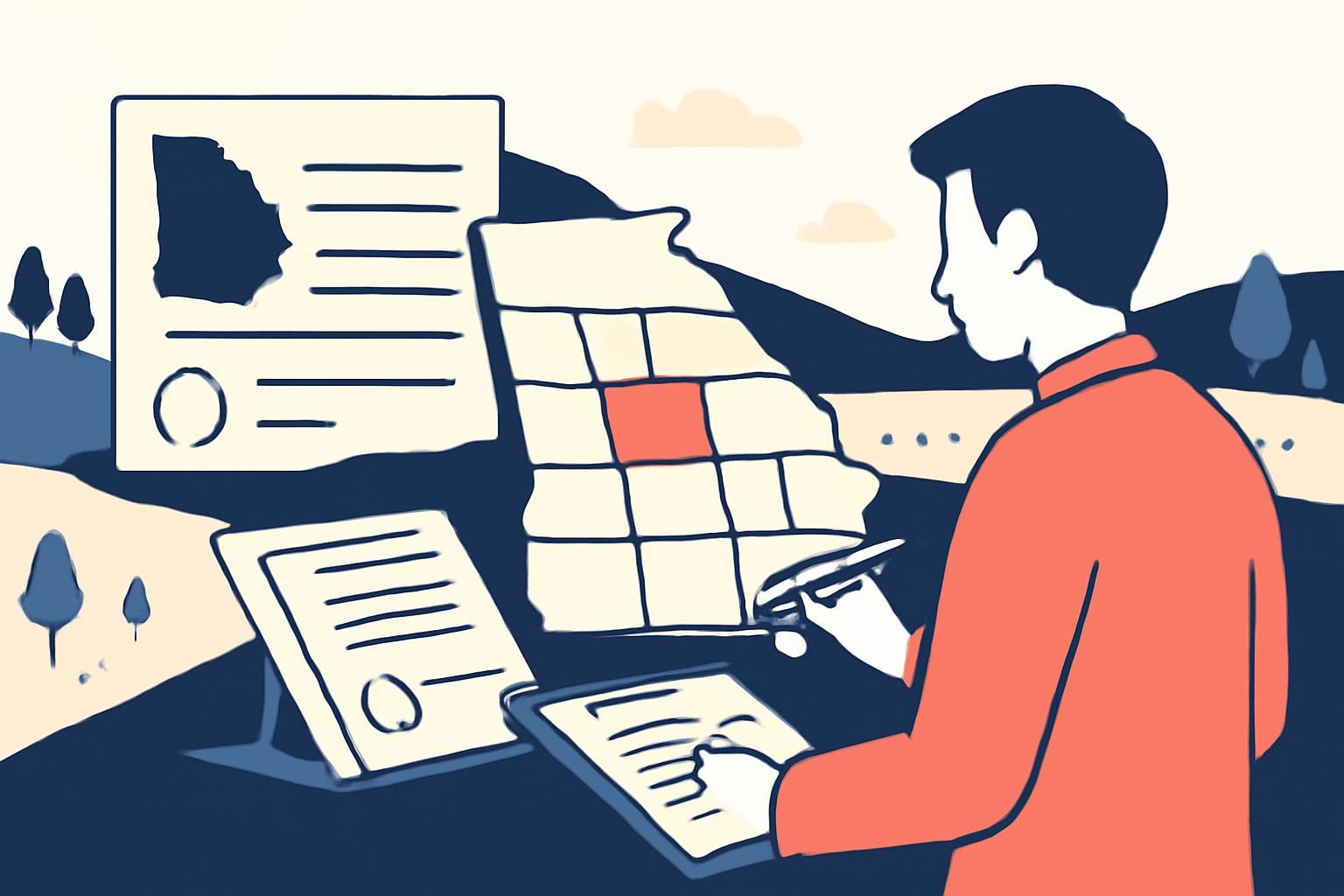
Off grid living in Georgia involves using self-sufficient systems to operate independently from traditional utilities such as electricity, water, and sewer networks. The state’s off grid regulations govern how you can set up these systems safely and legally. This guide explains what off grid regulations are in Georgia, what you need to verify before buying land or building off grid, and how to navigate permits, zoning, and other local requirements to make informed land-investing decisions.
Understanding Georgia’s off grid regulations is essential because they directly impact your ability to develop and use a property off grid. Non-compliance can lead to costly fines, project delays, or the forced removal of structures. This article covers the key regulatory areas to research and confirms who to consult for property-specific verification.
What Are Off Grid Regulations in Georgia?
Off grid regulations in Georgia consist of state and local laws that control how alternative energy, water supply, waste disposal, and building construction are managed outside of public utilities. They ensure off grid systems are safe, environmentally responsible, and meet health standards. Since Georgia’s counties have different codes and zoning rules, off grid compliance depends heavily on local jurisdiction as well as overarching state policies.
Before progressing on a land deal, it matters to confirm all applicable off grid regulations affecting that specific parcel. This verification helps avoid legal risks and unexpected compliance costs that can dramatically alter your project’s feasibility.
Verification: Contact the county zoning office and building permit department where the land is located. Obtain the county’s off grid, energy, water, and waste management requirements in writing. A local land-use attorney or experienced off grid builder can help interpret these rules.
What Types of Off Grid Systems Are Allowed in Georgia?
Georgia generally permits solar, wind, and rainwater collection systems for off grid living, subject to local rules. Each system type has specific installation and safety standards.
Solar Power Systems
Solar photovoltaic panels are widely allowed with relatively few state restrictions but must comply with building codes and local zoning ordinances about placement and structural integrity. Some counties and HOAs impose additional rules on visibility, height, or aesthetics.
📘 Get Your FREE Land Investing Strategy Guide
Discover how savvy investors build passive income with vacant land.
Verification: Check local zoning regulations for solar system installation limits and required building permits. Verify if net metering or grid interconnection is an option if partial grid reliance is planned.
Wind Energy Systems
Wind turbines can be used but often face height restrictions and setback requirements to minimize noise and visual impact. Permits are typically required to confirm compliance with local ordinances.
Verification: Discuss turbine placement, dimensions, and permits with the county planning office. Some areas may prohibit large turbines or require environmental reviews.
Water Collection Systems
Rainwater harvesting is permitted but regulated under health codes to ensure water safety. System design must allow proper storage, filtration, and treatment for potable use.
Verification: Confirm health department regulations regarding rainwater collection and storage on the specific property to ensure potable water standards are met.
Do I Need a Permit for Off Grid Living in Georgia?
Yes, permits are generally required for structures, electrical systems, wells, septic systems, and renewable energy installations. The exact permits depend on the county and the scope of your systems.
Failing to obtain required permits can result in fines, mandatory removal of unpermitted structures, or difficulty selling the property later.
Common Permits
- Building permits for home and accessory structures
- Electrical permits for solar panels or wiring
- Plumbing permits for water systems
- Well permits for drilling groundwater sources
- Septic permits for wastewater treatment systems
Verification: Contact the county building department early to identify all necessary permits and their application process. Review application checklists carefully and budget for permit fees. Consulting a local contractor experienced with off grid projects can streamline this.
What Are the Zoning Requirements for Off Grid Homes in Georgia?
Zoning laws define what land uses and structures can exist on a parcel. Off grid homes must fit within these limits, which can include restrictions on building size, type, minimum lot size, and energy system allowances.
Types of Zoning Impact
- Residential zones: Usually have stricter building and setback rules, affecting the design of off grid homes and systems.
- Agricultural zones: Often more flexible, allowing larger structures and agriculture-related uses that can complement off grid living.
- Special districts: Some counties have overlay zones (e.g., conservation, floodplain) that impose additional restrictions on building and resource use.
Verification: Obtain zoning maps and codes from the county planning department for the subject property. Verify current zoning classification and allowed uses. Ask if variances or conditional use permits are required or feasible if your plans don’t align with existing zones.
How Do Building Codes Affect Off Grid Living in Georgia?
Georgia’s building codes apply to all dwellings, including off grid homes, and cover structural safety, electrical systems, plumbing, and energy efficiency. Meeting these codes means your off grid home will be inspected for compliance and certified habitable.
Non-compliance risks include fines, forced remodeling, or denial of utility connections (if applicable).
Key Code Areas
- Structural design to withstand local wind, snow, and seismic loads
- Electrical wiring standards including for renewable energy systems
- Plumbing and water supply safety
- Fire safety requirements, like smoke detectors and egress windows
Verification: Review the latest Georgia Building Code and local amendments. Work with builders licensed in the county with experience in off grid construction. Schedule required inspections at construction milestones.
Are There Specific Regulations for Well Water Usage in Georgia?
Yes, drilling and using private wells for water supply require permits and must comply with health and safety regulations designed to protect groundwater quality.
For insights on connecting essential services in rural areas, explore our detailed guide on Development, Utilities & Access.
Well installations must meet location, construction, and testing standards.
Permit and Testing Requirements
- Obtain drilling permits from local or state health departments
- Ensure wells are located to avoid contamination from septic systems or chemical sources
- Conduct regular water quality testing for contaminants such as bacteria and nitrates
Verification: Check with the county health department for well permit applications, spacing requirements, and ongoing water testing guidelines. Unpermitted or poorly located wells can result in unusable water and costly repairs.
What Waste Management Regulations Apply to Off Grid Homes?
Off grid homes must manage wastewater onsite, typically through septic systems or approved composting toilets, complying with state and local health codes.
Septic Systems
Septic systems must be designed by licensed professionals and approved by the health department, considering soil absorption capacity and proximity to water sources.
Composting Toilets
Composting toilets may be allowed but must meet sanitation standards to avoid health risks. Proper maintenance and permitting are necessary.
Verification: Consult the county health department for septic system permit requirements and accepted waste treatment options. Avoid parcels where soil or site conditions are unsuitable for certified septic systems.
How Do State and Local Governments Regulate Off Grid Energy Systems?
State policies set the baseline safety and performance standards for alternative energy systems, while local governments enforce zoning, permitting, and technical standards in their jurisdictions.
Incentives like tax credits or rebates may be available but vary by location and system type.
Verification: Review state and local energy department regulations, and inquire with your county about permits, incentives, and restrictions specific to your off grid energy systems.
What Are the Environmental Regulations for Off Grid Living in Georgia?
Environmental regulations protect sensitive ecosystems and natural resources. Off grid projects may face requirements regarding land clearing, water use, and waste disposal to minimize ecological impact.
Some projects require environmental assessments to evaluate potential effects on wildlife, waterways, or soil.
Verification: Check with county environmental or planning departments for any necessary permits or assessments. Conducting due diligence on land characteristics helps anticipate environmental constraints.
Are There Restrictions on Using Renewable Energy Sources?
Using renewable energy such as solar, wind, or hydro is generally allowed in Georgia, but there can be restrictions on system size, placement, or connection to the grid, depending on local rules and HOA covenants.
Verification: Confirm with local zoning and building authorities about any size limits, height restrictions, or HOA rules that could affect your renewable energy plans.
What Are the Fire Safety Regulations for Off Grid Homes?
Fire safety codes require homes to have fire prevention features such as smoke detectors and setbacks from combustible vegetation. Some areas prone to wildfires may require defensible space around structures and fire-resistant building materials.
Verification: Review local fire codes and the recommendations from fire departments in the property area. Incorporate fire prevention strategies into your property plan to reduce risk.
How Do Homeowners Associations (HOAs) Influence Off Grid Living?
HOAs can have significant influence by imposing rules on exterior appearance, structures, and energy systems that may restrict or prohibit certain off grid installations like solar panels or rainwater tanks.
Verification: Before purchase, review the HOA covenants and restrictions closely. Confirm if they allow the off grid features you plan to install and weigh whether HOA rules align with your lifestyle.
What Are the Insurance Considerations for Off Grid Homes?
Insuring an off grid home requires coverage for the structure, renewable energy systems, and liability risks. Not all insurers offer specialized policies for off grid setups, so it is important to disclose your systems fully to obtain appropriate coverage.
Verification: Consult multiple insurance agents experienced with off grid properties. Request written policy terms covering renewable technologies, and understand exclusions and claims procedures ahead of time.
Can I Sell My Off Grid Home in Georgia?
Yes, you can sell an off grid home, but you must disclose the condition and compliance status of off grid systems like solar panels, wells, and septic tanks. Prospective buyers and lenders may require evidence of permits and inspections.
Verification: Before listing, confirm all permits and inspections are up-to-date. Keep documentation ready to share with buyers or agents.
What Are the Tax Implications of Off Grid Living?
Off grid homes are subject to property taxes assessed based on land and improvements. Tax credits may be available for renewable energy installations, but eligibility and amounts vary.
Verification: Consult the county tax assessor’s office and a tax professional to understand property tax assessments and renewable energy incentive programs applicable to your property.
How Can I Stay Updated on Changes to Off Grid Regulations?
Stay informed through county and state government websites, community meetings, and off grid focused organizations. Regular updates help you stay compliant and leverage new incentives or policies.
Verification: Subscribe to local planning department newsletters and join relevant community forums or workshops.
What Are the Common Challenges of Living Off Grid in Georgia?
Challenges include navigating complex regulations, upfront costs of systems, technical maintenance, and occasional limited access to municipal emergency services.
Mitigation: Address these by thorough research, financial planning, professional installation, and building a network of local experts and neighbors.
How Can I Prepare for Off Grid Living in Georgia?
Preparation requires detailed research on laws, land conditions, and system options; developing a realistic budget; and establishing connections with local authorities and off grid communities.
Next Steps: Assemble a project plan with milestones for permits, construction, and system commissioning. Engage professionals with off grid expertise early in the process.
What Resources Are Available for Off Grid Living in Georgia?
Resources include county planning and health departments, online off grid forums, local workshops, and specialized contractors. These can provide guidance on compliance and best practices.
For more details on related topics, see Off grid living in Georgia, energy production regulations, and building codes.
Are There Any Success Stories of Off Grid Living in Georgia?
Yes, many off grid residents successfully manage self-sufficient homes in Georgia’s diverse environments. These case studies often emphasize careful planning, compliance with local regulations, and community support as key to success.
What Future Trends Might Affect Off Grid Regulations in Georgia?
Expect evolving policies that favor renewable energy, improvements in off grid technology, and increased environmental protections which may impact regulations and permit requirements.
How Can I Connect with Other Off Grid Enthusiasts in Georgia?
Join local meetups, online forums, and social media groups focused on off grid and sustainable living to share knowledge, resources, and support.
What Are the Benefits of Living Off Grid in Georgia?
Benefits include greater independence from utilities, potential financial savings over time, environmental sustainability, and tailored lifestyle choices aligned with personal values.
What Are the Risks Involved with Off Grid Living?
Risks include legal issues from permit non-compliance, technical failures in systems, and financial strain from upfront investments and maintenance costs. Awareness and proactive management of these risks is essential.
What Are the Best Practices for Compliance with Off Grid Regulations?
Maintain organized records of all permits and inspections, conduct periodic compliance reviews, and maintain open communication with county authorities and professionals versed in off grid regulations.
How Do Climate and Geography Influence Off Grid Regulations in Georgia?
Georgia’s varied geography affects regulations due to flood risks in coastal areas, wildfire threats in certain regions, and resource availability like sun and wind that impact system design and placement.
Verification: Study local environmental conditions and consult county planners for region-specific restrictions or requirements.
What Are the Long-Term Implications of Off Grid Living in Georgia?
Long-term, off grid living supports sustainability goals, fosters new local communities around self-sufficiency, and may prompt regulatory evolution as off grid lifestyles become more common.
How Can I Advocate for More Favorable Off Grid Regulations?
Participate in local planning meetings, build coalitions with other off grid advocates, and engage policymakers with data and testimonials to promote favorable regulation and incentives for off grid living.
Mini FAQ
What is off grid living?
A lifestyle independent of traditional utilities, relying on self-sufficient energy, water, and waste systems.
Do I need permits for off grid systems in Georgia?
Usually yes; permit requirements depend on systems and local regulations.
What waste management options do off grid homes use?
Septic systems, composting toilets, and approved waste disposal methods as regulated by local health codes.
How can I stay informed about off grid regulations?
Monitor government websites, attend community workshops, and join off grid forums.
Are there financial incentives for renewable energy in Georgia?
Tax credits and rebates may be available; check with state and local programs.
How do I connect with other off grid enthusiasts?
Through local meetups, online forums, and social media groups focused on sustainable living.
What risks come with off grid living?
Legal compliance challenges, safety hazards, and financial uncertainties related to system installation and upkeep.
This content is for informational purposes only. It does not constitute accounting, financial, or legal advice. Please consult a qualified professional before making decisions based on this information.



