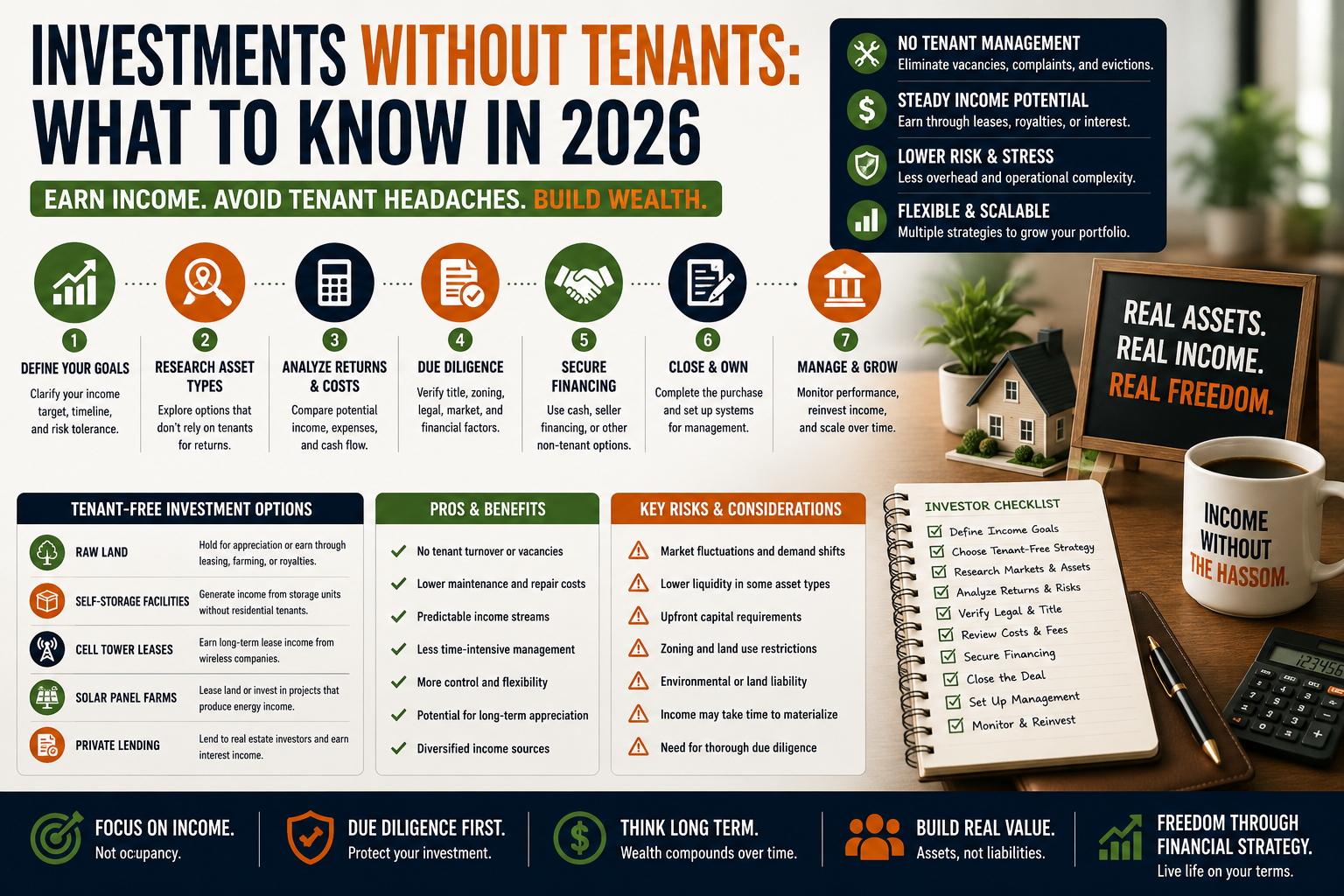
Investing in income-producing assets without tenants offers an alternative to traditional rental properties by eliminating direct tenant management. These investments generate income through mechanisms such as royalties, dividends, or lease payments on land or financial instruments, but they come with distinct operational demands, risks, and liquidity profiles that require careful evaluation. The central tension for investors lies in balancing the desire to avoid tenant hassles against the need to understand income variability, legal complexities, and exit challenges inherent in tenant-free assets.
Choosing the right tenant-free investment depends on your capital availability, risk tolerance, management capacity, and liquidity needs. While some options like publicly traded REITs provide relative ease and liquidity, others,such as mineral rights or timberland,may require specialized knowledge and active oversight. This article clarifies these tradeoffs, highlights unique tenant-free income opportunities in land investing, and outlines practical steps for beginners to navigate this complex landscape in 2026.
What Are Tenant-Free Income-Producing Investments and How Do They Generate Income?
Income Mechanisms Beyond Tenant Management
Tenant-free investments produce revenue without leasing property directly to renters. Instead, income is derived from contractual agreements, royalties, dividends, or usage fees. For example, mineral rights generate royalties based on resource extraction volumes and commodity prices, while REITs distribute dividends from rental income without requiring investors to manage tenants. Storage units collect fees from customers, typically under straightforward contracts. Although these investments avoid tenant relations, they still demand oversight such as verifying income accuracy, monitoring market conditions, and ensuring compliance with legal and regulatory requirements.
Common Types of Tenant-Free Income-Producing Investments
Financial Assets
- REITs (Real Estate Investment Trusts): Public REITs offer liquidity and dividend income by pooling capital to own and manage real estate portfolios. Private REITs may have limited liquidity and require scrutiny of fees, dividend consistency, and financial health.
- Royalties: Income from intellectual property or natural resource rights (oil, gas, minerals). Due diligence must confirm ownership, payment history, contract terms, and audit rights.
- Crowdfunded Real Estate: Platforms aggregate investor funds into projects that generate income without tenant management. Transparency, fee structures, and legal frameworks vary widely and require careful vetting.
Physical Assets
- Land with Mineral Rights: Investors earn royalties from resource extraction. Title verification and lease agreement analysis are critical due to potential separation of surface and mineral rights.
- Timberland: Income arises from sustainable timber harvesting cycles, demanding expertise in forestry management and market timing.
- Storage Units: Generate income through rental fees with minimal tenant interaction, but income depends on occupancy and local demand.
Comparing Tenant-Free Investments to Traditional Rental Properties
Management Effort and Operational Demands
Tenant-free investments reduce direct tenant management but introduce other responsibilities such as contract oversight, income verification, and regulatory compliance. For instance, mineral rights require monitoring extraction and royalty payments, while REIT investors track fund performance and dividend policies. Rental properties demand active tenant relations, maintenance, and leasing activities. Recognizing these differences helps investors avoid underestimating the time and expertise needed.
Income Stability and Risk Profiles
Income from tenant-free assets often fluctuates with commodity prices, lease terms, or market demand. Mineral royalties depend on volatile oil and gas prices; timberland income varies with harvest cycles and global timber markets. Rental properties generally provide more stable monthly rents but carry risks like vacancies and maintenance costs. Investors should weigh income volatility against management complexity and consider diversification to mitigate risk.
📘 Get Your FREE Land Investing Strategy Guide
Discover how savvy investors build passive income with vacant land.
Liquidity and Exit Strategies
Liquidity varies widely among tenant-free investments. Public REITs offer high liquidity through stock exchanges, while crowdfunded real estate may have limited withdrawal windows. Physical assets like land or mineral rights are less liquid, often requiring extended sales processes and specialized buyers. Rental properties have moderate liquidity but involve transaction costs and market-dependent delays. Planning exit strategies carefully is essential to avoid forced sales or unfavorable pricing.
| Aspect | Tenant-Free Investments | Traditional Rental Properties |
|---|---|---|
| Management Effort | Contract and asset oversight; minimal tenant interaction | Active tenant management, maintenance, leasing |
| Income Stability | Variable; influenced by commodity prices, lease terms, market demand | Generally stable monthly rents; risk of vacancy and tenant issues |
| Liquidity | Ranges from high (public REITs) to low (physical assets) | Moderate; sales can be time-consuming and costly |
| Risk Profile | Income volatility, market risk, legal complexities | Tenant risk, property market fluctuations, maintenance liabilities |
Key Risks and Costs of Tenant-Free Income-Producing Assets
Market and Income Volatility
Income streams often fluctuate with external factors such as commodity prices, market demand, and contract terms. For example, mineral royalties depend on extraction volumes and volatile commodity prices; timberland income varies with timber market cycles; storage unit income can be affected by local economic conditions and competition. This variability complicates cash flow planning and requires analyzing historical income patterns and diversification.
Legal, Zoning, and Title Risks
Ownership disputes, liens, zoning restrictions, and environmental liabilities pose significant risks. Mineral rights may be severed from surface rights, necessitating careful title and lease reviews. Zoning laws can limit land uses, restricting income opportunities. Environmental issues such as contamination may impose remediation costs or legal penalties. Comprehensive title searches, environmental assessments, and legal consultations are essential before investing.
Maintenance, Taxes, and Management Fees
Ongoing expenses such as property taxes, maintenance, management fees, and legal costs reduce net income. Timberland requires reforestation and pest control; storage units need upkeep and security; REITs and crowdfunded platforms charge management fees. Investors must factor these costs into income projections to avoid overestimating returns.
Due Diligence Checklist for Tenant-Free Investments
- Verify Clear Title and Absence of Liens: Confirm legal ownership and encumbrances through title companies or attorneys. Unclear title or liens are deal killers.
- Review Income History and Documentation: Obtain contracts, payment records, royalty statements, or dividend reports to assess income reliability. Lack of transparent income history should halt consideration.
- Confirm Legal and Zoning Compliance: Check local zoning maps, permits, and environmental restrictions. Noncompliance can invalidate income potential or impose costly penalties.
- Understand All Fees and Expenses: Obtain detailed fee schedules and expense reports, including management and maintenance costs. Excessive or unclear fees can erode returns.
- Evaluate Market Demand and Liquidity: Research resale markets, buyer pools, and income sustainability to understand exit options. Poor liquidity or limited buyer interest increases risk.
Common Pitfalls and How to Avoid Them
- Assuming tenant-free means low risk or fully passive income; many require active management and carry market risks.
- Ignoring liquidity constraints and ongoing expenses, which can reduce flexibility and net returns.
- Failing to verify legal status and income documentation, risking disputes or income shortfalls.
- Overlooking specialized management needs, such as forestry expertise or mineral lease negotiations.
Practical Scenario: Choosing Tenant-Free Income with $50,000 and Low Management Effort
Setup: An investor seeks steady income without tenant management, has $50,000 to invest, prefers low management effort, and desires moderate liquidity.
Options:
- Invest in a publicly traded REIT focused on commercial properties.
- Purchase a small parcel of land with mineral rights leased for resource extraction.
Facts to Verify:
- Current yield and income stability of the REIT, including dividend history and fund health.
- Lease terms, royalty payment reliability, and production forecasts for the mineral rights.
- Liquidity and exit options for both investments, including market demand and transaction costs.
- Tax implications of REIT dividends versus mineral lease income.
Decision Logic: Compare income stability, liquidity, management effort, and tax treatment. Weigh the investor’s preference for liquidity and minimal management against income variability and exit flexibility. Select the option aligning best with these priorities.
Walk-Away Condition: If income history or lease terms are unclear or unfavorable, or if liquidity is insufficient for investor needs, reconsider or reject the investment.
Next Step: Conduct detailed due diligence on the chosen option and consult a financial advisor if needed to clarify tax and legal implications.
Unique Tenant-Free Income Opportunities Within Land Investing
Leasing Land for Mineral and Resource Rights
Leasing mineral rights can generate royalties from oil, gas, or mineral extraction. This requires thorough title verification, lease term analysis, and environmental liability assessment. Lease agreements specify royalty rates, durations, and operational responsibilities. Investors must evaluate regulatory compliance and potential remediation obligations carefully.
Timberland Income and Management
Income comes from sustainable timber harvesting cycles, requiring active management and forestry expertise to optimize harvest timing, maintain asset health, and respond to market conditions. Risks include pest infestations, fire, and timber price fluctuations. Planning for reforestation and contract terms is critical.
Alternative Land Leases: Cell Towers, Agriculture, and More
Leasing land for cell towers, agriculture, or other specialized uses can provide steady income streams. These leases involve zoning considerations, easements, and contract management. Cell tower leases often offer long-term, inflation-adjusted payments but require negotiation and regulatory compliance. Agricultural leases depend on crop cycles and tenant reliability, typically involving less intensive management than residential rentals.
Tax Implications of Tenant-Free Income-Producing Assets
Varied Tax Treatments by Asset Type
Tax treatment differs significantly across asset classes. Mineral rights income is often treated as royalty income, which may be taxed differently than ordinary income or capital gains. Timber sales can produce capital gains or ordinary income depending on harvest methods and holding periods. REIT dividends generally qualify as ordinary income but may have favorable rates. Storage unit income is typically rental income. Depreciation, passive activity loss rules, and state taxes also affect net returns.
Consulting Tax Professionals
Given the complexity and variability of tax laws, consulting a tax professional familiar with your investments and personal situation is essential. Advisors can help optimize tax outcomes, ensure compliance, and identify deductions or credits relevant to tenant-free income assets.
Liquidity and Exit Options for Tenant-Free Investments
Liquidity Spectrum
Publicly traded REITs offer the highest liquidity, with shares traded on stock exchanges allowing quick transactions at market prices. Crowdfunded real estate platforms may provide limited liquidity windows with restrictions. Physical assets such as land, mineral rights, or timberland are generally illiquid, requiring longer sales processes, title transfers, and specialized buyers. Illiquidity can hinder access to capital during market downturns or emergencies.
Planning Exit Strategies
Exit options include direct sales to individual or institutional buyers, auctions, or transfers to specialized investors. Physical asset sales often involve marketing efforts, legal documentation, and negotiation, extending timelines. Investors should anticipate delays, market fluctuations, and transaction costs to avoid forced sales at unfavorable prices. Partial sales or holding longer may be preferable in some cases.
Decision Framework for Selecting Tenant-Free Income Investments
- Assess Investment Horizon and Capital Availability: Longer horizons accommodate less liquid assets like land or timberland; shorter timelines favor liquid REITs or crowdfunded platforms.
- Balance Risk, Income Stability, and Management Effort: Match tolerance for income variability and management willingness to asset type.
- Align Choices with Financial Goals and Diversification: Consider how tenant-free assets complement other holdings and mitigate portfolio risk.
- Conduct Thorough Due Diligence: Verify legal status, income reliability, fees, market demand, and liquidity before committing capital.
- Plan Exit Strategies and Understand Tax Implications: Prepare for liquidity constraints and tax consequences specific to each asset type.
Frequently Asked Questions About Investments Without Tenants
Can Tenant-Free Investments Provide Reliable Long-Term Income?
They can, but income often depends on market-sensitive factors like commodity prices or lease renewals, which may be less predictable than tenant rents. Careful analysis of income history and diversification can help mitigate variability.
Are Tenant-Free Income Assets Suitable for Small Budgets?
Some options, such as fractional land interests or crowdfunded real estate, may be accessible to investors with smaller budgets. However, many tenant-free investments require substantial capital and ongoing expenses. Assess your budget carefully, including fees and maintenance costs.
How Do I Verify Legal and Zoning Compliance for Land Investments?
Consult county records, zoning maps, and title documents through local government offices or online portals. Engaging a real estate attorney or title company adds assurance. Environmental assessments may also be advisable depending on the property.
What Are the Typical Management Requirements for Tenant-Free Assets?
Management varies: timberland requires forestry oversight; mineral rights need lease monitoring and royalty verification; storage units involve operational management. Understanding these upfront helps ensure proper income generation and avoids surprises.
How Do Crowdfunded Real Estate Platforms Work for Tenant-Free Investing?
These platforms pool investor funds into real estate projects that may generate tenant-free income. Due diligence on platform transparency, fees, asset quality, and legal structure is essential. Review offering documents, platform history, and investor protections carefully.
Is It Necessary to Consult a Financial Advisor Before Investing?
Consulting a financial advisor is recommended, especially for complex tenant-free investments. Advisors help align investments with your goals, interpret legal and tax documents, and reduce risks of costly mistakes.
This content is for informational purposes only. It does not constitute accounting, financial, or legal advice. Please consult a qualified professional before making decisions based on this information.



