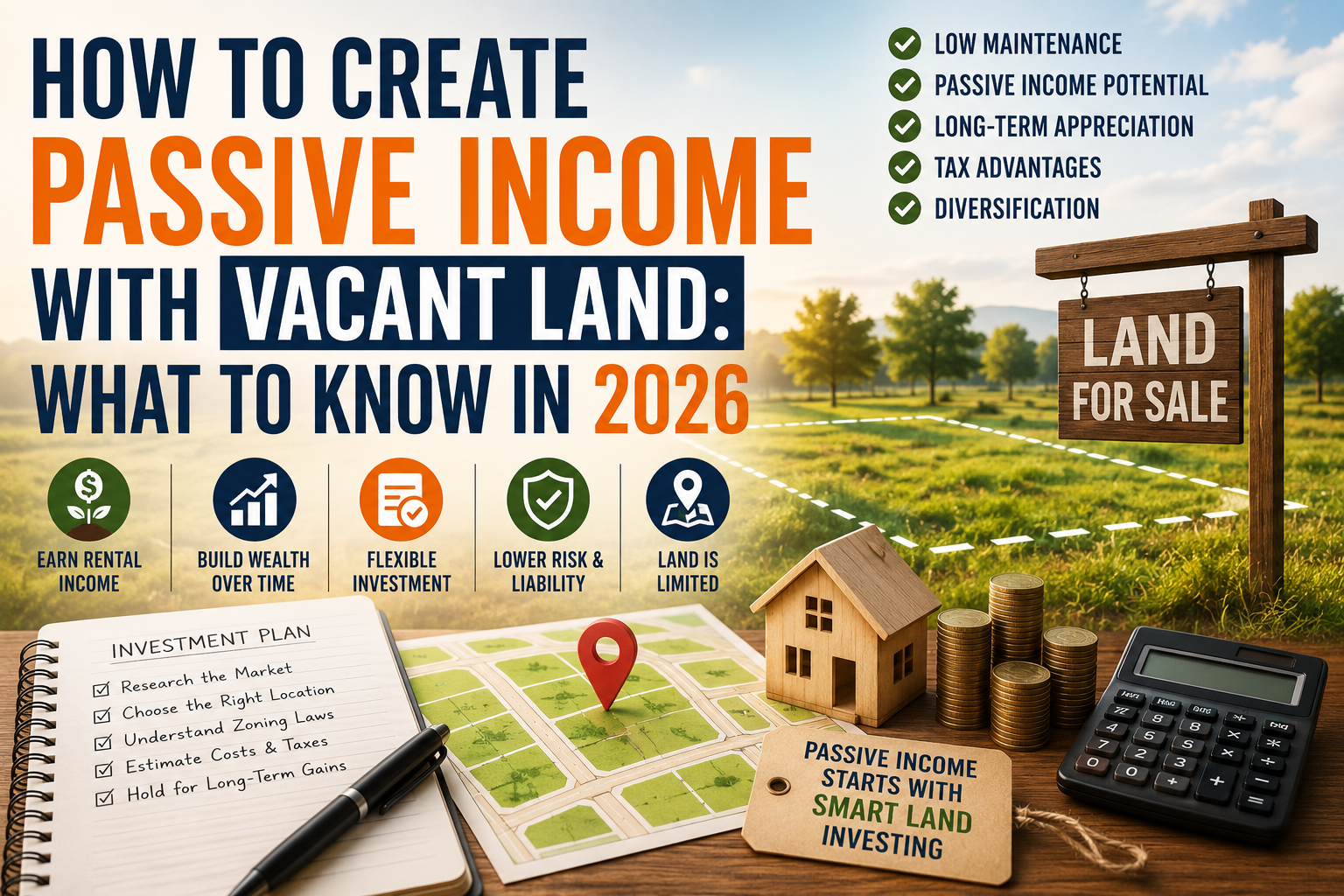
How To Create Passive Income With Vacant Land: What to Know in 2026
Generating passive income from vacant land in 2026 involves leveraging your property’s unique characteristics while rigorously confirming legal permissions, market demand, and management capacity. The key is choosing income streams that fit your land’s zoning and your willingness to oversee tenant compliance and maintenance. Reliable income typically requires ongoing, though limited, management rather than being fully hands-off. This practical guide outlines how to evaluate, select, and sustain passive income opportunities that best match your property and investment goals.
How Can I Create Passive Income with Vacant Land?
Passive income from vacant land usually comes from leasing specific usage rights to others who can utilize the land’s natural resources or location. Common options include solar or renewable energy leases, agricultural and grazing leases, hunting and recreational leases, cell tower or communication infrastructure leases, and conservation easements. Each requires confirming zoning allowances, assessing how much management you can handle, and understanding related risks.
Leases for solar and energy projects often offer long-term contracts with relatively low management, provided your land has good sun or wind exposure and utility access. Agricultural leases depend on soil quality and water availability and involve moderate oversight to prevent land degradation. Hunting leases tend to be seasonal with higher liability risks and require tenant screening and insurance management. Communication site leases offer steady income but involve complex negotiations and zoning compliance. Conservation easements may bring tax benefits or low-maintenance income but restrict land use and can involve legal complexities.
What Should I Verify Before Relying on a Passive Income Strategy for My Land?
Before committing to any income stream, verify your land’s zoning and legal use permissions with the local planning or zoning office. Confirm whether the intended use requires special permits or restrictions that could hinder leasing. Next, research local market demand for that use by consulting county extension services, real estate brokers, or agricultural associations. Assess your land’s physical suitability,soil, water, access roads,that significantly affect tenant interest and upkeep costs.
Evaluate whether the income potential outweighs the upfront costs (improvements, legal fees, insurance) and ongoing management effort. Verify if insurance is available to mitigate liability exposures, especially for hunting or recreational leases. A landlord’s realistic willingness to oversee tenant compliance and land condition is critical to sustaining income and avoiding costly disputes or damage.
How Does a Practical Passive Income Scenario on 15 Acres of Rural Land Illustrate These Steps?
Consider a 15-acre parcel zoned agricultural with limited road access and no existing structures. First, confirm with your county zoning official that agricultural or recreational leases are permitted to avoid legal issues. Then, assess local tenant demand by speaking to local brokers or extension agents,are there farmers or ranchers seeking grazing land? Is there hunter interest?
📘 Get Your FREE Land Investing Strategy Guide
Discover how savvy investors build passive income with vacant land.
Choose between agricultural leases, which typically provide steadier but moderately managed income due to fencing and soil oversight, and hunting leases that require less daily management but higher liability insurance and tenant screening. Limited road access may reduce hunting lease appeal unless you invest in improvements. If liability insurance costs are prohibitive or market demand is low, reconsider or pause leasing plans to avoid overspending without reliable returns.
Once verified, engage legal counsel to draft clear leases identifying rent, tenant and owner duties, insurance needs, and dispute handling. Establish a schedule for inspections and tenant communications to maintain land condition.
What Due Diligence Checklist Should I Complete Before Starting a Passive Income Stream?
- Confirm zoning and land use restrictions: Obtain official local documents to verify allowable uses and identify needed permits.
- Assess environmental and physical conditions: Review soil quality, drainage, topography, and road access that affect usability.
- Research local market demand and tenant reliability: Use brokers and extension offices to understand tenancy prospects and set realistic income expectations.
- Estimate upfront and ongoing costs: Cover improvements, legal fees, insurance premiums, taxes, and management time to ensure income exceeds expenses.
- Review legal and lease requirements: Use qualified attorneys to prepare enforceable leases with indemnification and insurance clauses.
- Secure appropriate liability insurance: Especially essential for high-risk uses like hunting or recreation.
- Plan for management effort and monitoring: Create schedules for site visits and tenant compliance checks to prevent land damage.
- Prepare contingency plans: Set aside reserves and draft flexible leases that accommodate tenant changes or regulatory shifts.
How Do Common Passive Income Streams Compare in Effort, Risk, and Complexity?
| Income Stream | Effort Required | Risk Level | Income Potential | Legal Complexity |
|---|---|---|---|---|
| Solar Lease | Low | Low to Moderate | High | High (permits, contracts) |
| Cell Tower Lease | Low | Low | High | High (negotiations, zoning) |
| Agricultural Lease | Moderate | Moderate | Moderate | Moderate |
| Hunting Lease | Moderate | Moderate to High | Moderate | Moderate |
| Recreational Lease | Moderate | Moderate | Moderate | Moderate |
| Conservation Easement | Low | Low | Low | Low to Moderate |
High income streams usually come with higher legal complexity and may require more active management. Matching your capacity and risk tolerance to the income source is essential for sustainable results.
What Legal and Zoning Issues Must I Confirm Before Leasing My Land?
Ensuring zoning compliance is the foundation for any lease. Obtain official zoning documents from your local planning department and confirm that your intended lease use is permitted. Some uses require specific permits or conditional approvals involving public hearings or environmental reviews. Noncompliance can invalidate leases or trigger fines.
Leases must be formal, detailed agreements defining rent, duration, renewal options, permitted uses, maintenance duties, insurance obligations, and dispute procedures. Indemnification provisions help protect you from tenant-caused liabilities. Retain legal counsel to draft or review all lease documents to reduce risks associated with informal agreements.
Liability management is critical. Secure appropriate insurance and require tenants to carry coverage and indemnify you, especially for uses like hunting where injury risk is elevated.
How Much Management Effort Will Different Passive Income Streams Demand?
| Income Stream | Management Level | Owner Responsibilities | What to Verify |
|---|---|---|---|
| Solar Leases / Conservation Easements | Low | Periodic inspections, lease compliance checks | Lease terms, tenant adherence, site condition |
| Agricultural / Hunting Leases | Moderate | Tenant relations, site visits, liability insurance management | Tenant credibility, local regulations, soil and property condition |
| Timber, Recreational Rentals, Events | High | Property maintenance, marketing, compliance oversight | Owner availability, professional assistance needs |
Underestimating management obligations is a common mistake that risks tenant disputes and loss of income. Assess realistically how much time and effort you can devote before selecting a strategy.
What Risks Should I Consider When Using Vacant Land for Passive Income?
- Zoning and Regulatory Changes: Unexpected changes can block intended uses or force costly adjustments.
- Tenant Financial Reliability and Property Care: Tenant default or misuse threatens income continuity and raises repair expenses.
- Liability and Environmental Hazards: Injury claims or contamination may lead to legal and remediation costs.
- Market and Economic Fluctuations: Changes in demand and lease values can reduce or increase revenue unpredictably.
- Land Condition and Access Constraints: Poor soil, flooding, or difficult access deter tenants or increase maintenance expenses.
Mitigate these risks with thorough tenant vetting, strong lease contracts, adequate insurance, and regular property monitoring. Avoid overcomplicating land use with multiple income streams without clear management plans.
Can Multiple Passive Income Strategies Be Combined on One Property?
Yes, but mixing income streams increases management complexity and legal coordination. For example, you might lease one portion of your land to a solar company while renting other sections for agriculture or hunting.
Conservation easements can sometimes coexist with limited timber harvesting or recreational leases, but overlapping uses must be clearly defined to avoid conflicts or accelerated land degradation. Each lease requires separate contracts, compliance monitoring, and potentially different permits, which increases operational demands.
Carefully evaluate tenant compatibility and cumulative impact on land value and marketability. Some combinations diversify income effectively, while others may reduce future resale prospects or cause tenant disputes.
Frequently Asked Questions About Creating Passive Income with Vacant Land
How Do I Price Land Leases Fairly?
Set lease rates by researching local comparable leases and factoring in your property’s quality, location, and allowed uses. Without solid data, you risk undervaluing your land or deterring tenants with excessive rates. Consult local brokers or extension services to establish benchmarks and adjust for unique conditions.
What If My Income Stream Ends Suddenly?
Income disruptions can result from tenant defaults, regulatory changes, or land damage. Develop contingency plans including reserve funds, flexible lease terms that allow re-leasing or termination, and maintain good tenant communication. Regular lease and market evaluations help anticipate and respond to unforeseen events.
Are There Tax Implications I Should Consider?
Tax consequences vary by lease type and ownership structure. Income from land leases is usually taxable, but some leasing-related expenses might be deductible. Conservation easements can offer tax benefits but involve restrictions. Always consult a tax professional familiar with local rules to understand your specific situation.
Can I Sell My Land While It Has Active Leases?
Yes, but check if leases include clauses about transferability and new owner obligations. Some leases may require tenant consent or have automatic assignment provisions. Active leases can affect sale price and market attractiveness, so disclose lease terms to prospective buyers and factor them into negotiations.
Who Should I Consult Before Signing Lease Agreements?
Work with legal counsel experienced in land leases for drafting or review to ensure enforceability and risk mitigation. Insurance agents can advise on necessary liability coverage. Local zoning officials or land-use planners clarify regulatory requirements relevant to lease terms. Their combined advice reduces financial and legal risks.



