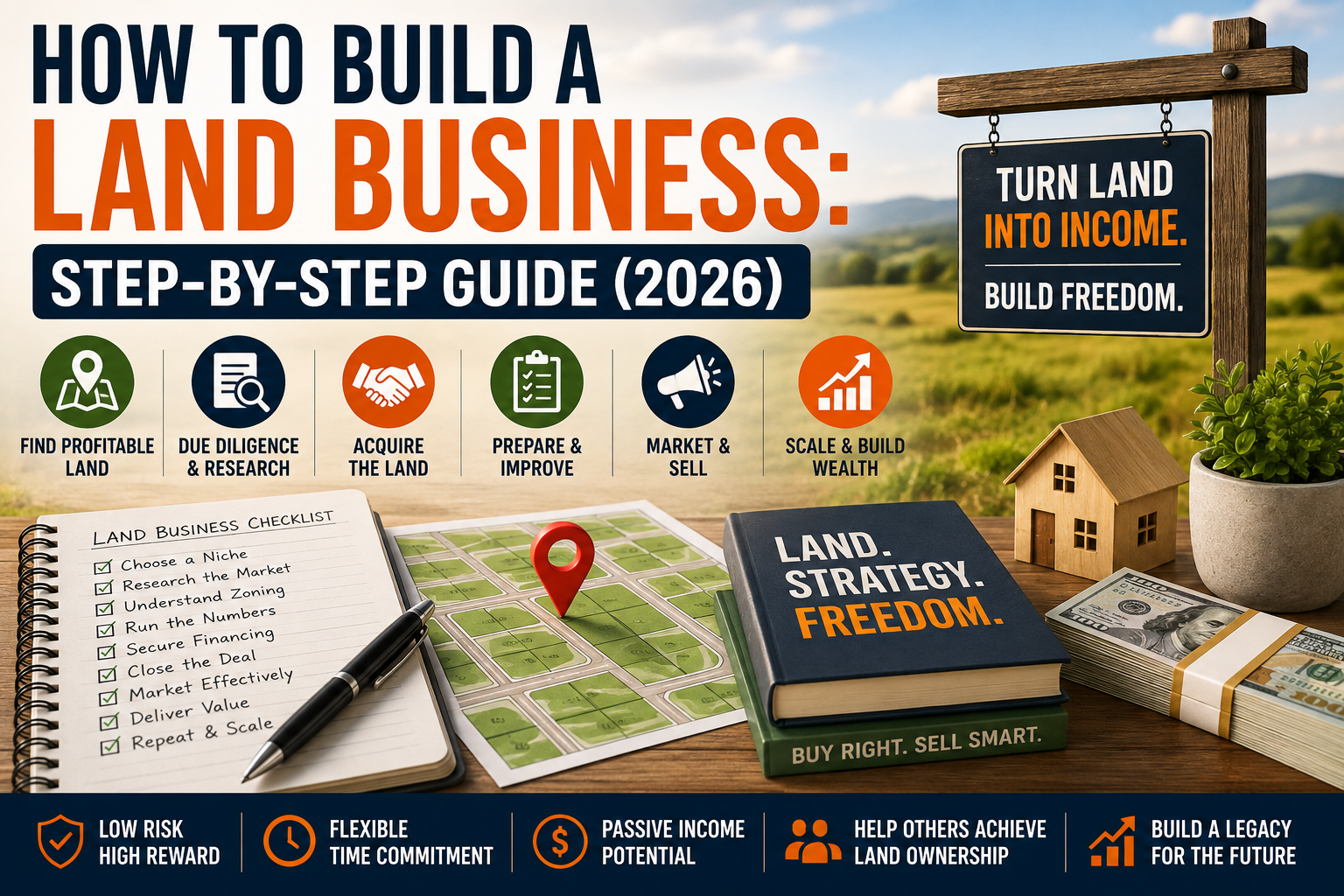
Building a land business requires a disciplined approach that prioritizes verifying clear title and zoning compliance before acquisition. The central tension lies in balancing the need for thorough due diligence and risk management against the desire to move quickly on promising deals. Skipping critical checks can lead to costly legal issues or unsellable properties, while excessive caution may cause missed opportunities.
Strategically using seller financing can reduce upfront capital requirements and expand buyer pools, but it introduces legal complexity and default risk that must be managed with clear contracts and contingency plans. Success depends on developing a repeatable workflow integrating acquisition, financing, marketing, and resale tailored to local market nuances and buyer segments.
How Do I Start a Land Business from Scratch?
Begin by selecting your target land type and acquisition method, then conduct rigorous due diligence focusing first on title clarity and zoning restrictions. Choose financing,cash, bank loan, or seller financing,aligned with your capital and risk tolerance. Establish a repeatable process for sourcing, evaluating, marketing, and selling land parcels.
Key Decision Points and Their Impact
- Acquisition Channels: Direct owner deals offer negotiation flexibility but require relationship-building; auctions can yield bargains but carry title risks and demand quick decisions.
- Financing Options: Cash reduces complexity but limits deal volume; bank loans require qualification and can delay closings; seller financing lowers upfront costs but demands strong contracts and risk controls.
- Land Type Focus: Residential, agricultural, or recreational parcels have distinct demand drivers and regulatory hurdles,choose based on your expertise and local market conditions.
Prioritize verifying clear title and zoning before investing time or money to avoid deal-killing surprises.
Where Can I Find Good Vacant Land Deals?
Combine online listings, local auctions, and proactive outreach to landowners and county offices to uncover motivated sellers and off-market opportunities. Relying solely on online platforms risks overpaying and missing local nuances.
Practical Approaches to Deal Sourcing
- Online Marketplaces: Useful for broad searches but often competitive and less detailed on local conditions.
- Auctions: Tax lien or deed sales can offer discounts but require thorough title and auction rule research.
- Direct Outreach: Contact landowners, real estate agents, and county officials to identify motivated sellers and gain early insights on zoning or infrastructure changes.
What Should I Look for When Evaluating Land Parcels?
Focus first on confirming clear title and absence of liens or disputes, then verify zoning compliance and environmental constraints. Assess legal access and utilities availability, and estimate holding costs to ensure the parcel fits your investment and resale strategy.
📘 Get Your FREE Land Investing Strategy Guide
Discover how savvy investors build passive income with vacant land.
Due Diligence Checklist (Ordered by Consequence)
- Title Report: Confirm ownership and check for liens, easements, or disputes that could block sale or use.
- Zoning and Land Use: Verify allowable uses and pending changes with local planning departments; restrictive zoning can negate intended resale plans.
- Environmental Restrictions: Identify wetlands, flood zones, or contamination that limit development or add costs.
- Legal Access: Ensure public road access or valid easements; lack of access drastically reduces value.
- Utilities: Confirm availability if development is planned; utility connection costs can be prohibitive.
- Holding Costs: Estimate property taxes, insurance, and maintenance expenses to avoid cash flow surprises.
How Do Financing Options Compare for Acquiring Vacant Land?
Cash purchases minimize complexity but require substantial capital. Bank loans offer leverage but involve strict qualification and longer closing times. Seller financing lowers upfront capital needs and increases flexibility but introduces higher risk and legal complexity requiring solid contracts and risk mitigation.
| Financing Type | Upfront Capital | Qualification | Flexibility | Risk Exposure |
|---|---|---|---|---|
| Cash | High | None | Low | Low |
| Bank Loan | Moderate | Strict (credit, income, property) | Moderate | Moderate |
| Seller Financing | Low | Negotiable | High | Higher (buyer default risk, legal complexity) |
How Does Seller Financing Work and How Can I Structure It Safely?
Seller financing involves the seller acting as lender, allowing the buyer to pay over time under a legally compliant contract specifying terms, payment schedule, and remedies for default.
Step-by-Step Process to Structure Seller-Financed Deals
- Verify Seller’s Title and Authority: Confirm clear title and no encumbrances that prevent financing.
- Assess Buyer Creditworthiness: Evaluate payment ability to reduce default risk.
- Draft Detailed Contract: Include down payment, payment schedule, interest, late fees, and default remedies.
- Include Default and Repossession Provisions: Define clear, enforceable procedures and timelines.
- Record Contract with County Recorder: Establish public notice and priority.
Consult a qualified real estate attorney to ensure compliance with state-specific laws and enforceability.
What Are the Typical Holding Costs for Vacant Land?
Holding costs primarily include property taxes, insurance (if applicable), and maintenance such as weed control or fencing. These vary widely by location and parcel size and can impact cash flow and profitability.
Estimating and Managing Holding Costs
- Obtain current tax information from county assessor offices.
- Assess insurance needs based on land use and liability risks.
- Plan for maintenance to preserve access and comply with local codes.
- Factor in any special assessments or homeowners association fees.
What Is the Step-by-Step Process to Flip Land Successfully?
Follow a disciplined workflow: acquire parcels with verified title and zoning, estimate holding costs and resale value, secure appropriate financing, market to targeted buyer segments, and close sales efficiently to minimize carrying costs and legal risks.
Acquisition and Due Diligence Checklist
- Confirm clear title and absence of liens.
- Verify zoning and environmental suitability for intended resale.
- Estimate holding costs and resale value using comparable sales.
- Secure financing aligned with your timeline and risk tolerance.
Marketing Strategies by Buyer Type
- Investors: Emphasize appreciation potential and rezoning opportunities.
- Developers: Highlight zoning, utilities, and infrastructure access.
- Recreational Buyers: Showcase natural features, privacy, and access.
Use a mix of online listings, local agents, signage, and direct outreach. Track inquiry sources to optimize marketing spend and reduce holding times.
Closing and Legal Paperwork
Engage professional title and escrow services to ensure clean ownership transfer. Use clear contracts detailing terms and contingencies. Timely closings help minimize carrying costs and legal exposure.
What Are the Main Risks in Land Flipping and Seller Financing, and How Can I Mitigate Them?
Major risks include title defects, zoning changes, buyer defaults on seller-financed contracts, and unexpected holding costs. Mitigate these through thorough due diligence, strong contracts with default remedies, and contingency planning.
Risk Mitigation Strategies
- Obtain comprehensive title reports and verify zoning and environmental restrictions.
- Assess local market trends to avoid illiquid parcels.
- Require adequate down payments and personal guarantees in seller financing.
- Plan exit strategies such as resale, lease, or partnerships for adverse scenarios.
Practical Scenario: Financing a Vacant Lot When You Lack Full Cash Upfront
If you find a vacant lot priced below market but lack full cash, negotiate seller financing with reasonable down payment and terms or partner with a cash investor to share costs and risks. Ensure clear title and verify local market demand before proceeding.
Scenario Evaluation Steps
- Verify Seller’s Title and Financing Authority: Confirm no liens or restrictions impede seller financing.
- Assess Seller Financing Terms: Evaluate down payment, interest, payment schedule, and default remedies for risk and affordability.
- Estimate Carrying Costs: Calculate taxes, insurance, and maintenance during financing period.
- Verify Market Demand: Confirm comparable sales and buyer interest to ensure resale viability.
Decision Logic and Walk-Away Conditions
If title issues remain unresolved, seller financing terms are unfavorable or unclear, or carrying costs threaten profitability, walk away. Prioritize deals with clear title, reasonable terms, and strong market demand.
Next Step
Request a detailed title report and draft a letter of intent outlining proposed seller financing terms to initiate formal negotiations.
Frequently Asked Questions About Building a Land Business
Can I Build a Land Business Part-Time as a Side Hustle?
Yes, but it requires disciplined time management and realistic expectations. Due diligence and legal processes take time; rushing increases risk of costly errors.
How Do I Handle Zoning or Environmental Restrictions When Flipping Land?
Consult local planning departments and land-use professionals to clarify permitted uses and potential resale or development constraints before purchase.
What Happens if a Buyer Defaults on a Seller-Financed Land Contract?
Default triggers contract-specific remedies such as foreclosure or repossession. Well-drafted contracts and legal counsel are essential to enforce rights efficiently and legally.
Is Land Flipping Better Than Traditional Real Estate Flipping?
Land flipping typically involves lower holding costs and simpler transactions but may have less liquidity and longer sale cycles. Choose based on your capital, risk tolerance, and market knowledge.
How Do I Draft a Seller-Financed Contract?
Use qualified legal assistance to ensure compliance with state laws and clear terms on payments, interest, defaults, and foreclosure procedures. Avoid DIY contracts to reduce legal risks.
What Tools Do I Need to Evaluate Land Parcels?
Essential tools include title reports, zoning maps, environmental assessments, surveys, and local sales data. Systematic use reduces surprises and supports informed decisions.
This content is for informational purposes only. It does not constitute accounting, financial, or legal advice. Please consult a qualified professional before making decisions based on this information.



