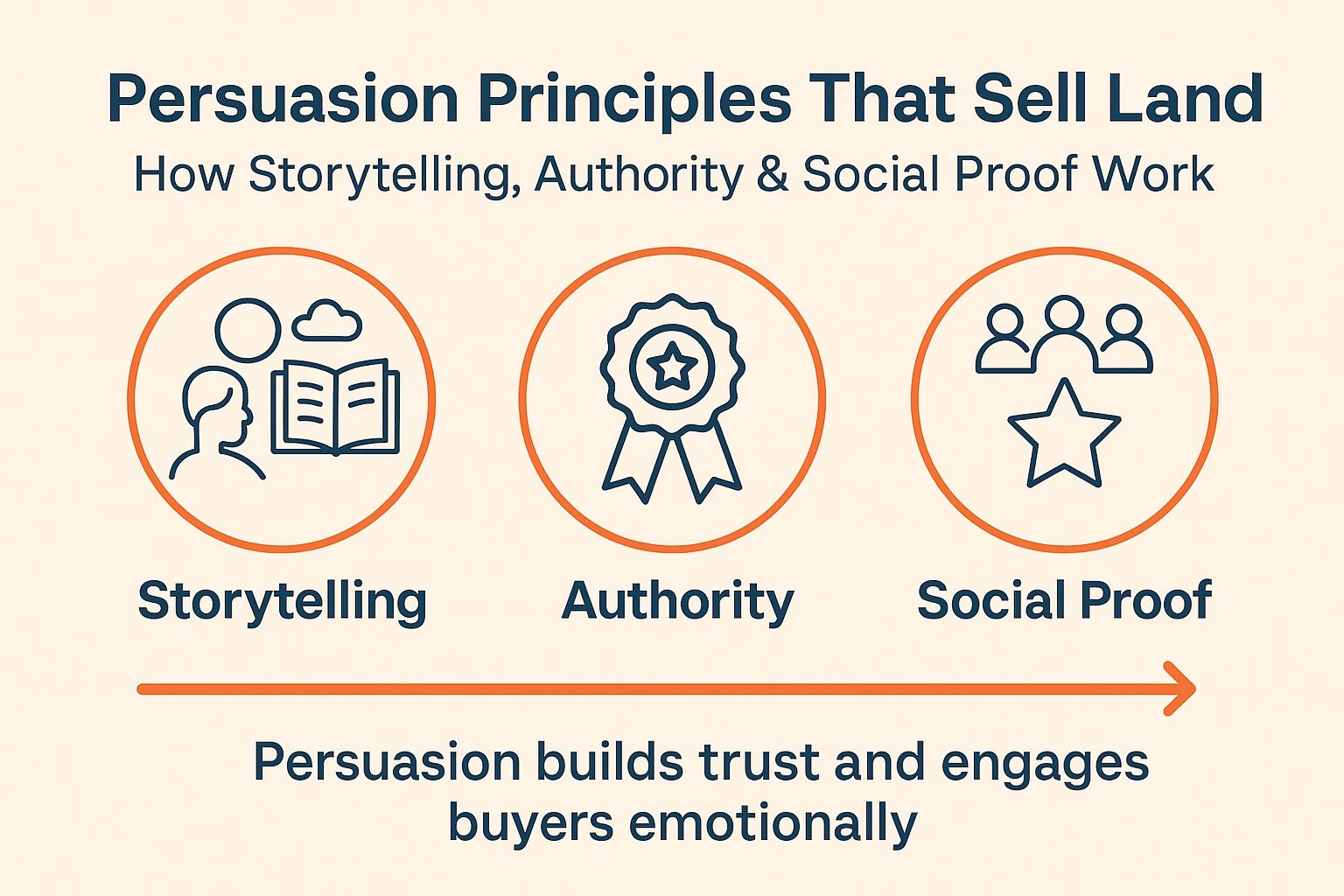
Persuasion sells land when it helps the right buyer understand the property, picture a realistic use for it, and feel confident about the next step. The goal is not pressure. It is to replace uncertainty with clear information, credible proof, and a story that makes the parcel memorable.
Land is different from a house purchase. A buyer may not immediately understand access, terrain, nearby services, permitted uses, or what ownership will actually feel like. Strong land marketing addresses those questions while showing the buyer why this particular parcel may fit their goals.
Why should you use persuasive psychology when selling land?
Persuasive psychology matters in land sales because buyers make decisions with both logic and emotion. Facts help them evaluate a parcel, but trust, clarity, and personal relevance help them decide whether to move forward.
A listing that only states acreage, location, and basic features may be accurate, but it can leave the buyer doing all the mental work. They still have to ask: What could I do here? Is this seller straightforward? What should I verify before I commit?
The practical approach is to make the decision easier without hiding the tradeoffs. Lead with the parcel’s strongest legitimate benefit, explain the features that support that benefit, and be direct about items a buyer should investigate. If a property is suited to privacy, recreation, future use, or a simple long-term hold, explain why using facts that can be supported.
Good persuasion reduces friction. It gives buyers a clear path from initial interest to informed due diligence.
How does storytelling influence land buyers’ decisions?
Storytelling helps a buyer connect property details to a possible future. Instead of seeing a map pin and a list of features, they can understand how the setting, access, terrain, and surroundings may fit the life or project they have in mind.
The key is to tell a grounded story, not an imaginary one that overpromises. A useful land story starts with what is actually present on the parcel and then connects it to an appropriate buyer motivation.
Build the story from verified property facts
- Start with the setting: Describe the landscape, road approach, vegetation, views, or nearby character accurately.
- Name the likely buyer goal: Privacy, outdoor recreation, a future homesite, a weekend base, or land ownership may appeal to different people.
- Connect features to that goal: Explain how the actual features support the use without implying approvals or rights that have not been confirmed.
- Include the buyer’s next verification step: Point them toward questions about zoning, access, utilities, building, water, and restrictions.
For example, rather than saying a parcel is “perfect for a cabin,” describe the road access, tree cover, terrain, and surrounding land pattern, then invite the buyer to confirm local requirements for their intended use. That is more persuasive because it is more trustworthy.
Use the same story consistently across the listing, property video, email follow-up, and buyer conversations. Consistency makes the seller look organized and reduces the chance that a buyer hears conflicting claims.
Before writing the listing, it also helps to understand the audience for the deal. This guide to how to flip land and identify likely buyers can help sellers think beyond generic advertising and match a parcel to a practical buyer profile.
What types of social proof work best for land sales?
The best social proof is specific, truthful, and relevant to the buyer’s concern. It shows that other people have had a clear, professional experience with the seller, rather than trying to create hype around the property.
| Proof type | What it can show | What to verify |
|---|---|---|
| Buyer feedback | Communication and process quality | Permission to publish and accurate wording |
| Documented reviews | Patterns in buyer experience | Source, authenticity, and relevance |
| Process examples | How questions and closing steps are handled | That details are not misleading or confidential |
| Property media | That the parcel is presented clearly | Dates, location, and whether media reflects current conditions |
A strong testimonial does not need dramatic language. It can explain that the buyer received clear answers, understood the paperwork, or appreciated straightforward communication. Those details address the concerns a new land buyer is likely to have.
Do not use altered reviews, anonymous praise presented as a customer statement, copied endorsements, or claims that cannot be substantiated. If a buyer allows you to share feedback, preserve its meaning and do not add claims they did not make.
You can also use social proof through your operating process. A well-organized property page, current maps, clear contact information, responsive follow-up, and a transparent due-diligence checklist all signal professionalism. For broader context on collecting and assessing buyer feedback, see the Land Geek testimonials guide.
How can authority and credibility help you sell land?
Authority in land marketing comes from being accurate, prepared, and helpful. Buyers do not need a seller to sound impressive. They need confidence that the seller understands the parcel, communicates honestly, and knows where the buyer should seek local confirmation.
Build credibility by preparing a property file before marketing begins. This should include the information you can verify, such as parcel identification, maps, known access details, available surveys or reports, and the right local offices or professionals to contact for use-specific questions.
Show competence without overstating expertise
- Use current, clear photos and maps that match the property being offered.
- Answer direct questions with direct answers, including “I do not know” when appropriate.
- Separate known facts from assumptions and buyer plans.
- Explain the general purchase process without giving legal, tax, title, engineering, or zoning advice beyond your expertise.
- Encourage the buyer to verify intended use with the relevant county office, title professional, surveyor, lender, attorney, or other qualified local professional when needed.
A common mistake is treating authority as self-promotion. Credentials, experience, affiliations, and prior work should only be mentioned if they are accurate and relevant. In most cases, detailed property knowledge and consistent communication do more to build trust than broad claims about success.
Pricing also affects credibility. A buyer can sense when the asking price has no relationship to the parcel’s market context. A disciplined vacant land pricing strategy helps you frame value clearly without relying on exaggerated claims.
What persuasive mistakes should you avoid in land marketing?
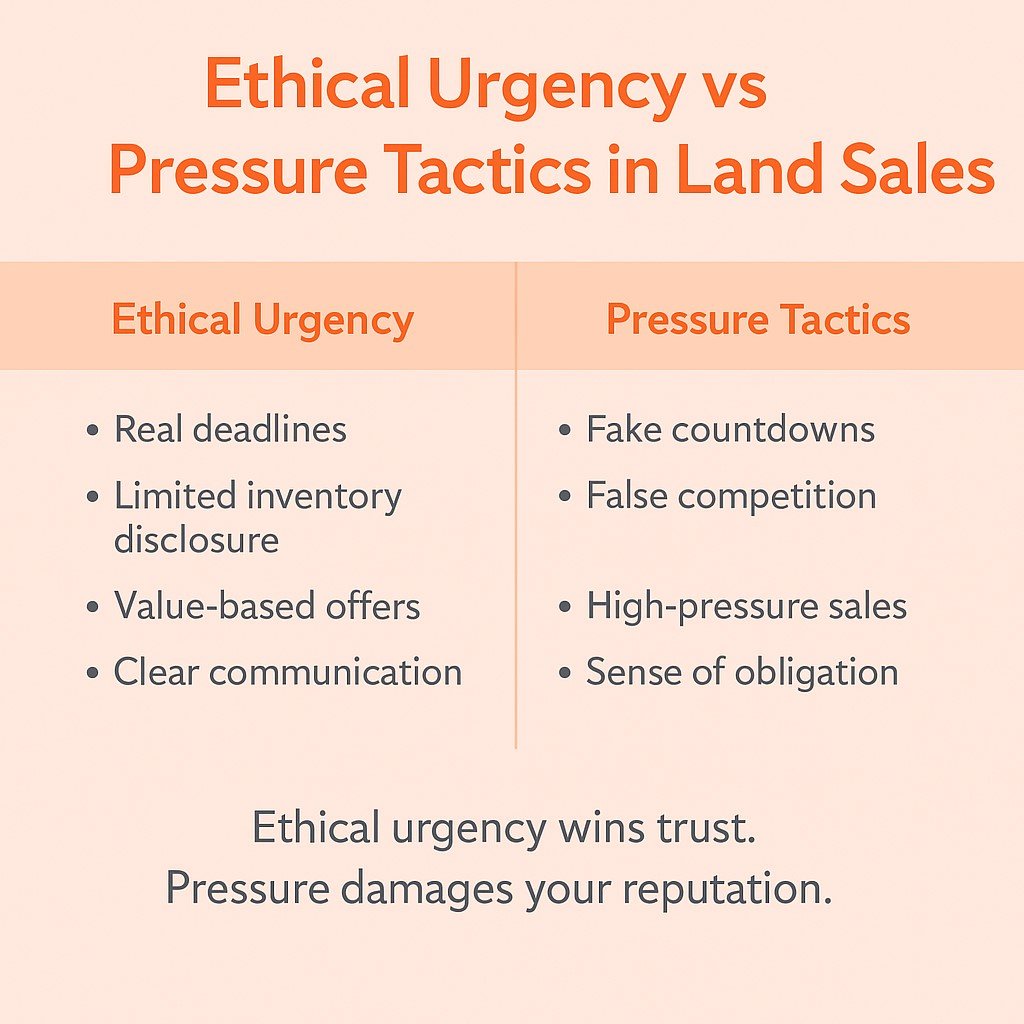
The biggest persuasive mistake is trying to create urgency or certainty that the facts do not support. Land buyers often have legitimate questions, and evasive or overly promotional copy can cause them to disengage.
- Overhyping possible uses: Do not describe a property as buildable, unrestricted, subdividable, or suitable for a particular project unless that claim has been verified and presented with appropriate context.
- Hiding friction points: Access, terrain, easements, restrictions, flood conditions, utilities, and neighboring uses can matter. Explain what is known and what the buyer must confirm.
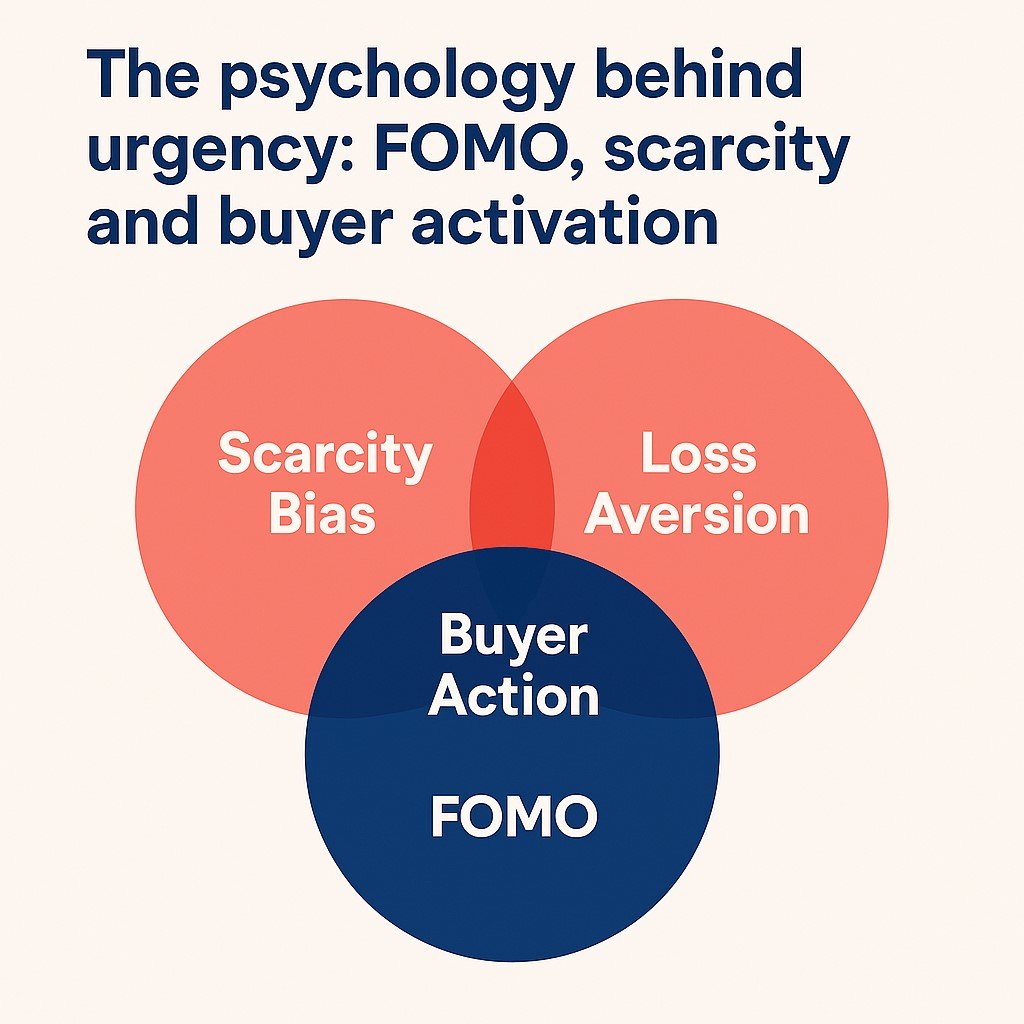
- Using false scarcity: A real deadline or competing interest can be communicated honestly. Manufactured urgency damages trust.
- Writing generic copy: Phrases like “dream property” and “won’t last” do not tell a buyer what makes the land useful or distinctive.
- Failing to follow through: If a listing promises maps, answers, documents, or a call back, deliver what was promised promptly and accurately.
Scarcity can be legitimate when it reflects a real condition, such as a seller’s actual decision deadline or confirmed buyer activity. The important distinction is transparency. For responsible ways to frame urgency, review how to create urgency and scarcity in land sales.
How do you create a persuasive land listing workflow?
A persuasive listing workflow begins with due diligence and ends with a clear buyer path. If the underlying information is thin or inconsistent, better copy will not solve the trust problem.
- Gather and organize the property facts you can support.
- Identify the most likely buyer motivation based on the parcel’s actual characteristics.
- Write a clear opening that connects the property to that motivation.
- Present practical details in scannable sections, including what should be verified locally.
- Add authentic proof of your process and communication standards where available.
- Use a simple call to action that invites a question, property review, or next due-diligence step.
Think of the listing as a guided decision tool. The buyer should finish it knowing what is appealing about the land, what they need to investigate, and how to get a straight answer from the seller.
Mini FAQ: Persuasive psychology in land sales
Can you be persuasive without being pushy?
Yes. Ethical persuasion gives a buyer relevant information, acknowledges uncertainty, and helps them evaluate the parcel. Pressure begins when a seller tries to rush a decision or conceal important facts.
What is the simplest way to add storytelling to a land listing?
Start with a real property feature and connect it to a realistic buyer goal. Describe the setting accurately, then explain what the buyer should verify before planning a specific use.
Should you mention potential concerns in the listing?
Yes, when a concern is material and known. Clear disclosure and a practical explanation of what to verify can attract better-qualified buyers and prevent wasted conversations.
How do you build trust with a first-time land buyer?
Be organized, answer questions plainly, provide accurate property materials, and distinguish facts from items that require local professional confirmation. Trust grows when the buyer feels informed rather than managed.