Land investing for beginners starts with a clear intended use, a realistic budget and a plan for verifying the parcel. You may pursue resale, leasing or a longer hold, but low purchase prices do not guarantee low risk. Check access, title, permitted use and total costs before committing.
This guide gives you a step-by-step approach to evaluating, purchasing, managing, and selling land investments wisely. You’ll learn how to pinpoint the most important factors that affect value and risk, how to do proper due diligence on every property, and how to develop a strategy based on your specific financial goals and local market conditions.
Understanding land investing well can protect your money and increase the chances you buy land that works for your intended use and budget.
How do you buy land for investment?
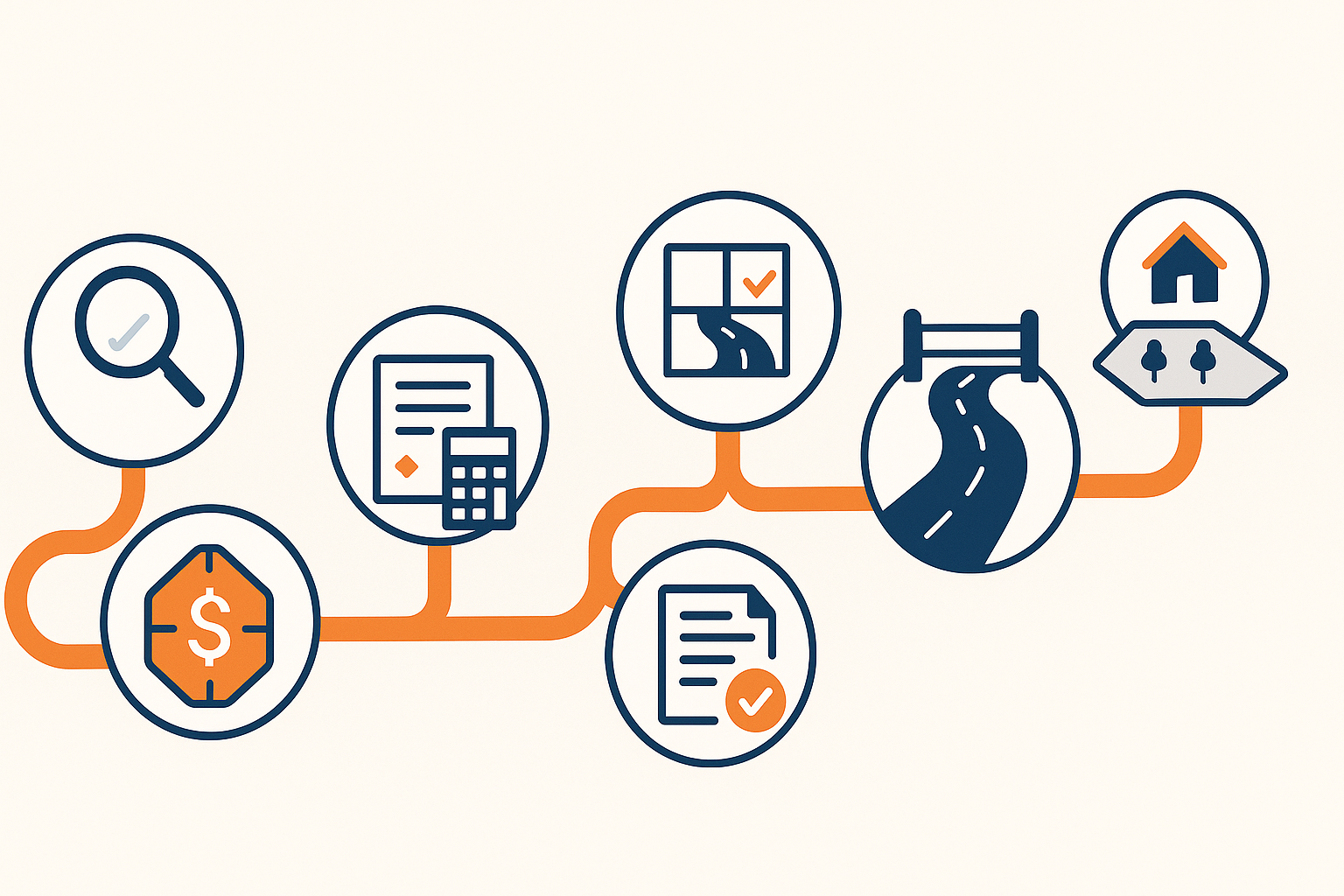
- Define the exit. Write down who would lease or buy the parcel, the use they need and the most cash you can commit through resale.
- Screen the parcel. Match the listing to the county parcel number. Check comparable closed sales and ask the planning office about the intended use.
- Set your offer ceiling. Subtract acquisition, holding and selling costs and your required margin from a defensible resale estimate.
- Verify before closing. Have a local closing professional check title and recorded access. Track outstanding inspections, costs and contract deadlines in writing. Resolve any item essential to your exit before committing funds.
What is Land Investing?
Land investing means buying undeveloped or minimally developed land parcels to generate a profit through later resale, development, or leasing. Unlike buildings or rental properties, land itself is a tangible asset you can hold and sell without building maintenance, although taxes, vegetation, access roads, liability and any lease arrangements still need attention.
Understanding this distinction is key before you invest. Raw land (vacant and unimproved) offers different risks and rewards than improved land (with utilities, roads, or structures). Before making an offer, identify exactly what type of land you’re buying and what uses are feasible based on county zoning and local development plans.
Types of Land Investments
The main categories for land are:
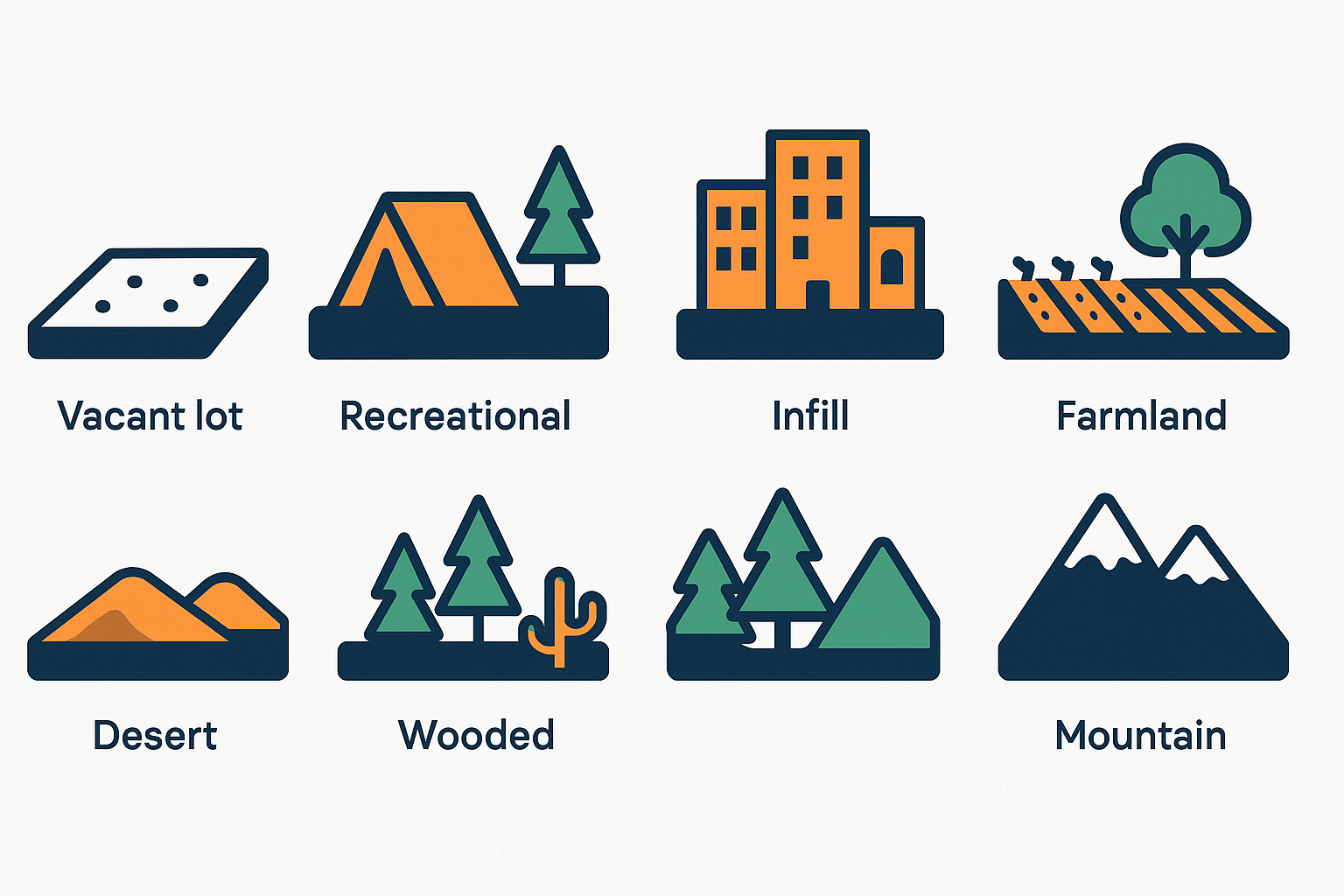
- Residential: Planned for housing or subdivisions, often subject to strict local zoning and development rules.
- Commercial: Zoned for businesses, offices, or retail developments; market risk depends heavily on local economic conditions.
- Agricultural: Used for farming or ranching, value influenced by soil quality, water access, and commodity markets.
- Industrial: Intended for factories or warehouses, with location and infrastructure access being critical.
Decide early which land type fits your strategy and verify permitted uses by contacting the county planning or zoning office. Buying without verifying land use restrictions is a frequent cause of costly mistakes.
Why Should Beginners Consider Land Investing?
Land investing may suit beginners willing to research parcels and tolerate uncertain resale timing. Entry cost, competition and development potential vary by market. Success depends on confirming location-specific facts that affect value and risks, not on broad promises about market cycles or quick flips.
How Does the Low Barrier to Entry Help?
Many land parcels sell for considerably less than developed properties, making initial investment capital requirements lower. But a low price doesn’t mean low risk,do not overlook due diligence steps like title checks and zoning verification.
What About Potential Returns and Competition?
Land in growing areas can appreciate sharply as demand grows, but this varies widely by location and local development plans. Also, many investors avoid land because of unfamiliarity, which can create opportunities. Still, verify market demand and recent comparable sales to set realistic expectations and avoid overpaying.
What are the main ways to invest in land?
Start with how you expect to get paid: resale, rent, or a future sale after improvements. Each strategy requires different evidence. If you want real estate exposure without owning a parcel, research funds or REITs separately and verify what they actually hold.
| Strategy | How it could earn money | Evidence to get first |
|---|---|---|
| Buy and resell | Sell to a buyer who values the parcel’s verified use. | Recent closed sales with similar access, utilities, permitted use, and buyer demand. |
| Buy and lease | Collect rent from a farm, recreational, or other permitted use. | Comparable signed rents where available, local tenant demand, and a budget for vacancy and owner expenses. |
| Buy and hold | Sell later if the parcel appreciates enough to cover cumulative costs. | A carry-cost budget and a plausible exit buyer supported by closed sales. Test a case with flat prices. |
| Improve or develop | Sell or lease after creating a more usable property. | Planning feedback, preliminary cost estimates, utility availability, and comparable sales or leases for the finished property. |
Direct ownership gives you control over a specific parcel and responsibility for its costs. With a REIT, you buy exposure to a real estate business. Review its holdings, fees, and liquidity before assuming it provides exposure to vacant land. See Investor.gov’s guide to publicly traded REITs.
How do you calculate the break-even price on a land investment?
Add the purchase price, buying costs, and cumulative holding costs. Divide the total by one minus the share of the sale price you expect to pay in selling fees. This estimates the gross sale price needed to cover those costs before income taxes.
For example, suppose a parcel costs $20,000, buying costs are $1,000, and one year of holding costs is $1,800. With selling fees of 6% of the sale price and no other selling costs, break-even is about $24,255 ($22,800 ÷ 0.94). If it takes another year at the same holding cost, break-even rises to about $26,170. At a $25,000 sale after two years, the example produces a $1,100 loss before income taxes.
Use the latest comparable closed sales to test both holding periods. If those sales only support $25,000 and your timeline is uncertain, recalculate your offer or pass. If you plan to lease the parcel, model rent and vacancy separately before relying on rental income to cover the hold.
Can you afford to hold the land if it takes another year to sell?
Using the example above, closing uses $21,000 of cash for the parcel and buying costs. Keeping a separate $3,600 holding reserve would cover two years at $1,800 per year, assuming no rent, no borrowing, and no unexpected work. That brings the two-year cash budget to $24,600 before selling fees.
The average cost is $150 per month, but bills can arrive together. Put the actual property tax and insurance due dates on a calendar. If you finance the purchase, replace the cash purchase price with the down payment in your upfront budget and add the scheduled loan payments to your cash forecast. Include any balloon payment due before your planned sale.
Test the month when your available cash is lowest. If a tax bill or loan payment would force a sale before a buyer is likely to close, revisit the purchase price, financing terms, or reserve before making an offer.
How do I start land investing for beginners?
The starting point is a clear process: define your investment goal, research markets, set a budget including all associated costs, and gather verified data sources.
Step 1: Identify Your Intended Use
Clarify what you want to do with the land,hold for appreciation, develop a project, lease for income, or flip quickly. Your strategy impacts where and what type of land to pursue.
Step 2: Research Local Market Conditions and Regulations
Before making offers, check multiple data points with local county offices and trusted real estate professionals:
- Zoning and Land Use: Confirm permitted uses and development requirements with the county zoning or planning department.
- Title and Encumbrances: Order a title report to uncover liens, easements, or disputes that could affect ownership or development potential.
- Topography and Utilities: Assess if the terrain and access to utilities support your intended use.
Investors who skip local verification frequently face unexpected costs or are unable to proceed with their plans.
Step 3: Set a Budget with All Costs Included
Include purchase price, due diligence (title, survey, environmental assessment), closing costs, property taxes, insurance, and potential preliminary development costs. Understand that even raw land may require maintenance like weed control, access road upkeep, or fencing.
How Do I Determine the Value of Land?
Determining land value starts with a comparative market analysis (CMA) looking at recent sales of similar properties nearby. However, raw price comparisons alone don’t capture key influencers like legal access, usable acreage, zoning, or environmental restrictions. Adjust your valuation by verifying:
- Legal Access: Confirm recorded easements or road access. Unresolved legal access can severely limit use, financing and resale; obtain professional review rather than guessing its effect on value.
- Usable vs. Total Acreage: Steep terrain, wetlands, or protected areas reduce usable land. A survey or site visit can clarify this.
- Zoning and Restrictions: Verify current zoning allows your intended use and check for future rezoning trends with planning officials.
- Utilities: Availability of water, electricity, and sewer can materially affect both development and agricultural operations. Confirm the requirements for your intended use.
Online listings and automated valuations can provide screening signals but never substitute for county records, surveyed boundaries, or onsite inspection.
How can a beginner tell which land sales are comparable?
Start with closed sales that serve the same buyer. Compare recorded access, permitted use, usable acreage and utility costs before comparing price per acre. A similar lot size or ZIP code can hide differences that change what a buyer will pay.
Try this before making an offer. You find a two-acre lot listed at $12,000. You plan to resell it as a homesite. The listing says there is a road nearby, and water and wastewater service are still unverified. Three nearby records appear in your search:
- $18,000 closed sale: A two-acre lot with recorded road access and similar utility uncertainty. Use it as a starting point if local records confirm a similar permitted use and the subject’s access is verified.
- $27,000 closed sale: A two-acre homesite with confirmed public water and sewer connections. Set it aside unless you can support an adjustment for the different utility conditions.
- $22,000 active listing: A competing parcel that can help you see other choices buyers have. Leave its asking price out of your closed-sale estimate.
In this example, $18,000 is a lead to investigate, and one sale alone gives you limited evidence. Look for more closed sales that match the property, ask the title professional to verify access, and confirm utility availability and costs with the providers. If the evidence supports a lower-value use, build a new set of comparable sales for that use before pricing an offer.
What Are the Key Due Diligence Steps Before Buying Land?
Due diligence is the process that protects your investment by uncovering risks or limitations:
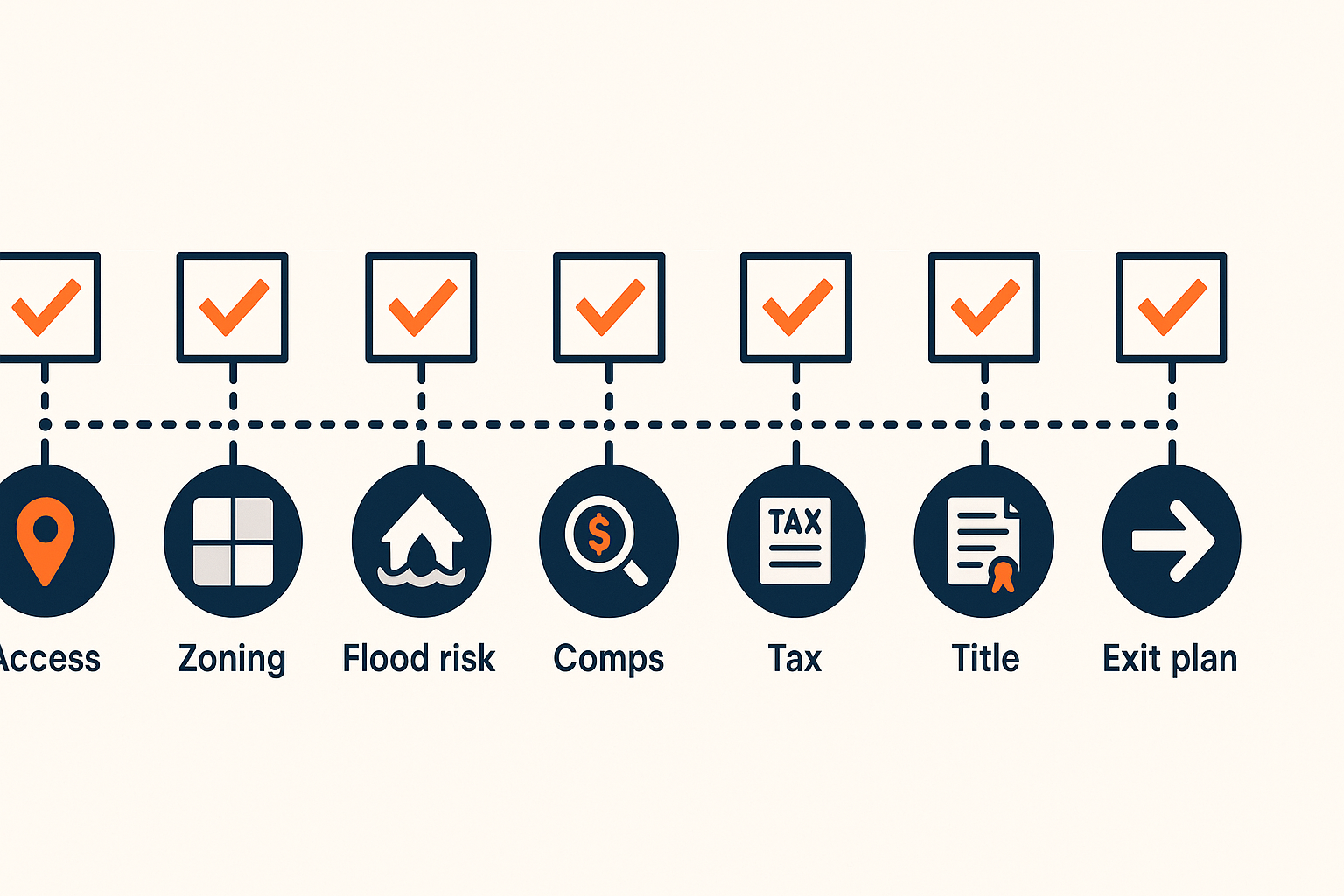
- Title Search: Obtain a title report from a reputable title company to identify liens, easements, or ownership disputes. Resolve title defects with the closing professional before committing to close; some defects can be cured and others may justify terminating under the contract.
- Survey: Hire a licensed surveyor to confirm boundaries, identify encroachments, and verify lot size and shape.
- Environmental and Site Assessments: Check for contamination, wetlands, or protected species on the land using state environmental agencies or professional assessments.
- Zoning Verification: Confirm zoning with the county planning office, including any restrictions or upcoming changes.
- Legal Access and Road Maintenance: Verify existence and maintenance responsibility of access roads; private roads may incur ongoing costs or disputes.
Completing these steps can reveal deal breakers or negotiating points before money is committed.
What financing supports land investing for beginners?
Land loans are more difficult to qualify for than home mortgages and often require a sizable down payment. Alternatives include cash purchases and seller financing.
Things to Consider When Choosing Financing
- Cash Purchases: Simplify closings and make offers more appealing to sellers but tie up liquidity.
- Land Loans: Available from some lenders, with terms depending on the borrower, parcel and intended use. Do not assume a USDA home-loan program funds standalone vacant land; verify the specific program and project eligibility. Confirm interest rates, down payment requirements, and prepayment penalties before applying.
- Seller Financing: Can enable deals when conventional loans are unavailable, but negotiate clear terms and have all agreements reviewed by an attorney.
Regardless of method, include all financing costs when setting your budget and exit price.
How Do I Close a Land Deal Successfully?
Closing involves making a clear offer with contingencies, completing full due diligence, and executing legal agreements with transfer of funds and title.
To reduce risk:
- Make offers conditioned on clear title and zoning confirmation.
- Use an escrow or title company to handle funds and recording.
- Engage a local real estate attorney if unfamiliar with land-specific contract nuances.
What mistakes matter most in land investing for beginners?
Beginners frequently make errors that undermine their returns or cause sunk costs. Key pitfalls to avoid include:
- Skipping Due Diligence: Not verifying zoning, title, or access leads to surprise legal issues or unusable land.
- Overpaying Based on Asking Prices: Always perform your comparative market and condition analysis before making an offer.
- Ignoring Holding Costs: Budget for ongoing taxes, insurance, and required maintenance even if you don’t actively use the land.
- Assuming Development is Easy: Building permits, environmental restrictions, and infrastructure costs can be substantial and vary greatly.
How Can I Market and Sell Land for Top Dollar?
Successfully selling land depends on timing, presentation, and pricing. Follow these strategies:
- Time the Market: Sell when demand and comparable sales indicate higher prices. Track local market reports and sales trends.
- Enhance Curb Appeal: Confirm permissions before clearing vegetation or changing access; use accurate photos, signage and detailed property information to create a strong first impression.
- Price Strategically: Base asking price on recent sales of similar properties adjusted for your land’s unique features and restrictions.
- Use Multiple Channels: List on online marketplaces, network with local investors, and use a real estate agent with land expertise for wider exposure.
What Should I Know About Environmental and Legal Regulations?
Environmental laws may limit land use through wetlands protection, endangered species habitats, or pollution rules. Always check with local environmental agencies before buying.
Legal restrictions such as conservation easements or private covenants may also affect development potential. Property-use limitations should be confirmed via title review and public records search.
How Can I Build a Reliable Network in Land Investing?
Connect by joining local real estate clubs, attending land investing seminars, and participating in specialist online forums. A good network provides access to off-market deals, mentorship, and local insights not available from public sources alone.
How Can I Invest in Land Remotely (Out of State)?
Out-of-state land investing is achievable with due diligence modifications:
- Thoroughly research local laws, zoning, taxes, and market conditions using county offices and legal experts.
- Use virtual tours, drone footage, and trusted agents to inspect the property.
- Confirm remote closing procedures and acceptable documentation with your closing agents or attorney.
Local representation and trusted contacts are especially important to manage property maintenance and legal compliance from afar.
What Are Signs of a Good Land Investment Opportunity?
Look for these key indicators:
| Indicator | Why It Matters | Verification Source | Red Flag |
|---|---|---|---|
| Market Growth Potential | Population and employment trends can inform demand research but do not guarantee appreciation. | Local government planning or economic reports. | Declining or stagnant population. |
| Community Development Plans | Verify project funding, completion and parcel-specific benefits before assigning value. | County planning department and public meeting records. | A valuation that depends on unapproved or unfunded projects. |
| Access to Utilities | Availability of water, electricity, and roads enables development. | Utility companies and survey reports. | No legal access or lacking essential utilities without feasible alternatives. |
How Do I Protect My Land Investment?
Protection strategies include:
- Purchasing suitable land insurance for hazards and liability.
- Securing your rights with clear title and legal easements.
- Monitoring property condition regularly to prevent deterioration or unauthorized use.
Consult your insurance agent and legal counsel to tailor protections to your property and circumstances.
What Should You Do Next to Move From Reading to Taking Action?
Land investing success comes from following a systematic process that minimizes mistakes and maximizes opportunity. Start by identifying your specific investment goals and budget, then thoroughly research local regulations and market conditions. Complete full due diligence for each property: verify title, zoning, access, and environmental factors before making an offer.
Consider further education such as the Dirt Rich book or The Land Geek’s land investing bootcamp. Use these resources to build your process, then verify each purchase independently. Education does not establish that a specific deal will be profitable.
How do beginners turn land research into a buying decision?
Use a written decision file that connects each investment assumption to evidence. Identify the likely buyer or permitted use, verify the constraints, obtain cost estimates and calculate a downside case. Proceed only when essential unknowns have been resolved.
Which free maps help screen a parcel?
Start with official parcel, flood and soil information, then record the source and date for each finding. Maps help prioritize questions but do not certify ownership, boundaries or buildability. Confirm important conclusions with the appropriate local agency or professional.
The FEMA Flood Map Service Center provides official flood-hazard mapping. USDA Web Soil Survey provides soil information for planning; some engineering and soil assessments require onsite investigation. Neither tool replaces a survey, septic approval or local permit review.
What belongs in a first-parcel budget?
Separate purchase costs from investigation, site work, holding and resale expenses. Obtain quotes for the items that matter to the intended use. Preserve cash for delays instead of spending the full available budget on the purchase price.
| Budget line | Evidence to collect |
|---|---|
| Purchase and closing | Contract terms and closing estimate |
| Due diligence | Title, survey and specialist investigation quotes |
| Site readiness | Access, utilities and required approval estimates |
| Ownership | Taxes, insurance, maintenance and financing costs |
| Exit | Comparable closed sales and selling-cost estimates |
| Reserve | Extra holding time and identified cost uncertainties |
Use a base case and a downside case. For example, calculate what happens if the property takes twice as long to sell while the resale price is lower than expected. The appropriate inputs come from your market and finances, not a universal return target.
When should you renegotiate or walk away?
Pause if you cannot verify the intended use, legal access, ownership or essential services before the contract deadline. Price a fix only when its feasibility and cost are documented. If the solution depends on speculation, reconsider the purchase.
A road drawn on GIS is not an access opinion; a nearby power line is not a connection quote; a neighboring septic system is not approval for your parcel. Keep these distinctions in the decision file and discuss contract options with your adviser.
Land investing for beginners: frequently asked questions
How can a beginner start investing in land?
Choose an intended use and market, set a budget that includes holding and resale costs, then evaluate a parcel using verified sales and property records. Complete title, access, zoning and site checks before the applicable contract deadlines.
Does vacant land produce passive income automatically?
No. A parcel may generate no income while taxes, insurance and maintenance continue. Leasing or seller financing require separate agreements and ongoing responsibilities. Model the cash flows of the actual strategy rather than assuming ownership produces income.
Can online maps prove a parcel is buildable?
No. Online maps are screening tools. Buildability depends on parcel-specific rules and conditions, including access, setbacks, wastewater, utilities and environmental constraints. Obtain the relevant local confirmations and professional investigations for the planned use.