Land banking in 2026 means strategically purchasing parcels of land,often undeveloped or underused,with the intention to hold them until their value increases enough to sell at a profit or develop. It’s a long-term land investment strategy that relies on anticipating growth driven by urban expansion, infrastructure improvements, or demographic trends. This guide focuses on practical, decision-critical advice every land investor should verify before committing funds to land banking.
Understanding when land banking makes sense and how to evaluate each opportunity can protect you from common pitfalls and position you for returns in today’s changing markets.
What is land banking and how does it work?
Land banking involves buying land to hold for future resale or development once market conditions or regulations improve its value. Investors select parcels anticipating appreciation from urban growth, zoning changes, or infrastructure projects. The key is to buy below intrinsic value, hold patiently, and exit when demand rises. This requires validating growth prospects, legal constraints, and costs before purchase to avoid holding land that stagnates or depreciates.
Here’s what to verify early on:
- Intended use of the land: Is your plan residential, commercial, or speculative holding? Confirm allowable uses with the county zoning office.
- Legal access: Ensure recorded legal access by public right-of-way or easement to avoid unusable land.
- Comparable sales data: Obtain recent, local sales of genuinely similar parcels to estimate fair value.
Beware of parcels without guaranteed access, complicated ownership, or restrictive zoning that conflict with your intended use; these can be grounds to walk away.
Why consider land banking as an investment in 2026?
Land banking offers potential long-term appreciation due to scarcity and growth-driven demand, often with lower volatility than stocks or developed real estate. It is attractive for investors who want to diversify beyond conventional assets and have patience to hold land through slow appreciation periods. Additionally, tax treatments favor long-term capital gains if held accordingly, though exact rates vary locally and must be confirmed with a tax advisor.
Before investing, verify:
- Historical appreciation trends in targeted areas from county sales records or real estate databases.
- Local plans for infrastructure or development from regional planning agencies to assess growth drivers.
- Potential holding costs including property taxes, which vary widely and can offset appreciation.
If these factors align, land banking can complement your portfolio as a stable, inflation-hedged asset class.
What kinds of land are viable for land banking?
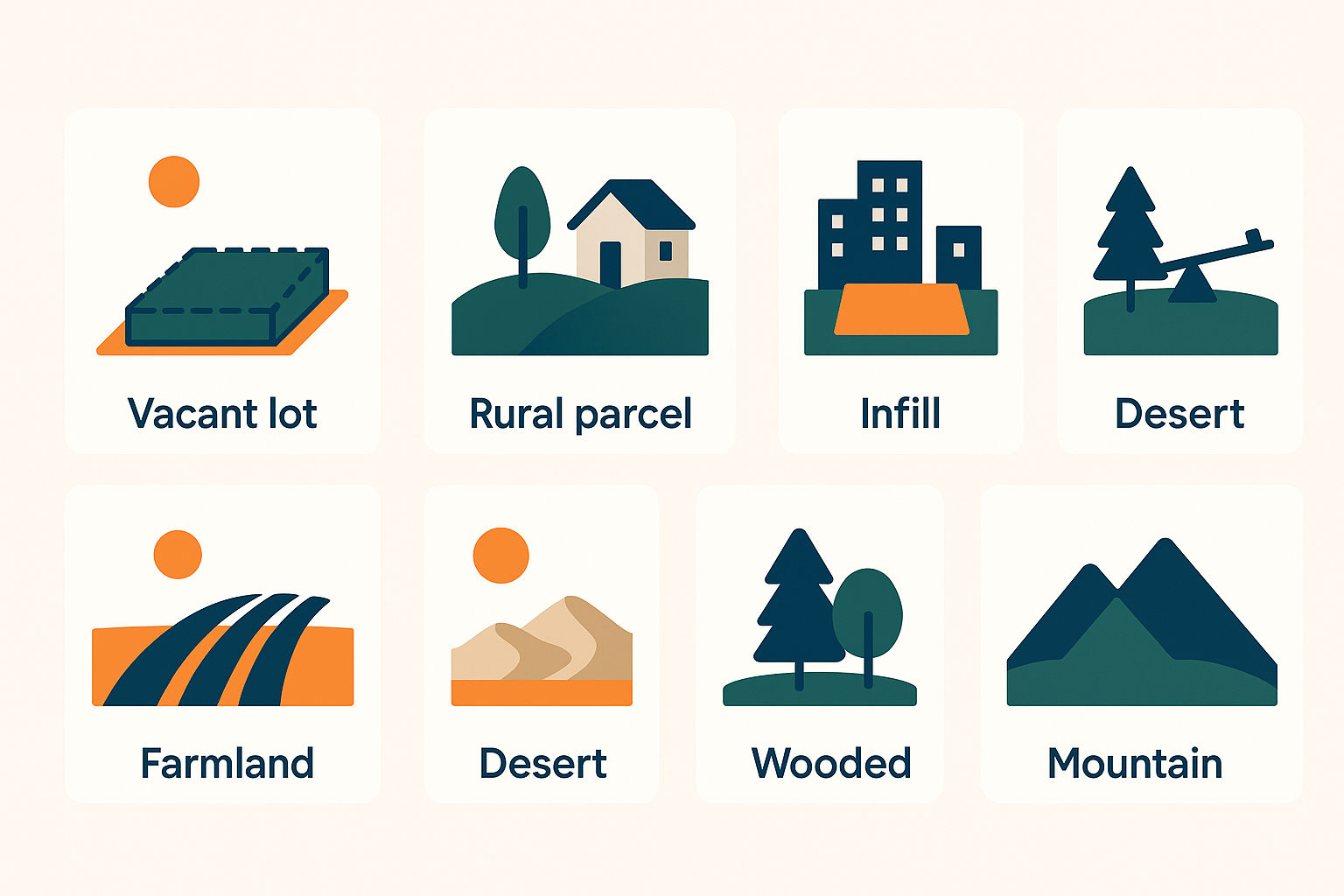
Three primary categories suit land banking, each with unique risk and return profiles:
| Type of Land | Description | Verification Needed | Investment Implication |
|---|---|---|---|
| Raw Land | Undeveloped, no utilities or improvements | Check topography, access, zoning, environmental restrictions (e.g. wetlands permits) | Lower initial cost but higher risk and holding costs; long-term appreciation potential |
| Developable Land | Land ready for building, with utilities and access | Confirm development approvals, utility availability, zoning compliance | Higher cost but can appreciate faster due to immediate build potential |
| Commercial Land | Zoned for business use: retail, industrial, offices | Verify commercial zoning, market demand for business property, traffic and accessibility | Often appreciates with economic growth but sensitive to market cycles and regulations |
A common mistake is overlooking zoning or environmental restrictions that limit future use. Always confirm with local planning departments and title records before purchasing.
How do you identify promising land banking locations?
Start with areas exhibiting sustained population growth, planned infrastructure projects, or economic development plans. Then verify site-specific details:
- Demographic and economic trends: Use county planning and census data to confirm growing job markets and populations.
- Zoning designations: Check county zoning maps and overlay districts to ensure land supports desired uses or likely interim changes.
- Public infrastructure plans: Review local government project lists for new roads, utilities, schools, or transit impacting land value.
Next, cross-check with real estate sale records for comparable land performance and on-the-ground access. Red flags include lack of confirmed legal access, environmental restrictions, or stagnant local economies.
What risks should you consider with land banking?
Land banking carries specific risks that impact value and liquidity:
- Market cycles: Land prices can stagnate or decline during economic downturns; long holding periods increase exposure to market risk.
- Environmental and legal constraints: Unpermitted wetlands, flood zones, or contamination can severely limit use and resale prospects.
- Regulatory changes: Unexpected rezoning, land use restrictions, or tax increases can reduce profitability.
Mitigate by conducting thorough due diligence, including environmental site assessments and title searches, and by consulting local land-use professionals to identify known or probable regulatory shifts before buying.
How much capital do you need to start land banking?
The investment amount depends heavily on land type, location, and your holding strategy. Raw land in rural areas may cost less upfront but come with ongoing carrying costs (property tax, insurance). Conversely, developable or commercial land in growth corridors demands higher capital but may appreciate more rapidly.
Budget for:
- Purchase price plus closing costs: Estimate 2–5% of purchase price for closing fees, title insurance, and surveys.
- Holding costs: Property taxes and maintenance throughout the holding period; confirm local property tax rates with the county assessor’s office.
- Due diligence expenses: Title searches, environmental reports, land surveys to confirm usability and legal standing.
Financing options vary,traditional loans often require larger down payments for land than for developed real estate, and seller financing or partnerships may reduce upfront cash needs but add complexity. Always evaluate financing terms with a lender or qualified advisor familiar with vacant land loans.
What are the key steps to start land banking?
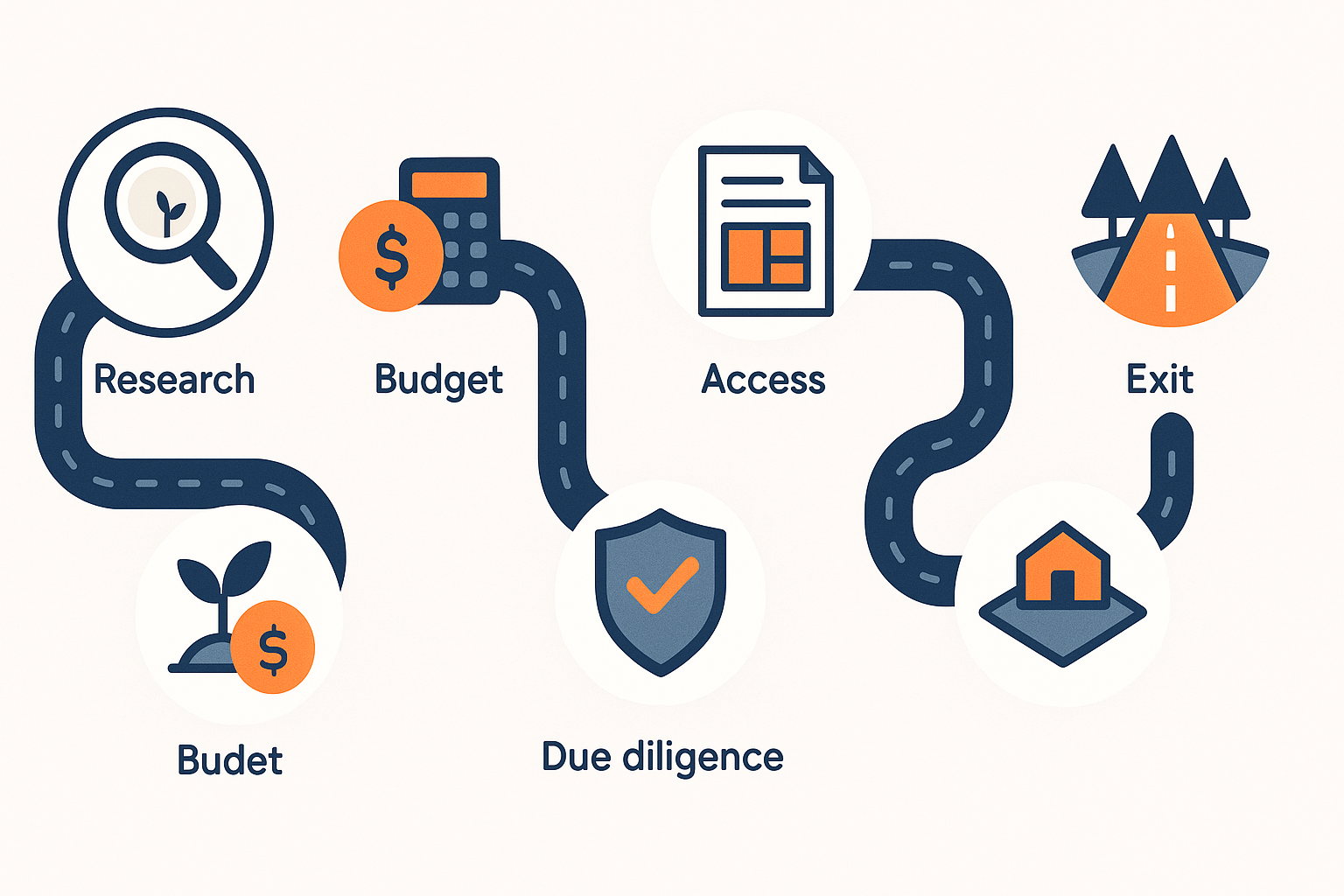
Follow this workflow to reduce risk and make informed land banking investments:
- Define your investment goal: Decide on intended use, investment horizon, and expected returns.
- Research target markets: Identify growth regions by analyzing census data, job growth, and local plans.
- Find and vet properties: Use MLS listings, real estate agents specializing in land, and public records to locate options matching your criteria.
- Conduct due diligence: Verify ownership/title with a title company, confirm legal access, check zoning and environmental restrictions via county agencies, and perform surveys.
- Secure financing or funds: Arrange capital or financing terms suitable for your holding strategy.
- Close the purchase: Engage a real estate attorney to review contracts and ensure clean title transfer.
- Manage and monitor: Keep property taxes current, monitor local market changes affecting land value, and update your exit strategy accordingly.
Skipping any step can increase risk of ownership problems, liability, or poor returns.
How do you evaluate a land banking opportunity effectively?
Focus on these factors to assess opportunity viability:
- Comparable sales: Review recent sales of similar parcels nearby for valuation benchmarks.
- Zoning and land use: Confirm the highest and best allowed use to estimate redevelopment or resale potential.
- Physical characteristics: Evaluate terrain, access, flood zones, and environmental conditions impacting usability.
- Holding costs vs. expected appreciation: Model property taxes, insurance, and maintenance against forecasted land value gains in your target market.
If evaluations reveal misaligned uses, unfavorable holding costs, or uncertain market prospects, reconsider or adjust your offer accordingly.
What legal considerations must you understand before purchasing land?
Land ownership and use are controlled by records and local laws you must verify to protect your investment:
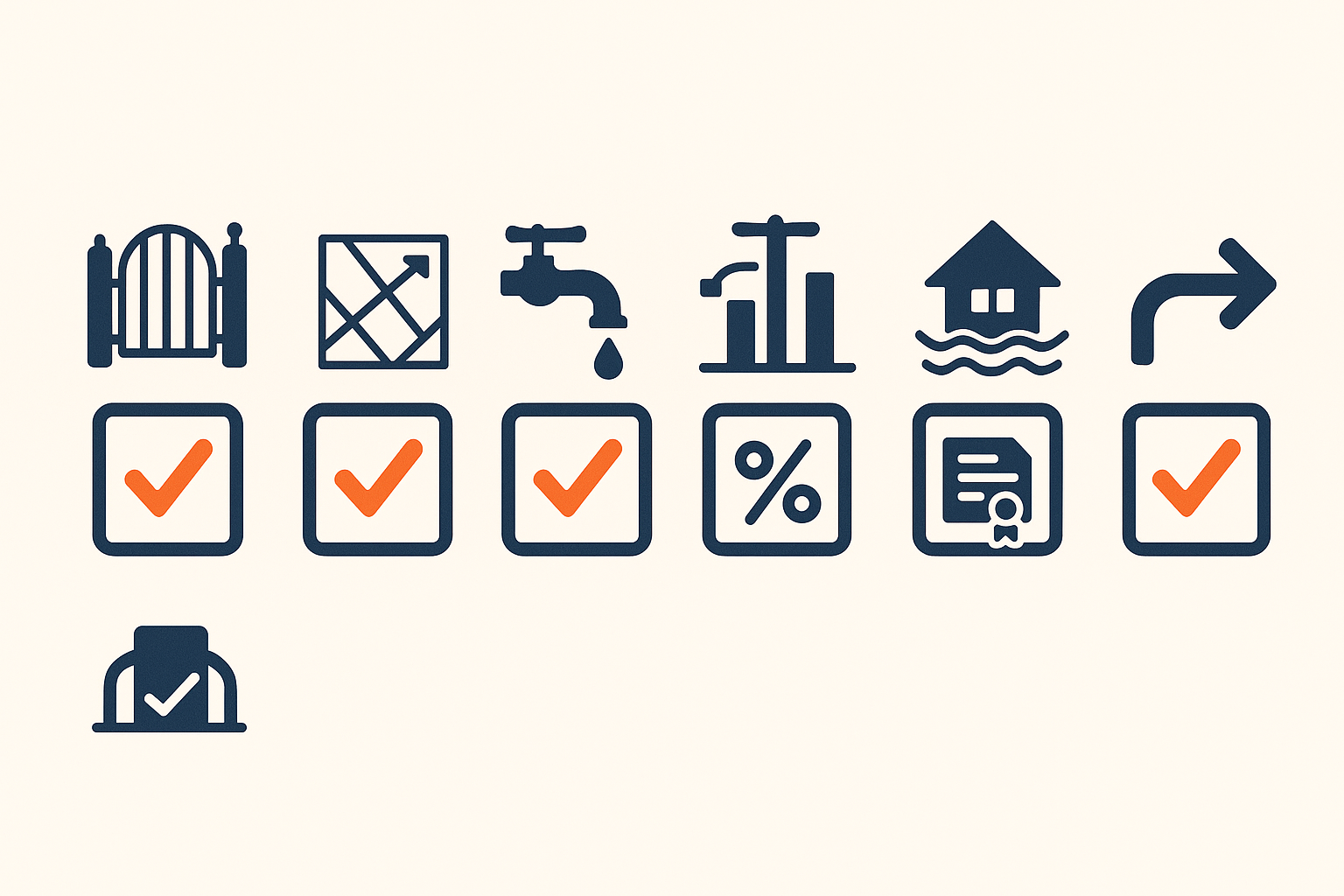
- Title and ownership: Conduct title searches to confirm the seller’s legal ownership, free from liens or encumbrances.
- Zoning restrictions: Review zoning codes and future land use plans from the local planning department to verify permitted uses.
- Environmental regulations: Check for wetlands, flood zones, conservation easements, or other restrictions through county and state environmental agencies.
- Access rights: Confirm recorded easements or public road access; landlocked parcels have limited resale potential.
Engage a real estate attorney or title company familiar with local land laws before closing to avoid surprises that could derail your plans.
How does land banking fit into a diversified investment portfolio?
Land banking offers diversification by adding a physical, non-depreciating asset class that typically behaves differently than stocks or bonds. It can serve as a hedge against inflation and market volatility, especially over long holding periods.
Verify your risk tolerance and liquidity needs first. Due to generally lower liquidity of land and potential for extended holding times, ensure land aligns with your broader portfolio goals and cash flow requirements. A mix of land types and geographic diversification further spreads risks.
What role do real estate agents play in land banking?
Real estate agents specializing in land can help investors by:
- Identifying off-market or under-advertised parcels suited for land banking strategies.
- Providing localized knowledge about zoning, access, and buyer demand.
- Negotiating purchase terms and helping navigate complex transaction paperwork.
Use agents experienced with land investments, not just general real estate, to maximize the value of their insights and networks.
How can you find land banking opportunities?
Start with multiple sources for leads:
- Online land listings: Use specialized platforms and MLS with advanced filters for land type and price.
- Local auctions and tax sales: These sometimes offer discounted land but require extensive due diligence.
- Networking: Attend land investor meetups and join communities to learn about off-market opportunities.
Each source comes with verification needs: online listings require confirming accuracy; auctions need title and condition checks; networking requires vetting offers critically.
What financial metrics matter in land banking analysis?
| Metric | Purpose | Verification Step | Impact on Decision |
|---|---|---|---|
| Return on Investment (ROI) | Estimate percentage gain relative to costs | Calculate from purchase price, holding expenses, and projected sale price based on comps | Helps decide if expected gains justify investment and holding time |
| Holding Costs | Ongoing property tax, insurance, maintenance | Contact county assessor and insurers for accurate rates | High holding costs can erode returns or require adjustments in purchase price |
| Cash Flow | Income generated (e.g., leasing) minus expenses | Verify lease agreements or income potential if applicable | Sometimes negative in raw land; understand how that affects your liquidity |
How can you finance land banking investments responsibly?
Because land typically lacks immediate income, lenders consider it higher risk, demanding larger down payments and shorter loan terms. Verify financing options: traditional land loans, seller financing arrangements, or partnerships can reduce upfront cash needs but require clear terms and legal documentation. Consult lenders experienced with land transactions and weigh interest rates and repayment flexibility against your investment timeline.
What are the usual tax implications in land banking?
Property taxes accrue annually and vary widely; verify rates with the local assessor’s office. When selling land, capital gains tax applies, typically favoring long-term holdings, but exact treatment depends on your jurisdiction and your tax situation,consult a tax professional. You may be eligible for deductions related to property taxes and maintenance expenses; keep meticulous records to support your filings.
How do current market trends influence land banking potential?
Economic growth indicators like employment rates, demographic shifts, and infrastructure investments can predict rising land demand. However, these factors fluctuate and local conditions vary greatly. Confirm current and planned infrastructure projects with local planning departments, review economic reports for job and population growth, and watch interest rate trends influencing borrowing costs. Avoid investing where growth is uncertain or declining.
How should you maintain and protect your land investment?
- Regular inspections: Confirm no trespassing, encroachment, or environmental issues have arisen.
- Legal compliance: Stay current on property tax payments, zoning requirements, and any easements or restrictions.
- Property management: Secure boundaries with fencing or signage if necessary, maintain access roads, and handle any noxious vegetation or hazards.
What practical steps should you follow when selling land in your banking strategy?
- Identify the right buyers: Target developers, investors, or end-users suited for your land type through brokers or marketing.
- Market effectively: Use high-quality listings, professional photos, and highlight growth drivers or development potential.
- Negotiate carefully: Set clear terms aligning with your financial goals and remain flexible to close deals efficiently.
What common misconceptions about land banking should you avoid?
- It’s only for wealthy investors: Affordable land options exist, but make sure you understand due diligence and holding costs.
- It’s a fast way to make money: Land banking is a slow, patient strategy requiring long-term commitment.
- All land is good for banking: Only land in growth corridors or with clear development potential has worthwhile appreciation prospects.
How can technology assist in your land banking process?
While technology tools provide useful screens such as property listings, GIS maps, and virtual tours, these only serve as preliminary filters. Concrete verification through title searches, physical site visits, and consultations with local officials remains critical. Use digital data to narrow choices but confirm critical facts locally before offers.
What key land use planning knowledge supports smart land banking?
Understand local and regional land use plans and community needs assessments from planning agencies. These documents indicate permitted uses, future infrastructure projects, and community priorities. Lands aligned with these plans are more likely to appreciate. Confirm updates periodically to anticipate changes that could affect your land’s utility and value.
How do economic conditions shape land banking risk and opportunity?
Interest rates affect your financing costs and the overall demand for land. Low rates often stimulate land purchases, while high rates reduce affordability. Job market strength drives population influx and housing demand. Inflation impacts development costs and land value differently depending on location. Keep a pulse on local economic health via government economic reports to time purchases and sales prudently.
Which environmental factors must you assess before buying land?
- Environmental assessments: Identify contamination, flood risks, endangered species habitats, or wetlands that restrict use.
- Sustainable practices and conservation easements: Some land is tied to conservation agreements limiting development but may offer tax incentives; evaluate if these fit your strategy.
Failing to check environmental constraints can result in expensive surprises or legal liabilities.
How is land banking different from investing in developed properties?
Land banking invests solely in undeveloped or raw land, with no buildings or tenants generating income. This results in longer holding periods with no immediate cash flow, lower liquidity, and higher exposure to regulatory risk. However, it avoids landlord responsibilities and depreciation. Understanding these distinctions helps set realistic expectations about timelines and returns.
What strategies increase your chances of land banking success?
- Maintain a long-term vision: Be patient and prepared to hold through slow markets.
- Continuously educate yourself: Stay current on land laws, market trends, and investing principles.
- Network with experts: Engage real estate attorneys, local planners, agents, and experienced land investors to uncover opportunities and avoid mistakes.
Mini FAQ
What is land banking? Buying and holding land for future appreciation or development.
What land types suit land banking? Raw land, developable land with utilities, and commercial land, verified by zoning and local plans.
How to find good locations? Focus on population growth areas with confirmed zoning and infrastructure plans.
What risks exist? Market cycles, environmental issues, and regulatory changes.
How to finance land purchases? Traditional loans, seller financing, or partnerships after comparing terms.
Tax issues? Property taxes and capital gains vary; consult professionals.
Technology use? Mainly for preliminary research and virtual inspection; verify details offline.
What should you do next to move from reading to taking action?
Land investing becomes more manageable with a clear process and proven resources. To accelerate your progress and avoid costly missteps, consider:
- Dirt Rich book for step-by-step land investing guidance.
- Land investing bootcamp that offers virtual and in-person education.
- Land Geek community for ongoing support and expert mentorship.