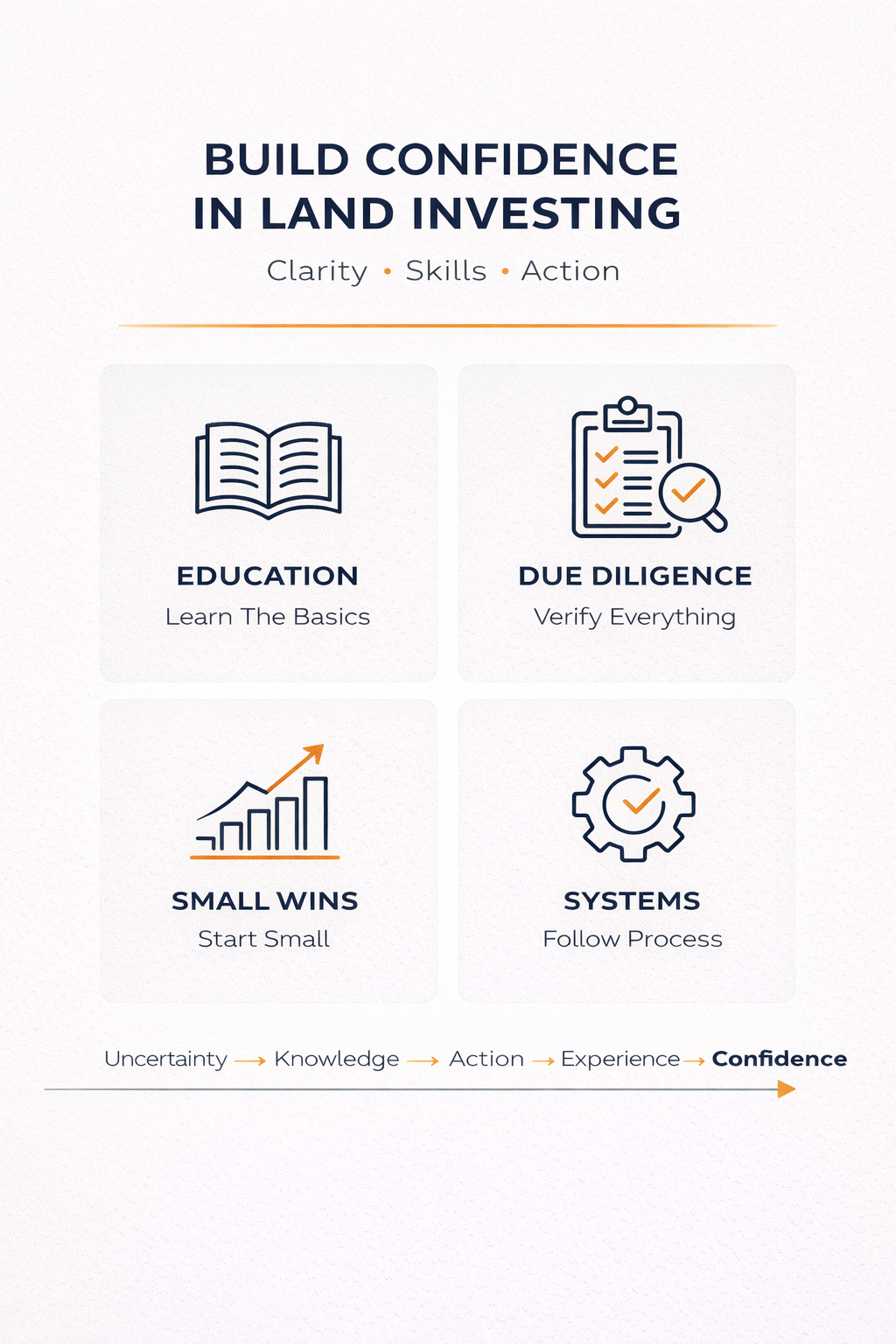
Building confidence in land investing as a beginner requires more than general knowledge,it demands a clear, step-by-step approach tailored to your goals and backed by thorough verification. This guide provides practical, actionable advice to help you confidently evaluate, acquire, and manage land investments in 2026.
Understanding how to verify critical facts and navigate common pitfalls will prepare you to make sound investment decisions. Whether your goal is to flip property, hold land for appreciation, or use it personally, this guide offers a dependable framework to build confidence and reduce uncertainty from the outset.
What Is Land Investing and Why Should You Consider It?
Land investing means buying plots of land without structures, aiming to profit through resale, development, or long-term appreciation.
This matters because land can require less upfront capital and maintenance than developed real estate but carries unique considerations in terms of zoning, access, and market demand. Your decision to invest hinges on how the land fits your intended use and financial goals.
Before proceeding, verify the property’s title, legal access, and zoning restrictions with the county recorder or planning department. These factors directly affect your ability to develop or resell and can be deal-breakers.
How Do You Start Your Journey in Land Investing?
Begin by clearly defining your investment goals (short-term flip, long-term hold, recreational use) and setting a realistic budget that includes purchase price plus taxes and maintenance.
This grounding guides where and what type of land to target and prevents overextending financially. Conduct market research focusing on property sales data, zoning trends, and local economic drivers.
Use county websites and real estate databases to compare recent sales of similar parcels. Confirm access rights, zoning, and restrictions with local authorities to avoid costly surprises.
What Skills Are Essential to Build Confidence in Land Investing?
Core skills include analytical thinking to evaluate deals, negotiation to secure favorable terms, and market research to identify opportunities.
📘 Get Your FREE Land Investing Strategy Guide
Discover how savvy investors build passive income with vacant land.
Analytical skills help assess comparable sales and land characteristics; negotiation skills improve pricing and contract terms; market research ensures you target properties aligned with your goals.
Practice each skill by reviewing actual listings, simulating offers, and analyzing zoning maps. Consider teaming with an experienced real estate agent specialized in land for practical insights and deal flow.
How Can You Educate Yourself About Land Investing Effectively?
Focus on education that teaches how to perform due diligence, analyze deals, and navigate legal and zoning complexities in your target markets.
Enroll in specialized courses or workshops, read authoritative land investment books, and engage actively in investor communities online and locally. Their practical experience combined with your research builds competence.
Importantly, verify specifics locally since land rules and market conditions vary widely by county and state.
What Common Risks Should You Anticipate in Land Investing?
Key risks include market fluctuations lowering land values, legal issues like title defects or zoning violations, and environmental problems such as contamination or access limitations.
Ignoring these risks can lead to financial losses or inability to use the property as intended.
Verify title history through a title company, confirm zoning and land use restrictions with local planning offices, and consider environmental assessments by qualified professionals especially for land in industrial or previously developed areas.
How Do You Mitigate Risks in Land Investing?
Mitigate risks first by performing thorough due diligence including title, zoning, access, and environmental checks before purchase.
Consider title insurance to protect against unknown liens or disputes.
Diversify your land holdings by location or property type to reduce concentration risk. Consult local experts for nuances in regulations and market characteristics before finalizing offers.
What Is Due Diligence and Why Is It Critical?
Due diligence is systematically verifying all material facts about a land parcel before purchase, including legal title, zoning, access, environmental, and physical conditions.
This process ensures you identify deal breakers and hidden costs early, enabling informed offers or a walk-away decision.
Steps include ordering a title report, reviewing county zoning codes, conducting a site visit, confirming legal access via public roads or easements, and assessing environmental risks.
Failing to conduct adequate due diligence is a common beginner mistake with costly consequences.
How Do You Find the Right Land Deals?
To find suitable land deals, use a combination of online platforms, relationships with local real estate agents specializing in land, and attendance at county land auctions.
Set clear property criteria rooted in your investment goals and verify properties against these before considering offers.
Real estate agents can provide inside knowledge and help identify motivated sellers; auction properties may offer below-market prices but require careful research.
What Factors Should You Consider When Evaluating Land?
Evaluate location relative to infrastructure and growth prospects; zoning rules that permit your intended use; physical access (legal roads or recorded easements); utility availability; and parcel topography and environmental constraints.
Each factor affects usability, development costs, and resale potential.
Confirm zoning with the municipality, request utility availability from providers, and obtain survey or plat maps to verify access and boundaries.
How Can You Analyze the Value of a Land Investment?
Start by performing a comparative market analysis (CMA) reviewing recent sales of similar properties considering size, location, and zoning.
Adjust for usable acreage, access constraints, and any special encumbrances or improvements.
Assess development potential by analyzing zoning codes, planned public projects, and market demand.
Use multiple evaluation methods to triangulate a fair market value and establish a firm walk-away price.
What Financing Options Are Available for Land Investment?
Traditional mortgages are less common and often challenging for raw land. Land loans from specialized lenders or banks may be available but usually require higher down payments and stricter underwriting.
Seller financing or lease-to-own arrangements can offer flexible terms, especially for smaller parcels or private sellers.
Thoroughly verify financing terms with lenders and consider your cash flow and exit strategy before committing.
How Can You Build a Network in the Land Investing Community?
Join local real estate investment clubs, attend land investing conferences, and participate in online forums focused on land deals.
Networking provides access to deal flow, market insights, and mentorship opportunities,critical for new investors.
Engage genuinely and contribute knowledge to build trust and long-term connections.
What Role Does Mentorship Play in Building Confidence?
Mentorship accelerates learning by providing practical guidance, personalized feedback, and experience-based advice.
Finding a mentor involves identifying experienced investors you respect and respectfully requesting their guidance.
Mentors can help you avoid common mistakes, navigate challenges, and build your confidence more quickly.
How Can You Track Your Progress in Land Investing?
Set specific, measurable goals like number of parcels acquired or net investment returns.
Use spreadsheets or investment tracking software to monitor expenses, income, and portfolio performance.
Regularly review your portfolio against your goals, adjusting strategies as needed to stay aligned with your investment plan.
What Are Best Practices for Negotiating Land Deals?
Understand the seller’s motivation to tailor your approach,whether seeking quick sale or maximum price.
Make offers based on market comps and clearly communicate contingencies that protect you but remain reasonable.
Know your maximum price and be ready to walk away if terms do not meet your criteria, preserving capital and confidence.
How Do You Handle Rejection in Land Investing?
Rejection is inevitable and provides learning opportunities.
Analyze rejections to understand why deals didn’t close and adjust your approach accordingly.
Maintain persistence while seeking peer feedback and mentorship to improve continuously.
What Resources Can Help You Stay Informed About Market Trends?
Use reliable real estate blogs, industry newsletters, county planning office updates, and market reports for data on pricing, zoning changes, and development plans.
Engage local government websites for official updates impacting land value and use.
Regularly checking credible sources helps you anticipate shifts that affect investment decisions.
How Can You Leverage Technology in Land Investing?
Mapping software and Geographic Information Systems (GIS) help visualize parcel boundaries, zoning, and environmental overlays.
Online marketplaces aggregate listings and allow filtering by criteria important to you.
Investment analysis tools assist in evaluating financial viability by calculating estimated costs, holding expenses, and resale values.
Use technology to screen and organize deals, but always confirm key facts through authoritative records and professional inspection.
What Are the Legal Considerations in Land Investing?
Understand property ownership laws, zoning regulations, easements, and restrictions that govern land use in the target area.
Title insurance is advisable to protect against undisclosed liens or competing claims.
Consult qualified real estate attorneys and title companies for all legal verifications before purchasing.
How Can You Build a Personal Brand in Land Investing?
Create a professional website showcasing your land investments, goals, and expertise.
Use social media to share insights and connect with the investing community, enhancing your credibility.
Demonstrate reliability and professionalism through consistent communication and ethical practices.
What Strategies Can You Use to Increase Your Confidence?
Practice visualization of successful investments, set achievable milestones, and commit to continuous learning.
Breaking down goals into manageable steps builds momentum and reinforces your decision-making ability.
Seeking feedback regularly helps identify blind spots and strengthens your approach.
How Important Is Patience in Land Investing?
Patience is essential as land values typically appreciate over time and market conditions fluctuate.
Rushing can lead to poor purchases; waiting for the right opportunity aligned with your strategy produces better outcomes.
Set realistic expectations for timelines and be prepared for market cycles when holding land investments.
How Do You Know When to Make Your First Investment?
Make your first investment once you’ve defined clear goals, completed due diligence, and identified a property that meets your criteria with verified legal access and zoning.
Trust your research combined with intuition,pause or walk away if critical facts can’t be confirmed or if the deal doesn’t fit your goals.
What Should You Do After Making Your First Land Investment?
Reflect on your experience to identify lessons learned, document outcomes, and adjust your strategy accordingly.
Continue your education, stay engaged with the investing community, and plan subsequent investments with an informed perspective.
How Can You Use Feedback to Improve Your Land Investing Skills?
Actively seek feedback from mentors, peers, and professionals, and apply constructive criticism to enhance your decision-making.
View mistakes as growth opportunities and be willing to adapt your investment approach based on insights gained.
What Are Some Success Stories in Land Investing?
Study investor case studies focusing on how they identified profitable deals, overcame challenges, and applied due diligence.
Identify key lessons such as the importance of patience, thorough research, and flexibility in strategy.
How Can You Stay Motivated in Your Land Investing Journey?
Set attainable short-term goals to generate frequent wins, connect with inspiring investors for support, and celebrate milestones no matter how small.
This steady progress helps maintain focus and confidence over the long term.
What Are the Next Steps After Gaining Confidence in Land Investing?
Leverage your confidence to scale investments by acquiring more parcels or exploring new markets with growth potential.
Continue deepening your knowledge and refining your strategies to adapt as markets evolve.
Mini FAQ
Q: What is the best way to start land investing?
A: Begin with clear goals, a defined budget, and comprehensive market and property-specific research to build a reliable foundation.
Q: How can I mitigate risks in land investing?
A: Perform due diligence, obtain title insurance, verify zoning and access, and diversify your portfolio geographically and by property type.
Q: What skills are essential?
A: Analytical evaluation, negotiation, and market research skills are critical for confident decision-making.
Q: How do I find good land deals?
A: Use online platforms, engage land-focused real estate agents, and attend auctions while verifying all property details.
Q: Why is mentorship important?
A: It provides practical experience-based guidance, helping you learn faster and avoid common mistakes.
Q: What mistakes should I avoid?
A: Neglecting due diligence, overlooking zoning restrictions, and rushing into purchases without verified data.
Q: How do I stay motivated?
A: Set measurable goals, find inspiration from others, and celebrate incremental achievements.
Through disciplined research, verification, skill development, and strategic action, confidence in land investing grows logically and sustainably. Use this guide as your compass to navigate the complexities of land purchases and build a rewarding investment portfolio.
This content is for informational purposes only. It does not constitute accounting, financial, or legal advice. Please consult a qualified professional before making decisions based on this information.



