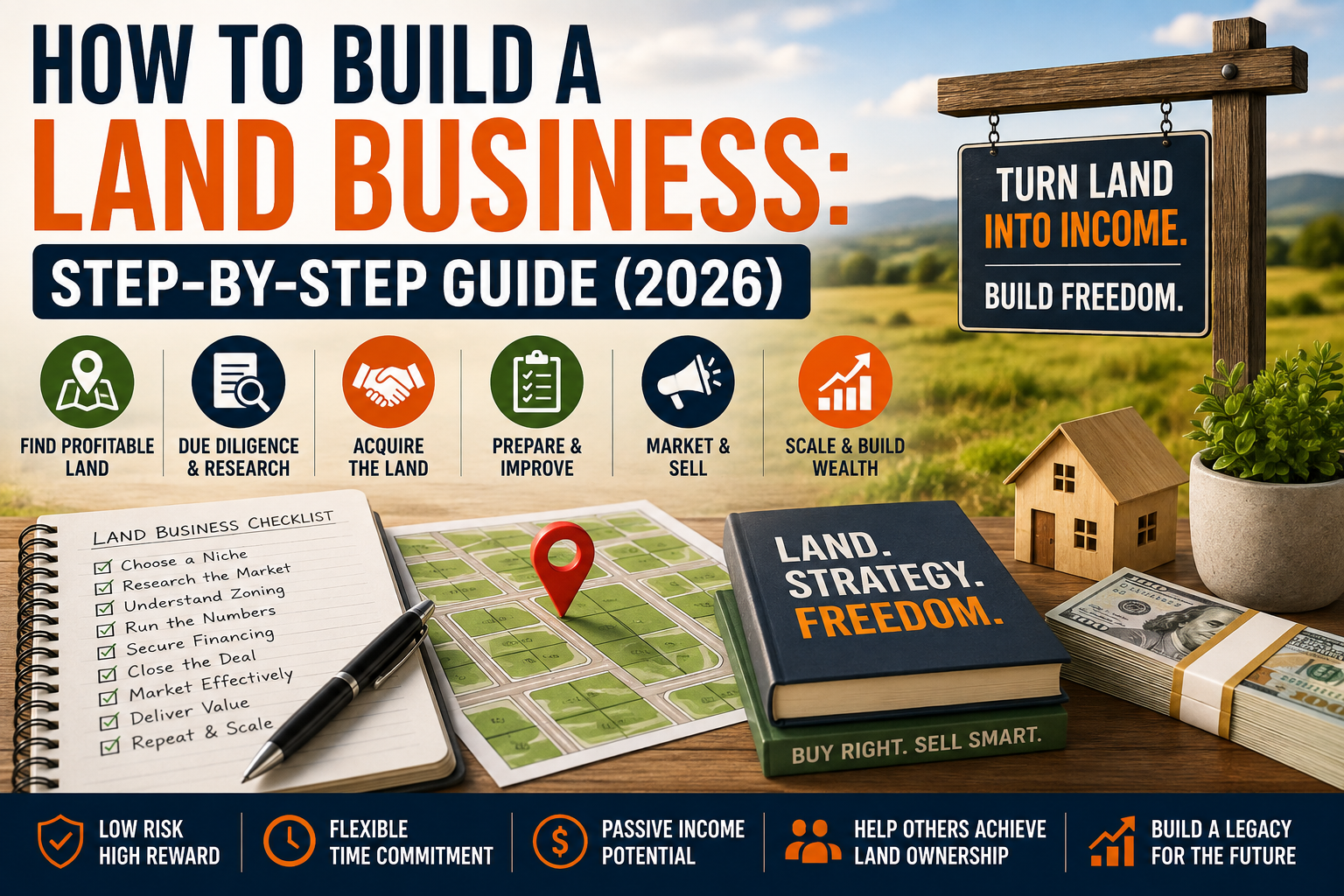
Building a land business in 2026 requires a practical strategy focused on verifying critical property details before purchase, managing financing carefully, and establishing a replicable workflow for buying, holding, marketing, and selling parcels. The goal is to confidently identify land parcels with clear title, suitable zoning, and reasonable costs, then use financing and marketing strategies that align with your capital and risk tolerance.
This guide breaks down the essential steps and decisions needed to start and grow a land business, providing actionable verification steps, potential pitfalls, and trade-offs you must consider before committing to any deal.
How Do I Start a Land Business from Scratch?
To start a land business from scratch, first choose the type of land and acquisition method you want to focus on, then prioritize verifying clear title and zoning compliance before making any offer. Select financing aligned with your resources and risk tolerance, and develop a repeatable process for sourcing, vetting, marketing, and selling land.
Choosing your niche upfront is crucial because residential, agricultural, and recreational lands each have distinct market factors and regulatory hurdles. Your acquisition channels,whether direct owner deals, auctions, or listings,affect negotiation flexibility and risk exposure.
Before spending effort or money on any parcel, obtain a title report to confirm ownership and identify liens or easements. Next, verify zoning rules with local planning authorities to ensure the land can be used as intended. Skipping these steps risks costly surprises later.
For financing, cash purchases are straightforward but limited by available capital. Bank loans offer leverage but demand strict qualification and lengthier closings. Seller financing can reduce upfront capital needs but requires careful contract structuring and risk management.
Build a checklist tailored to your target market and financing approach, so each step from offer to closing confirms facts that impact value and resale potential.
Where Can I Find Good Vacant Land Deals?
Locate good vacant land deals by combining online marketplaces with local tax or deed auctions and proactive outreach to landowners, real estate professionals, and county offices. Relying solely on online listings risks missing motivated sellers and local opportunities.
Online platforms offer broad search options but often face more competition and lack detailed local insights. Auctions can offer discounted land but require thorough title research and understanding auction terms to avoid hidden risks.
Direct outreach to landowners and local officials can uncover off-market parcels and early information about zoning or infrastructure changes that affect value. This approach demands persistence and good record-keeping but expands your options significantly.
What Should I Look for When Evaluating Land Parcels?
When evaluating land parcels, the most important factors are verifying clear title free of liens or disputes, confirming compatible zoning and land use, ensuring legal access, checking for environmental constraints, assessing utility availability, and estimating holding costs.
📘 Get Your FREE Land Investing Strategy Guide
Discover how savvy investors build passive income with vacant land.
Clear title verification via a title report or title insurance commitment is the foundation. Any unresolved liens or easements can block your ability to resell or use the land as intended, creating deal-breaking risks.
Zoning confirmation with local planning or zoning offices determines permissible uses and pending ordinance changes. Land restricted to uses incompatible with your plan should be avoided unless you factor in rezoning uncertainty.
Legal access means the parcel has a public road or an enforceable easement. Landlocked lots with no access are difficult to resell and often worthless. Verify access by checking county plat maps or recorded easements.
Environmental issues such as wetlands, flood zones, or contamination can restrict development or require costly remediation. Consult local environmental or planning departments and FEMA flood maps.
Availability of utilities (electricity, water, sewer) is essential for development or resale priced on convenience. Utility connections can be expensive if infrastructure is distant.
Finally, anticipate ongoing holding costs including property taxes, insurance if applicable, and maintenance such as weed control or fencing. These expenses impact your cash flow and profit margin during the holding period.
How Do Financing Options Compare for Acquiring Vacant Land?
Financing options differ primarily in upfront cash required, qualification hurdles, flexibility, and risk exposure: cash offers simplicity but requires full funds upfront; bank loans provide leverage but demand strict credit and property eligibility criteria; seller financing lowers cash needed but carries higher risk and complexity.
| Financing Type | Upfront Capital | Qualification | Flexibility | Risk |
|---|---|---|---|---|
| Cash | High | None | Low | Low |
| Bank Loan | Moderate | Strict (credit, income, property) | Moderate | Moderate |
| Seller Financing | Low | Negotiable | High | Higher (buyer default risk, legal complexity) |
Cash purchases minimize risk and often enable faster closings but limit deal volume. Bank loans require a qualified borrower and suitable property,often a lengthy process with appraisal and underwriting. Seller financing allows deals without full cash but you must manage buyer credit risk and have enforceable contracts specifying payment terms, interest, and default remedies.
How Does Seller Financing Work and How Can I Structure It Safely?
Seller financing means the seller acts as lender, enabling the buyer to pay over time under a legally compliant contract that details payment schedules, interest, late fees, and default remedies. Safe structuring involves clear title verification, thorough buyer assessment, detailed contracts, and proper recording with local authorities.
Key steps include:
- Verify Seller’s Clear Title: Ensure the seller can legally offer financing and the title is free of liens or restrictions that could block sale or financing.
- Evaluate Buyer Creditworthiness: Assess payment ability to minimize default risks.
- Draft Comprehensive Contract: Include specifics on down payment size, full payment schedule, interest rate, fees, and default consequences.
- Specify Default and Repossession Procedures: Clearly define when and how the seller can repossess property in case of default to avoid costly disputes.
- Record Financing Agreement: File the contract or a memorandum with the county recorder to establish legal priority and public notice.
Because seller financing laws and requirements vary by state, consult a real estate attorney to confirm your contracts comply with local regulations and effectively protect your rights.
What Are the Typical Holding Costs for Vacant Land?
Typical holding costs for vacant land include property taxes, optional insurance based on liability concerns, and maintenance expenses such as weed control, fencing, and access upkeep. These costs vary widely by location and parcel size and must be factored into profitability calculations.
To estimate and manage holding costs:
- Contact county assessor offices to verify current property tax amounts and any expected changes.
- Evaluate insurance needs,some investors obtain liability insurance to protect against accidents on the property.
- Budget for routine maintenance like clearing brush or repairing fences to maintain legal access and avoid violations.
- Review any special assessments, local fees, or homeowner association obligations that apply to the parcel.
What Is the Step-by-Step Process to Flip Land Successfully?
To flip land successfully, follow a disciplined process: acquire parcels with clear title and confirmed zoning, estimate holding costs and resale value, secure suitable financing, market to the right audience, then close sales efficiently to minimize carrying costs and legal risks.
Start by completing thorough due diligence including title search, zoning check, and environmental review. Use recent comparable sales to estimate potential resale value and holding cost projections to guide pricing and timing.
Select financing , cash, loan, or seller financing , that matches your risk profile and timeline. Marketing strategies should align with target buyer groups:
- Investors: Appeal with land appreciation potential and rezoning prospects.
- Developers: Highlight zoning that supports construction, utilities, and infrastructure.
- Recreational Buyers: Emphasize privacy, natural features, and easy access.
Use combined marketing methods,online listings, signage, local agent networks, and direct outreach,while tracking inquiry sources to refine your effort and limit holding time.
Use professional title and escrow services to manage closing paperwork and confirm clean ownership transfer. Clear contracts with defined contingencies reduce post-sale disputes.
What Are the Main Risks in Land Flipping and Seller Financing, and How Can I Mitigate Them?
The main risks include title defects, zoning changes, buyer defaults on seller-financed contracts, and unanticipated holding costs. You can mitigate these risks by conducting deep due diligence, crafting strong contracts with clear default remedies, and planning multiple exit strategies.
- Obtain a comprehensive title report from a reputable title company to identify liens, easements, and disputes.
- Research zoning regulations and monitor local government plans to anticipate restrictive changes.
- In seller financing, require meaningful down payments and personal guarantees when possible to reduce default likelihood.
- Maintain contingency plans like lease options, resale to alternative buyer types, or partnerships to handle adverse market conditions.
Practical Scenario: Financing a Vacant Lot When You Lack Full Cash Upfront
If you want to acquire a vacant lot priced below market but lack full cash, negotiate seller financing with reasonable down payment and clear contract terms or partner with a cash investor to share capital and risk. Before proceeding, confirm clear title and verify local market demand for resale potential.
Evaluate the scenario with these steps:
- Seller’s Title and Financing Authority: Verify the seller’s ability to offer financing and that no liens or legal obstacles exist.
- Seller Financing Terms: Assess down payment size, interest rate, payment schedule, and default procedures for affordability and risk.
- Carrying Costs: Calculate taxes, insurance, and maintenance expenses during the financing period to ensure cash flow viability.
- Market Demand: Check recent comparable sales and buyer activity to confirm the likelihood you can resell profitably.
If title issues remain unresolved, seller financing terms are unfavorable or unclear, or carrying costs would erode profits, walk away from the deal. Favor parcels with clean title, reasonable seller terms, and robust resale demand to improve success.
Next, request a detailed title report and draft a letter of intent summarizing proposed financing terms to open formal negotiations and due diligence.
Frequently Asked Questions About Building a Land Business
Can I Build a Land Business Part-Time as a Side Hustle?
Yes, you can, but it requires disciplined time management and realistic expectations. Due diligence and legal steps take time; rushing increases the likelihood of costly errors. Plan your schedule carefully and avoid shortcuts in verification to protect capital.
How Do I Handle Zoning or Environmental Restrictions When Flipping Land?
Before purchasing, consult local planning departments and land-use experts to clarify permitted uses, potential rezoning options, and environmental constraints. Restrictions affecting your intended use or resale plans require careful trade-off analysis or may justify walking away.
What Happens if a Buyer Defaults on a Seller-Financed Land Contract?
Default triggers contract-specific remedies, such as foreclosure or property repossession. Enforceability depends on well-drafted contracts compliant with state laws. Work with legal counsel to ensure your contracts are clear, and understand local foreclosure timelines to handle defaults effectively.
Is Land Flipping Better Than Traditional Real Estate Flipping?
Land flipping often involves lower holding costs and simpler transactions but might have longer sale cycles and less liquidity. It suits investors with limited capital and patience for slower turnover. Choose based on your financial position, risk tolerance, and market knowledge.
How Do I Draft a Seller-Financed Contract?
Always use qualified legal assistance to draft your seller-financed contracts. They must comply with state laws and clearly specify payment terms, interest, defaults, and remedies including foreclosure procedures. Avoid do-it-yourself contracts to reduce legal risks and ensure enforceability.
What Tools Do I Need to Evaluate Land Parcels?
Essential tools include a title report or title insurance commitment, local zoning maps and planning records, environmental assessments (such as wetland or flood maps), boundary surveys, and recent comparable sales data. Using these systematically reduces surprises and supports confident, evidence-based decisions.
For a practical introduction to this process, consider reviewing The Land Geek’s official starting resources, which provide step-by-step guidance suitable for new investors entering the land business.



