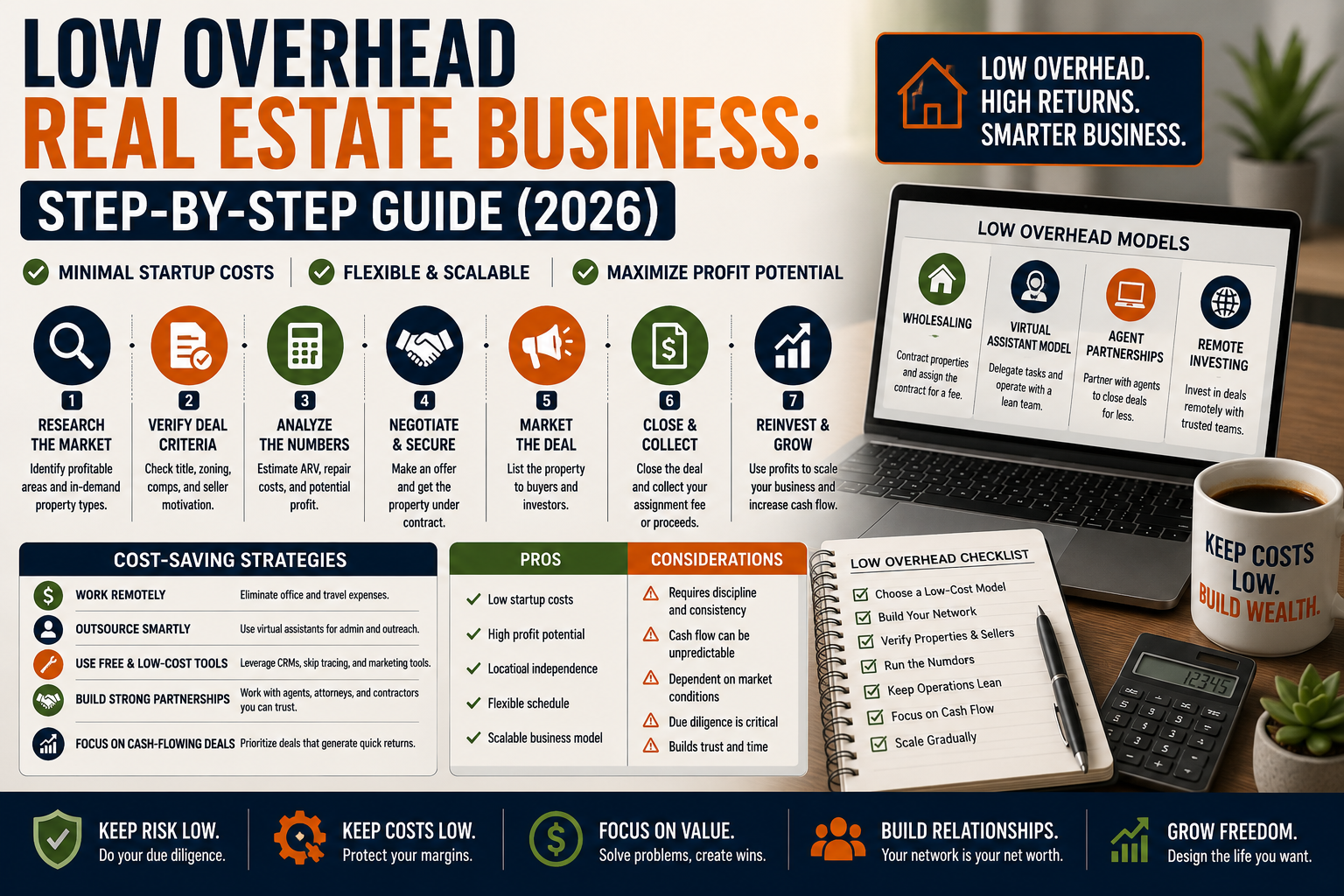
Starting a low overhead real estate business in 2026 means choosing strategies that keep upfront and ongoing expenses minimal without compromising essential due diligence and legal compliance. For land investors, this approach can reduce costs for property taxes, maintenance, and management. The key challenge is to balance the limited capital and operational demands against risks such as illiquidity, title problems, zoning restrictions, and market volatility. This guide guides you through practical, step-by-step decisions tailored to land investing and related low overhead methods.
In this article, you will discover the most common low overhead real estate business models suitable for land buyers, learn what vital checks to perform before committing, understand how to manage ongoing costs effectively, and explore a realistic scenario comparing land investing versus wholesaling with limited capital. Additionally, key risks and legal considerations will clarify when to proceed or hold back on an investment opportunity. Following this approach helps you avoid costly surprises and confidently navigate your land investing journey in 2026.
Understanding low overhead strategies is essential because real estate can tie up capital and effort if due diligence is incomplete or operational challenges arise. Knowing exactly what to verify, who to consult, and when to walk away ensures your chosen model matches your investment objectives and risk tolerance.
Which low overhead real estate business models work best for land investors in 2026?
Land investing, wholesaling, and lease options are common low overhead real estate models that balance startup costs, ongoing expenses, legal complexity, and operational effort differently. Each serves distinct investor goals and risk profiles.
| Model | Upfront Costs | Ongoing Expenses | Legal/Compliance Complexity | Operational Effort | Liquidity | Primary Risks |
|---|---|---|---|---|---|---|
| Land Investing | Moderate (purchase price, title & zoning verification) | Low (property taxes, minimal maintenance) | Low to Moderate (title, zoning, environmental checks) | Low (minimal management after purchase) | Low to Moderate (market dependent, often illiquid) | Holding costs, illiquidity, market changes |
| Wholesaling | Minimal (marketing, contract fees) | Minimal (marketing, closing costs, legal fees) | High (state licensing, contract law, disclosures) | High (deal sourcing and negotiation) | High (quick turnaround if deals close) | Legal risks, deal failures, reputation |
| Lease Options | Low to Moderate (option fees, initial lease) | Moderate (property upkeep, tenant management) | Moderate (contracts, tenant laws) | Moderate (tenant enforcement) | Moderate (dependent on tenant interest) | Tenant default, legal disputes |
For land investors focused on low overhead, purchasing vacant land can limit ongoing costs while offering clear use and resale options. Wholesaling requires little capital but demands careful navigation of legal requirements and intensive deal work. Lease options introduce tenant management complexities often unsuitable if your goal is minimal ongoing effort.
What due diligence steps are essential to minimize risks and overhead in a low overhead land investment?
Before buying land, the single most important step is verifying clear title and permissible uses. A thorough due diligence process includes these checks:
- Title Search: Obtain a report from a reputable title company or the county recorder confirming ownership, uncovering liens, easements, unpaid taxes, or claims that could hinder transfer or use. Unexpected encumbrances should be a red flag to pause or renegotiate the offer.
- Zoning and Land Use Verification: Contact local planning or zoning departments to confirm permitted uses and restrictions. Future zoning changes or overlays may affect your intended plans or resale value. Zoning restrictions that conflict with your use plan can make the investment unviable.
- Tax and Fees Review: Confirm property tax rates, expected assessments, and potential fees such as special district taxes or utility charges. Hidden or unusually high carrying costs will erode the benefits of a low overhead approach.
- Market Demand and Comparable Sales: Review recent sales of similar lots nearby and assess local development trends. An illiquid or depressed market means longer holding periods, increasing risk of cost overruns or forced sales.
- Access and Utilities Check: Ensure legal access via public or recorded easements and verify the availability of utilities if critical to your intended use. Lack of access or utilities can limit buyer interest and resale viability.
- Exit Strategy Definition: Define realistic resale, leasing, or other disposition options and prepare contingency plans if market or regulatory conditions shift.
Each of these checks should be confirmed through official records or qualified professionals. If any element reveals significant limitations or costs that invalidate your business plan, reconsider before proceeding.
How should I manage ongoing operational costs in a low overhead land investment?
Low overhead does not imply zero effort or expense. Even with vacant land, you must monitor and pay property taxes on time to avoid penalties or tax sales. Maintaining legal access, such as ensuring roads or easements remain passable, can protect your investment value. Compliance with local regulations might require occasional filings or responses.
📘 Get Your FREE Land Investing Strategy Guide
Discover how savvy investors build passive income with vacant land.
Automated reminders for tax deadlines, digital organization of title and purchase documents, and outsourcing specialized tasks like title research or legal advice help maintain low complexity without incurring high costs. Ignoring these operational duties risks expensive enforcement actions or loss of property.
How does choosing between land investing and wholesaling play out with $10,000 capital?
What options are viable?
With $10,000, you can choose to buy a small vacant land parcel with low taxes or engage in wholesaling residential properties without owning any real estate.
What must you verify to make the right choice?
- Property tax rates and any special assessments on the targeted land parcel.
- Local market conditions and comparable sales to judge resale potential.
- State laws and licensing requirements that govern wholesaling activities.
What are the practical trade-offs?
Land investing demands a tangible upfront purchase and low ongoing costs but may tie up funds for months or years before a sale, limiting liquidity. Wholesaling requires minimal capital investment but significant time for deal-finding, negotiating, and compliance, with legal risks varying widely by state. Operational costs in wholesaling are mostly time and legal fees, not cash holding costs.
When should you walk away?
If the land parcel’s title or zoning issues cannot be resolved inexpensively, or wholesaling license requirements are unclear or prohibitive, it is prudent to pause or stop the plan. Proceeding without resolving these issues risks costly surprises and potential legal complications.
What should the next steps be?
Complete thorough due diligence,conduct a title search for land or confirm wholesaling rules with state regulators. Establish a detailed exit plan including alternative strategies in case of unexpected market or legal challenges.
What common risks and challenges increase overhead in low overhead real estate models?
Unexpected Holding Costs
Special assessments, back taxes, or infrastructure maintenance like road repairs can significantly increase carrying costs, negating anticipated savings. Always verify these potential costs with county records and, where necessary, inspections.
Title Problems and Zoning Restrictions
Liens, easements, disputes, or zoning changes discovered after purchase can limit your use or forced sale value. Avoid these by ordering professional title insurance or legal review and confirming zoning peculiarities with local authorities.
Market Liquidity and Difficulty Exiting
Illiquid land markets may prolong your holding period with no income, raising risk and overhead. Wholesaling depends on fast turnover; failure to close deals wastes time and resources. Assessing local demand and comparable resale times is critical before committing.
What legal and regulatory issues should low overhead land investors watch?
Wholesaling regulations differ dramatically by state,some require real estate licenses while others do not. Noncompliance risks include fines and invalid contracts. Land ownership comes with local zoning ordinances, environmental laws, and tax rules that affect use, costs, and sale prospects. Confirm all licensing, permit, land use, and tax details with licensed attorneys, title specialists, and local government offices before purchase or business launch.
Frequently Asked Questions
Can I operate a low overhead real estate business part-time?
Yes. However, limited available time raises risks of missed tax deadlines, overlooked expenses, or legal noncompliance. Implement disciplined workflows, use digital reminders, and consider outsourcing specialized tasks to stay on top of requirements.
How do I research and verify land parcels before investing?
Check public county resources such as recorder and assessor offices for title and tax data. Consult planning departments for zoning. Professional title companies and land surveyors provide detailed reports. A physical visit and local expert advice can reveal conditions not documented on paper.
Are there hidden fees that can increase overhead in land investing?
Yes. Beyond property taxes, watch for special district assessments, unpaid back taxes, outstanding liens, and environmental remediation costs. Early, thorough investigations reduce the risk of unexpected expenses.
What tools can help manage low overhead real estate ventures?
Property management software with tax payment reminders, cloud storage for documents, and subscription services for title and zoning data assist organization and compliance without significant added costs.
Who should I consult to confirm compliance and minimize costs?
Licensed real estate attorneys, title agents, tax professionals, and local land use consultants offer expertise to navigate complex rules and identify cost-saving opportunities. Building early relationships with these professionals helps avoid costly errors or delays.