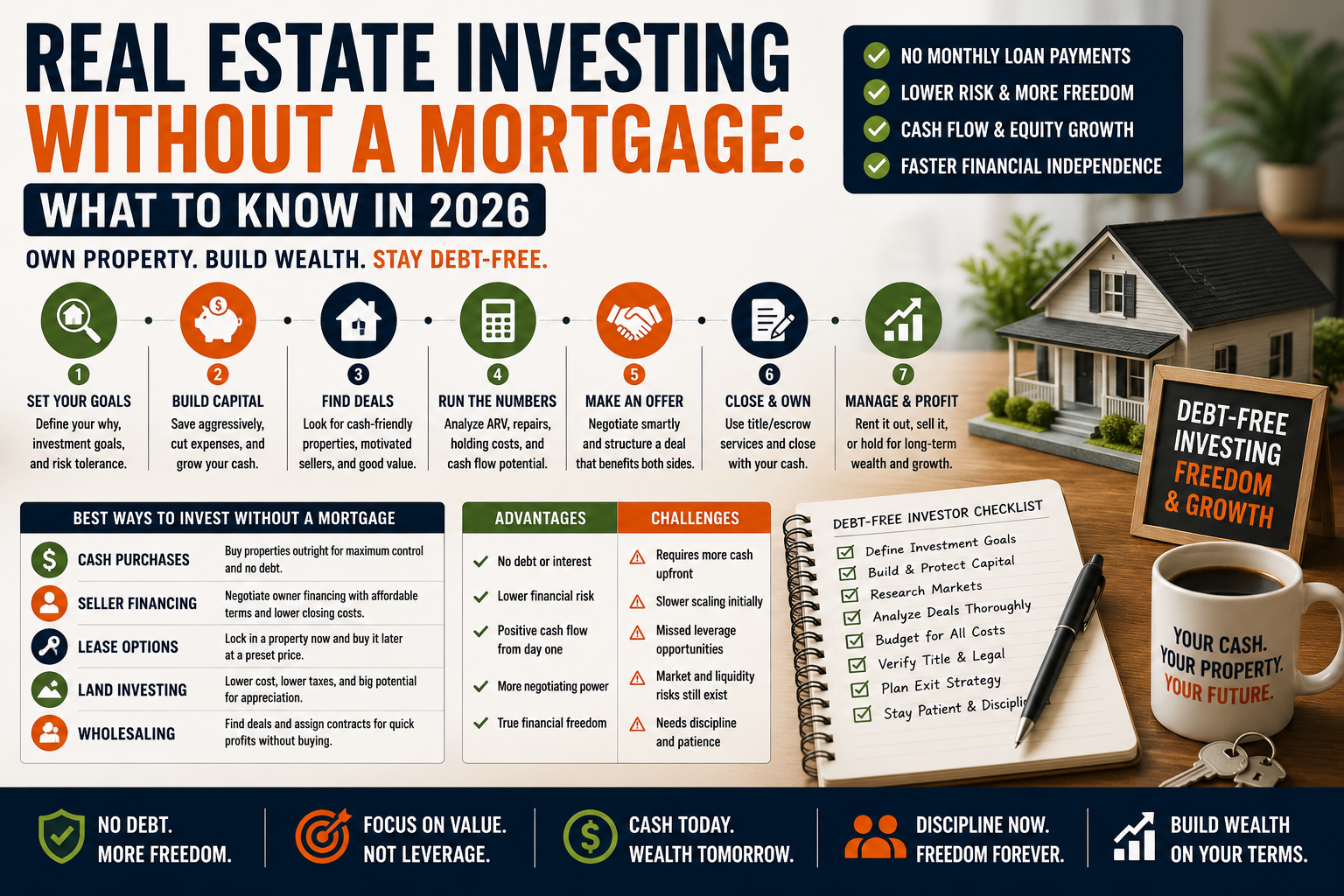
Investing in real estate without a mortgage involves acquiring property without traditional bank loans, relying instead on cash or alternative financing methods. This approach reduces debt exposure and lender restrictions but demands more upfront capital, thorough due diligence, and careful evaluation of risks, liquidity, and market conditions. The central challenge is balancing available funds and risk tolerance with investment goals while navigating financing alternatives that differ significantly from conventional mortgages.
Choosing mortgage-free strategies such as cash purchases, seller financing, lease options, or land investing requires understanding their unique tradeoffs. For example, land investing often requires less capital but may have slower appreciation and ongoing costs, while seller financing can offer access to better properties but involves contractual risks similar to mortgages. Effective investing without a mortgage depends on disciplined verification of title and liens, realistic budgeting for holding costs, and professional legal review to avoid costly pitfalls.
What Alternative Real Estate Investing Methods Avoid Mortgages?
Besides traditional mortgages, investors can use cash purchases, seller financing, lease options, or partnerships to acquire property without bank loans. Each method demands different capital levels and risk management, and none eliminate the need for thorough legal and financial due diligence.
Cash Purchases: Tradeoffs and Considerations
Paying cash outright removes debt and monthly payments, providing full control and often stronger negotiating power. However, it concentrates capital in a single asset, reducing liquidity and limiting portfolio diversification. Even cash deals require verifying clear title, absence of liens, and property condition to avoid unexpected liabilities that can erode investment value.
Seller Financing: Risks and Protections
Seller financing replaces bank loans with a private credit agreement from the seller, often with flexible terms and faster closings. While it can enable purchases with less upfront capital, it exposes buyers to risks such as balloon payments, foreclosure on default, and less regulatory oversight. Careful contract review by a real estate attorney is essential to identify unfavorable clauses, understand repayment obligations, and verify the seller’s authority to finance the property.
📘 Get Your FREE Land Investing Strategy Guide
Discover how savvy investors build passive income with vacant land.
Lease Options: Flexibility with Delayed Ownership
Lease options allow leasing a property with the right to purchase later, requiring lower initial capital but delaying ownership. This strategy offers flexibility but risks losing option fees if the purchase is not completed. Contracts must clearly define terms, option periods, and protections to safeguard invested funds and avoid disputes.
How Does Land Investing Work as a Mortgage-Free Strategy?
Land investing can be a practical mortgage-free approach because vacant land often costs less than developed properties and can sometimes be purchased outright with available cash. However, it typically generates no income, may appreciate slowly, and involves ongoing holding costs that require patience and detailed due diligence.
Accessibility and Market Realities of Land Investing
Raw land’s lower price point can make it accessible for investors with limited capital, but this advantage comes with tradeoffs. Land usually does not produce cash flow, and resale markets can be thin, potentially locking up capital longer than expected. Understanding local land-use trends, zoning restrictions, and infrastructure access is critical to assessing land’s investment viability.
Essential Due Diligence for Land Purchases
Investors must verify clear title and absence of liens, confirm zoning and permitted uses, and assess access to utilities and roads. Property taxes, insurance, and maintenance costs persist despite no mortgage payments. Consulting county records and local planning departments helps uncover legal or practical constraints that could affect future use or resale.
Financial and Legal Considerations Unique to Mortgage-Free Investing
Without lender involvement, investors bear full responsibility for verifying title, budgeting upfront and ongoing costs, and securing legal protections through contract review to avoid hidden liabilities and ensure enforceability.
Title Verification and Liens
Clear title is a non-negotiable deal breaker. Investors must obtain a title report from county records to confirm ownership and identify liens or encumbrances. Title defects can lead to costly disputes or loss of ownership. Title insurance is advisable to protect against unforeseen claims.
Budgeting Upfront and Holding Costs
Mortgage-free investing requires sufficient capital not only for purchase price but also for taxes, insurance, maintenance, and potential association fees. Underestimating these costs risks financial strain and limits flexibility to respond to market changes or unexpected expenses.
Legal Review of Contracts
Seller financing and lease option agreements can contain complex terms with significant risks. Engaging a qualified real estate attorney to review contracts helps identify unfavorable provisions, clarify obligations, and ensure compliance with state laws, reducing the chance of disputes or financial loss.
Risks and Benefits of Investing Without a Mortgage
Mortgage-free investing reduces debt and lender constraints but requires more upfront capital, may limit portfolio growth and liquidity, and involves distinct risks such as capital lockup and slower appreciation, especially in land investments.
Benefits: Control and Reduced Financial Stress
Owning property free of mortgage debt eliminates monthly loan payments and lender-imposed restrictions, providing greater operational flexibility and potentially less financial stress during market downturns. Investors maintain full control over property decisions, including sale timing and use.
Risks: Capital Intensity and Limited Leverage
High upfront capital requirements limit the number of properties an investor can acquire, slowing diversification and portfolio scaling. Reduced liquidity can constrain the ability to seize new opportunities or cover unexpected costs. Forgoing leverage may also limit potential returns compared to mortgage-backed investments.
Common Misconceptions
Mortgage-free investing is not risk-free. It demands disciplined capital management and realistic expectations about growth pace and liquidity. Assuming mortgage-free means no financial risk or quick portfolio expansion can lead to costly mistakes.
Checklist: Due Diligence for Mortgage-Free Real Estate Investing
- Verify Clear Title and Absence of Liens: Obtain a title report to confirm ownership and identify encumbrances; unresolved title issues are deal killers.
- Review Financing Contracts Thoroughly: For seller financing or lease options, have a real estate attorney scrutinize terms, payment schedules, default clauses, and balloon payments; unclear or unfavorable terms warrant walking away.
- Confirm Zoning and Land Use Compliance: Ensure the property’s permitted uses align with your investment goals to avoid legal or practical restrictions.
- Estimate Total Upfront Capital Needs: Include purchase price, down payments, option fees, and closing costs to verify affordability.
- Calculate Holding Costs: Account for property taxes, insurance, maintenance, and association fees to assess ongoing financial commitment.
- Assess Market Conditions and Liquidity: Research local real estate trends, resale potential, and demand for cash or alternative financing buyers.
- Plan Exit Strategies: Consider how and when you might sell or otherwise exit the investment to avoid capital lockup.
- Engage Professionals: Consult real estate attorneys, title companies, and land specialists as needed to reduce risk.
Scenario: Choosing Between Raw Land Purchase and Seller Financing Residential Property with $30,000 Cash
Setup and Constraints
An investor with $30,000 cash aims to start real estate investing without a mortgage. Options include purchasing raw land outright or negotiating seller financing for a small residential property. Both avoid bank loans but differ in risk, liquidity, and complexity.
Facts to Verify
- Current market prices for raw land and small residential properties in the target area.
- Seller financing contract terms, including down payment, interest rate, payment schedule, balloon payments, and default provisions.
- Clear title and absence of liens on both land and residential properties.
- Estimated holding costs: property taxes, insurance, maintenance, and utilities.
Tradeoffs and Decision Logic
- Raw Land Purchase: Lower upfront capital required, no financing contract complexity, and fewer legal risks. However, land typically does not generate income, may appreciate slowly, and can have limited resale demand, potentially tying up capital longer.
- Seller Financing Residential Property: Access to better locations and properties with higher market appeal, potentially improving liquidity and appreciation. Involves contractual risks similar to mortgages, higher holding costs, and requires careful legal and title review.
The investor should prioritize verifying clear title and favorable financing terms. If title defects or unfavorable seller financing clauses arise, or if holding costs exceed budget, walking away is prudent. The choice depends on risk tolerance and investment horizon: land suits patient investors with limited capital; seller financing appeals to those accepting contractual risk for better property quality.
Next Steps
Conduct detailed due diligence on selected properties, engage a real estate attorney to review contracts, and reassess capital availability and risk tolerance before committing funds.
FAQ: Common Questions About Real Estate Investing Without a Mortgage
Can I Build a Large Portfolio Without Using Mortgages?
Building a large portfolio without leverage is possible but generally slower and requires significant upfront capital. Growth depends on reinvesting profits and accumulating cash, which may limit diversification and scale compared to mortgage-backed investing.
Are There Hidden Costs in Alternative Financing Methods?
Yes. Seller financing and lease options can include higher interest rates, balloon payments, fees, and penalties. Careful contract review is essential to understand all obligations and avoid surprises.
How Do I Find Properties Available for Mortgage-Free Purchase?
Look for cash-only listings, direct owner sales, or seller financing offers. Networking with local investors, real estate agents, and searching specialized listings can help locate these less common opportunities.
Is Mortgage-Free Investing Suitable for All Property Types?
Mortgage-free investing is generally more feasible for raw land or smaller residential properties due to lower capital requirements and simpler financing. Larger residential or commercial properties often require mortgages because of higher costs and complexity.
What Happens If I Default on Seller Financing?
Default typically results in loss of the property and any equity invested, similar to foreclosure but often with fewer buyer protections. Understanding default terms and remedies in the contract is critical to managing this risk.
How Important Is Professional Legal Advice in These Transactions?
Essential. Alternative financing involves complex contracts and legal risks. Professional legal counsel helps identify unfavorable terms, ensures compliance with laws, and protects investor interests.
This content is for informational purposes only. It does not constitute accounting, financial, or legal advice. Please consult a qualified professional before making decisions based on this information.



