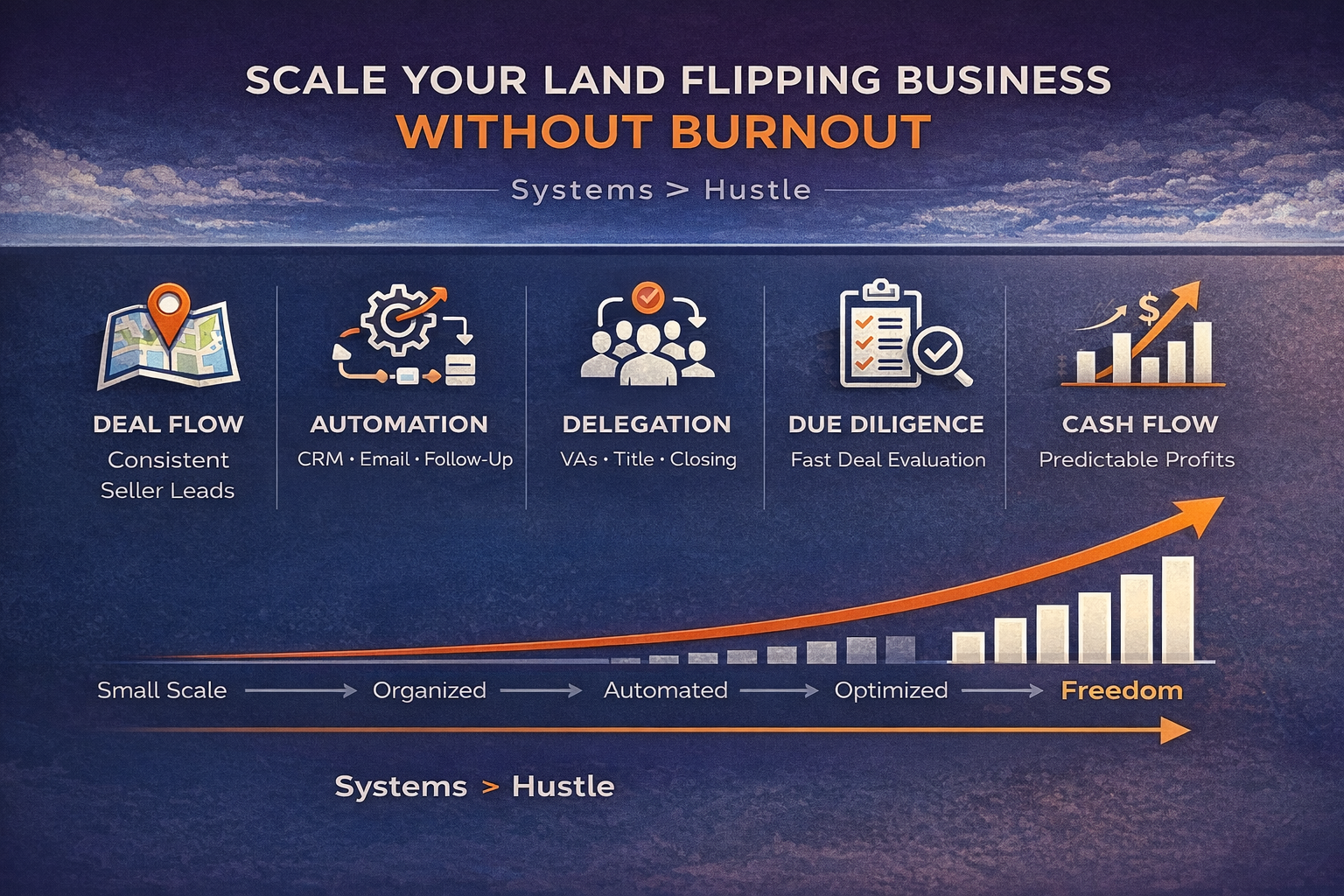
Scaling a land flipping business successfully without burnout requires a strategic approach centered on sustainable growth, efficient operations, and clear decision-making at each step. This comprehensive guide walks you through the essential questions and practical actions needed to expand your land investing venture while preserving your time, energy, and financial health.
By understanding when and how to scale, building reliable systems and teams, employing focused marketing, and continuously monitoring key financial and operational metrics, you can grow your land flipping business confidently and responsibly. This guide prioritizes what you must verify in your local context to make informed decisions that protect your capital and well-being.
What is Land Flipping and How Does It Work?
Land flipping means buying undervalued land parcels and reselling them at a higher price, often without extensive renovations but with strategic improvements like title clearing, permitting, or enhanced marketing. The core of this business is acquiring land where you see upside potential based on local trends and regulations.
To identify profitable land, start by verifying zoning classifications, legal access rights, and local planned infrastructure changes at the county recorder’s and planning department offices. Cross-check comparable sales data from recent transactions in the area to establish a realistic value range. A big red flag is unclear title or restricted access,these can derail sales or reduce marketability.
Executing a successful flip involves several steps: locate promising parcels with potential buyers in mind; perform due diligence on ownership, liens, and access; purchase with contingencies to protect yourself; add value through permitted improvements or marketing; finally, list and negotiate sales effectively. Each step requires careful verification from county records and sometimes a title company review before proceeding.
Why is Scaling Important in a Land Flipping Business?
Scaling lets you increase profits reliably by expanding your portfolio and streamlining processes, but it must be done smartly to avoid overextension. Growth unlocks buying power, wider market reach, brand recognition, and operational improvements that reduce costs per flip.
Before scaling, verify your current business health by tracking key financial metrics like profit margins and cash flow, ensuring you have capital reserves. Assess whether you can handle increased transaction volume without quality loss,this means reviewing your time commitments and operational bottlenecks. If you rush scaling without these checks, you risk cash flow problems or burnout.
Gradual growth that confirms your capacity to handle more deals without compromising diligence maximizes your ability to negotiate better deals and reinvest profits efficiently. Sustainable scaling also buffers against market downturns by diversifying your portfolio.
What Are the Signs You’re Experiencing Burnout?
Burnout manifests as physical exhaustion, low motivation, irritability, and detachment from your business tasks. For a land flipper, this may mean missed deadlines, sloppy due diligence, or poor decision-making that reduces profitability or increases risk.
📘 Get Your FREE Land Investing Strategy Guide
Discover how savvy investors build passive income with vacant land.
To monitor burnout, schedule regular self-assessments focusing on energy levels, emotional response to work tasks, and productivity. If you notice persistent fatigue or decline in focus, that’s a warning sign. Ignoring these symptoms can cause costly mistakes in land evaluation or negotiation.
Combat burnout by delegating tasks, establishing routine breaks, and setting clear boundaries between work and personal time. Recognizing burnout early enables timely adjustments to workflow and staffing that preserve your health and business integrity.
How Can You Create a Sustainable Business Model?
A sustainable business model in land flipping clearly defines your target market, sets realistic goals, and allocates budget based on verified cost structures. It incorporates flexibility to adapt to market changes while maintaining disciplined financial management.
Start by setting SMART goals,specific, measurable, achievable, relevant, and time-bound,such as a target number of flips or revenue within a year. Next, map your monthly and per-deal budgets to include purchase costs, closing fees, marketing expenses, and holding costs. Verify typical fees and property taxes with local county offices as these vary widely.
Understanding market trends requires regularly checking recent sales reports, planned county infrastructure projects, and zoning changes that influence land desirability. Use verified public data sources such as the county assessor and planning websites to avoid assumptions. This groundwork informs your acquisition and resale pricing models, aligning expectations with realities on the ground.
What Tools and Technologies Can Help You Scale?
While specific technology options won’t replace due diligence, real estate transaction management software and Customer Relationship Management (CRM) tools can support scaling by organizing leads, tracking deals, and automating marketing outreach.
Choose software that integrates title, contract, and lead tracking for land-centric processes, then verify it supports your local jurisdictions and document requirements. For marketing, use platforms enabling targeted email campaigns and social media management to maintain consistent buyer engagement without increasing manual workload.
Data analytics tools can help monitor campaign performance and market trends but cross-validate insights against local transaction records and county databases before acting. No tool substitutes for verifying legal access, zoning, and title through official local records.
How to Build a Reliable Team for Your Land Flipping Business?
Scaling without burnout means assembling a team that shares responsibility and expertise relevant to land investing. Key roles may include acquisition specialists, title researchers, marketing coordinators, and sales support.
Hire team members with proven experience in land real estate or related fields, verifying credentials and past work. Delegate tasks based on individual strengths: for example, assign title work to those detail-oriented in paperwork, while marketers focus on lead generation.
Foster a positive culture by communicating clear goals, acknowledging contributions, and providing training to align processes. Verify team performance regularly through key role-specific metrics and adjust roles or workflows as needed to maintain quality control.
What Marketing Strategies Are Effective for Land Flipping?
Effective marketing focuses on targeting the right buyers with consistent messaging through social media, email marketing, and SEO-driven content that answers common buyer questions.
Prioritize local social media groups where land buyers congregate and create posts highlighting parcel features with clear calls to action. Segment email lists by buyer interest or location and send tailored property updates. Create website content optimized for search terms prospective buyers use, focusing on helping them evaluate land deals, zoning, and purchase logistics.
Validate marketing ROI by tracking lead sources and conversion rates, then adjust campaigns based on data rather than assumptions. Avoid generic marketing,local buyer preferences and property specifics must guide your strategy.
How to Find and Acquire New Properties Efficiently?
Efficient property acquisition leans on focused local networking, diligent use of verified online listings, and strategic attendance at auctions or foreclosure sales.
Build long-term relationships with local real estate agents, title companies, and investors who can tip you off to off-market deals. Verify property details with county records before making offers. Use listing sites that specialize in land and set up filters for desired parameters to quickly spot bargains.
Attend auctions only after researching parcel histories, title status, and auction terms. Be prepared to act fast but cautiously, with clarity on your maximum bid and walk-away points based on verified estimated property value and resale potential.
What Role Does Networking Play in Scaling Your Business?
Networking opens doors to partnerships, off-market deals, mentorship, and shared resources critical for scaling efficiently. It brings market intelligence not always available publicly and expands your opportunities beyond what online searches reveal.
Focus on building authentic relationships with other land investors, local government officials familiar with zoning, and professionals involved in land transactions. Verify any referrals or leads through your due diligence process before reliance.
Joining industry groups or local real estate associations gives access to vetted resources and collective knowledge. Always assess the credibility of new connections by checking their track record and reputation before joint ventures or large commitments.
How Can You Optimize Your Workflow for Better Efficiency?
Workflow optimization depends on clearly documented SOPs (standard operating procedures), the disciplined use of checklists, and robust time-management techniques to ensure repeatable success and prevent errors.
Create detailed step-by-step guides for property evaluation, contract processing, and marketing workflows. Use checklists to confirm tasks such as title verification, zoning confirmation, and marketing deadlines are complete before advancing.
Implement time-blocking to allocate focused periods for high-concentration tasks like due diligence or proposal drafting, minimizing distractions. Regularly review your workflows to identify and eliminate bottlenecks, using measurable KPIs such as average days to close or cost per lead for ongoing improvement.
What Financial Strategies Can Help You Scale Without Debt?
Sustainable scaling without debt relies on reinvesting profits, exploring partnerships for capital, and diligent cash flow management.
Reinvest a fixed portion of earnings from each sale back into acquiring new properties, but keep reserves for unexpected costs. Before taking on partners or investors, verify their terms align with your risk tolerance, and structure agreements clearly with legal advice.
Maintain a rolling cash flow forecast that accounts for acquisition costs, holding expenses, and expected sale proceeds. Identify potential shortfalls early and prioritize deals with positive cash flow implications. Avoid over-leveraging against projected profits, as delays or market changes can expose you to financial pressure.
How to Set Realistic Goals for Your Business Growth?
Set realistic goals using the SMART framework,specific, measurable, achievable, relevant, and time-bound,tied to tangible outputs like the number of flips, revenue targets, or profit margins.
Document your goals and track progress monthly with KPIs such as deals sourced, contracts signed, and net profits. Adjust goals proactively based on ongoing performance data and market conditions.
Be flexible; if acquisition timelines lengthen or holding costs increase, recalibrate goals to prevent operational stress or diminishing returns. Clear goal-setting creates accountability and focus needed to guide scaling decisions responsibly.
What Are the Risks Involved in Scaling a Land Flipping Business?
Primary risks include market volatility reducing resale prices, overextending operational capacity leading to poor due diligence, and potential legal obstacles affecting property titles or zoning compliance.
To mitigate these risks, continuously monitor local real estate trends and economic indicators through county and industry reports. Avoid overcommitting capital or deals beyond your verified business capability. Conduct thorough legal checks using title companies and county zoning offices.
Watch for red flags such as rapid price drops, rising holding costs, or ambiguous title documentation. Address these promptly or consider walking away from deals that introduce excessive uncertainty.
How Can You Maintain Work-Life Balance While Scaling?
Maintain balance by clearly separating work hours from personal time, prioritizing self-care practices, and scheduling regular downtime to recharge.
Set firm boundaries, such as defined office hours and no-work zones at home. Engage in activities promoting physical and mental well-being, like exercise and mindfulness. Schedule vacations or breaks proactively to prevent burnout, essential for sustained sharpness in your investing decisions.
A healthy balance supports clearer judgment, better relationships with your team, and reduces the risk of costly mistakes caused by fatigue or stress.
What Are the Best Practices for Property Evaluation?
Evaluate properties by thoroughly researching recent comparable sales, understanding zoning and land-use restrictions, and assessing physical limitations such as terrain or access.
Obtain sales data from county records or MLS databases and verify by visiting properties where possible. Check zoning designations with planning departments to confirm allowable uses and potential future changes. Physically inspect parcels or hire local contractors to assess topography and easements affecting usability.
Use a weighted assessment of these factors to estimate potential resale value and profitability before making an offer. Avoid properties with unresolved title issues, inaccessible boundaries, or zoning that conflicts with your resale strategy.
How to Leverage Technology for Property Management?
Use specialized software designed for real estate transactions and land management to track property details, pending deals, and communications.
Implement CRM tools to manage leads systematically, automating follow-ups and organizing buyer information. For properties held longer-term, property management platforms can help track taxes, legal deadlines, and maintenance needs if applicable.
Ensure all technology solutions align with your specific land investing workflow and jurisdictional requirements. Regular audits of data accuracy can prevent mistakes such as missed tax payments or overlooked contract terms.
What Are the Key Financial Metrics to Monitor?
Track profit margins (gross and net), ROI per deal, and cash flow regularly to understand financial health and growth capacity.
Calculate profit margins by subtracting all purchase, holding, improvement, and selling costs from sale prices. Use ROI to compare efficiency across deals, informing where to focus efforts. Cash flow analysis ensures you maintain liquidity to fund ongoing acquisitions without shortfalls.
Monitor these metrics monthly and adjust your business model or deal selection criteria to strengthen weak points and enhance overall profitability.
How Can You Use Social Proof to Build Trust?
Social proof builds credibility by sharing verified testimonials, successful case studies, and maintaining an engaging, professional online presence.
Request feedback from clients after transactions and prominently display positive reviews on your website and marketing materials, ensuring authenticity. Share detailed case studies that discuss challenges and successful resolutions to illustrate competence.
Actively manage your social media channels and respond promptly to inquiries or reviews to build rapport with prospective buyers. Trust developed through social proof can accelerate sales and improve your brand reputation.
What Are the Common Mistakes to Avoid When Scaling?
| Mistake | Effect | Verification/Prevention |
|---|---|---|
| Underestimating costs | Leads to cash flow crunch and project delays | Consult county tax records and vendor quotes; build contingency buffers |
| Neglecting marketing | Reduces lead generation and prolongs sale times | Track marketing ROI monthly; adjust channels based on lead quality |
| Ignoring customer feedback | Missed opportunities for improving services and reputation | Collect feedback systematically; act on recurring issues quickly |
How to Stay Motivated During the Scaling Process?
Maintain motivation by setting clear milestones, celebrating incremental achievements, and seeking experienced mentorship.
Break large goals into smaller, manageable targets with deadlines. Recognize and reward progress to sustain momentum. A mentor can offer perspective, accountability, and strategies to overcome obstacles, helping you navigate the ups and downs of growth without losing focus.
What Role Does Continuous Learning Play in Growth?
Continuous learning helps you adapt to changing market conditions, refine skills, and avoid repeating past mistakes.
Dedicate time regularly to review industry publications, attend relevant seminars, and participate in professional groups. Analyze deals that did not meet expectations to pinpoint causes and implement lessons. This commitment to growth enhances decision-making and operational effectiveness.
How Can You Develop a Strong Brand Identity?
Craft a unique value proposition that clearly states what differentiates your land flipping business, supported by professional branding and consistent engagement with your audience.
Create branding materials,logo, website, and marketing collateral,reflecting your expertise and values. Engage your audience through authentic communication and provide educational content that answers common buyer questions. This builds loyalty and attracts repeat and referral business.
What Are the Benefits of Joining a Land Flipping Community?
Joining a community gives access to vetted resources, peer support, and expanded networking, all essential for sharing knowledge and finding opportunities.
These groups often share local market intelligence and tips for avoiding pitfalls. They provide emotional support to counter isolation and burnout that can accompany solo ventures. Networking within the community can lead to partnerships, funding sources, and deal flow beyond publicly available listings.
How Can You Use Customer Feedback to Improve Your Business?
Collect feedback actively using surveys or direct conversations after transactions. Analyze responses for patterns such as complaints or suggestions.
Prioritize common issues and implement corrective actions promptly. Communicate these improvements back to your customers to demonstrate commitment to service, boosting satisfaction and referral rates.
What Strategies Can Help You Scale While Minimizing Stress?
Minimize stress by prioritizing high-impact tasks, scheduling dedicated time blocks, and practising stress-reduction techniques like mindfulness or exercise.
Focus resources on activities directly linked to growth and profitability, delegating or postponing low-value work. Structured schedules reduce decision fatigue and promote effective workload management. Incorporating stress management into your routine preserves your mental resilience throughout scaling.
How Do You Know When It’s Time to Scale Your Business?
Use consistent positive financial performance, increasing deal flow, and personal readiness as indicators that your business is ready to scale.
Confirm profitability trends by reviewing financials quarterly. Assess workflow efficiency and team capability to handle growth. Evaluate your energy and availability to manage expanded operations without burnout. If these align, develop a clear scaling plan with milestones and risk management.
What Are the Long-Term Benefits of Scaling Sustainably?
Sustainable scaling builds a stable, reputable land flipping business capable of weathering market cycles and providing lasting income.
It creates employment opportunities, contributes positively to local economies, and fosters goodwill through community engagement. A business built on responsible growth can adapt, innovate, and maintain competitive advantage over time.
Mini FAQ
- What is land flipping? Purchasing undervalued land, adding value legally or through marketing, then reselling for profit.
- Why is scaling important for a land flipping business? To increase profits sustainably, access better deals, and reduce costs per transaction.
- What are the signs of burnout? Chronic tiredness, loss of motivation, irritability, and detachment from work tasks.
- How can technology assist in scaling? By organizing deals, automating marketing, and tracking buyer interactions to streamline operations.
- What financial strategies support growth without debt? Reinvest profits carefully, partner strategically, and maintain disciplined cash flow oversight.
- How can networking benefit a land flipping business? It provides deal leads, mentorship, joint ventures, and market insights.
- What are effective marketing strategies for land flipping? Targeted social media, segmented email marketing, and SEO-rich content that addresses buyer questions.
This content is for informational purposes only. It does not constitute accounting, financial, or legal advice. Please consult a qualified professional before making decisions based on this information.



