Living off grid in Nevada is not only possible but offers a compelling opportunity for those seeking independence, self-sufficiency, and a closer connection to nature. However, successfully living off-grid there requires a detailed understanding of the legal, environmental, and practical considerations unique to the state. This guide provides clear, actionable insights you need to evaluate land investment decisions and plan for a sustainable off-grid lifestyle in Nevada.
Can You Live Off Grid in Nevada?
Yes, you can live off grid in Nevada, but doing so effectively depends heavily on land choice, legal compliance, resource availability, and preparation for the state’s diverse and often extreme environment. Nevada’s large expanses of rural and undeveloped territory make it one of the more accessible states for off-grid living. However, this lifestyle necessitates thoughtful consideration of utilities, legal constraints, climate challenges, and infrastructure development.
Understanding these factors will guide your land purchase and development plans, reducing risk of costly setbacks or regulatory problems.
What Are the Legal Requirements for Off-Grid Living in Nevada?
Living off grid in Nevada means complying with state and local regulations including zoning laws, building codes, permits, and utility standards. These legal requirements can affect your choice of land, construction plans, and utility installations.
Zoning Laws
Zoning controls what activities and structures are allowed on a parcel. Since Nevada’s counties have varied zoning rules, your first step is to verify the parcel’s zoning designation and permitted uses through the county planning department. Be alert for zoning restrictions on residential use, temporary structures (like tiny homes), livestock, or agricultural activities. A red flag would be parcels zoned for commercial or industrial use only, which often prohibit off-grid residential setups.
📘 Get Your FREE Land Investing Strategy Guide
Discover how savvy investors build passive income with vacant land.
Building Codes and Permits
Although rural Nevada areas may have minimal building codes, most permanent structures require permits and must meet safety standards. You need to check with the local building department whether your intended off-grid dwelling,be it a cabin, tiny home, or earth-sheltered structure,requires permits or inspections. Skipping permits can lead to fines or forced removals.
Water and Waste Management Regulations
Water access and waste management are often regulated separately. Verify well drilling permits and compliance with state water rights laws, as unauthorized groundwater use can cause legal issues. Similarly, septic system installation often requires permits and needs to meet health codes. Handling waste through composting toilets or alternative systems may have restrictions that must be confirmed at the county level.
Before finalizing any offer, obtain copies of relevant zoning maps, recorded land-use covenants, and contact both the county building and health departments. If any restrictions limit your intended living arrangements, reconsider or negotiate contingencies in your purchase.
Is It Possible to Find Suitable Land for Off-Grid Living in Nevada?
Yes, you can find suitable land in Nevada for off-grid living, but selection requires vetting specific land characteristics and regional amenities to match your purpose.
Types of Land to Consider
Raw land offers maximum flexibility but may lack access roads, utilities, and permits for water wells. Agricultural land can include water rights and may ease livestock or gardening plans. Recreational parcels often come with limitations on permanent structures or agriculture.
Land Purchase Considerations
Evaluate land access (both legal and physical), water availability, solar or wind potential, topography, and soil quality before purchase. Check for existing easements, deed restrictions, and any community covenants that may forbid off-grid infrastructure. Additionally, consider property tax implications and potential future development in the area that could impact privacy or utility options.
Where to Look?
Counties such as Elko, Humboldt, and Esmeralda present good opportunities with affordable rural land and fewer zoning restrictions conducive to off-grid setups. However, verify each parcel’s individual attributes, as conditions can vary greatly within regions.
Using county GIS databases and talking to local real estate agents experienced in rural sales will help you identify promising parcels and avoid surprises.
What Utilities Should You Plan for in Off-Grid Living?
Planning for water, power, and waste management systems forms the backbone of a successful off-grid property. Each utility requires independent solutions tailored to Nevada’s environmental and regulatory context.
Water Supply
Water is your top priority. Options include drilling a well, using existing springs, or rainwater harvesting. Wells are reliable but require permits and depend on adequate groundwater. Rainwater harvesting can supplement supply but is subject to state and local rules. Before buying land, verify groundwater accessibility by consulting local water authorities or hydrogeologic studies and confirm any water rights attached to the property.
Energy Sources
Solar power is typically the best energy source in Nevada due to high sun exposure. Assess solar potential carefully, including shading and orientation. Wind power can complement solar but requires consistent wind data and compliance with local regulations. Backup generators fueled by propane or diesel provide emergency power. Always plan for battery storage capacity and redundancy.
Waste Management
Waste disposal usually relies on septic systems. Confirm soil suitability and septic permit requirements with county health officials. Composting toilets offer an alternative, especially in locations where septic installation is difficult. Consider hauling options for trash and recycling in remote locations.
Directly consult county environmental and health departments to confirm applicable requirements and acquire necessary permits before construction.
How Can You Access Water While Living Off-Grid in Nevada?
Accessing water off-grid involves evaluating and selecting between wells, rainwater harvesting, surface water, and inherited water rights.
For additional information on setting up essential services, explore our guide on Development, Utilities & Access.
Drilling a Well
For consistent water access in rural Nevada, drilling a well is often the best option. Verify groundwater availability through the county water office, check well logs nearby, and conduct a site-specific assessment. Hiring a licensed well driller familiar with local laws is necessary to comply with permits and drilling standards. Failure to secure water can halt your project.
Rainwater Harvesting
Rainwater harvesting can supplement your supply but depends on enough annual rainfall and legal permissions. Review current state and county laws, as some areas have limits or registration requirements. Install adequate filtration for potable water.
Water Rights and Legal Constraints
Nevada has strict water rights governed by doctrine and local regulations. Even with a well, water usage restrictions may apply. Consult a water rights professional if your use will be significant or commercial. Unlawful water extraction risks penalties and legal disputes.
What Are the Best Energy Sources for Off-Grid Living in Nevada?
Nevada’s climate favors solar power as the primary off-grid energy source, supported by wind turbines and generators as backups.
Solar Power
Abundant sunlight creates excellent conditions for photovoltaic panels. Assess the land for unobstructed sun exposure, and consider investing in battery storage systems. Check local policies for solar incentives or permitting.
Wind Power
Wind turbines may be viable in select areas with consistent winds. Conduct professional wind assessments before investing in turbine installation. Confirm adherence to zoning, height restrictions, and noise ordinances.
Backup Generators
Generators are necessary for emergencies or prolonged renewable energy outages. Depending on fuel availability, propane is common, but fuel storage logistics must be planned carefully.
Optimize energy system design by consulting with renewable energy experts who understand Nevada’s climate and regulations.
How Can You Manage Waste When Living Off-Grid?
Comprehensive waste management off-grid involves dealing with human waste, solid garbage, and recycling to maintain health and minimize environmental harm.
Human Waste
Septic systems require soil and site approval and permits. If septic is not feasible, composting toilets serve as an alternative without reliance on water or sewer connections. Confirm local acceptance of composting toilet systems.
Solid Waste
Plan for transport of non-compostable waste to disposal facilities. Investigate local recycling programs, and minimize waste generation through reuse and reduction strategies.
Environmental Compliance
Always confirm local health and environmental regulations for waste handling to avoid fines and environmental damage. Failure to properly manage waste is a common cause for code enforcement actions in rural areas.
What Are the Key Challenges of Living Off-Grid in Nevada?
Off-grid living in Nevada involves tackling harsh climate extremes, wildlife encounters, and potential isolation.
Extreme Weather
Prepare for hot, dry summers and cold winters with high diurnal temperature swings. Installing adequate insulation, heating, and cooling systems adapted to the climate is vital. Water and solar availability may fluctuate seasonally, so design systems with buffers.
Wildlife and Pests
Rural Nevada is home to rodents, snakes, and larger mammals that may damage crops or property. Use secure storage, fencing, and pest management plans tailored to local species.
Isolation and Access
Remote land can mean limited social interaction and access to emergency services. Ensure reliable transportation and establish community connections to mitigate isolation risks.
What Are the Benefits of Living Off-Grid in Nevada?
Key benefits include independence, lowered utility costs, and a strong connection to nature, appealing to those prioritizing self-reliance and sustainability.
Self-Sufficiency
Generating your own power, water, and food fosters empowerment and resilience.
Cost Savings
While upfront investments are significant, ongoing utility savings can offset costs long term.
Connection to Nature
Living in Nevada’s open spaces strengthens environmental awareness and well-being.
How Can You Stay Connected While Living Off-Grid?
Maintaining internet and phone connectivity off-grid in Nevada is achievable through satellite internet, cellular networks, and radio communications, but coverage varies by location.
Internet Options
Satellite internet covers remote locations but can have latency issues. Cellular data depends on network proximity; use coverage maps and signal boosters to assess viability.
Communication Devices
Satellite phones and two-way radios serve as backups when cellular service is unreliable, offering critical emergency connectivity.
Research providers beforehand and consider redundancy to avoid communication gaps.
What Transportation Options Support Off-Grid Living in Nevada?
Reliable transportation relies mainly on personal vehicles suited to rough terrain, as public transport is scarce in remote areas.
Vehicle Choice
Four-wheel-drive trucks or SUVs handle unpaved roads better. Consider fuel efficiency, cargo space, and maintenance needs.
Road Conditions
Assess property access roads for seasonal passability. Budget for maintenance or upgrades if necessary.
Plan accordingly to ensure emergency access and supply deliveries.
How Can You Find Community Support for Off-Grid Living in Nevada?
Community support is available through local off-grid groups, online forums, and meetup organizations that share knowledge and offer social connections.
Local Communities
Nearby off-grid neighbors can offer advice, resource sharing, and mutual aid.
Online Platforms
Forums and social media groups provide a broader network for troubleshooting and encouragement.
Meetups
Periodic gatherings foster skills training and community building.
Joining these networks reduces the sense of isolation and enhances problem-solving.
What Skills Are Essential for Off-Grid Living?
Mastering survival techniques, gardening, and basic construction and repair skills improves your ability to maintain a self-sufficient homestead.
Survival and First Aid
Skills like fire-starting, shelter-building, and first aid are critical in emergencies.
Gardening and Food Preservation
Growing food adapted to Nevada’s climate with permaculture principles and preserving harvests ensure food security.
Handyman Abilities
Skills in plumbing, electrical systems, and property maintenance reduce dependence on external help.
Investing in continuous learning and practical experience prepares you for independent living.
What Are the Best Housing Options for Off-Grid Living in Nevada?
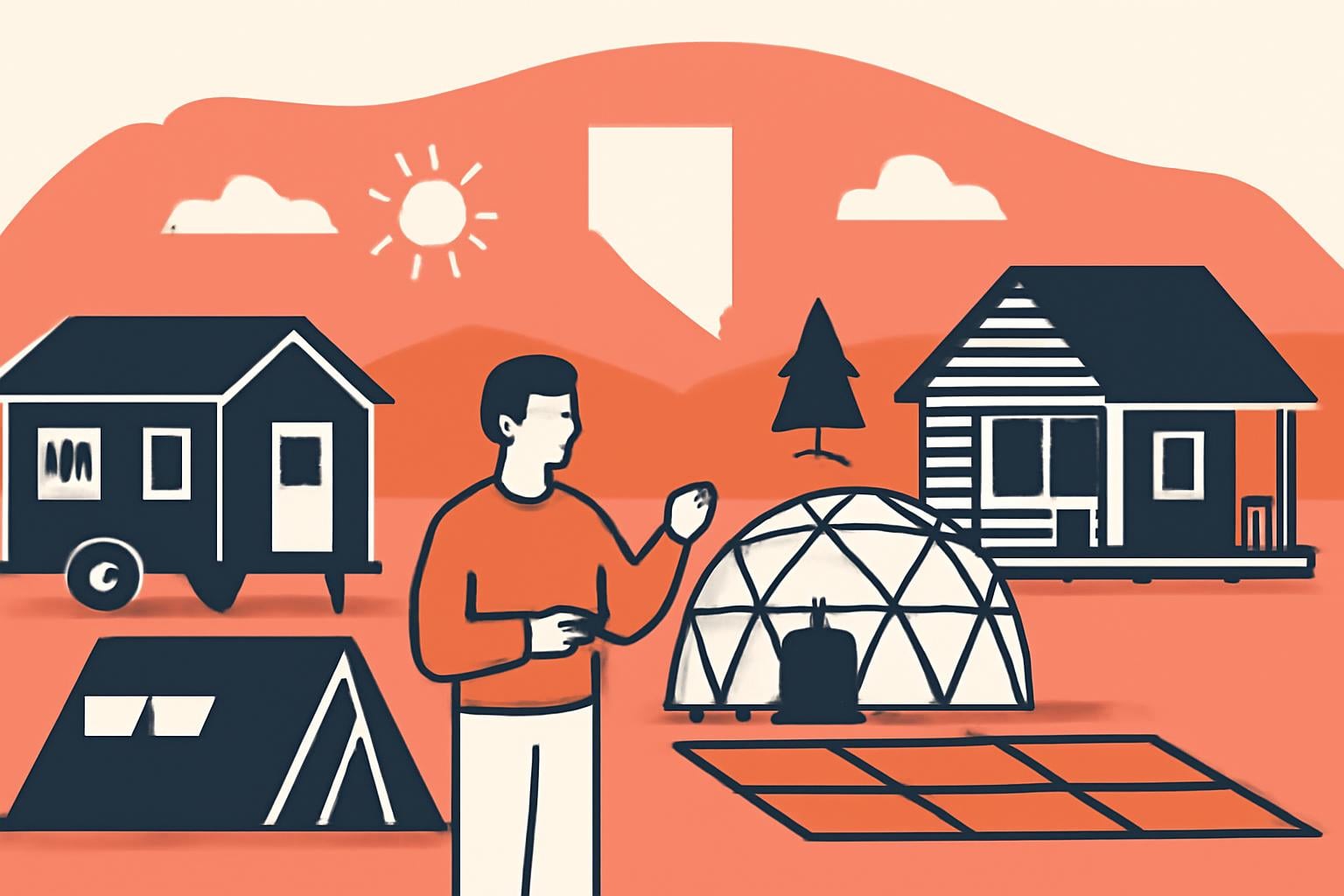
Choices include tiny homes for minimalism, earth-sheltered houses for insulation and protection, or repurposed shipping containers for durability and affordability.
Tiny Homes
Economical and mobile with low energy needs but must meet local building codes.
Earth-Sheltered Homes
Provide natural temperature regulation but require specialized design to manage drainage and ventilation.
Shipping Container Homes
Durable and modular, but insulation is necessary to cope with Nevada’s temperature extremes.
Your choice should align with your budget, intended permanence, and local regulations.
How Can You Grow Food While Living Off-Grid in Nevada?
Implementing permaculture techniques, utilizing greenhouses to extend seasons, and choosing drought-resistant crops can optimize food production.
Permaculture Practices
Design your garden to mimic natural ecosystems, improving sustainability and reducing water use.
Greenhouses
Protect plants from harsh weather and increase yield periods.
Crop Selection
Focus on hardy, native, or drought-tolerant vegetables, fruits, and herbs to improve success.
Regularly evaluate and adapt your gardening practices to climate shifts.
What Are the Environmental Impacts of Off-Grid Living?
Off-grid living offers potential environmental benefits but requires responsible land stewardship and resource management.
Sustainable Practices
Using renewable energy and water conservation methods reduces ecological footprints.
Land Use
Prevent erosion and protect habitats by avoiding over-clearing and implementing erosion control techniques.
Wildlife Conservation
Creating native plant habitats supports local biodiversity.
Monitor your environmental impact to maintain ecological balance.
How Can You Secure Your Off-Grid Property?
Physical barriers like fencing, security cameras powered by solar energy, and community watch participation enhance safety.
Fencing
Choose fencing types based on security needs and local wildlife challenges.
Surveillance Systems
Solar-powered cameras and alarms provide remote monitoring.
Neighborhood Cooperation
Building relationships with neighbors creates informal security networks.
Consistently maintain security measures to protect your investment.
What Resources Support Off-Grid Living in Nevada?
Local workshops, specialized books, and online forums dedicated to Nevada’s off-grid conditions offer education and community.
Educational Workshops
Hands-on learning in renewable energy, gardening, and building enhances skills.
Books and Guides
Focus on state-specific and practical material for actionable insights.
Online Communities
Forums and social media provide ongoing support and advice.
Leverage these resources for informed decisions and problem-solving.
How Can You Adapt to Nevada’s Climate While Living Off-Grid?
Adaptation involves building design with insulation and ventilation, passive solar strategies, and seasonal planning.
Cooling and Heating
Use shading and natural ventilation for cooling, efficient stoves or heat pumps for heating. Insulating homes prevents energy loss.
Seasonal Adjustments
Shift water use, gardening, and energy management according to seasonal resource availability.
Material Choice
Select durable, weather-appropriate construction materials to withstand temperature extremes.
Climate adaptation is ongoing; monitor your systems and adjust as needed.
What Are the Financial Implications of Off-Grid Living?
Expect substantial initial investments for land, infrastructure, and utilities installation, balanced by lower ongoing utility costs and potential incentives.
Initial Setup Costs
Include land purchase, building permits, renewable energy systems, water access, and waste management. Planning your budget with contingencies prevents surprises.
Ongoing Expenses
Maintenance of energy systems, water treatment, and property upkeep add to annual costs, though typically less than grid-dependent living.
Financing and Incentives
Explore loans, grants, or rebates for renewable energy installations. Confirm eligibility and conditions locally.
Comprehensive financial planning reduces risks and ensures sustainability.
How Can You Ensure Safety and Emergency Preparedness Off-Grid?
Build well-stocked emergency kits, acquire first aid training, and have disaster response plans tailored to rural Nevada risks.
Emergency Kits
Include food, water, medicines, tools, and communication devices sufficient for several days.
First Aid and Training
Courses in basic first aid and wilderness medicine increase your resilience against injury or illness.
Disaster Preparedness
Understand natural threats like wildfires and drought; prepare evacuation routes and backup power options.
Regular drills and updating resources maintain readiness.
What Are the Potential Health Risks of Off-Grid Living?
Health risks include water contamination, exposure to extreme weather, and limited immediate medical access.
Water Safety
Regular test your water sources and use appropriate filtration to prevent waterborne illnesses.
Climate Exposure
Protect against heat stroke, dehydration, and hypothermia through proper shelter and clothing.
Healthcare Access
Establish relationships with local medical providers and plan for emergency transportation.
A proactive approach to health mitigates risks inherent to isolated living.
Can You Raise Livestock While Living Off-Grid in Nevada?
Raising livestock is viable but demands understanding species needs, feeding, shelter requirements, and regulatory compliance.
Choosing Livestock
Common options include chickens, goats, sheep, and pigs, selected based on your land, goals, and resources.
Care and Feeding
Plan for feed production or procurement, veterinary care, and appropriate housing.
Regulations
Check county ordinances on animal limits, slaughtering, and zoning before keeping livestock.
Non-compliance can lead to enforcement actions or loss of animals.
How Can You Maintain Work-Life Balance Living Off-Grid?
Balancing work, maintenance, and personal time requires structured scheduling, boundaries, and mindfulness to avoid burnout.
Time Management
Use planners to prioritize tasks and allocate downtime effectively.
Setting Boundaries
Separate work from leisure by designating spaces and times.
Enjoying Off-Grid Life
Engage in hobbies, community events, and nature activities to sustain mental health and satisfaction.
Balance nurtures long-term commitment to the off-grid lifestyle.
What Is the Future of Off-Grid Living in Nevada?
Growing interest in sustainability and technological advances are making off-grid living increasingly accessible and practical in Nevada. Community networks are expanding, fostering innovation and support.
Trends
More people value independence and environmental responsibility, increasing demand for off-grid land and resources.
Technological Advances
Improved renewable energy systems, water purification, and construction methods support better, more affordable off-grid living.
Community Growth
Formation of supportive groups enhances knowledge-sharing and social connection, improving quality of life.
Investors and buyers should monitor these developments to align land choices with emerging opportunities.
Are There Any Success Stories of Off-Grid Living in Nevada?
Numerous Nevada residents have successfully established off-grid homesteads by combining thorough planning, community engagement, and adaptive learning.
Resident Interviews
Insights from long-term off-grid residents reveal key lessons in preparation, resource management, and resilience.
Case Studies
Documented examples highlight the diversity of housing types, energy solutions, and lifestyle adaptations possible within Nevada’s legal and environmental frameworks.
Key Takeaways
Success depends on diligence in research, compliance with laws, and realistic expectations regarding challenges and rewards.
Mini FAQ
1. What Does Off-Grid Living Mean? Living off-grid means minimizing reliance on public utilities by producing your own power, sourcing your own water, and managing waste independently.
2. How Do I Find Land Suitable for Off-Grid Living in Nevada? Prioritize rural land with accessible water sources, suitable zoning, and good solar or wind potential. Verify with county records and professionals.
3. What Are the Best Energy Sources Off-Grid in Nevada? Solar power is the most reliable, supplemented by wind turbines and backup generators.
4. Can I Raise Livestock Off-Grid? Yes, but ensure understanding of care requirements and compliance with local livestock regulations.
5. What Skills Are Critical for Off-Grid Success? Survival skills, gardening, basic home maintenance, and knowledge of renewable energy systems are vital.
6. How Do I Ensure Safety Off-Grid? Use physical security measures, maintain communication means, and prepare emergency supplies and plans.
7. What Should I Budget for Financially? Expect significant upfront costs for land and infrastructure, offset by lower ongoing utility costs. Seek local incentives and financing when possible.
This content is for informational purposes only. It does not constitute accounting, financial, or legal advice. Please consult a qualified professional before making decisions based on this information.



