
To prove you meet the IRS 2-out-of-5-year rule, keep records showing that you owned and used the property as your principal residence for at least two of the five years before the sale. Useful evidence can include closing statements, utility bills, tax records, voter registration, insurance, and address history. The exclusion has limits and exceptions, so confirm the facts with a qualified tax professional before relying on it.
What Exactly is the 2 out of 5 Year Rule in Real Estate?
The 2 out of 5 Year Rule allows homeowners to exclude capital gains tax from the sale of their primary residence if they have lived there for at least two years during the five years immediately before the sale. This means the property must be your main home for a combined total of two years, not necessarily consecutive, within the last five years.
For those interested in property ownership, understanding Land Investing Fundamentals can provide valuable context beyond residency requirements.
This matters because the rule provides a significant potential tax benefit that can influence whether an investment or purchase is profitable after taxes. For buyers and sellers, confirming you meet this requirement is essential before making offers, arranging financing, or planning sales.
Verification starts with reviewing your occupancy timeline and ownership records, which you should obtain from your property deed, tax filings, and proof of utility payments. Watch out for red flags if your residency is sporadic or if you rented the property for long periods, as these may reduce eligibility.
How Does the 2 out of 5 Year Rule Function?
The rule works by requiring both ownership and use-of-residence conditions to be met during the five years before selling the home. Specifically, you must have owned the property and lived in it as your principal residence for at least two of those five years.
This is important for land investors considering moving from an investment to a primary residence, or those deciding how long to hold before selling. Proper timing of the sale is a strategic decision to maximize exclusions.
To verify compliance, document the exact dates of ownership (from your deed or purchase contract) and periods of residence (utility bills, tax returns, or other official records). Temporary absences are generally allowed but should be carefully tracked and justified. Any gaps or conflicting records could raise questions.
What Key Benefits Does the 2 out of 5 Year Rule Offer?
The primary benefit is the ability to exclude up to $250,000 of capital gains for single filers or $500,000 for married couples filing jointly, significantly reducing potential tax bills on home sales. This can free up capital for reinvesting in land or other real estate opportunities.
📘 Get Your FREE Land Investing Strategy Guide
Discover how savvy investors build passive income with vacant land.
Understanding this can change your buying or selling timelines: if you qualify, you might afford to accept a lower offer now and avoid taxes on higher gains later, or conversely, decide to hold longer to meet the residency requirements.
To maximize this benefit, verify your filing status and previous claims on residence exclusions, as reusing the exemption too soon can disqualify you. Keep detailed, dated documentation to prove your residency and ownership during the required period.
How Do You Qualify for the 2 out of 5 Year Rule?
Qualification requires that the property sold was your primary residence and that you owned and lived in it for a total of at least two years during the five years preceding the sale. You cannot claim this benefit if you have excluded gains on another home sale within the last two years.
This qualification impacts concrete decisions such as which property to designate as primary residence if you own multiple homes or land parcels, and how to document your occupancy if you have intermittent residency.
To verify eligibility, confirm your ownership through deeds and mortgage documents. Confirm residence by gathering utility bills, tax return addresses, and lease agreements if relevant. Consult a tax professional to confirm past exclusion use and how your filing status impacts your exemption limit.
What Records Are Necessary to Prove Residency Under This Rule?
You prove residency primarily through documentation showing your physical presence and use of the home as your main dwelling during the required period. Essential records include utility bills, tax returns listing the property address, voter registrations, driver’s license or ID changes, and, if applicable, lease agreements.
This evidence matters for your offer and resale strategy. Missing, inconsistent, or incomplete records can delay sales or trigger IRS scrutiny during audits.
Verify your residency with utility providers for historical billing statements, IRS tax transcript records, and local government registries. When purchasing or investing in land, start maintaining these records early to ensure eligibility when it is time to sell.
What Is the Best Way to Track Your Time of Residency?
The most reliable approach is to use a detailed, dated calendar or a residency log to record all days lived at the property, noting any absences and their reasons. This record becomes your evidence in case of disputes.
For land investors planning to convert a parcel into a primary residence, starting this log upon move-in can make proof straightforward later. Misremembered or undocumented periods risk disqualifying your claim.
Verify tracking by cross-referencing dates with bills, mail receipts, or other digital records such as property tax payments. In communities where technology is accessible, consider apps or digital calendars for documentation. Any discrepancies or undocumented absences should be reviewed carefully to avoid surprises.
How Do Home Sales Influence the 2 out of 5 Year Rule?
Home sales start the process where eligibility and exemption amount are calculated. Selling before meeting the two-year residency can affect your exclusion amount or disqualify it altogether. Timing your sale after qualifying for the two-year residency helps maximize the exclusion and minimize taxable gains.
This directly affects your decision whether to hold or sell a property and plan your exit strategy. Understanding the requirement early can prevent costly tax penalties after sale.
Verify the sale date and residency timeline. If considering selling multiple properties, identify which property qualifies as your principal residence based on use and time allocation. When investing, factor in likely hold times to comply with this rule to optimize cash flow and tax impact.
How Do You Calculate Your Ownership and Residency Periods?
Ownership starts on the date the title transfers to you, documented by the property deed or closing statement, and ends on the sale date. Residency periods are cumulative total days or years when you physically lived in the property as your main home.
For land investors, partial year ownership or occupancy counts proportionally. Adding these periods across multiple intervals within the five years before sale is acceptable, as long as the total is at least two years.
Verify dates by reviewing closing documents, utility bills, tax records, and move-in/move-out statements. Any gaps between ownership and occupancy should be justified or could cause tax complications.
What Documentation Do You Need to Prove Compliance?
Proof requires a combination of ownership documents (such as deeds and mortgage statements) and residency evidence (utility bills, tax returns, voter registrations). Additional supporting materials include homeowner insurance policies, affidavits from neighbors, and official ID address changes.
For land investors converting parcels into homes, keeping meticulous records of these documents strengthens your claim and prevents unnecessary disputes or audit issues.
Gather these documents from title companies, utility providers, and government offices. Missing or inconsistent documentation is a red flag,pause the deal or add contingencies until proper records are confirmed.
How Can You Effectively Prove You Lived in the Property?
Besides traditional documents, affidavits from neighbors, employers, or community members can substantiate your physical presence. Witness statements and HOA records may also support your claim, especially in rural or land investment cases where official utilities might be limited.
This proof matters when paperwork is limited, such as with land parcels where traditional utilities are absent, and residence is established by other means. It can make or break your ability to claim the tax exclusion.
Collect affidavits and written statements from credible individuals and organizations involved with the property. Keep these alongside other documents. Involving a qualified real estate or tax professional to help assemble this packet can ensure it meets IRS expectations.
What If You Own Multiple Properties?
When owning multiple properties, you can only claim the exclusion on your primary residence,the home you occupy most and consider your main dwelling. Accurately determining and documenting this status is critical before you sell to avoid audits or denied claims.
This impacts your investment and exit plans: you must choose which property to designate as primary, sometimes necessitating residency shifts or strategic sales timing.
Verify your declarations through consistent documentation: tax returns, utility bills, and official address recognitions must align. Discrepancies between properties can undermine your claim and increase tax risk.
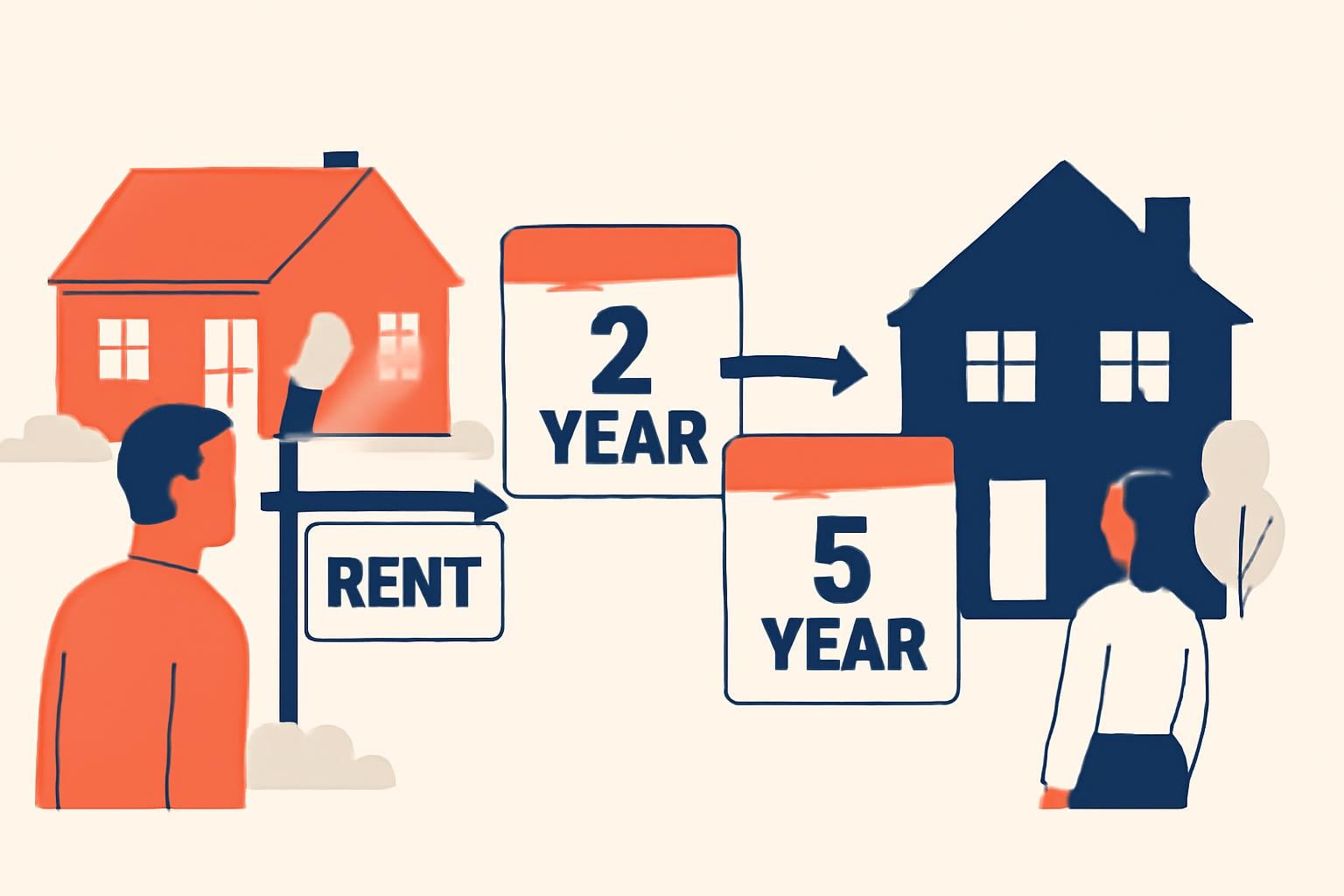
How Does Renting Affect the 2 out of 5 Year Rule?
Renting impacts residency proof. If you rent a property, you cannot claim it as your primary residence for this exclusion unless you actually occupy it for the required periods. However, renters who become homeowners and satisfy the residency requirement can still qualify.
For land buyers planning to rent out their parcels temporarily, this distinction matters because rental periods do not count as residency and can reduce your qualifying time.
To verify residency as a renter or landlord, maintain clear lease agreements, payment histories, and utility bills. Transitions between renting and owning must be carefully documented to confirm eligibility.
What Common Mistakes Should You Avoid?
Common mistakes include inadequate documentation, misunderstanding residency definitions, failing to track time accurately, and ignoring previous uses of the exclusion. These errors can jeopardize your ability to claim the capital gains exemption and expose you to unexpected tax bills.
For land investors, overlooking permissible absences or mixing rental and personal use periods are frequent pitfalls that affect compliance and may lead to audit issues.
Mitigate these risks by maintaining detailed records, continuously updating your residency calendar, and consulting professionals before selling or claiming the exclusion. Missing documentation is an immediate red flag,you should verify completeness well before the sale.
How Can You Prepare for a Possible IRS Audit?
Preparing means organizing all residence and ownership records in accessible files, understanding IRS documentation requirements, and engaging a tax advisor familiar with real estate transactions. Being proactive can simplify the process and reduce stress should your claim be questioned.
This is crucial for sellers of land-turned-homes or complex ownership histories where residency might be questioned.
Confirm all utility bills, tax returns, affidavits, purchase deeds, and sales contracts are compiled. Review audit triggers with your tax professional and consider pre-audit reviews to ensure readiness.
What Are the Tax Implications You Should Understand?
Without meeting the 2 out of 5 Year Rule’s residency requirements, gains from a home sale may be fully taxable as capital gains, increasing your tax bill. Meeting the rule allows large exclusions, reducing or eliminating taxable gain on the sale.
This affects how you price offers, plan sales timing, and structure ownership and occupancy. Understanding these implications guides decisions that protect your financial return.
Consult with a tax professional to understand how your residency period, filing status, and prior exclusions interact with current local laws. Reporting requirements on tax forms must be completed accurately to claim the exemption.
How Can You Maximize Benefits from the 2 out of 5 Year Rule?
Maximize benefits by timing your sale to follow completion of residency requirements, maintaining detailed records, and strategically planning use if you own multiple properties. Using the rule in conjunction with broader real estate investment plans, such as converting rental homes into primary residences, can further enhance outcomes.
For land investors, planning your move-in date and occupancy periods to trigger the exclusion is a practical strategy that can save significant tax dollars when you sell.
Verify timing carefully against purchase and occupancy dates, filing histories, and prior claims. Employ a tax advisor to tailor strategies to your unique situation.
What If You Sold Your Home Before Meeting Two Years of Residency?
If you sell before two years, you may still qualify for a partial exclusion if the sale is due to qualifying circumstances such as job relocation, health issues, or unforeseen events. However, selling early without such a reason usually results in taxable gains.
This situation demands evaluation of trade-offs: the need to sell now versus potential tax costs. Understanding your specific circumstances can guide your negotiation and timing decisions.
Confirm qualifying reasons by consulting the IRS guidelines or a tax professional. Collect all relevant documentation supporting your situation, as this documentation is critical in case of audits or disputes.
Can You Use the 2 out of 5 Year Rule for Investment Properties?
Yes, but only after bona fide conversion of the investment property into your primary residence. You must live in it for two years within five before selling to qualify. This strategy is common for land investors transitioning parcels into homes.
For a deeper understanding of long-term benefits, explore our comprehensive guide on Investment Strategy, Passive Income & Returns.
This affects your investment timeline and occupancy decisions. Planning conversion carefully ensures you meet requirements and avoid costly tax exposures.
Verify your occupancy by collecting new residency documents and adjusting your ownership records. Consult tax professionals to ensure your conversion is recognized and documented properly.
What Resources Can Help You Prove Compliance?
Government IRS publications provide official guidelines; professional advisors such as real estate attorneys and tax consultants offer personalized advice. Local records offices provide access to deeds and tax assessments.
Using these resources protects your investment by ensuring compliance and informed decision-making. For land-buyers, leveraging these resources before and after conversion is vital for smooth resale and tax benefits.
Access government resources online and schedule consultations with qualified advisors early in your investment or sale process. Avoid relying solely on informal advice.
How Can Professional Help Improve Your Outcome?
Real estate attorneys clarify property and residency requirements; tax professionals navigate complex IRS rules and filing; realtors advise on market timing and pricing aligned with residency qualifications.
Engaging professionals can prevent costly mistakes that jeopardize your exemption and financial outcomes. Especially for land investors unfamiliar with residency complexities, professional advice is critical.
Verify credentials of professionals, ask about experience with residency-related exclusions, and integrate their advice early to adjust your ownership or occupancy plans accordingly.
What Are Practical Steps to Stay Compliant and Ready?
Create a checklist including ownership documents, residency proofs, clearly marked timelines, affidavits, and professional consultations. Maintain organized files and update records as circumstances change.
This proactive approach enables you to confirm eligibility at each transaction stage, spot red flags, and confidently claim the exclusion. It’s the best way to protect your land investment and peace of mind.
Regularly review your checklist, adjust for new properties or changed residency, and plan moves and sales to maximize benefits.
Mini FAQ
What is the 2 out of 5 Year Rule? It allows homeowners to exclude capital gains tax on a home sale if they lived there at least two years in the last five.
How to prove residency? Use utility bills, tax returns, lease agreements, affidavits, and government records to verify continuous or cumulative occupancy.
Can I qualify if I sell before two years? Partial exclusions may apply for qualifying events; otherwise, you may owe capital gains tax.
What if I own multiple properties? Only one can be your primary residence for this exclusion. You must provide evidence of which property qualifies.
How to prepare for an IRS audit? Organize all proof documents, understand IRS rules, and consult a tax professional for guidance and representation.
What if my claim is denied? Understand why, gather additional evidence, appeal if appropriate, and seek legal advice to resolve disputes.
How to maximize the benefits? Time your sale strategically after meeting residency requirements, maintain thorough records, and plan conversions if switching property use.
This content is for informational purposes only. It does not constitute accounting, financial, or legal advice. Please consult a qualified professional before making decisions based on this information.



