

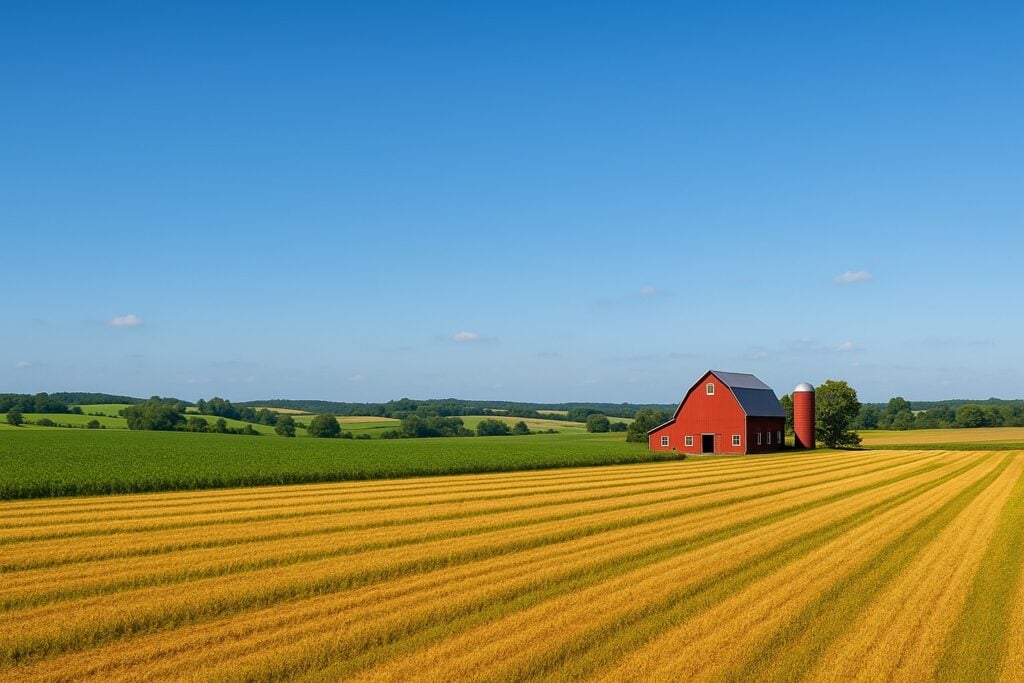

Farmland investing can take two very different paths: buying a farm and leasing it to an operator, or gaining exposure through a managed investment vehicle. For beginners, the key is not chasing a projected return. It is buying or selecting an asset only after you understand its soil, water, access, tenant demand, operating costs, financing risk, and exit options.
Farmland is not a hands-off asset simply because someone else farms it. A strong investment plan connects the parcel’s physical capability to a realistic lease structure and a conservative ownership budget. Start with the property, then verify the operator, then decide whether the financing and ownership structure fit your goals.
How do I buy farmland to lease to an operator?
To buy farmland for leasing, identify land with usable soils, dependable water, practical access, and demand from qualified local operators. Then use a written lease that clearly assigns responsibilities for rent, maintenance, insurance, improvements, and renewal.
Begin with the farming system the land can support. Row-crop ground, pasture, orchards, specialty crops, and mixed-use farms each have different infrastructure needs and tenant pools. A productive parcel is not automatically a good rental property if it lacks road access, field entrances, drainage, storage, or a workable water source.
Talk with local farmers, farm managers, and agricultural lenders before making assumptions about tenant demand. Ask what crops are commonly grown, whether operators are expanding or contracting, which improvements matter most, and what lease structure is customary in that county. Local practice can vary dramatically between neighboring areas.
What is the difference between cash rent and crop-share leases?
A cash-rent lease generally sets a fixed payment arrangement, while a crop-share lease gives the landowner a share of production or sales. Cash rent is simpler to administer. Crop share can tie the owner more closely to farming results, commodity prices, and operating decisions.
| Lease type | Owner role | Potential benefit | Main risk |
|---|---|---|---|
| Cash rent | Primarily landlord | Simpler budgeting | Rent may not reflect a strong crop year |
| Crop share | More involved owner | Participation in production results | Revenue can vary with yield and pricing |
| Flexible cash rent | Landlord with adjustment terms | Can share some upside or downside | Terms can become difficult to verify |
For a first-time owner, a straightforward cash lease may be easier to understand, but only if the lease reflects the land’s condition and local market. A common mistake is accepting a lease template without confirming who pays for lime, drainage repairs, fencing, irrigation maintenance, weed control, taxes, and casualty insurance.
What should a farmland lease cover?
A farmland lease should identify the leased acres, permitted uses, payment terms, access rights, maintenance duties, conservation practices, insurance expectations, default procedures, and what happens to improvements at lease end. Have a qualified local attorney review the agreement because enforceability and required terms vary by state.
Do not treat a tenant relationship as a minor detail. The operator’s stewardship affects the property’s condition, future marketability, and the likelihood of a smooth renewal. Verify references, farming experience, crop plans, equipment access, and whether the proposed use matches the land’s capability.
How can I invest in farmland without owning an entire property?
You can gain farmland exposure without buying a whole farm through publicly traded vehicles, private funds, fractional arrangements, or other managed structures. These options may reduce direct management work, but they introduce different risks involving fees, liquidity, governance, and the quality of the underlying assets.
The practical way to think about indirect farmland investing is to separate ownership of land from ownership of an investment interest. With direct ownership, you control the parcel and lease decisions. With a fund or platform, a manager makes many decisions and you must evaluate the structure as carefully as the land itself.
What should I compare before choosing a farmland investment vehicle?
- How the investment is structured and what ownership rights you receive.
- Which properties, regions, crop types, and tenants are included.
- Who selects, manages, and values the farmland.
- All disclosed fees, expenses, conflicts of interest, and distribution policies.
- Whether interests can be sold, redeemed, or transferred, and under what conditions.
- How often investors receive property and financial reporting.
Liquidity deserves special attention. Publicly traded securities may be easier to sell than a direct farm interest, but their market price can move for reasons unrelated to the underlying farmland. Private interests may be difficult to exit when you want to sell. Review offering documents carefully and consider advice from a qualified financial professional before purchasing a security or private investment interest.
For a broader overview of approaches, compare the tradeoffs in this guide to farmland investing options and leasing.
What due diligence is essential before buying farmland?
Essential farmland due diligence verifies the parcel’s legal access, boundaries, title, soils, water, drainage, environmental condition, zoning, and tenant suitability. The goal is to confirm that the land can be used as expected and that no hidden condition changes the economics or limits future use.
Start with documents. Review the deed, preliminary title materials, recorded easements, surveys, leases, tax records, and any available water or irrigation documents. A title professional and local real estate attorney can help identify liens, access issues, mineral interests, use restrictions, and exceptions that a buyer should understand before closing.
How do I evaluate soil and water resources?
Soil and water are operating assets, not background details. Review soil maps, field history, drainage patterns, erosion concerns, flood exposure, and whether the parcel’s soil capability matches the intended crops or grazing use. A local agronomist, conservation professional, or experienced farm manager can help interpret what the records mean on the ground.
For water, verify the actual source, condition of wells or irrigation equipment, delivery arrangements, permits or allocations where applicable, and any restrictions on use. Do not assume that a pond, canal, well, or historic irrigation practice creates an ongoing right to use water. Confirm the details with the appropriate local authority and qualified advisers.
What property issues do beginners often overlook?
- Road access that crosses another owner’s land without a clear recorded right.
- Field shapes or slopes that make modern equipment difficult to use.
- Drainage systems, fences, pumps, or buildings that need repair.
- Hunting, grazing, utility, conservation, or mineral agreements affecting use.
- Environmental concerns from prior dumping, fuel storage, or agricultural operations.
- Local land-use rules that limit agritourism, housing, events, processing, or farm stands.
Walk the property with people who understand farming, not only with a broker. Look at entrances, ditches, culverts, fences, neighboring uses, low spots, and evidence of erosion. If the property has unusual features or a concerning history, determine whether a specialized inspection or environmental review is appropriate.
How can I finance a farmland investment?
Farmland financing can come from agricultural lenders, conventional lenders, seller financing, or other negotiated arrangements. The right choice depends on the borrower, property type, intended use, down payment resources, collateral, repayment capacity, and the lender’s view of agricultural risk.
Before seeking financing, prepare a conservative property budget. Include expected lease revenue, taxes, insurance, maintenance, professional fees, vacancy or transition periods, and capital repairs. Then test whether the plan still works if the tenant changes, an improvement fails, or operating costs rise. Debt should support a durable plan, not force an owner to depend on optimistic assumptions.
This overview of ways to finance farmland can help you compare lender financing with owner-financed arrangements.
When might seller financing make sense?
Seller financing may be useful when a buyer and seller can agree on terms that conventional lenders will not offer, or when the property has characteristics that make bank underwriting more complicated. It still requires careful documentation, title work, and legal review. The note, security instrument, payment obligations, default process, and recording requirements should be handled correctly for the jurisdiction.
A common mistake is focusing only on the payment amount. Review whether the loan terms match the lease term, whether a future refinance is realistic, and what happens if the property needs unexpected work before it produces enough lease revenue to support ownership costs.
What sustainable strategies can improve farmland value?
Sustainable farmland strategies can protect productivity and tenant appeal when they fit the parcel, operator, and local market. Useful practices may include erosion control, cover crops, rotational grazing, drainage improvements, habitat work, efficient irrigation, and soil-health planning.
The key is to distinguish a sound land-management practice from a marketing label. A practice should have a clear purpose: reduce erosion, improve water infiltration, protect forage, address compaction, or preserve the productive capacity of the soil. Ask who will perform the work, who pays, how results will be documented, and what happens if the tenant changes.
Can conservation programs or agritourism add value?
Conservation programs may support qualifying practices, but eligibility, obligations, payments, and restrictions depend on the program and location. Verify details directly with the administering office before assuming a property qualifies. Also confirm whether an existing agreement survives a sale or limits future uses.
Agritourism can create another use for suitable land, but it is not a simple add-on to a farm lease. Parking, sanitation, traffic, accessibility, insurance, neighbor impacts, food rules, and local permits can all matter. Consider it only where the site, operator, and local rules support the business plan.
How can I plan an exit from a farmland investment?
Plan your farmland exit before you buy by identifying likely future buyers, keeping records organized, and avoiding improvements that only make sense to one tenant. A profitable sale is never assured, so focus on preserving options rather than assuming appreciation or a premium buyer.
Possible exit paths include selling to a neighboring operator, another investor, a farm family, an agricultural business, or a buyer seeking a different permitted use. The best path depends on the parcel’s location, water, access, condition, lease status, and local demand at the time of sale.
Should I consider a like-kind exchange?
A like-kind exchange may be relevant when selling investment real estate and acquiring replacement real estate, but the rules are detailed and strict. Eligibility, timing, ownership structure, and handling of sale proceeds can affect the outcome. Speak with a qualified intermediary and tax adviser before listing property if an exchange may be part of your plan.
Keep a clean property file from day one. Include surveys, title materials, lease records, maintenance invoices, conservation documentation, maps, water records, and improvement history. Good records make diligence easier for a future buyer and help you explain what the land can actually do.
What metrics should a farmland investor track?
Track farmland performance by monitoring property condition, lease reliability, net operating results, debt obligations, capital needs, and marketability. Metrics are useful only when they help you make a decision, such as renewing a lease, funding a repair, refinancing, or preparing to sell.
- Lease status: payment history, expiration date, renewal discussions, and compliance with lease duties.
- Operating results: lease revenue less recurring ownership expenses and planned reserves.
- Debt coverage: whether property cash flow can reasonably support loan obligations and ownership costs.
- Land condition: drainage, erosion, soil stewardship, fencing, roads, irrigation, and deferred maintenance.
- Marketability: buyer demand, comparable listings, local farm activity, and any change in permitted uses.
Review the property at least as often as needed to manage the lease and maintenance cycle, but do not confuse frequent review with constant intervention. The purpose is to catch issues early, maintain a productive tenant relationship, and make decisions based on current local facts rather than broad national headlines.
If you are building a broader land portfolio, this buyer’s guide to land investment strategies can help frame farmland alongside other land-investing approaches.
Mini FAQ
What determines farmland rent?
Farmland rent depends on soil capability, water, drainage, field configuration, crop suitability, local tenant demand, improvements, access, and the lease structure. Ask local operators and agricultural professionals about comparable land, but verify the condition and terms rather than relying on a headline rate.
Can I combine direct farmland ownership with indirect investments?
Yes, some investors use both, but they have different risks and responsibilities. Direct ownership requires property oversight and tenant management. Indirect investments may offer professional management but can involve liquidity limits, fees, and less control. Consider whether each position serves a distinct purpose in your overall plan.
How should I prepare before making an offer?
Build a due-diligence checklist, identify the professionals you may need, review local farming conditions, and decide what findings would cause you to renegotiate or walk away. The best beginner move is often not making an offer quickly. It is knowing exactly what must be verified before you commit.