

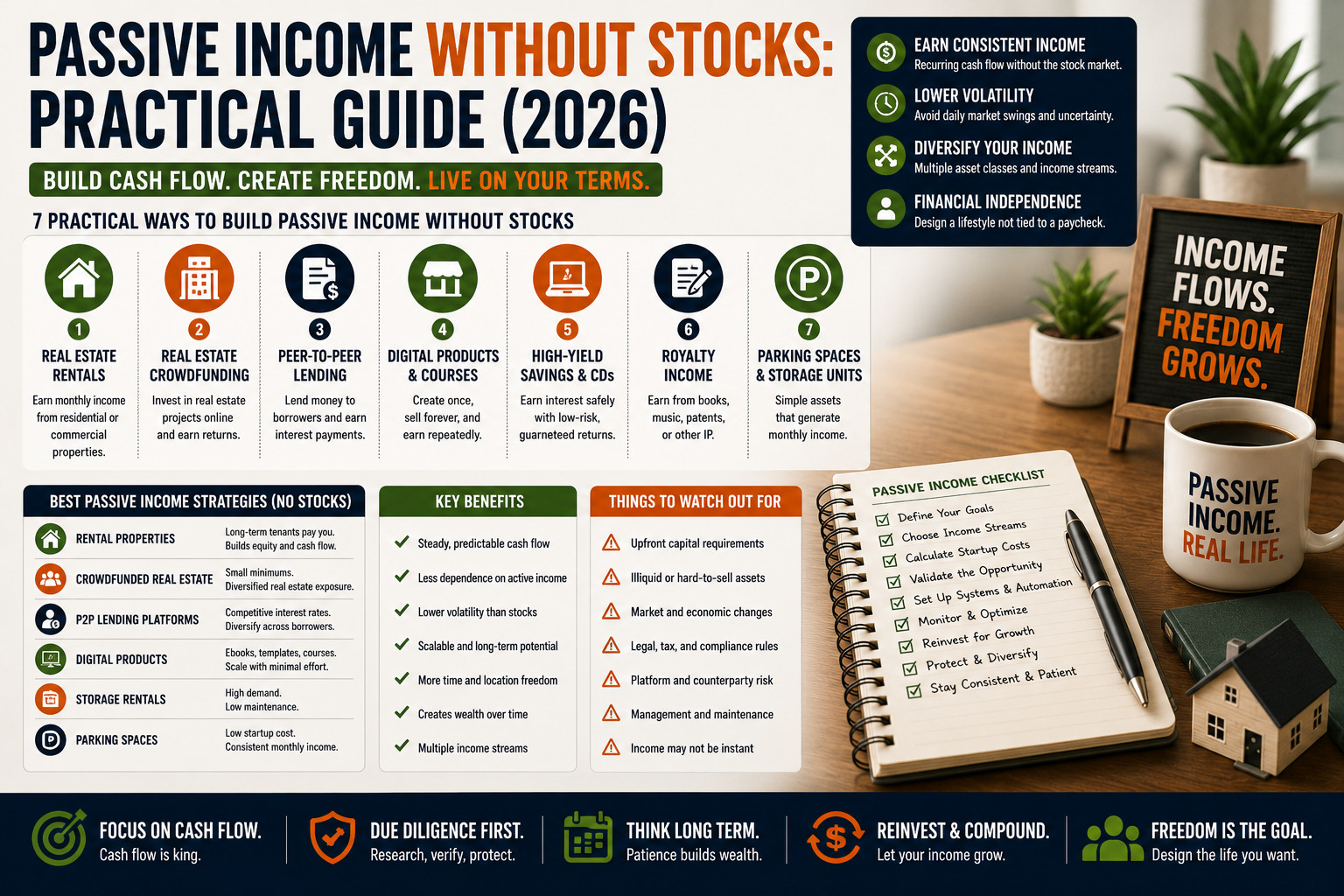

Generating passive income without stocks requires carefully selecting income-producing assets that provide recurring cash flow with limited ongoing active management. Options such as land leases, rental properties with professional management, royalties, peer-to-peer lending, vending machine routes, and digital assets each come with distinct trade-offs in capital, effort, risk, and liquidity. The central challenge is balancing these factors to find an approach aligned with your resources and risk tolerance.
Ignoring the nuances of these alternatives can lead to underestimated management demands, legal complications, or illiquid investments that fail to deliver expected income. For example, land investing can be a viable source of passive income through leasing or royalties but requires thorough due diligence on zoning, ownership rights, and market demand. Understanding these dependencies and potential pitfalls upfront is critical to making informed decisions and avoiding costly mistakes.
What Are Reliable Ways to Earn Passive Income Without Investing in Stocks?
Reliable passive income without stocks comes from assets that generate recurring payments with minimal daily involvement after initial setup. These include rental properties managed by professionals, leasing land for agriculture or commercial uses, earning royalties from mineral rights or intellectual property, peer-to-peer lending, vending machine routes, and digital assets. Each option varies in how passive the income truly is and the level of ongoing management required.
Categories of Non-Stock Passive Income Streams
Physical Assets: Land, Rental Properties, and Vending Machines
Physical assets provide tangible collateral and income through leases, rents, or sales but often require some degree of maintenance and management. Rental properties typically need tenant relations and property upkeep, though professional management can reduce active involvement. Vending machines generate cash flow from sales but require restocking and location oversight unless outsourced. Land can be leased for agriculture, commercial use, or resource extraction; however, verifying zoning, access, and permitted uses is essential before investing.
Financial Alternatives: Real Estate Notes, Peer-to-Peer Lending, and Royalties
These streams rely on contractual payments without direct physical management. Real estate notes pay interest on mortgage loans, peer-to-peer lending involves lending money via platforms, and royalties derive from intellectual property or natural resources. While generally requiring less hands-on work, these carry counterparty and default risks, making due diligence on borrower quality and contract enforceability critical.
Digital and Intellectual Property Assets
Income from digital assets or intellectual property depends on licensing, advertising, or sales. Examples include royalties from books, music, patents, or websites generating ad revenue. These assets can scale globally but involve legal complexities such as copyright enforcement and fluctuating market demand. Confirming ownership and rights through official registries is necessary to protect income streams.
Which Income-Producing Assets Offer the Most Manageable Recurring Income Ideas Outside the Stock Market?
Manageable recurring income ideas balance income potential with reasonable effort and capital requirements. Leasing land for cell towers or mineral rights can provide steady income with minimal oversight if contracts are well structured. Rental properties with professional management reduce daily involvement but require sufficient capital and market research. Vending machine routes can generate income but demand operational management or reliable outsourcing, with location selection being critical.
Leasing Land for Cell Tower or Mineral Rights
Long-term land leases for cell towers often include rent escalations and require little ongoing effort beyond contract oversight. Mineral rights royalties depend on extraction activity and commodity prices, which can be volatile. Both require confirming zoning, ownership rights, and legal protections to avoid disputes or restrictions that could block income generation.
Owning Rental Properties with Professional Management
Outsourcing property management reduces active work but does not eliminate risks such as vacancies, property damage, or market downturns. Evaluating tenant demand, property condition, and management fees is essential to ensure net income meets expectations. High management fees or poor tenant markets can erode returns significantly.
Operating or Outsourcing Vending Machine Routes
Vending machines require restocking and maintenance, which can be outsourced at additional cost. Location quality directly affects revenue potential. Risks include theft, vandalism, and changing consumer preferences. Investors must weigh operational demands against profit margins and consider whether outsourcing partners are reliable and cost-effective.
How Does Land Investing Generate Passive Income Without Stocks?
Land investing generates passive income primarily through leasing for commercial or agricultural uses, earning royalties from mineral or resource rights, and potential appreciation. Each method requires careful evaluation of legal, zoning, and market factors to ensure income reliability and manageable oversight.
Leasing Land for Commercial or Agricultural Use
Leases with clear, long-term terms reduce management needs and provide steady income if zoning and market demand support intended uses. Without verifying zoning and tenant reliability, investors risk owning land that cannot be leased or generates inconsistent income. Periodic lease reviews and tenant screening remain necessary to maintain income stability.
Earning Royalties from Mineral or Resource Rights
Mineral rights can yield royalties if extraction occurs, but income fluctuates with commodity markets and extraction activity. Legal complexities include surface rights conflicts and environmental regulations. Monitoring production and payments is advisable despite the largely passive nature of royalties.
Evaluating Land Appreciation Potential
Land appreciation is speculative and should not be the primary income source. It depends on local economic growth, infrastructure development, and zoning changes. Land is less liquid than stocks, often requiring long holding periods and incurring ongoing costs such as taxes and insurance.
What Initial Capital and Effort Are Required for These Non-Stock Passive Income Streams?
| Asset Type | Typical Initial Capital Range | Key Capital Considerations |
|---|---|---|
| Small Land Parcels | $2,000 – $20,000 | Price varies by location and zoning; verify access and permitted uses. Include property taxes and insurance in ongoing costs. |
| Rental Properties | $30,000 – $100,000+ | Down payment, closing costs, reserves for repairs and vacancies. Management fees typically 8-12% of rental income. |
| Peer-to-Peer Lending | $500 – $5,000 minimum | Platform minimums vary; diversification reduces default risk. Periodic reinvestment may be needed to sustain income. |
| Vending Machine Routes | $10,000 – $50,000 | Machine purchase, inventory, and route acquisition costs. Outsourcing increases expenses but reduces personal time commitment. |
Management effort ranges widely: land leases often require minimal oversight if contracts are clear; rental properties can be outsourced; vending machines need regular servicing or reliable outsourcing; peer-to-peer lending requires monitoring platform and borrower performance. Underestimating these demands risks frustration or financial loss.
What Risks Are Unique to Passive Income Sources Outside the Stock Market?
Legal and Zoning Restrictions
Zoning laws may prohibit intended uses, rendering land unusable for income generation. Mineral rights ownership can be complicated by surface rights and environmental regulations. Legal disputes over contracts or ownership can be costly and time-consuming. Conduct thorough title searches and consult local authorities or legal experts before investing.
Market Demand and Income Stability Risks
Non-stock income often depends on localized or niche demand vulnerable to economic shifts or technological changes. Vending machine income may decline with reduced foot traffic; mineral royalties fluctuate with commodity prices; rental income depends on tenant demand and local economy. Diversification and contingency reserves help mitigate these risks.
Tax Implications and Reporting Requirements
Tax treatment differs from stocks and can be complex. Rental properties allow depreciation but may trigger passive loss limits. Mineral royalties are typically ordinary income with unique reporting rules. Land sales incur capital gains taxes influenced by holding period and use. Peer-to-peer lending interest is taxable as ordinary income. Professional tax advice is recommended.
How Can I Evaluate If a Land Parcel Is a Good Passive Income Investment?
Evaluate location, zoning, leasing permissions, income potential, costs, and exit options to ensure the land aligns with your goals and risk tolerance.
Assessing Location, Zoning, and Leasing Opportunities
Location affects demand and income potential. Verify zoning through county records to confirm permitted income-generating uses. Check for easements, access rights, or environmental restrictions that could limit usability. Without proper zoning, leasing or royalties may be impossible.
Estimating Income Potential and Costs
Research comparable lease rates or royalties via local brokers or government reports. Balance expected income against recurring costs such as property taxes, insurance, maintenance, and management fees. Avoid overestimating income or underestimating expenses to maintain positive cash flow.
Understanding Exit Options and Liquidity
Land is generally illiquid, with sales often taking months or years. Review sales data for similar parcels to assess resale potential and typical time on market. Factor in transaction costs and taxes when planning exits. Illiquidity increases risk and reduces flexibility.
What Steps Should I Take to Start Building Passive Income Without Stocks?
Clarify your capital, time, and risk tolerance; research local market and legal conditions; and consult qualified professionals to validate your plans before investing.
Clarifying Personal Capital, Time, and Risk Tolerance
Define your available capital, time commitment, and risk appetite. Assets requiring minimal oversight, like land leases, suit investors with limited time. Higher-risk options like peer-to-peer lending or digital assets may fit those with greater risk tolerance. Clear constraints focus your search and prevent overextension.
Researching Local Market and Legal Conditions
Investigate zoning, tax implications, and market demand using official sources such as county assessor offices and planning departments. Understanding local economic trends and regulations avoids surprises and ensures feasibility.
Consulting Qualified Professionals Before Investing
Engage tax advisors, real estate experts, or experienced investors to reduce risks of hidden costs or legal issues. Professionals assist with title searches, contract drafting, and tax planning. Proceed only after confirming alignment with your goals and feasibility.
Comparison of Non-Stock Passive Income Streams by Capital, Effort, Risk, and Liquidity
| Income Stream | Capital Required | Effort Level | Risk Profile | Liquidity |
|---|---|---|---|---|
| Rental Properties | High | Moderate (management or property manager) | Moderate (market fluctuations, tenant risk) | Low to Moderate (market dependent) |
| Land Leasing | Moderate | Low (contract management) | Low to Moderate (tenant reliability, zoning changes) | Low (slow sales) |
| Peer-to-Peer Lending | Low | Low (platform oversight) | High (default risk) | Moderate (secondary markets vary) |
| Vending Machines | Moderate | Moderate to High (restocking, maintenance) | Moderate (location, theft, demand) | Moderate (machines resellable) |
| Digital Assets (royalties, IP) | Low | Low to Moderate (creation/acquisition effort) | High (market volatility, regulation) | High (platform dependent) |
Checklist for Evaluating Non-Stock Passive Income Opportunities
- Legal and Zoning Compliance: Verify ownership rights, zoning, and regulatory restrictions before considering income potential.
- Asset Type: Identify whether the asset is physical, financial, or digital to understand management demands.
- Risk Factors: Assess legal, market, counterparty, and operational risks that could affect income stability.
- Initial Capital Needed: Confirm minimum investment and additional costs such as taxes, fees, and maintenance.
- Expected Effort Level: Determine ongoing management or oversight required and your willingness to commit time or outsource.
- Liquidity: Understand how quickly and easily the asset can be sold or exited, considering transaction costs.
- Tax Considerations: Review applicable tax treatment and reporting requirements to avoid surprises.
- Market Demand: Research local or niche demand for leasing, royalties, or sales to validate income potential.
- Exit Strategy: Plan for potential resale or termination of income streams to maintain capital flexibility.
Practical Scenario: Choosing Between Land Investing and a Vending Machine Route for Passive Income
Scenario Setup and Options
An investor with $15,000 seeks low-maintenance passive income without stocks. Options include purchasing a small land parcel for leasing or appreciation, or owning vending machines with potential outsourcing of management. The investor prefers minimal day-to-day involvement but wants a reliable income stream.
Verification of Local Regulations and Income Data
For the land parcel, the investor verifies local zoning permits agricultural leases and confirms access rights. They research comparable lease rates and check for environmental restrictions. For vending machines, the investor obtains historical income and maintenance cost data from existing operators, assessing foot traffic and security risks.
Decision Criteria and Next Steps
Land investing may require less frequent management but depends on legal clearance and market demand. Vending machines offer quicker income but require active oversight or reliable outsourcing. The investor weighs lease income stability against operational demands and income variability. They choose the option with confirmed legal feasibility, manageable effort, and stable income potential.
Walk-Away Condition
If legal restrictions prevent leasing the land or vending machine income is unreliable or demands excessive active management, the investor should reconsider or pause to avoid undue risk.
Next Action
Conduct local market research and consult professionals such as real estate agents or vending operators to validate assumptions before committing capital.
Frequently Asked Questions About Passive Income Without Stocks
Can I Generate Passive Income Without Any Upfront Capital?
Most reliable non-stock passive income streams require some initial investment or ongoing management. Opportunities without upfront capital often involve trade-offs in time or risk and may not be truly passive.
Is Peer-to-Peer Lending a Safe Alternative to Stocks?
Peer-to-peer lending carries credit risk and lacks regulated exchange liquidity. Assess platform transparency, borrower quality, and default rates carefully. Diversification reduces but does not eliminate risk.
How Do Tax Rules Differ for Land Income Compared to Stocks?
Tax treatment for land income can be complex, involving different reporting requirements and limited depreciation options. Capital gains taxes apply on sales, and passive loss rules may affect deductions. Professional tax advice is recommended.
What Are Signs That a Passive Income Opportunity May Be a Scam?
Warning signs include promises of high returns with no risk or effort, pressure to invest quickly, lack of verifiable information, and unclear legal or tax compliance. Always perform due diligence and consult trusted advisors before investing.
Can Digital Assets Provide Reliable Recurring Income?
Digital assets can provide recurring income, but stability varies due to market volatility and regulatory uncertainty. Income may fluctuate with trends, platform policies, or copyright enforcement. Diversification and careful evaluation are important.
How Often Should I Review My Non-Stock Passive Income Investments?
Review investments at least annually to ensure alignment with goals, market conditions, and legal changes. Early identification of risks allows timely adjustments. For assets like rental properties or land leases, periodic tenant or lease reviews are advisable.