

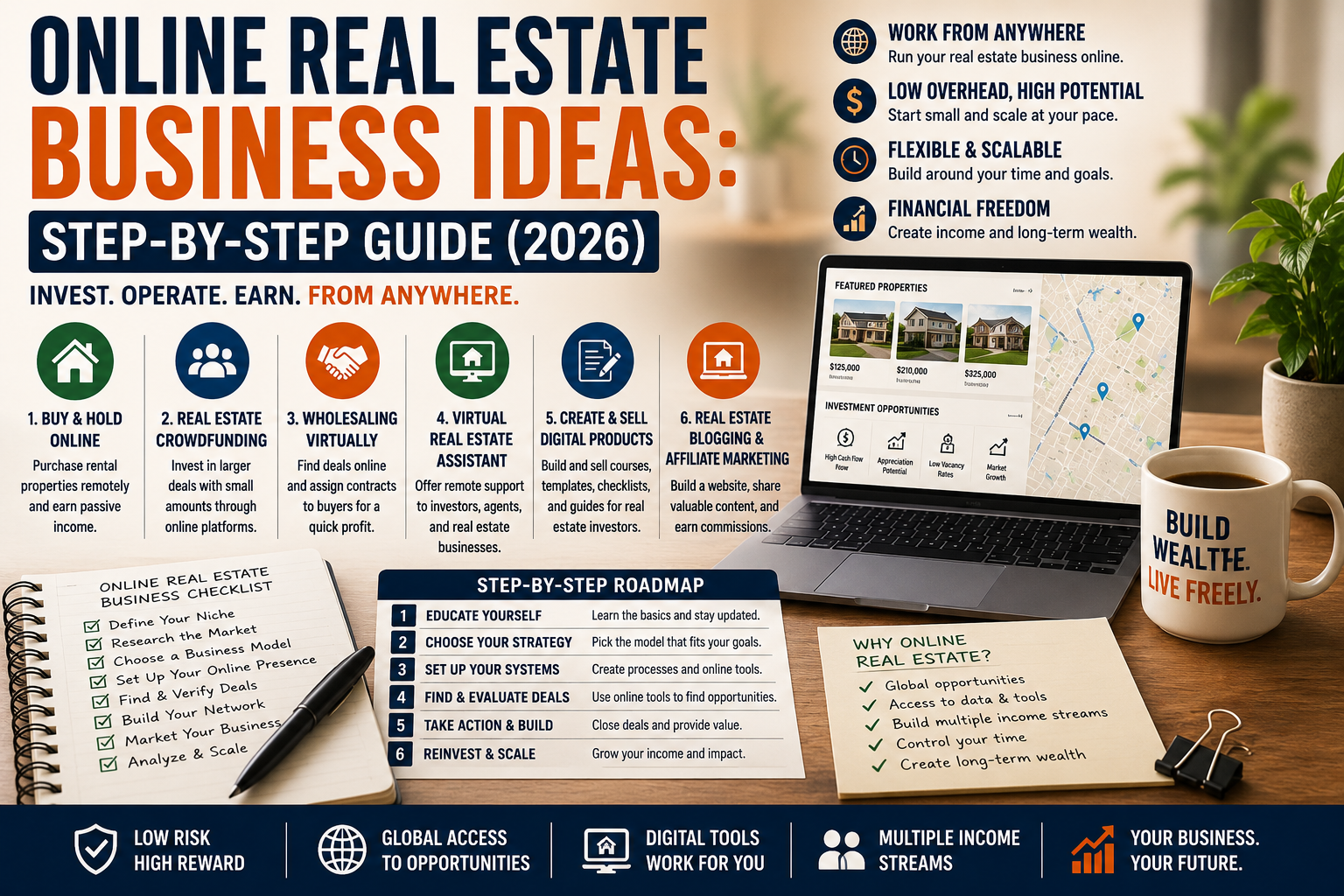
Online Real Estate Business Ideas: Step-by-Step Guide (2026)

Online real estate business ideas span a variety of models, from buying small parcels of land to wholesaling contracts or investing through crowdfunding platforms. This guide provides step-by-step, practical guidance focused on land investing online, helping you identify, verify, and evaluate opportunities to make informed decisions that suit your capital, time, and risk tolerance.
Understanding critical verifications such as title clarity, zoning compliance, and platform credibility will protect you from common pitfalls in remote land transactions. This approach prioritizes actionable due diligence to ensure you can confidently proceed, pause, or walk away based on evidence rather than assumptions or incomplete information.
What are practical online real estate business ideas and their tradeoffs?
Popular online real estate models include purchasing small land parcels, wholesaling property contracts, and real estate crowdfunding; each has unique capital requirements, time commitments, and risks that directly impact your land investment strategy.
Small Parcel Land Investing: What should I know before buying?
Buying affordable land parcels online is a common entry-point requiring low to moderate capital, often under $5,000. The tradeoff is that your success depends on verifying clear legal ownership, no outstanding liens or encumbrances, confirmed legal access routes, and zoning that permits your intended use.
Failing to confirm these factors can result in owning land that cannot be developed, sold, or financed, locking up capital with little chance for return. Before making an offer, check the county recorder or assessor’s official records to confirm title status and liens. Additionally, contact the local zoning office or use official websites to verify land use restrictions. Red flags such as unclear ownership or restrictive zoning should prompt a walk-away decision or renegotiate terms.
Wholesaling and Online Flipping: What are key considerations?
Wholesaling involves securing contracts to sell properties without taking ownership, relying on negotiation skills and understanding legal contracts. It generally requires low upfront capital but demands significant time for deal sourcing, marketing, and compliance with local laws.
Critical verification includes ensuring the contract terms allow assignment and that local regulations permit wholesaling activities. Misinterpreting these rules can expose you to legal challenges or financial penalties. Confirm legality by consulting a local real estate attorney before proceeding.
Real Estate Crowdfunding: How does it fit into my investment plan?
Crowdfunding platforms allow you to invest small amounts for fractional ownership in land or property portfolios, offering diversification with minimal active management. Although this reduces time commitments, you relinquish control over property management and are exposed to platform risks such as solvency, fee transparency, and regulatory compliance.
Thoroughly review any platform’s regulatory filings, fee disclosures, and investor protections. Avoid platforms with opaque histories, unclear terms, or unresolved complaints. This approach suits investors seeking passive income or diversification but who understand and accept platform dependency risks.
| Business Idea | Typical Minimum Capital | Time Commitment | Control Level | Key Verification Points | Suitability |
|---|---|---|---|---|---|
| Small Parcel Land Investing | Low to Moderate | Moderate (due diligence required) | High (direct ownership) | Title clarity, liens, zoning, legal access | Investors wanting direct control and willing to research |
| Wholesaling / Online Flipping | Low upfront | High (active management, contract negotiation) | Medium (contract control, no ownership) | Contract legality, local wholesaling rules, market demand | Experienced investors with legal knowledge and time |
| Real Estate Crowdfunding | Low (fractional investments) | Low (passive) | Low (pooled ownership) | Platform licensing, fee transparency, investor protections | Investors seeking passive diversification |
How do I evaluate land investing opportunities online?
Evaluating land opportunities online starts with verifying critical facts,ownership, title, zoning, access, and market value,using official records and trusted professionals to avoid costly mistakes.
How can I verify legal ownership and title remotely?
Begin every land purchase by accessing official county recorder or assessor websites to confirm the seller legally owns the property and that there are no liens, easements, or unpaid taxes. If online records are unclear or incomplete, instruct a local title company or attorney to conduct a title search.
Clear title with no unresolved encumbrances is a non-negotiable criterion. Any uncertainties here should pause your transaction until satisfactorily resolved. Documentation gaps or complex title chains may require walking away or renegotiating.
What should I check about zoning and land use regulations?
Contact local municipal or county zoning offices or check their official online maps to confirm the parcel allows for your intended use,be it recreational, residential, agricultural, or commercial. Zoning restrictions can limit future development or resale options.
Unclear or restrictive zoning is a red flag that demands either further inquiry or termination of the deal. Variances or conditional use permits may be possible, but never assume without confirmation from planning officials.
How do I analyze market comparables and land potential?
To set an appropriate price and evaluate resale potential, examine recent sales of similar parcels nearby with matching size, zoning, and access. Utilize public appraisal records or multiple listing services when available. Beware of overpaying if comparisons are absent or inaccurate.
Understanding local market trends informs your exit strategy and holding period. If data is sparse or inconsistent, treat valuation assumptions with caution.
What common mistakes should I avoid during evaluation?
A frequent error is skipping or rushing title and zoning verification because online platforms do not always disclose these details. Never trust seller statements without independent verification from official records or competent local professionals. This diligence preempts legal disputes and asset illiquidity.
Scenario: How can I start land investing online with limited time and $3,000 capital?
- Focus on small rural parcels offered below $5,000 on reputable auction sites after verifying title, liens, and zoning.
- Consider partnering with experienced investors to share workload and risk while learning the process.
- Crucial verifications include clear ownership, zoning allowing your intended use, realistic estimates of ongoing costs like property taxes, and the reliability of the sales platform.
- Walk away if title or zoning is unclear, the platform lacks transparency, or ongoing expenses exceed your budget.
- Proceed only after thorough due diligence and ensuring your available time matches the active management needed.
What due diligence steps must I take before buying land online?
- Confirm ownership and lien status: Verify ownership through county recorder offices or title companies. Unresolved liens or disputes are deal-breakers.
- Check zoning and land use compliance: Obtain zoning maps and ordinances from local planning departments. A mismatch with intended use requires further action or abandonment.
- Evaluate seller and platform credibility: Review seller identity, reputation, platform licensing, and regulatory compliance. Poor credibility warrants walking away.
- Analyze comparable sales: Research recent sales of similar parcels to gauge fair price range and avoid overpayment.
- Assess legal and practical access: Use official maps, satellite imagery, and county records to verify physical and legal access for future use or resale.
- Calculate ongoing ownership costs: Account for taxes, transfer fees, maintenance, and any association fees impacting total investment.
- Plan your exit strategy: Understand resale prospects, holding periods, and market liquidity to align your offer and financing.
How does online land investing compare with other real estate strategies?
Online land investing typically demands lower capital and offers direct ownership control but carries moderate risks from zoning restrictions, market illiquidity, and carrying costs.
Wholesaling focuses on contract flipping with active deal-making and legal nuances, requiring high time commitment but lower capital.
Crowdfunding reduces individual management for diversified exposure but cedes control and introduces platform dependency risks.
| Business Model | Capital Needed | Risk Level | Time Commitment | Control Level | Liquidity |
|---|---|---|---|---|---|
| Online Land Investing | Low to Moderate | Moderate (zoning, market risks) | Moderate (due diligence & management) | High (ownership rights) | Low (long-term hold typical) |
| Wholesaling Properties | Low upfront | Moderate to High (legal and contract) | High (active sourcing & negotiation) | High (deal contract control) | Moderate (dependent on deal closure speed) |
| Real Estate Crowdfunding | Low (platform minimums) | Varies (portfolio & platform risks) | Low (passive) | Low (limited decision authority) | Moderate to High (platform dependent) |
What are the common risks and legal issues in online real estate investing?
How can I protect myself from fraud and scams?
Remote transactions increase fraud risk with unverifiable listings or sellers. Always validate property and seller information through official public records and reputable title searches. Avoid rushed deals or those lacking clear documentation. If you cannot independently confirm key facts, do not proceed.
What title and zoning challenges might arise?
Defective titles, such as unclear ownership or hidden liens, and restrictive zoning can derail your intended use, resale, or financing. These legal complexities often surface after purchase, causing costly disputes or unusable land. Confirm these essentials before buying.
How can I mitigate these risks?
Work with official county records, licensed title companies, and compliant platforms. Vet sellers thoroughly and recognize red flags: unverifiable ownership, inconsistent seller information, unclear zoning, and platforms with customer complaints.
Which platforms and tools should I trust for online real estate investing?
What should I verify about online auction sites?
Choose auction platforms with clear regulatory licensing, transparent bidding processes, and positive user reviews. Avoid those with vague credentials or recurring complaints for fraud or hidden fees.
How do I select reliable real estate crowdfunding platforms?
Prefer platforms registered with regulatory bodies offering transparent fee schedules and investor safeguards. Scrutinize their financial stability and user feedback before committing funds.
Why is a trusted title search service essential?
These services confirm ownership and identify liens or easements. Use reputable providers known for accuracy and clear pricing. Inaccurate or incomplete reports increase risk significantly.
Can market analysis software improve investment decisions?
Data tools can offer valuation trends and comparable sales but verify the data’s currency and sources. Outdated or biased data can mislead valuations. Use these tools to supplement county records and professional advice.
Are deal management platforms necessary?
These tools help track transaction documents securely and organize due diligence. Select platforms with strong security, transparent pricing, and ease of use to avoid hidden costs or information breaches.
| Platform/Tool Type | Key Features | Verification Criteria | Risks | Decision Guidance |
|---|---|---|---|---|
| Online Auction Sites | Transparent bidding, distressed assets | Licensing, user reviews, regulatory filings | Fraud, hidden fees, poor customer support | Use only with positive credentials; avoid unclear platforms |
| Crowdfunding Marketplaces | Fractional ownership, diversification | SEC registration, fee transparency, investor protections | Platform insolvency, unclear fees | Prioritize trusted, regulated platforms |
| Title Search Services | Ownership verification, lien detection | Provider reputation, accuracy, transparent pricing | Incomplete data, excessive costs | Use established, transparent providers |
| Market Analysis Software | Valuation trends, comparables | Up-to-date data, reliable sources | Outdated or biased information | Supplement other verifications carefully |
| Deal Management Platforms | Document tracking, secure storage | Security, ease of use, transparent fees | Data breaches, hidden charges | Choose secure, user-friendly platforms |
What are common questions about online real estate business ideas?
What ongoing costs should I budget for online land investing?
Expect to pay property taxes, possible maintenance or association fees, insurance where applicable, and transfer costs during sale. Accurately estimating these ongoing expenses is critical for assessing the total investment burden and cash flow impact.
How do I verify the credibility of online real estate sellers?
Confirm ownership through public county property records and verify that no liens or legal claims exist. Research seller backgrounds, look for verified reviews or references, and assess platform reputation. Lack of transparency or verification should dissuade proceeding.
Can I combine land investing with rental property strategies via online platforms?
It is possible but adds operational complexity and time demands. Ensure you have management systems and capacity to handle different asset types effectively before diversifying.
What tax considerations apply to online real estate investing?
Tax rules vary by state, local jurisdiction, and investment structure. Consulting qualified tax professionals is advisable to understand implications specific to your circumstances. Do not assume universal tax benefits or liabilities.
Are online real estate investments truly passive?
Rarely. Even land investments require ongoing oversight for taxes, maintenance, legal compliance, and possibly resale activities. Passive does not mean no involvement; plan accordingly.
Where can I find official land ownership and zoning records online?
Official records are typically maintained by county recorder, assessor, or zoning departments and are often available through their governmental websites. Using these primary sources is essential for reliable due diligence.