


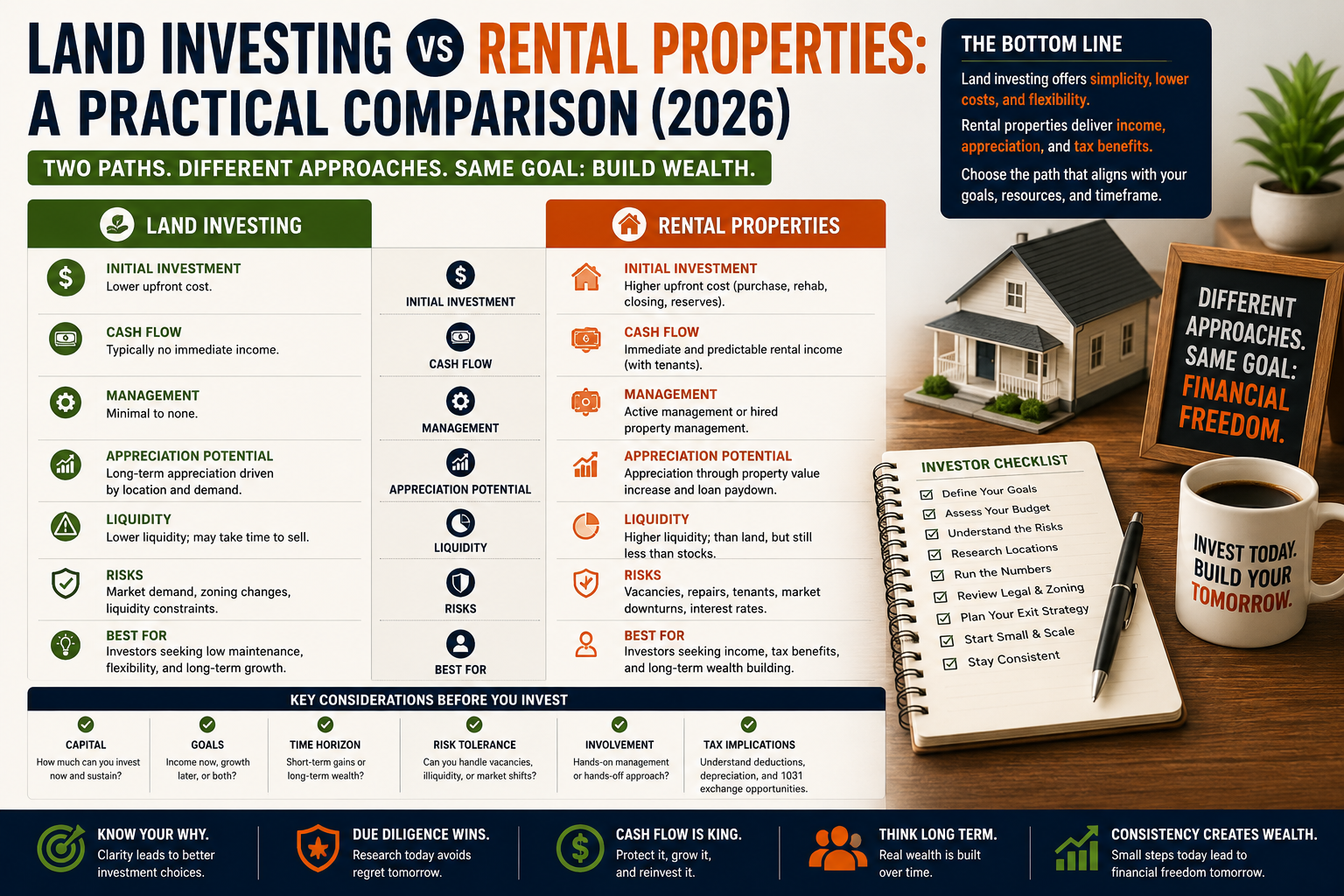
Investors deciding between land investing and rental properties face a fundamental tradeoff: rental properties typically offer more immediate and predictable cash flow through tenant rents but require active management or reliable property management services. In contrast, land investing,including vacant land ownership, land flipping, and seller-financed land,usually demands less ongoing management but involves distinct risks such as market timing, legal complexities, and limited liquidity, with returns often realized only through appreciation or resale.
The choice hinges on your capital availability, risk tolerance, income needs, and willingness to manage tenants or property. Rental properties suit investors seeking steady income and prepared for operational involvement, while land investing may appeal to those prioritizing lower management demands and longer-term appreciation, provided they conduct thorough due diligence to avoid pitfalls like unclear title, zoning restrictions, or unfavorable financing terms.
Core Differences Between Land Investing and Rental Properties
Vacant land investments generally do not produce ongoing income and require patience for appreciation or resale, carrying risks related to market liquidity, zoning, and title clarity. Rental properties generate recurring rental income but demand active management or property management services to maintain cash flow and property condition, exposing investors to tenant-related risks and operational costs.
Land Investing Subtypes and Their Implications
Vacant land investing involves purchasing undeveloped parcels that typically incur holding costs without rental income. Success depends on verifying zoning, access, and market demand. Land flipping requires precise market timing and parcel selection to avoid losses from illiquid assets. Seller-financed land expands buyer pools but introduces credit risk and legal complexities, necessitating careful contract structuring and ongoing administration.
Rental Property Investment Considerations
Rental properties provide more predictable income streams but require tenant management, maintenance, and compliance with landlord-tenant laws. Investors must realistically assess their capacity to handle or outsource these responsibilities, as underestimating management demands can erode returns and increase stress.
Cost and Cash Flow Comparison
Vacant land usually requires lower upfront capital but generates no rental income, resulting in negative cash flow during ownership due to property taxes and holding costs. Rental properties demand higher initial investment and ongoing expenses but can produce positive cash flow if managed effectively and occupancy is maintained.
Upfront and Financing Costs
Land purchases often involve smaller cash outlays and may use seller financing, which reduces upfront capital but carries higher interest rates and default risk. Rental properties require larger down payments and closing costs, with more structured mortgage options but stricter qualification criteria. Investors must weigh financing availability against capital constraints and risk tolerance.
Holding Costs and Income Offsets
Both asset types incur property taxes and insurance. Vacant land’s holding costs are not offset by income, which can erode returns over time. Rental properties add maintenance, management fees, and vacancy risk but generate rental income that can cover or exceed expenses, supporting positive cash flow when managed well.
Cash Flow Realities
Rental properties offer ongoing income but expose investors to variability from vacancies, tenant defaults, and maintenance. Land investments lack regular income and depend on appreciation or seller-financed payments, requiring patience and acceptance of negative cash flow during holding periods.
Management and Operational Demands
Rental properties require active tenant management or hiring property managers, entailing time, expertise, and costs. Vacant land demands minimal daily management but significant upfront due diligence on zoning, title, and market conditions. Seller-financed land adds administrative burdens and credit risk monitoring, often underestimated by investors.
Tenant Management Challenges
Managing tenants involves screening, rent collection, conflict resolution, and maintenance. Underestimating these demands can lead to costly vacancies and legal issues. Outsourcing to property managers reduces workload but increases expenses, affecting net returns.
Due Diligence for Land
Land investors must verify zoning, access rights, environmental restrictions, and clear title before purchase. Skipping these steps risks ownership complications or limited resale options, which can trap capital and cause losses.
Seller Financing Oversight
Seller financing requires monitoring buyer payments, enforcing contracts, and managing legal risks. Without proper legal counsel and administrative systems, sellers may face defaults and costly disputes, undermining investment objectives.
Risk Profiles and Exit Strategies
Land flipping carries high market timing and liquidity risks, while seller-financed land exposes investors to legal and credit risks. Rental properties face tenant-related risks such as vacancies and rent defaults, requiring active risk management strategies tailored to each asset type.
Market and Liquidity Risks
Land markets can be illiquid and volatile, especially for parcels without development potential or clear zoning. Poor timing or parcel selection can lead to extended holding periods or losses. Rental properties generally attract more buyers due to income potential, enhancing liquidity but remain vulnerable to local economic cycles and tenant demand.
Legal and Credit Risks in Seller Financing
Seller financing involves complex contracts and credit risk. Without thorough legal review and clear title, sellers risk buyer default and costly enforcement. Investors should consult legal professionals to structure agreements and mitigate exposure.
Tenant-Related Risks in Rentals
Vacancies, rent nonpayment, and property damage directly impact rental income stability. While tenant screening and lease agreements mitigate risks, active management remains essential to maintain cash flow and property value.
Tax Implications
Rental properties offer depreciation and deductible expenses that can reduce taxable income, whereas vacant land generally does not qualify for depreciation and offers limited deductions. Seller-financed land generates installment income with distinct tax reporting requirements, necessitating careful record-keeping and professional advice.
Land Tax Treatment
Vacant land is treated as an investment asset without depreciation benefits. Holding costs may be deductible only if the land is held for investment. Gains from land flipping are subject to capital gains tax, with rates depending on holding period, affecting tax planning.
Rental Property Tax Benefits
Owners can depreciate building structures and deduct expenses such as repairs, management fees, insurance, and mortgage interest, creating tax advantages that improve cash flow. Depreciation recapture applies upon sale, which should be factored into exit planning.
Seller Financing Tax Considerations
Installment sales generate taxable interest income and principal repayments that reduce basis. This spreads tax liability over time but requires detailed record-keeping and understanding of tax rules, making professional advice advisable.
Market Factors Affecting Investment Viability
Land value and liquidity depend on zoning, access to utilities, and local demand, while rental properties rely on vacancy rates, tenant demand, and economic cycles. Thorough market analysis is essential to assess risks and exit options for each investment type.
Zoning and Infrastructure
Land usability hinges on zoning and access to utilities. Parcels lacking these can be difficult or impossible to develop or resell, severely limiting liquidity. Confirming these factors before purchase is critical to avoid costly mistakes.
Rental Market Dynamics
High vacancy rates and declining rental demand signal potential income disruptions. Monitoring local rental market reports and economic indicators helps investors anticipate tenant stability and rental income trends.
Economic Cycles
Economic downturns can reduce buyer interest in land and increase tenant turnover in rentals. Rental properties may offer some income cushioning if demand remains steady, while land investments may face prolonged illiquidity.
Investor Profile and Decision Factors
Investors with limited capital and low tolerance for management may lean toward land investing, accepting longer holding periods and no immediate income. Those prioritizing steady cash flow and willing to manage or outsource tenant relations may find rental properties more suitable.
Capital and Liquidity Constraints
Rental properties require higher upfront equity and ongoing expenses, which can strain limited budgets. Land investing often allows smaller initial outlays, especially with seller financing, but lacks immediate income and may have longer liquidity horizons. Matching investment size and liquidity needs to market realities is essential.
Management Willingness
Rental properties demand active or outsourced tenant management, while land requires due diligence and occasional oversight. Underestimating rental management burdens can lead to unexpected costs and stress. Honest self-assessment of management capacity helps align investment choice with personal preferences.
Income Expectations and Time Horizon
Rental properties can provide more immediate income but carry variability in cash flow. Land investments typically require longer horizons for appreciation without periodic income. For example, an investor with $50,000 and minimal experience who prefers low management might choose vacant land with seller financing, accepting no immediate income. Conversely, if steady income is a priority and management is acceptable or can be outsourced, rental properties may be preferable.
Critical Due Diligence Steps
Thorough due diligence is vital to avoid costly pitfalls. Verify clear title and absence of liens, confirm zoning and access for land, assess rental market conditions and property condition for rentals, and have seller financing contracts reviewed by qualified legal counsel. Skipping these steps increases risk of legal disputes, ownership complications, or poor investment performance.
Title and Lien Verification
Clear title free of liens or encumbrances is foundational. Use county records to confirm ownership history and lien status. Unresolved title defects can block ownership transfer or cause unexpected liabilities.
Zoning, Access, and Utilities Confirmation
Check local zoning regulations to ensure permitted uses. Verify legal access to land parcels and availability of utilities. Lack of access or utilities can render land unusable or difficult to develop or resell.
Rental Market and Property Condition Analysis
Review vacancy rates, rent levels, and tenant demand through MLS data and local reports. Conduct thorough inspections to assess property condition and maintenance needs. Poor market fundamentals or property issues can reduce income and increase holding costs.
Seller Financing Contract Review
Engage legal counsel to review seller financing agreements for enforceability, default provisions, and compliance with state regulations. Proper contract structuring mitigates risks of buyer default and legal disputes.
Only proceed if title, zoning, market, and legal risks are satisfactorily addressed. Walk away from investments with unresolved title defects, unfavorable zoning, weak rental markets, or seller financing lacking proper documentation.
Practical Scenario: Investing $50,000 With Minimal Management Preference
An investor with $50,000 and limited experience must choose between purchasing vacant land with seller financing or buying a single-family rental requiring tenant management or a property manager. Each option involves tradeoffs in upfront costs, ongoing expenses, income potential, and management burden that must be carefully evaluated.
Upfront and Ongoing Cost Comparison
Vacant land typically requires lower initial cash outlay, especially with seller financing, preserving liquidity. However, it incurs ongoing property taxes and minimal maintenance costs without rental income to offset expenses. Rental properties demand larger down payments and closing costs but offer potential monthly rental income. They also involve ongoing expenses such as property management fees, maintenance, insurance, and vacancy risk. The investor must assess whether lower upfront capital and minimal management align better with their risk tolerance versus higher but income-generating costs of rentals.
Management Burden and Income Potential
Vacant land requires minimal day-to-day management but no immediate cash flow. Rental properties require active management or outsourcing, adding complexity and expense but potentially delivering steady income. For an investor prioritizing low management and willing to forgo immediate income, land may be preferable. Conversely, if steady income is a priority and management is acceptable or can be outsourced, rentals may be more suitable.
Walk-Away Signals and Next Steps
Before committing, conduct thorough due diligence: verify clear title and absence of liens; confirm zoning and access; analyze local market trends for land appreciation and rental demand; scrutinize seller financing terms including interest rates, balloon payments, and default consequences. If title issues, restrictive zoning, or weak rental markets emerge, reconsider or walk away. Next steps include detailed review of these factors and consultation with real estate and legal professionals to align investment choice with capital constraints, income needs, and management willingness.
Comparison Table: Land Investing vs Rental Properties
| Aspect | Land Investing (Vacant, Flipping, Seller-Financed) | Rental Properties |
|---|---|---|
| Upfront Cost | Generally lower; seller financing may reduce immediate cash needed but carries credit risk | Higher down payments and closing costs; mortgage financing common with stricter qualification |
| Ongoing Management | Minimal daily management; requires thorough upfront due diligence and legal oversight for seller financing | Active tenant management or property manager needed; involves tenant screening, rent collection, and maintenance |
| Cash Flow | No rental income; income depends on appreciation or seller financing payments; negative cash flow common during holding | Regular rental income subject to vacancy and tenant risks; potential for positive cash flow if managed well |
| Holding Costs | Property taxes, insurance, minimal maintenance; no income offset | Property taxes, insurance, maintenance, management fees; offset by rental income |
| Liquidity | Variable; depends on location, zoning, market demand; often less liquid | Generally higher due to income stream attracting buyers; subject to local market conditions |
| Risk Factors | Market timing, zoning, title issues, buyer default (seller financing), illiquidity | Tenant vacancies, rent defaults, maintenance costs, legal compliance, management workload |
| Tax Benefits | No depreciation; capital gains treatment; installment sale tax rules for seller financing | Depreciation, deductible expenses reduce taxable income; depreciation recapture on sale |
Due Diligence Checklist for Land and Rental Property Investments
- Title and Liens: Confirm clear title and absence of liens or encumbrances via county records; deal killers if unresolved.
- Zoning and Land Use: Verify permitted uses and restrictions with local zoning authorities; restrictive zoning can negate value.
- Access and Utilities: Ensure legal access and availability of utilities for land parcels; lack of access severely limits usability.
- Seller Financing Contracts: Have legal counsel review for enforceability, default provisions, and compliance; avoid undocumented or unclear terms.
- Rental Market Analysis: Assess vacancy rates, rent levels, and tenant demand; weak markets increase vacancy risk and reduce income.
- Property Condition: Inspect rental properties for maintenance needs and compliance; costly repairs can erode returns.
- Local Market Trends: Analyze land appreciation potential and rental market stability; poor trends increase holding risk.
- Financial Feasibility: Calculate holding costs, expected income, and cash flow scenarios; negative cash flow requires capital reserves.
- Exit Strategy: Plan resale, flipping, or long-term hold based on market conditions and goals; lack of clear exit increases risk.
FAQ: Common Questions About Land Investing Versus Rental Properties
Can Vacant Land Generate Steady Income Like Rentals?
Vacant land rarely produces consistent income unless leased for specialized uses such as agriculture, mineral rights, or cell tower leases, which are not typical for most investors seeking steady cash flow.
Is Seller Financing a Safe and Easy Way to Invest in Land?
Seller financing facilitates purchases but carries risks including buyer default and legal complexities. It requires thorough due diligence, clear contracts, and often professional legal advice to mitigate risks, so it is neither inherently safe nor simple.
How Liquid Are Land Investments Compared to Rental Properties?
Land liquidity varies widely by location, zoning, and demand; some parcels may take months or years to sell. Rental properties generally attract a broader buyer pool due to income potential, offering relatively higher liquidity but still subject to market conditions.
What Are Typical Exit Strategies for Land Investors?
Exits include outright sale, flipping after improvements or rezoning, seller financing to spread payments, or holding long-term for appreciation. Choice depends on market timing, parcel characteristics, and investor goals.
Do Rental Properties Always Provide Positive Cash Flow?
No, rental properties do not guarantee positive cash flow. Expenses such as maintenance, vacancies, property management, and financing costs can exceed rental income. Careful market and expense analysis is essential before investing.
When Should I Consult a Real Estate Attorney or Tax Advisor?
Consult professionals when dealing with complex contracts like seller financing, navigating zoning or title issues, structuring investments for tax efficiency, or resolving disputes. Early advice helps prevent costly mistakes and ensures compliance.