

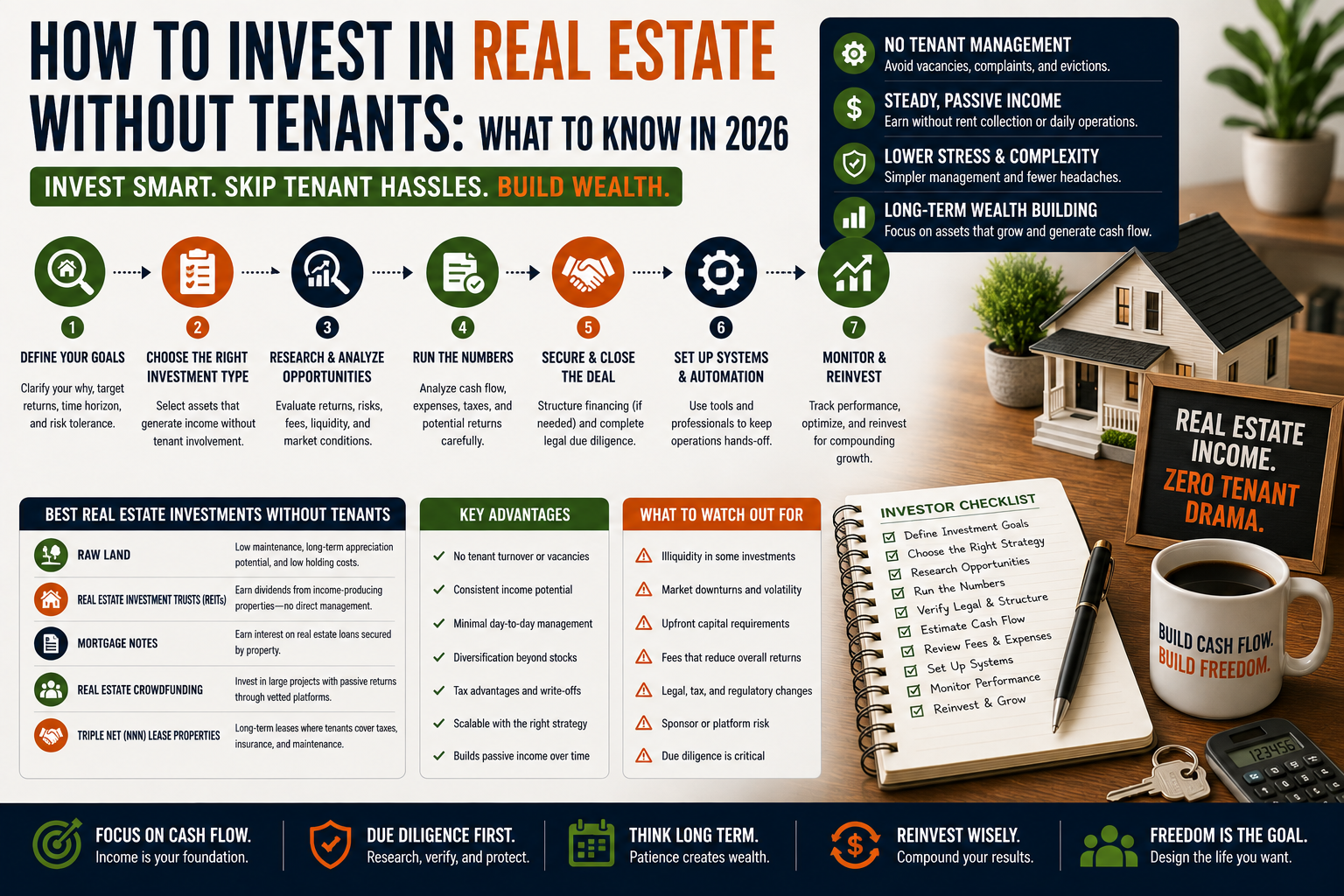

Investing in real estate without tenants means selecting asset types or strategies that avoid the operational demands of tenant management, such as leasing, rent collection, and maintenance requests. This approach typically involves investing in undeveloped land, real estate investment trusts (REITs), mortgage notes, or real estate crowdfunding. Each option presents distinct tradeoffs in liquidity, risk, management effort, and potential returns, requiring careful alignment with your investment horizon, capital availability, and risk tolerance.
The central decision tension is balancing the desire to avoid tenant-related hassles against the realities of market risk, illiquidity, and holding costs inherent in tenant-free investments. Understanding these tradeoffs and conducting thorough due diligence are critical to making informed choices that fit your financial goals and management preferences.
How Can I Invest in Real Estate Without Managing Tenants?
You can avoid tenant management by focusing on real estate assets that do not generate rental income or require tenant interactions. Common tenant-free options include:
- Land Ownership: Buying undeveloped or raw land that may appreciate or be developed later, but does not produce rental income.
- Real Estate Investment Trusts (REITs): Investing in publicly or privately traded companies owning or financing real estate, offering professional management and liquidity.
- Mortgage Notes: Purchasing loans secured by real estate to earn interest income without tenant management.
- Real Estate Crowdfunding: Pooling capital via online platforms to invest in real estate projects without direct tenant responsibilities.
Each option shifts management focus from tenants to legal, financial, or market factors and varies widely in liquidity, risk, and involvement.
Main Types of Tenant-Free Real Estate Investments
Land Investing: Direct Ownership and Key Considerations
Direct land ownership offers control and potential appreciation but requires accepting illiquidity and ongoing holding costs without rental income. Critical factors include:
- Title and Legal Status: Clear ownership and absence of liens or encumbrances are deal breakers. Unclear titles or unresolved easements can cause costly disputes.
- Zoning and Land Use Restrictions: Confirm permitted uses and potential for rezoning. Restrictions can severely limit development or resale options.
- Access and Utilities: Legal and physical access to the property is essential. Lack of road access or utilities reduces value and sale prospects.
- Holding Costs: Property taxes, insurance, and minimal maintenance such as brush clearing or road upkeep continue despite no income.
- Market Demand and Comparable Sales: Evaluate recent sales and local development trends to estimate appreciation potential and liquidity.
Due diligence must prioritize title verification and zoning confirmation before considering market data or price. Ignoring legal or access issues can lead to illiquid assets that drain capital.
Real Estate Investment Trusts (REITs): Public and Private
REITs offer liquidity and professional management but expose investors to stock market volatility and fees. Key points include:
- Liquidity: Public REITs provide daily trading liquidity; private REITs often have lock-up periods and limited transparency.
- Risk: Market-sensitive to interest rates, economic cycles, and sector-specific trends.
- Management Fees: Fees reduce net returns and vary by REIT type.
- Control: Investors have no direct influence on asset management.
REITs suit investors prioritizing liquidity and diversification over direct control or land-specific risks.
Mortgage Notes: Income Without Tenants but With Credit Risk
Mortgage notes generate income through borrower payments secured by real estate. Considerations include:
- Credit Risk: Borrower default can disrupt income and require costly legal enforcement.
- Legal Complexity: Foreclosure and servicing involve legal processes that may demand professional assistance.
- Liquidity: Secondary markets exist but may require discount sales.
Mortgage notes require active monitoring and legal knowledge, and are less liquid than REITs.
Real Estate Crowdfunding: Access and Risks
Crowdfunding platforms allow smaller capital commitments but typically lock funds until project completion. Key risks include:
- Platform Credibility: Verify regulatory compliance and track record.
- Project Execution: Development delays or failures impact returns.
- Liquidity: Investments are generally illiquid until exit events.
Risks and Holding Costs: Land vs. Rental Properties
Holding Costs Without Rental Income
Land investors face ongoing expenses such as property taxes, insurance, and maintenance without offsetting rental income. These costs can erode returns if appreciation does not materialize. For example, rural land taxes vary widely but can be several hundred to thousands annually. Maintenance may include clearing brush or maintaining access roads to preserve value and reduce liabilities.
Liquidity and Market Volatility
Land markets are less liquid than rental properties, often requiring months or years to sell. Economic downturns or local market stagnation can delay exits and trap capital. Unlike rental homes generating monthly cash flow, land investors must plan for long holding periods and maintain sufficient reserves.
Zoning and Legal Risks
Zoning restrictions can limit or prohibit development, affecting land value and resale potential. Unclear titles, easements, or environmental issues like wetlands or contamination pose legal and financial risks. Due diligence must include title searches, zoning verification, and environmental assessments to avoid costly surprises.
Comparing Tenant-Free Investment Types
| Investment Type | Liquidity | Risk Profile | Management Effort | Typical Returns | Tax Considerations |
|---|---|---|---|---|---|
| Public REITs | High (exchange-traded, daily liquidity) | Market and sector volatility | Low (professional management) | Variable; dividends plus capital appreciation | Dividends taxed as ordinary or qualified income |
| Private REITs | Low (lock-up periods, illiquid) | Illiquidity and market risk | Low to moderate | Potentially higher but less transparent | Varies; consult offering documents |
| Mortgage Notes | Low to moderate (secondary market possible) | Credit and legal risk | Moderate (monitoring payments, legal enforcement) | Interest income | Interest taxed as ordinary income |
| Crowdfunding | Low (locked until project completion) | Project and platform risk | Variable (depends on platform) | Project-dependent returns | Depends on investment structure |
| Land Ownership | Low (illiquid, long sales cycles) | Market, zoning, legal, and holding cost risk | Moderate to high (due diligence, maintenance) | Appreciation potential, no income | Capital gains on sale; holding costs deductible in some cases |
Due Diligence Checklist Before Buying Tenant-Free Real Estate
- Verify Title and Ownership: Confirm clear title and absence of liens or encumbrances through title reports and insurance. Deal killer if unresolved.
- Check Zoning and Land Use Restrictions: Consult local zoning offices to confirm permitted uses and any pending changes. Restrictive zoning can negate investment thesis.
- Assess Access and Utilities: Ensure legal and physical access to the property; lack of access reduces value and sale prospects.
- Investigate Environmental Factors: Identify flood zones, wetlands, contamination, or protected habitats that may limit use or impose liabilities.
- Review Comparable Sales and Market Data: Analyze recent transactions and local demand to estimate fair market value and liquidity.
- Estimate Holding Costs: Calculate property taxes, insurance, and maintenance expenses to assess carrying costs without income.
- Review Financial Documents for REITs, Notes, and Crowdfunding: Examine prospectuses, fee structures, regulatory filings, and platform credibility.
Financing Tenant-Free Real Estate Investments
Traditional Loans for Land and Notes
Land loans generally require higher down payments (20–50%) and higher interest rates due to risk and lack of income. Lenders demand clear title, appraisals, and exit strategies. Mortgage note financing is less common and often more costly.
Cash and Private Financing
Cash simplifies transactions and avoids interest but requires sufficient capital. Private or seller financing may offer flexible terms but often at higher rates and shorter durations, increasing refinancing risk.
Financing REITs and Crowdfunding
Public REIT shares can be purchased on margin through brokerage accounts, increasing risk. Crowdfunding typically requires upfront cash with limited borrowing options due to regulatory restrictions. Use leverage cautiously.
Decision Framework: Matching Tenant-Free Investments to Your Goals
- Investment Horizon and Liquidity Needs: Longer horizons can accommodate illiquid land or private REITs; shorter horizons favor liquid public REITs.
- Risk Tolerance: Market volatility suits some investors; others prefer credit or legal risk in notes or zoning risk in land.
- Management Willingness: Land and notes require active oversight; REITs and crowdfunding are more hands-off.
- Capital Availability: Land and private notes often require larger upfront investments; REITs and crowdfunding allow smaller amounts.
Practical Scenario: $50,000 Investment, Moderate Risk, 5-Year Horizon
Setup
An investor wants real estate exposure without tenant management, has $50,000 to invest, moderate risk tolerance, and a 5-year investment horizon.
Options
- Undeveloped Land: Potential appreciation linked to local growth; illiquid with ongoing holding costs; requires thorough due diligence on title, zoning, and access.
- Public Commercial REIT: Provides daily liquidity and diversification; subject to market volatility and management fees; dividends taxable and variable.
Key Facts to Verify
- Land: Confirm clear title, zoning permits intended use, access roads, utilities, and comparable sales data.
- REIT: Review historical performance, fee structure, dividend history, and sector exposure.
- Holding Costs: Estimate taxes and maintenance for land; understand tax treatment of REIT dividends.
- Liquidity and Exit: Land sales may take months or years; REIT shares can be sold daily but subject to market risk.
Decision Logic
If liquidity and minimal management are priorities, the REIT is preferable despite market risk. If willing to accept illiquidity and active due diligence, land investing may offer appreciation potential. Walk away from land deals with unclear title, restrictive zoning, or poor access. Avoid REITs with excessive fees or opaque management.
Next Steps
Conduct title and zoning verification for land parcels under consideration. Review REIT prospectuses and fee disclosures. Align choice with your broader portfolio and financial goals.
Frequently Asked Questions
Can I Generate Income Without Renting to Tenants?
Yes. Income can come from land appreciation, natural resource leases (e.g., timber, minerals), REIT dividends, or mortgage note interest. These sources require active management or market timing and do not guarantee steady cash flow.
Is Land Investing Truly Passive?
Rarely. Land ownership demands ongoing monitoring of holding costs, market conditions, and compliance with zoning or environmental regulations. Some active effort is usually necessary to preserve or enhance value.
What Are the Tax Implications?
Tax treatment varies: REIT dividends may be taxed as ordinary income; land gains may qualify for capital gains rates; mortgage note interest is generally ordinary income. Consult a tax professional for personalized advice.
How Can I Avoid Scams?
Verify titles and zoning with official records, research platforms and note sellers thoroughly, and avoid investments lacking clear documentation or credible references. Be skeptical of guaranteed returns or overly optimistic claims.
Are Tenant-Free Investments Suitable for Beginners?
They can be complex and less liquid than rental properties. Beginners should start with education, small exposures (e.g., public REITs), and professional advice before pursuing direct land or notes.
What If I Encounter Unclear Titles or Zoning Issues?
These are significant red flags. Engage qualified attorneys or title companies to resolve issues before proceeding. Unresolved problems can lead to legal disputes and financial loss.