

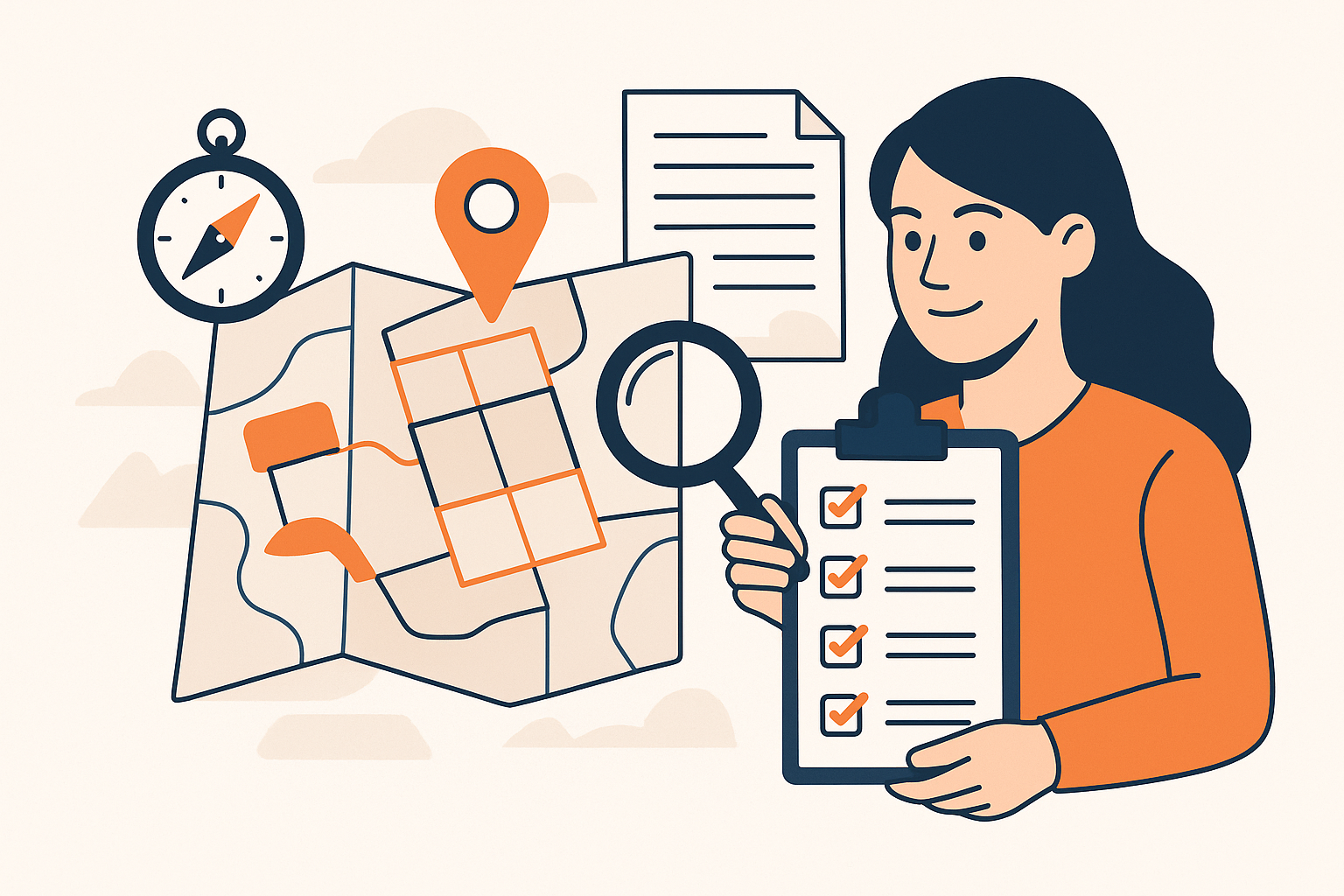
Investing in land demands a disciplined and thorough approach to avoid costly mistakes. A carefully executed land due diligence process in 2026 can protect your investment, clarify risks, and confirm the property’s suitability for your intended use. This guide offers a step-by-step checklist to help you verify all critical aspects before making a purchase.
By following this comprehensive checklist, you will learn what questions to ask, which records to consult, and how to interpret findings to decide whether to move forward, negotiate, or walk away. This is essential for confident land investing in today’s market.
Understanding and applying each verification step prevents surprises that can derail your plans or reduce your property’s value.
What Is a Land Due Diligence Checklist and Why Does It Matter?
A land due diligence checklist is a structured list of investigation steps designed to confirm the facts about a property before purchase. It ensures you uncover legal, physical, environmental, and financial issues that could affect your ownership or usage plans.
The checklist matters because land is a unique asset often sold “as-is” and can carry hidden risks like unclear titles, zoning limitations, or environmental liabilities. Skipping checks or relying on incomplete information risks your capital and goals.
You must verify each item through authoritative county records, professional inspections, or qualified experts. Red flags uncovered during this process might mean renegotiating terms, adjusting your use plan, or walking away if risks outweigh benefits.
Why Is Due Diligence Crucial in Land Investing?
Due diligence mitigates risks by uncovering issues that could compromise your ownership or intended use. It also protects your investment by confirming the legal status, physical condition, and financial implications of the land. Ultimately, it guides an informed decision to proceed, renegotiate, or reject the purchase.
Without due diligence, you might unknowingly acquire land with liens, access problems, or restrictive zoning, which can halt or devalue your plans. The key is to focus on facts that influence transaction terms, usability, resale, or holding costs.
What Are the Key Steps in a Proper Land Due Diligence Process?
Land due diligence typically follows three main phases:
- Initial Research: Collect data on ownership, zoning, environmental status, and legal encumbrances from county offices, online databases, and expert advice.
- Site Visit: Inspect the property to verify physical conditions, access, boundaries, and visible issues not apparent in records.
- Final Review & Decision: Analyze all gathered information in the context of your investment goals, adjusting your offer or exit plan accordingly.
This workflow ensures no critical aspect is overlooked and that you ground your offer in solid evidence.
How Do I Verify Land Ownership Accurately?
To verify land ownership, begin by reviewing public records at the county recorder or assessor’s office where the property is located. You must obtain copies of the deed and title documents showing the current owner and any claims against the land.
Next, commission a thorough title search,usually done by a title company,to examine the property’s legal history and identify liens, easements, or judgment claims. Any unresolved claims can complicate or block your ability to sell or develop the land.
Consider purchasing title insurance based on the title search report to protect against undiscovered title defects after closing. If title inconsistencies or multiple owners appear, you might need legal assistance to clarify or resolve matters before proceeding.
What Zoning Regulations Are Essential to Understand?
Check the property’s zoning classification with the local planning or zoning department. Zoning regulations define permitted uses, building restrictions, and development standards on the land.
Verify whether the property’s zoning allows your intended use, and if not, assess the feasibility and timeline for rezoning or obtaining variances. Zoning restrictions can drastically affect your ability to build homes, operate businesses, farm, or subdivide.
Failure to confirm zoning permissions can lead to legal issues or wasted investment in unusable parcels. Always obtain official zoning confirmation documents and maps to back your evaluation.
How Can I Assess Land Value for This Property?
Assess land value by performing a comparative market analysis (CMA) focused on recently sold parcels closely matching the size, location, zoning, and condition of your target property.
Adjust your value estimate for unique factors like legal access, availability of utilities, terrain challenges, environmental conditions, and restrictions. For high-value or complex parcels, consider commissioning a professional appraisal to obtain an objective market-based valuation.
Understanding land value guides your offer pricing and investment expectations, preventing overpayment or undervaluation.
What Environmental Considerations Must I Check?
Conduct or obtain an environmental assessment to identify issues such as contamination, wetlands, endangered species habitats, or floodplain location. These factors can limit land use or require costly remediation.
Consult county environmental agencies, the EPA’s databases, and conservation organizations to verify if your parcel lies in protected or environmentally sensitive zones. If environmental hazards are found, evaluate their impact on your plans and factor cleanup costs or restrictions into your decision.
How Do I Verify Access and Utilities?
Confirm legal and physical road access to the property through recorded easements or dedicated public roads. Visit the site to verify passable access in various weather conditions.
Check with local utility providers about availability of electricity, water, sewage, internet, and gas connections. Understand the costs, timeline, and process to bring utilities to the parcel if not already connected.
Absence of reliable access or utilities can reduce land usability, increase development expenses, or even make the property unusable for your intended purpose.
What Are Property Boundaries and How Should I Confirm Them?
Property boundaries define your parcel limits as described in legal documents and surveys. Confirm them by obtaining a professional land survey showing precise boundaries, encroachments, and easements.
Review existing survey records from the county or prior owners, but rely on a current survey especially if you plan to build or develop. Physical boundary confirmation prevents disputes with neighbors, avoids legal challenges, and ensures you know exactly what you are buying.
If boundary discrepancies or ongoing disputes exist, address these before purchase as they affect title and land use.
How Do Land Use Restrictions Affect My Investment?
Investigate any easements, covenants, or deed restrictions registered on the land title or imposed by homeowner associations or local governments.
These restrictions might limit building types, densities, land uses, or require access allowances to utilities or neighboring properties. Evaluate how these affect your plans and cost structure.
Ignoring usage restrictions can cause legal trouble, penalties, or inability to realize your property’s potential.
Why Should I Understand Local Market Trends?
Analyzing local market trends helps you anticipate land value appreciation or decline and understand buyer demand and risks.
Research recent sales volumes, price changes, demographic shifts, and economic development plans through county real estate data, local multiple listing services, and government planning offices.
Use this insight to adjust your investment horizon, resale price expectations, and exit strategy to current market realities rather than assumptions.
How Do I Check for Liens or Encumbrances?
Besides ownership verification, explicitly search public records for liens, unpaid taxes, judgments, or encumbrances on the property.
This search is vital because liens can transfer to you with the property, resulting in unexpected debts or legal claims. Clear any discovered liens prior to closing or negotiate price adjustments to account for payoff costs.
Title companies typically perform a lien search as part of title insurance procedures, but don’t rely solely on summaries; request detailed reports when possible.
What Financial Aspects Should I Analyze Before Buying?
Estimate all costs including purchase price, property taxes, insurance, utilities connection, maintenance, and potential environmental remediation to evaluate total ownership expense.
Be aware of local property tax rates and assessment methods; these can vary widely and change over time.
If financing, review loan terms carefully, focusing on interest rates, amortization, and any restrictions specific to raw land which often carry higher rates or shorter terms.
Understand projected returns based on your intended use,whether resale, rental, farming, or development,to ensure the investment meets your financial goals.
How Can I Investigate Future Development Plans Affecting the Land?
Proactively research local government plans, infrastructure projects, or zoning changes in development pipelines that might impact your property’s future value or use.
Access planning department websites, attend or review minutes from planning and zoning board meetings, and study regional master plans or transportation projects.
Knowing upcoming changes helps anticipate appreciation opportunities or regulatory hurdles, shaping your investment and development strategies.
What Legal Issues Must Buyers Be Aware Of?
Understand jurisdictional land use laws, building codes, and property rights affecting your parcel, including mineral, water, and access rights.
Confirm your intended use complies with all applicable regulations and that you can obtain necessary permits.
Engage legal counsel as needed to clarify rights or resolve title or boundary ambiguities to avoid costly disputes or invalidated transactions.
How Do Soil and Topography Influence Land Decisions?
Test soil quality and drainage capabilities for suitability,especially critical for agriculture, construction, or septic systems. Contact professional services or county agricultural extensions for testing.
Review topographical maps to understand slopes, flood-prone areas, or drainage patterns which influence building feasibility and costs.
Land with poor soil or challenging terrain may require costly modifications or limit usable area, affecting your offer and development plans.
What Are the Risks of Natural Disasters I Should Consider?
Check flood maps (e.g., FEMA flood zones), wildfire hazard areas, and earthquake risk zones for the property location.
Properties in high-risk areas might require costly insurance, face building limitations, or have reduced resale appeal.
Understanding these risks upfront lets you calculate mitigation costs or decide if the risk profile aligns with your investment tolerance.
How Can I Evaluate the Neighborhood’s Impact on My Land?
Research local crime rates, quality of nearby schools, and presence of community amenities to assess safety, desirability, and future demand.
Safe, amenity-rich neighborhoods typically support higher land values and easier resale, while declining areas can depress demand.
Gather data from local police departments, school rating websites, and municipal information to evaluate neighborhood prospects.
What Should I Know About Historical Land Use?
Research past use through historical records, aerial photos, or environmental databases to identify potential contamination or legacy restrictions.
Previous industrial or agricultural use could imply environmental cleanup obligations or regulatory oversight.
Historical analysis helps anticipate hidden issues and supports negotiation or decision to walk away if liabilities are too great.
How Do I Assess the Potential for Resale?
Analyze current and projected market demand for similar land types considering regional economic trends and buyer demographics.
Identify who your potential buyers might be and what uses they value most to forecast resale ease and price.
Develop multiple exit strategies,including direct sale, leasing, or development,to maximize flexibility and returns.
What Documents Are Essential to Collect Before Buying?
Secure copies of the current title deed, latest land survey, zoning verification, tax records, and any covenants or easements.
Gather building permits history and environmental reports if available.
Having these documents allows for clear verification of ownership, boundaries, restrictions, and liabilities and supports smooth closing.
How Should I Prepare for a Site Visit?
Create a checklist focused on access, terrain, boundaries, visible environmental issues, neighboring land use, and utility infrastructure.
During the visit, take notes and photos to document observations, focusing on factors that impact your use and value assessments.
Consider bringing professionals (surveyors, environmental inspectors) for on-site evaluation if your investment size warrants it.
What Are Typical Costs Associated with Due Diligence?
Cost elements include fees for title searches, surveys, appraisals, environmental assessments, legal advice, and possible permits.
These vary widely based on property size, location, and complexity. Budget accordingly and be prepared for unexpected costs such as remediation or dispute resolution.
Accurately anticipating due diligence costs protects your capital and prevents surprises that could affect deal viability.
How Do I Make an Informed Offer After Due Diligence?
Use the verified data to set an offer price that reflects the property’s true market value minus necessary adjustments for risks or deficiencies uncovered.
Present your findings during negotiation clearly and professionally, emphasizing factors that justify your offer terms.
Successful negotiation balances fair pricing with contingencies addressing unresolved issues, protecting your interests while facilitating agreement.
What Should I Do After Completing Due Diligence?
Make a final decision based on how well the property aligns with your use, risk tolerance, and financial goals considering all findings.
If proceeding, coordinate with title companies, legal counsel, and lenders to advance to closing with all conditions met.
If walking away, document your reasons to refine your investment criteria and maintain relationships with agents and professionals for future opportunities.

Mini FAQ
What is a land due diligence checklist? A thorough list of investigations verifying ownership, zoning, access, environmental, and financial conditions before buying land.
Why is due diligence essential? To uncover hidden risks, confirm legal use, and protect your investment from unexpected issues.
How do I verify land ownership? Check public records, conduct a title search, and consider title insurance for protection.
What zoning questions should I ask? Confirm legal zoning classification, permissible uses, and potential for rezoning if necessary.
How can I assess environmental risks? Obtain environmental assessments and review protected status or contamination databases.
How do I ensure legal access and utilities? Verify easements, road access through county records, and utility availability with providers.
What documents are critical to collect? Title deed, survey, zoning confirmation, tax records, and any restrictions or easements.
What is the next step after completing due diligence? Decide to buy, renegotiate, or walk based on verified facts and your investment goals.
What Should You Do Next to Move From Reading to Action?
Land investing is easier with a clear process and trusted resources guiding you through each step. To deepen your knowledge and avoid common pitfalls, consider learning more from expert resources: