


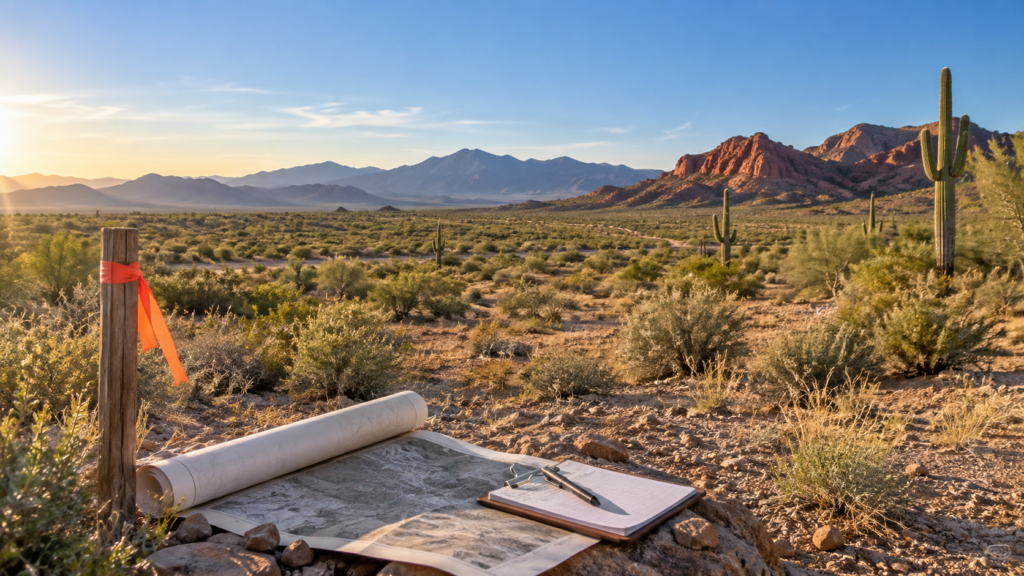
Starting a land-investing process in Arizona requires parcel-specific research. The state includes very different metropolitan, rural, desert, mountain, agricultural, and tribal-border contexts, and rules can change between counties, municipalities, and unincorporated areas.
Before buying, define the intended use, verify title and access, confirm zoning and water or utility feasibility, investigate physical and environmental conditions, understand taxes and financing, and plan for ownership and exit. This guide is general information for research and is not legal, tax, financial, title, survey, engineering, environmental, water, or planning advice.
What Makes Arizona Land Research Parcel-Specific?
Arizona properties can differ widely in terrain, climate, infrastructure, water conditions, development rules, insurance needs, and buyer demand. A statement that is reasonable for one county or parcel may not apply elsewhere.
Do not assume that population growth, a nearby project, a low asking price, or a desert location creates investment value. Verify current local facts and the intended use for the exact parcel.
What Should Be Defined Before Searching?
Write down whether the goal is personal use, recreation, agriculture, a home, development, leasing, holding, resale, or another permitted activity. Note the required access, utilities, time horizon, liquidity needs, management capacity, and maximum tolerable loss.
Keep essential savings and emergency reserves separate. Budget for no income, delayed approvals, site work, taxes, insurance, professional reports, and a longer holding period than expected.
How Should Arizona Counties and Locations Be Compared?
Compare the specific county or municipality on zoning, permitted use, property taxes, assessment, insurance, access, utilities, water conditions, hazards, infrastructure, demand, and the process for resale or development.
Check whether the parcel lies in a city, town, unincorporated county area, special district, flood area, or another jurisdiction with additional requirements. Use current public records and ask the responsible authority for written guidance where practical.
What Title and Ownership Checks Are Needed?
- Verify the seller’s identity, ownership, authority to sell, legal description, and parcel number.
- Obtain a title search and review liens, judgments, easements, restrictions, mineral or other reserved rights, and prior interests.
- Confirm boundaries, survey information, encroachments, access, and any shared-road or maintenance obligations.
- Check unpaid taxes, assessments, association charges, code matters, and recorded notices.
- Use a qualified Arizona title, escrow, closing, or real-estate attorney professional to explain material issues and available protections.
How Should Legal and Physical Access Be Verified?
Determine whether the parcel connects to a public road or relies on a recorded private easement. Review the route, width, maintenance, gates, seasonal limitations, emergency access, and rights to improve or cross adjoining property.
A visible road, nearby highway, or map pin does not prove legal access or that the route supports construction, utilities, emergency service, or commercial use. Inspect the route and confirm the recorded rights.
What Water Questions Matter in Arizona?
Do not assume that a parcel includes usable water, a well, a water right, a water provider connection, or permission to install a well. Confirm the legal and practical water situation with the appropriate Arizona water authority, county, municipality, provider, and qualified professionals.
Check water availability, well records and feasibility, groundwater or surface-water rules, hauling or storage needs, service-area boundaries, connection costs, drought or supply constraints, and any restrictions tied to the intended use. Water research should happen before treating a parcel as buildable or income-producing.
How Should Utilities and Septic Feasibility Be Checked?
Verify the location, capacity, provider, connection process, timing, and cost for electricity, water, sewer, septic, communications, and other services. “Nearby” does not mean connected, permitted, or affordable.
For wells, septic systems, off-grid services, roads, or power extensions, confirm feasibility with the relevant authority and qualified specialists. Include installation, permits, maintenance, replacement, and access costs.
How Do Zoning and Land-Use Rules Affect the Plan?
Confirm zoning, permitted and conditional uses, setbacks, lot size, density, subdivision, building, parking, signage, access, floodplain, environmental, and permit requirements with the authority responsible for the parcel.
Ask whether the intended use needs a variance, special approval, site plan, development agreement, or other continuing permission. A future rezoning, approval, or infrastructure project is not a current property right unless it has been granted and remains valid.
What Arizona Physical and Environmental Risks Should Be Investigated?
Review extreme heat, flash flooding and washes, drainage, erosion, wildfire, drought, terrain, soil, contamination, wetlands, desert vegetation, protected resources, nearby industrial or agricultural activity, and road conditions.
Use an independent surveyor, engineer, environmental professional, geotechnical specialist, or other qualified adviser when the intended use or facts warrant it. Desktop maps and listing photos are not a complete site assessment.
What Taxes and Carrying Costs Should Be Budgeted?
Review property taxes, special assessments, insurance, association or district charges, access and security, maintenance, clearing, utilities, legal and accounting work, surveys, inspections, financing, permits, environmental work, marketing, and eventual sale costs.
Confirm the current assessment and tax status with the appropriate county office, and ask how a change in use or improvements could affect future costs. Maintain reserves for delays, damage, nonpayment, and periods with no income.
What Financing and Offer Terms Matter?
Financing may involve cash, a land loan, seller financing, a partner, or construction financing. Review interest, payment schedule, maturity, collateral, guarantees, reserves, insurance, taxes, prepayment, late charges, default remedies, and the consequences of delayed development or resale.
Use a written offer and contract that address price, deposit, title, survey, inspection, water and utility feasibility, zoning or permit review, financing, access, disclosures, deadlines, closing conditions, remedies, and responsibility for costs. Have qualified local professionals review the documents.
How Should the Closing and Post-Purchase Plan Be Managed?
Confirm title and closing instructions through an appropriate professional, independently verify payment instructions, and preserve the executed documents, reports, receipts, and closing statement.
After closing, track taxes, insurance, access, agreements, permits, inspections, security, maintenance, and any water or utility obligations. Define who performs local work and how performance will be checked if management is outsourced.
What Deal-Breakers Should Slow or Stop a Purchase?
- Unclear title, ownership, legal description, easement, or access.
- No verified water or utility path for the intended use.
- Zoning or permit assumptions that are not confirmed in writing.
- Flood, wash, wildfire, soil, contamination, terrain, or other physical constraints that exceed the plan.
- Unpaid taxes, assessments, liens, code matters, or unexplained restrictions.
- Promises of guaranteed appreciation, buyers, approvals, income, or an easy resale.
- Pressure to waive diligence or bypass qualified title, escrow, legal, water, or inspection review.
What Is a Responsible Arizona Land-Investing Workflow?
- Define the use, location criteria, budget, reserves, time horizon, and exit plan.
- Identify the responsible county, municipality, water authority, utility providers, and other agencies.
- Verify seller, title, boundaries, legal access, zoning, water, utilities, physical conditions, taxes, and demand.
- Obtain qualified local reports and written professional guidance for material questions.
- Use contingencies and written agreements before committing funds.
- Model no-income, delayed-approval, higher-cost, and lower-sale-price outcomes.
- Review the full record before closing and maintain a post-purchase management plan.
What Questions Do New Arizona Land Investors Ask?
Is Arizona land automatically a good investment? No. Suitability depends on the parcel, intended use, title, access, water, zoning, physical conditions, costs, demand, financing, and exit options.
Can I assume a rural parcel has water or a buildable homesite? No. Verify water availability, well or service feasibility, septic, access, zoning, and permits for the exact parcel.
Are county rules the same across Arizona? No. Requirements can differ by county, municipality, unincorporated area, overlay, district, and intended use.
Where can I learn more before buying? Start with the Land Geek Start Here guide, then confirm current parcel-specific questions with qualified Arizona title, legal, tax, survey, water, engineering, environmental, and planning professionals.
General information only: Arizona land purchases involve title, access, water, zoning, environmental, physical, tax, financing, market, operational, and liquidity risks, including possible loss of capital. Verify current local requirements and seek qualified professional advice for your situation.