

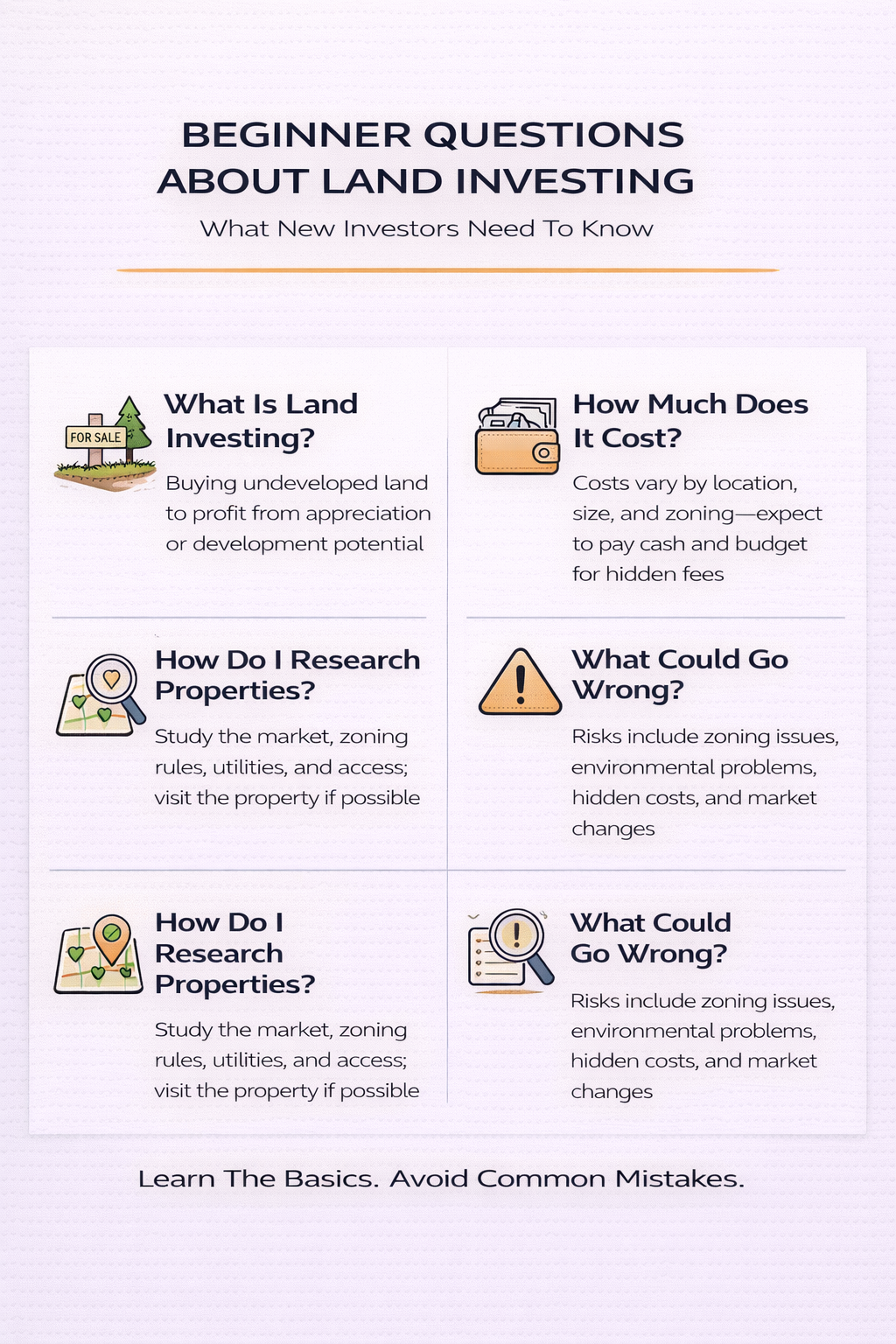

The Most Common Beginner Questions About Land Investing Answered Honestly — this guide provides clear, practical guidance and answers the most common questions, followed by detailed steps, tips, and key considerations to help you make confident decisions.
What Is Land Investing?
Land investing involves purchasing parcels of land for various purposes, including speculation, development, or leasing. This investment strategy can generate long-term returns, diversify portfolios, and offer unique opportunities in real estate.
Definition of Land Investing
Land investing refers to the acquisition of land with the intention of generating profit. Investors may hold raw land, developed land, or engage in land flipping. Understanding the nuances of land investing is crucial for making informed decisions.
Types of Land Investments
There are several types of land investments, including raw land, agricultural land, and commercial land. Each type has its own set of risks and rewards. Investors can choose based on their financial goals, risk tolerance, and market conditions.
Benefits of Investing in Land
Investing in land offers benefits such as potential for appreciation, low maintenance costs, and minimal competition. Unlike other real estate assets, land does not require ongoing management, making it an appealing option for many investors.
Why Should I Consider Land Investing?
Land investing can be an attractive option due to its potential for long-term appreciation, low maintenance needs, and ability to diversify your investment portfolio. It also offers unique opportunities in a growing market.
Long-Term Appreciation
One of the main reasons to consider land investing is the potential for long-term appreciation. As urban areas expand and populations grow, demand for land increases, leading to higher property values over time. Historical data supports this trend, indicating that land can be a reliable asset for wealth accumulation.
Minimal Maintenance
Unlike residential or commercial properties, land typically requires minimal upkeep, making it a hassle-free investment. Investors can avoid the headaches of property management, repairs, and tenant issues, allowing them to focus on strategic growth and planning.
Diverse Investment Portfolio
Including land in your investment portfolio can enhance diversification. Land often behaves differently from stocks and bonds, providing a hedge against market volatility. A well-rounded portfolio can lead to more stable returns and reduced risk.
How Do I Start Investing in Land?
To start investing in land, you need to research markets, set a budget, and identify suitable parcels. Understanding the landscape and financial implications is crucial to making informed decisions that align with your investment goals.
Researching Markets
Conducting thorough market research is essential for identifying the best locations for land investment. Investigate local economies, population growth trends, and future development plans. Utilize online Resources, local government reports, and economic forecasts to inform your decisions.
Setting a Budget
Setting a realistic budget is key to successful land investing. Consider not only the purchase price but also additional costs such as closing fees, property taxes, and potential development expenses. A well-defined budget ensures you remain financially viable throughout the investment process.
Finding Suitable Land
Finding the right piece of land requires a strategic approach. Utilize online platforms, attend real estate auctions, and work with local agents to identify promising parcels. Be prepared to conduct due diligence to ensure the land meets your investment criteria.
What Are the Risks Involved in Land Investing?
Land investing comes with risks such as market fluctuations, zoning and regulatory issues, and environmental concerns. Understanding these risks helps investors make informed decisions and protect their investments.
Market Fluctuations
Market fluctuations can significantly impact land values. Economic downturns, changes in demand, and shifts in population can lead to unpredictable price changes. Investors should stay informed about market trends and be prepared for potential declines in value.
Zoning and Regulations
Understanding local zoning laws and regulations is crucial when investing in land. These rules dictate how land can be used and can affect its value. Failure to comply with zoning regulations can result in costly legal issues or limit development opportunities.
Environmental Concerns
Investors must be aware of environmental concerns that may affect land use and value. Contaminated land or areas prone to natural disasters can pose significant risks. Conducting environmental assessments before purchasing land can help mitigate these risks.
How Do I Find Land to Invest In?
Finding land to invest in involves utilizing online listings, working with local real estate agents, and exploring auctions and foreclosures. A proactive approach can uncover hidden opportunities in the market.
Online Listings
Online real estate platforms offer extensive listings of available land for sale. Websites such as Zillow, LandWatch, and Realtor.com provide filters to narrow down options based on location, price, and land type. Regularly checking these sites can help you discover new listings quickly.
Local Real Estate Agents
Partnering with local real estate agents can offer valuable insights and access to off-market properties. Experienced agents understand the nuances of the local market and can guide you toward promising investment opportunities. Building a relationship with a knowledgeable agent can pay off in the long run.
Auctions and Foreclosures
Attending land auctions and exploring foreclosure listings can yield significant savings. Auctions often feature properties at lower starting bids, while foreclosures can offer discounts due to motivated sellers. However, it’s essential to conduct thorough research before participating in these events.
What Should I Look for When Buying Land?
When buying land, consider factors such as location, accessibility, zoning laws, and available utilities. Evaluating these elements ensures that the land meets your investment objectives and aligns with your future plans.
Location and Accessibility
Location is paramount in land investing. Proximity to urban centers, highways, and amenities can significantly impact land value and potential for appreciation. Assessing accessibility ensures that the land can be easily reached and developed, enhancing its attractiveness to future buyers or tenants.
Zoning Laws
Understanding zoning laws is crucial before buying land. These regulations dictate how the land can be used, which can impact its value and potential developments. Investigating zoning classifications helps ensure your intended use aligns with local regulations, preventing costly surprises down the line.
Utilities and Infrastructure
Access to utilities such as water, electricity, and sewage systems is vital for land investment. Land without these services may require significant investment to develop. Evaluating existing infrastructure can inform your decision and help you estimate potential development costs.
How Much Money Do I Need to Start Investing in Land?
The amount of money needed to start investing in land varies based on location and land type. Key expenses include down payments, closing costs, and ongoing expenses that should be factored into your initial investment plan.
Down Payments
Down payments for land purchases typically range from 20% to 30% of the purchase price, depending on the lender and loan type. It’s crucial to have adequate savings to cover these upfront costs, as they can significantly impact your financing options and overall investment strategy.
Closing Costs
Closing costs can add an additional 2% to 5% to the purchase price of the land. These costs encompass fees for title searches, appraisal, and legal services. Understanding these expenses ahead of time helps in budgeting accurately for your land investment.
Ongoing Expenses
Ongoing expenses can include property taxes, insurance, and maintenance costs. While land requires less upkeep than developed properties, it’s essential to factor these costs into your investment calculations to ensure continued financial viability.
Can I Invest in Land with Little or No Money?
Yes, it is possible to invest in land with little or no money through seller financing, partnerships, and creative financing options. These approaches allow investors to enter the market without substantial capital upfront.
Seller Financing
Seller financing involves the property owner directly financing the purchase, allowing buyers to make monthly payments instead of securing a traditional mortgage. This arrangement can be beneficial for both parties, particularly if traditional financing is difficult to obtain.
Partnerships
Forming partnerships with other investors can provide the capital needed to purchase land. By pooling resources, partners can share the financial burden while benefiting from combined expertise in land investment. Clearly defined agreements are essential to avoid disputes.
Creative Financing Options
Creative financing options, such as lease options or subject-to deals, allow investors to gain control of properties without significant upfront investment. These strategies can be complex and require careful structuring, but they can open doors to land investment opportunities.
What Are the Different Ways to Invest in Land?
Investing in land can be approached through various strategies, including raw land, developed land, and land flipping. Each method offers distinct opportunities and challenges for investors.
Raw Land
Raw land investment involves purchasing undeveloped land with the potential for future appreciation or development. Investors often buy raw land in growing areas, banking on future demand to increase its value. However, patience is required as returns may take time to materialize.
Developed Land
Developed land refers to parcels that have been improved with infrastructure and utilities. These properties are often more expensive but can yield quicker returns through leasing or sale. Investors should assess the current market demand for developed land to maximize profitability.
Land Flipping
Land flipping involves purchasing underpriced land, making improvements or clearing issues, and reselling it at a profit. This strategy requires market knowledge and the ability to identify undervalued properties. Successful land flippers often use effective marketing tactics to attract buyers quickly.
How Do I Finance My Land Purchase?
Financing a land purchase can be done through traditional loans, land loans, or alternative financing options. Understanding these financing vehicles is essential for making informed decisions about how to fund your investment.
Traditional Loans
Traditional loans are typically offered by banks and credit unions for purchasing land. These loans require a solid credit history and may have stricter requirements compared to other financing methods. Be prepared to provide detailed information about the land and your financial situation.
Land Loans
Land loans are specialized financing options designed specifically for purchasing land. These loans can have higher interest rates and shorter terms compared to traditional mortgages. However, they may be more accessible for buyers looking to invest in raw or undeveloped land.
Alternative Financing Options
Alternative financing options may include hard money loans or private lenders. These options can provide faster funding but often come with higher costs and shorter repayment terms. Evaluate the risks associated with alternative financing to determine if it aligns with your investment strategy.
What Are the Tax Implications of Land Investing?
Investing in land carries specific tax implications, including property taxes, capital gains tax, and potential deductions. Understanding these implications is vital to optimize your investment returns and maintain compliance with tax regulations.
Property Taxes
Property taxes vary by location and are an ongoing expense for landowners. These taxes are assessed based on the land’s value and can fluctuate over time. Investors should factor property taxes into their budget and stay informed about local tax regulations.
Capital Gains Tax
Capital gains tax applies when you sell land for a profit. The tax rate can vary based on how long you’ve held the property and your income level. Understanding capital gains tax is crucial for planning your exit strategy and maximizing your returns.
Deductions and Write-Offs
Investors may be eligible for various deductions and write-offs related to land investment. Expenses such as property maintenance, legal fees, and interest on loans can often be deducted from taxable income. Consulting with a tax professional can help maximize these benefits.
How Do I Assess the Value of a Piece of Land?
Assessing the value of land involves techniques such as comparative market analysis, professional appraisals, and evaluating investment potential. These methods provide a comprehensive understanding of a parcel’s worth in the current market.
Comparative Market Analysis
A comparative market analysis (CMA) evaluates the sale prices of similar properties in the area. This approach helps investors gauge market trends and determine a fair price for the land. A thorough CMA considers factors like location, size, and recent sales data.
Appraisals
Professional appraisals provide an unbiased assessment of land value based on various criteria, such as market conditions, land characteristics, and potential use. Hiring a certified appraiser can ensure an accurate valuation, which is particularly useful for financing and resale purposes.
Investment Potential
Evaluating the investment potential of a piece of land involves considering its future development opportunities, zoning regulations, and market demand. Conducting a thorough analysis helps investors understand how external factors can influence the land’s value over time.
What Are the Best Practices for Land Management?
Best practices for land management include regular maintenance, understanding local laws, and long-term planning. Implementing these practices ensures that your investment remains valuable and compliant with regulations.
Regular Maintenance
Even though land requires less maintenance than developed properties, it’s essential to monitor its condition. Regular checks for overgrowth, drainage issues, and boundary markers help maintain the property’s value. Proactive management can prevent costly problems in the future.
Understanding Local Laws
Staying informed about local laws and regulations is critical for landowners. Zoning laws, property taxes, and environmental regulations can change, impacting your investment. Regularly reviewing local ordinances helps ensure compliance and informed decision-making.
Long-Term Planning
Long-term planning involves setting clear investment goals and strategies for your land. Consider factors such as market trends, potential developments, and exit strategies. A well-defined plan helps navigate changes in the market and maximizes long-term returns.
How Do I Sell My Land Investment?
Selling land involves implementing effective marketing strategies, pricing your property appropriately, and possibly working with real estate agents. A well-thought-out selling process can enhance visibility and attract potential buyers.
Marketing Strategies
Effective marketing strategies can significantly impact the sale of land. Utilizing online platforms, social media, and local advertising increases exposure. High-quality images and detailed descriptions of the property can attract serious buyers and expedite the selling process.
Pricing Your Land
Pricing your land accurately is crucial for attracting buyers. Conduct a comparative market analysis to determine a competitive price based on similar properties in the area. Overpricing can deter buyers, while underpricing can lead to losses.
Working with Real Estate Agents
Collaborating with experienced real estate agents can streamline the selling process. Agents provide market insights, help navigate negotiations, and manage paperwork. Choosing an agent with a strong track record in land sales can enhance your chances of a successful transaction.
What Are Common Mistakes to Avoid in Land Investing?
Common mistakes in land investing include neglecting research, ignoring zoning laws, and overextending financially. Avoiding these pitfalls is essential for ensuring a successful investment experience and protecting your financial interests.
Neglecting Research
Failing to conduct thorough research can lead to poor investment decisions. Investors should analyze market trends, local economies, and property characteristics before purchasing land. Comprehensive research mitigates risks and enhances the likelihood of profitable outcomes.
Ignoring Zoning Laws
Ignoring zoning laws can result in costly legal issues and limitations on land use. Investors must understand how local zoning regulations affect their intended projects. Ensuring compliance with zoning laws protects the investment and allows for future development opportunities.
Overextending Financially
Overextending financially can jeopardize an investor’s entire portfolio. It’s crucial to set a realistic budget and stick to it, avoiding impulsive purchases. Understanding your financial limits ensures sustainable investing and long-term success.
How Does Land Investing Compare to Other Real Estate Investments?
Land investing differs from other real estate investments in terms of pros and cons, return on investment, and liquidity issues. Understanding these differences helps investors make informed decisions that align with their financial goals.
Pros and Cons
The pros of land investing include lower maintenance costs and fewer tenant-related issues. However, it may also involve higher risks due to market volatility and longer holding periods. Balancing these factors is crucial for successful land investment.
Return on Investment
Return on investment (ROI) in land can vary widely based on market conditions and holding periods. While some investors may see quick returns through flipping, others may experience gradual appreciation over time. Understanding ROI helps investors set realistic expectations.
Liquidity Issues
Liquidity can be a challenge in land investing compared to other real estate assets. Selling land can take longer due to limited buyer interest, especially in certain markets. Being aware of potential liquidity issues helps investors plan their exit strategies effectively.
What Is the Role of a Real Estate Agent in Land Investing?
Real estate agents play a vital role in land investing by helping investors find properties, negotiate deals, and navigate regulatory requirements. Their expertise can streamline the investment process and enhance overall success.
Finding Properties
Real estate agents often have access to exclusive listings and off-market properties that may not be available to the general public. Their knowledge of local markets enables them to identify promising investment opportunities tailored to your needs and goals.
Negotiating Deals
Experienced agents excel at negotiating deals on behalf of their clients. They understand market dynamics and can advocate for favorable terms, ensuring that you get the best possible deal. Effective negotiation can significantly impact your investment’s profitability.
Navigating Regulations
Navigating the complex landscape of regulations can be challenging for land investors. Real estate agents are familiar with local zoning laws, environmental regulations, and property taxes. Their guidance ensures compliance and minimizes potential legal issues.
How Can I Use Technology in Land Investing?
Technology can enhance land investing through online marketplaces, drones, and data analysis tools. Leveraging these technologies can streamline the investment process and provide valuable insights for decision-making.
Online Marketplaces
Online marketplaces have revolutionized the way land is bought and sold. Websites like LandWatch and Zillow allow investors to search and compare properties easily. These platforms often provide valuable information such as local market trends and pricing history.
Drones and Mapping Software
Drones and mapping software can provide aerial views and detailed topographical information about land. This technology aids in evaluating land characteristics and potential development opportunities. Utilizing drones can enhance site assessments and provide a competitive edge in land investment.
Data Analysis Tools
Data analysis tools can help investors evaluate market trends and property values effectively. Platforms that aggregate data from multiple sources allow for informed decision-making based on comprehensive market insights. Utilizing data analytics can improve investment strategies and outcomes.
What Should I Know About Land Zoning?
Understanding land zoning is essential for any investor, as it dictates how land can be used and developed. Familiarizing yourself with zoning classifications and regulations ensures compliance and maximizes investment potential.
Types of Zoning
Various types of zoning exist, including residential, commercial, industrial, and agricultural. Each classification has specific regulations that dictate permitted uses. Understanding these types helps investors identify suitable properties aligned with their investment goals.
Importance of Zoning Laws
Zoning laws play a critical role in maintaining community standards and property values. Compliance with these laws is essential for avoiding legal repercussions and ensuring that your investment can be developed as intended. Investors should regularly review local zoning regulations to stay informed.
How to Research Zoning
Researching zoning involves accessing local government resources, such as planning departments and municipal codes. Online databases and tools can also provide valuable information. Understanding the zoning status of a property is crucial for ensuring its suitability for your intended use.
How Can I Increase the Value of My Land?
Increasing the value of land can be achieved through improvements, effective marketing strategies, and staying informed about market trends. Proactively enhancing your property can yield significant returns in the long run.
Improvements and Developments
Making improvements to the land, such as clearing, grading, or obtaining necessary permits, can increase its value. Development potential can significantly enhance the attractiveness of the property to buyers. Consider the cost-benefit analysis of any improvements before proceeding.
Marketing Strategies
Implementing effective marketing strategies can help attract potential buyers and increase property visibility. Utilizing high-quality images, engaging descriptions, and targeted advertising can significantly enhance the appeal of your land. Consider using multiple platforms to reach a broader audience.
Understanding Market Trends
Staying informed about market trends is crucial for maintaining and increasing land value. Regularly review local economic indicators, demographic data, and development plans. This knowledge enables you to make informed decisions regarding your investment and identify opportunities for growth.
What Are the Legal Considerations for Land Investing?
Legal considerations in land investing include conducting title searches, understanding easements, and complying with environmental regulations. Navigating these legal aspects ensures compliance and protects your investment.
Title Searches
Conducting a title search is essential to ensure that the land has a clear title and is free from liens or encumbrances. Title issues can lead to costly legal disputes and hinder ownership rights. Hiring a title company can facilitate a thorough and accurate search.
Easements and Rights of Way
Easements and rights of way may affect land use and ownership. Understanding these legal rights is crucial for determining how the land can be accessed and used. Investors should review any existing easements to assess their impact on property value and potential development.
Environmental Regulations
Environmental regulations govern land use and development, particularly concerning protected areas and contamination. Compliance with these regulations is essential to avoid legal repercussions and ensure sustainable use of the land. Conducting environmental assessments can identify potential issues ahead of time.
How Do I Handle Disputes or Issues with Land?
Handling disputes or issues with land requires effective negotiation techniques, legal recourse, and mediation options. Approaching conflicts with a clear strategy can lead to favorable resolutions while protecting your investment.
Negotiation Techniques
Utilizing effective negotiation techniques can help resolve conflicts amicably. Clear communication, active listening, and a willingness to find common ground are essential in negotiations. Developing a collaborative approach can lead to mutually beneficial outcomes.
Legal Recourse
In cases where disputes cannot be resolved amicably, legal recourse may be necessary. Understanding your rights and obligations as a landowner is crucial when pursuing legal action. Consult with an attorney specializing in real estate law for guidance on your options.
Mediation Options
Mediation can serve as a constructive alternative to litigation in resolving land disputes. Engaging a neutral third party can facilitate discussions and help reach a resolution that satisfies all parties involved. Mediation often results in quicker resolutions and lower costs compared to court proceedings.
What Resources Are Available for New Land Investors?
New land investors can access a variety of resources, including books, online courses, forums, and networking opportunities. Utilizing these resources can enhance knowledge and provide valuable insights into successful land investing.
Books and Online Courses
Numerous books and online courses offer comprehensive guidance on land investing. These resources cover topics such as market analysis, financing, and legal considerations. Investing in education is a crucial step toward becoming a knowledgeable and successful investor.
Forums and Communities
Participating in online forums and communities can provide valuable insights and support from experienced investors. Engaging with others in the land investment space allows for knowledge sharing and networking opportunities. Building a community can enhance your understanding and success in the field.
Networking Opportunities
Networking opportunities, such as local meetups and real estate conferences, can help new investors connect with industry professionals. These events provide a platform for learning from experts and exploring potential partnerships. Investing time in networking can lead to significant growth and opportunities in land investing.
How Do Economic Factors Influence Land Investing?
Economic factors, including market trends, interest rates, and local economic conditions, significantly influence land investing. Understanding these factors helps investors make informed decisions and adapt their strategies accordingly.
Market Trends
Market trends, such as population growth and urban development, can impact land demand and pricing. Monitoring these trends allows investors to identify emerging opportunities and make proactive investment decisions. Staying informed about market dynamics is crucial for long-term success.
Interest Rates
Interest rates play a key role in land financing and overall investment costs. Higher interest rates can increase borrowing costs, potentially deterring buyers and impacting land values. Understanding the relationship between interest rates and land investment is essential for strategic planning.
Local Economic Conditions
Local economic conditions, such as employment rates and infrastructure development, can influence land investment potential. Areas with strong job growth and development projects tend to attract more buyers and investors. Evaluating local economic indicators is crucial for identifying promising investment locations.
What Are the Best Regions for Land Investing?
The best regions for land investing vary based on market trends, economic conditions, and personal investment goals. Identifying emerging markets and evaluating established locations can enhance investment success.
Emerging Markets
Emerging markets offer significant potential for land investment, as they often experience rapid growth and increasing demand. These regions may include areas undergoing development or revitalization. Researching local trends can help identify the most promising emerging markets for investment.
Established Locations
Established locations with a history of stable growth can provide reliable investment opportunities. These areas often have established infrastructure, amenities, and demand. While the competition may be higher, the potential for consistent returns is often more predictable.
Rural vs Urban Areas
Investing in rural areas may offer lower prices and less competition, while urban areas typically provide higher demand and potential for appreciation. Evaluating the pros and cons of each market type is essential for aligning your investment strategy with your goals.
How Do I Stay Updated on Land Market Trends?
Staying updated on land market trends involves utilizing market reports, news outlets, and social media. Regularly accessing reliable sources of information enhances decision-making and investment strategies.
Market Reports
Market reports provide valuable insights into land pricing trends, demand fluctuations, and regional developments. Subscribing to industry publications and reports can help you stay informed about current market conditions and forecasts. Regularly reviewing these reports supports data-driven decision-making.
News Outlets
Following reputable news outlets that cover real estate and land investing can provide timely updates on market changes and economic indicators. Staying informed about relevant news allows investors to react quickly to changing conditions and seize opportunities as they arise.
Social Media and Online Groups
Engaging with social media platforms and online investment groups can foster connections and facilitate knowledge sharing. Participating in discussions and staying active in these online communities can provide valuable insights and keep you informed about industry trends.
What Is the Future of Land Investing?
The future of land investing will be shaped by emerging technologies, changing regulations, and evolving market dynamics. Understanding these trends can help investors adapt their strategies and remain competitive in the market.
Emerging Technologies
Emerging technologies, such as blockchain and artificial intelligence, are transforming how land is bought, sold, and managed. These innovations can enhance transparency, streamline transactions, and provide valuable data insights. Staying abreast of technological advancements will be essential for future success in land investing.
Changing Regulations
As environmental concerns and urban development pressures rise, regulations governing land use are likely to evolve. Investors must stay informed about regulatory changes to ensure compliance and adapt their strategies accordingly. Proactive engagement with local authorities can help investors navigate these changes effectively.
Market Predictions
Market predictions indicate continued demand for land as urbanization and population growth persist. Investors who can identify trends and capitalize on emerging opportunities will likely see favorable returns. Remaining adaptable and informed will be key to thriving in the evolving landscape of land investing.
How Can I Network with Other Land Investors?
Networking with other land investors can be achieved through local meetups, online forums, and real estate conferences. Building relationships within the investment community fosters knowledge sharing and potential collaboration.
Local Meetups
Attending local meetups and investment groups provides opportunities to connect with fellow investors and industry professionals. These gatherings facilitate discussions, knowledge sharing, and networking. Engaging actively in your local investment community can lead to valuable insights and partnerships.
Online Forums
Participating in online forums dedicated to land investing allows for interaction with a broader audience of investors. These platforms provide opportunities for sharing experiences, asking questions, and learning from others. Building a reputation within these communities can enhance your network and knowledge base.
Real Estate Conferences
Real estate conferences offer a platform for networking with industry experts and fellow investors. Attending these events provides access to valuable resources, educational sessions, and potential partnerships. Engaging with peers and experts at conferences can significantly enhance your investment acumen.
What Are the Benefits of Joining a Land Investing Group?
Joining a land investing group offers benefits such as shared knowledge, access to investment opportunities, and support systems. These groups can enhance your investing experience and provide valuable resources.
Shared Knowledge
Land investing groups facilitate sharing insights and experiences among members. Learning from others’ successes and challenges can accelerate your understanding of land investing and provide actionable strategies. Engaging with a community of investors fosters collaboration and growth.
Investment Opportunities
Being part of a land investing group can lead to exclusive investment opportunities. Members often share leads on properties, partnerships, and joint ventures. Access to a network of investors enhances your ability to identify and pursue promising deals.
Support Systems
Investing in land can be challenging, and having a support system is invaluable. Land investing groups provide emotional and practical support, helping members navigate obstacles and celebrate successes. Building relationships within these groups can enhance your investing journey.
Mini FAQ
Q: What is the best way to start investing in land?
A: Research markets, set a budget, and identify suitable parcels to begin your investment journey.
Q: Can I invest in land with little money?
A: Yes, options like seller financing, partnerships, and creative financing can help you invest with minimal capital.
Q: How do I assess land value?
A: Use comparative market analysis, professional appraisals, and evaluate investment potential to determine land value.
Q: What are common mistakes in land investing?
A: Common mistakes include neglecting research, ignoring zoning laws, and overextending financially.
Q: How can I increase the value of my land?
A: Enhance the property through improvements, effective marketing, and understanding market trends to increase its value.
Q: What should I know about zoning?
A: Zoning dictates land use and development and varies by location, making it essential to understand local regulations.
Q: How do economic factors influence land investing?
A: Economic factors, such as market trends and interest rates, significantly impact land pricing and investment decisions.