



Yes, you can live off grid in Michigan, but making this lifestyle work requires thorough research and verification of local conditions before buying land. Michigan’s diverse geography and natural resources support off-grid living, yet challenges like harsh winters and regulatory requirements must be carefully navigated. This guide explains what to check to decide if living off-grid in Michigan fits your plans and how to avoid costly mistakes.
What does living off grid in Michigan mean in practical terms?
Living off grid means residing independently of municipal utilities by generating your own power, sourcing your own water, and managing waste onsite. In Michigan, this often involves harnessing solar or wind energy, drilling wells, installing septic or composting systems, and growing your own food. The state’s extensive forests, lakes, and rural land offer opportunities, but precise local rules and environmental factors shape what is feasible.
When evaluating land, verify allowed land uses, access to natural resources, and utility restrictions with the county zoning office. The legal and practical feasibility can vary widely by township and parcel.
What legal steps must you verify before buying land for off-grid living in Michigan?
Before purchasing property, confirm the local zoning allows residences with off-grid utilities and alternative waste systems. Contact the relevant county zoning department to obtain the zoning designation and permitted uses for the parcels you are considering. A zoning designation that explicitly or implicitly prohibits living off-grid or restricts alternative systems may require a special use permit or be a reason to walk away.
Check local building codes and permit requirements related to dwelling construction, well drilling, septic installation, and electrical systems. Local health departments enforce well and septic standards, and their approval is mandatory for legal occupancy. Securing a property survey and confirming legal access are critical steps to ensure your planned off-grid system can be built without encroachment or easement issues.
For detailed legal due diligence, review these relevant factors with a land-use attorney or a knowledgeable local agent to avoid surprises during development. Refer to legal requirements for a deeper understanding of surveying and title considerations.
What are the main practical advantages of living off grid in Michigan?
Off-grid living in Michigan can reduce ongoing expenses by eliminating utility bills and minimizing grocery costs through self-grown food. The state’s robust solar and wind energy potential, abundant freshwater, and rich forests provide essential resources for renewable energy, water, and heating. Living off grid fosters sustainability, resilience, and a closer connection to nature, which appeals to many seeking independence and ecological responsibility.
For buyers, properties with natural power generation prospects, good soil, and water access tend to hold higher long-term value for off-grid living.
What are the main challenges you must prepare for in Michigan’s off-grid lifestyle?
The toughest challenges include coping with Michigan’s cold, snowy winters and variable weather. Reliable heating (such as wood stoves, propane, or passive solar designs) and well-insulated structures are non-negotiable. Energy generation systems must account for seasonal variability; for example, solar panels produce less power in winter, necessitating battery storage or supplemental wind or generators.
Access to building materials, firewood, and potable water can be difficult on remote parcels, so confirm proximity to suppliers and emergency services. Isolation can impact both logistics and social needs; understanding local social networks helps plan for community support or mitigating isolation.
How do you identify land suitable for off-grid living in Michigan?
Search for land parcels where zoning allows residential off-grid use or where modifications and permits are reasonably obtainable. Focus on parcels with legal, maintained access roads and reliable water sources or good well-drilling prospects. Wooded lots provide renewable heating fuel, while open areas are better for solar arrays and gardening.
Evaluate each parcel’s terrain, soil quality, and potential flooding risk, especially near lakes and rivers. These factors are crucial for growth, water management, and building stability. When you find potential land, consult the local zoning office for rules affecting your plans and conduct a site visit to assess accessibility and natural resources firsthand.
How do you legally comply with off-grid power, water, and waste systems in Michigan?
Michigan allows off-grid systems but requires compliance with state and local regulations:
Understanding local development, utilities, and access regulations is essential when planning off-grid living Development, Utilities & Access.
- Power: Solar and wind installations usually require electrical permits and inspections. Utility interconnections are optional off-grid but may become necessary if hybridizing later.
- Water: Wells must be drilled and approved following county health department rules, with regular water quality testing advised.
- Waste: Septic systems must meet local health codes and be permitted. Composting toilets are allowed in some jurisdictions but often need approval.
Confirm each system’s regulatory requirements with relevant county offices before buying. Non-compliance can lead to fines, forced removal, or inability to occupy the home. Check water supply and waste management regulations for comparable insights.
What are the best off-grid power generation options in Michigan?
Solar power is generally the most practical off-grid energy source in Michigan thanks to reliable summer sun and dropping panel costs. Pairing solar arrays with adequate battery storage ensures electricity during winter and nighttime.
Wind turbines should be considered if your parcel is in a recognized windy zone, particularly near the Great Lakes. Wind can complement solar by producing more power in winter months.
Backup generators using propane, diesel, or gasoline provide critical redundancy during extended low renewable generation but add ongoing fuel costs and maintenance burdens.
When analyzing a property, verify solar exposure with a site visit, research historical wind data for wind turbine viability, and understand generator storage and fuel access constraints.
See this power generation overview for related energy considerations.
What heating methods work best for off-grid homes in Michigan’s climate?
Wood stoves remain a reliable, cost-effective heating source, especially in wooded areas where firewood is renewable. Propane heating offers convenience but requires fuel delivery and storage.
Incorporating passive solar heating during design,such as south-facing windows and thermal mass,can reduce fuel needs seasonally. Regardless, heating plans must be robust to withstand months of cold and snow. Verify availability and sustainability of firewood or fuel deliveries near your chosen parcel before purchasing.
How should off-grid water supply be secured and maintained?
Most off-grid homes in Michigan rely on drilled wells for a reliable, clean water supply that meets health codes. Drilling and pump installation require permits and inspections. Consistent water testing is necessary to ensure safety and catch contaminants early.
Rainwater harvesting may supplement water supply but is generally limited to non-potable uses unless treated extensively. Confirm local ordinances about rainwater collection as they vary by locality.
Check county health department requirements and conduct a site-specific water availability study before finalizing land purchases. Reliable water is a foundational factor that can limit your off-grid plans if not secured.
What waste management solutions comply with Michigan’s standards?
Most off-grid homes use permitted septic systems sized according to home occupancy. Locating a suitable septic site on your land is vital; soil tests and site evaluations must be done early in the buying process.
Composting toilets offer a waterless alternative and reduce septic load but must be allowed under local health codes. Some areas restrict composting toilets, requiring permits or limiting their use to seasonal or temporary dwellings.
Verify septic permit feasibility through the county health department and complete any required soil percolation tests before making an offer.
How can you grow food sustainably off grid in Michigan?
Your ability to produce food off grid depends on soil quality, growing season length, and climate. Implementing permaculture principles and crop rotation improves soil health and maximizes productivity within Michigan’s temperate climate.
Use seasonal planting calendars aligned with frost dates, and consider greenhouses to extend growing periods. Assess the property’s soil and microclimate before purchase; land with established gardens or good soil profiles will reduce setup time and costs.
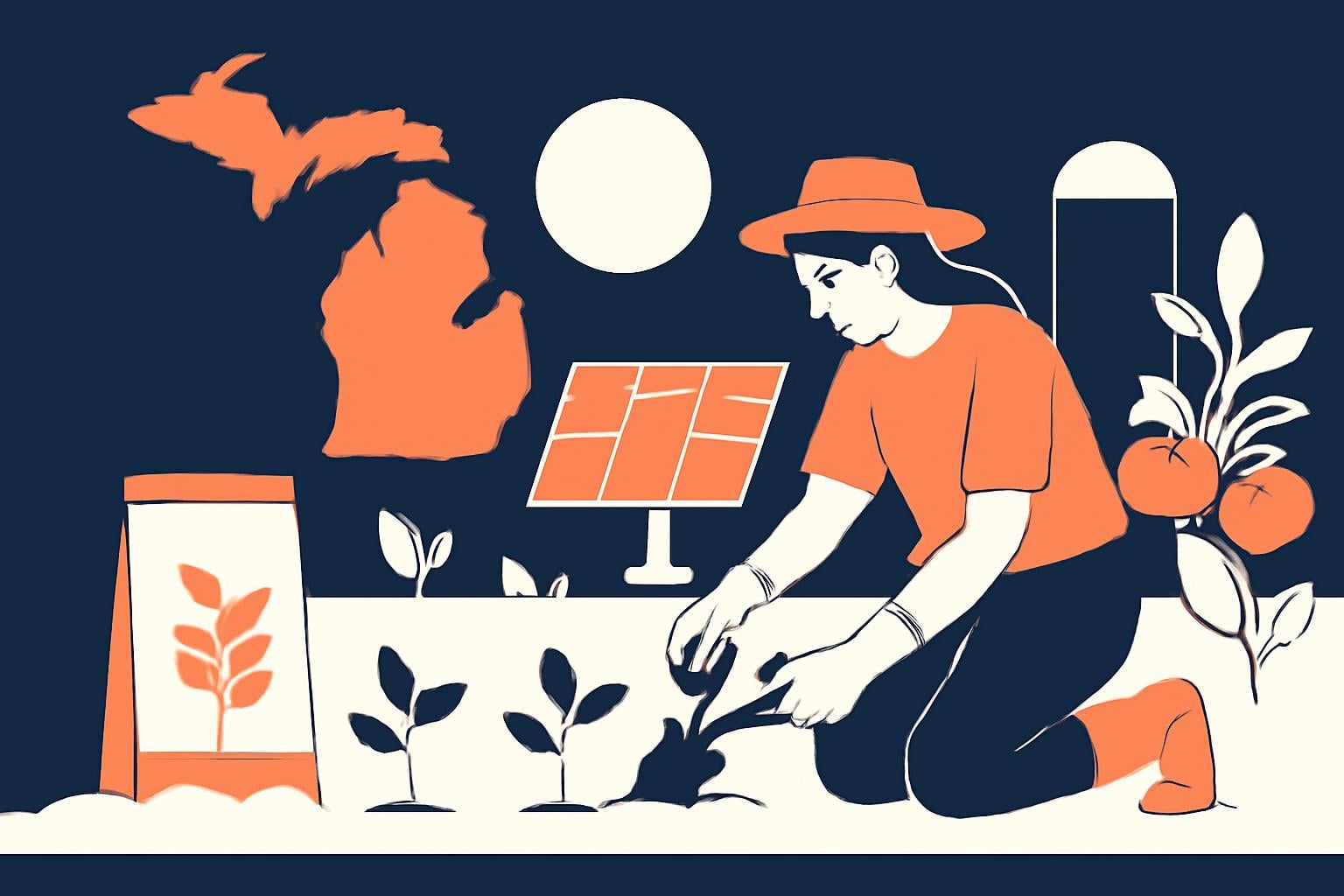
Where in Michigan are the best areas for off-grid living?
The Upper Peninsula and northern Lower Peninsula offer large tracts of forested, sparsely populated land ideal for solitude, firewood supply, and natural water sources. Proximity to lakes or rivers adds benefits but may come with stricter regulations and flood risks.
Counties adjacent to these regions often have varying zoning rules, so confirm off-grid allowances locally. Areas closer to urban centers may limit off-grid options but offer better access to supplies and services. Evaluate your trade-offs between remoteness and resource accessibility carefully.
How do you stay connected while living off-grid in Michigan?
Internet and cell service in Michigan’s remote areas can be inconsistent. Satellite internet offers the broadest coverage but at slower speeds and higher cost. Mobile hotspots depend on cellular coverage, which is spotty in many off-grid locales.
Signal boosters can help but require baseline cell service. Establish whether your land has adequate connectivity and explore community resources or nearby towns for reliable internet before committing.
What insurance considerations are important for off-grid properties?
Traditional homeowners insurance may not cover off-grid setups, or may charge higher premiums due to their rural locations and unique features. Negotiate with insurers about coverage for dwellings, renewable energy systems, water and waste systems, and liability protection.
Obtain multiple quotes from agents familiar with rural or off-grid properties. Note exclusions or special endorsements for off-grid features that might affect claims. Verify insurance feasibility as part of your overall cost analysis.
How can safety and emergency preparedness be managed off grid?
Formulate an emergency plan covering medical incidents, power outages, severe weather, and fire. Maintain supplies of food, water, fuel, and first aid materials suitable for extended isolation.
Learn first aid and basic survival skills. Check emergency response times and proximity to hospitals and fire services from your chosen land before purchase, since long delays increase risk.
What skills should prospective off-grid residents develop?
Essential skills include renewable energy system maintenance, well and septic system basics, gardening, food preservation, basic construction, and emergency first aid. These enable independence and reduce reliance on costly professional services.
Prioritize developing skills matching your off-grid design, and seek local workshops or online courses for ongoing education. Skill gaps may increase costs or risks post-purchase.
What financial options exist to support off-grid living in Michigan?
Off-grid living is typically self-financed through personal savings or loans. Some grants or subsidies may be available, particularly for renewable energy installations. Research local, state, and federal programs cautiously; confirm eligibility and application details before relying on funding.
Crowdfunding can supplement finances for specific projects but requires effective storytelling and outreach. Incorporate realistic cost projections, including land, infrastructure, permits, and contingency funds into your financial plans.
How does off-grid living impact family and emotional well-being?
Living off grid demands collective family commitment and adaptability to new roles and responsibilities, such as resource management and home upkeep. Social isolation challenges can affect mental health, so fostering community connections and having clear communication within the family are essential.
Regularly assess your family’s emotional needs and create support networks to balance solitude with interaction.
Summary Checklist for Evaluating Off-Grid Land in Michigan
| Factor | What to Verify | Why It Matters | Red Flag or Trade-Off |
|---|---|---|---|
| Zoning & Building Codes | Contact county zoning/building dept.; obtain official land-use rules | Ensures legal off-grid residence; avoids fines or denial of permits | No residential or off-grid use allowed; restrictive covenants |
| Water Source | Test for well feasibility or rainwater legality; check water quality | Reliable potable water supply required for habitation | No groundwater; poor water quality; restricted rainwater use |
| Waste Management | Check septic permit rules; assess soil percolation for septic | Health code compliance prevents fines and contamination | Unsuitable soil for septic; no permits for composting toilets |
| Power Potential | Evaluate solar exposure; check local wind data; backup fuel access | Reliable power critical for heating, lighting, and appliances | Shaded land; low wind area; no fuel delivery routes |
| Heating Fuel | Verify wood availability or fuel supplier proximity | Essential for Michigan winters; safety and cost consideration | No wood supply; distant propane delivery |
| Access & Infrastructure | Legal and maintained road access; proximity to service providers | Material delivery and emergency access depend on this | Seasonal/poor road condition; land locked parcels |
| Insurance Coverage | Consult insurers regarding coverage options and premiums | Protects property and liability risks | Coverage denial or costly premiums |
| Connectivity | Test cell signal; research internet providers and satellite options | Necessary for emergencies and modern conveniences | No cell/internet; high-cost satellite only |
| Community & Social Resources | Locate nearby off-grid communities and support groups | Alleviates isolation; provides shared knowledge and aid | Remote with no community contacts |
In conclusion
Living off grid in Michigan is achievable but requires deliberate land selection and extensive due diligence to comply with regulations and meet practical needs. Start by defining your off-grid goals, then verify zoning, water, waste, power, and access specifics with local authorities and site visits. Assess heating fuel availability and connectivity options. Factor insurance and community support into your decision. If critical red flags arise during verification, reconsider or walk away.
By following this step-by-step verification workflow, you can make a confident land purchase aligned with your off-grid lifestyle aspirations and prepare for a safe, sustainable living experience in Michigan.