


Living off-grid in California is achievable but demands thorough research, adherence to local laws, sustainable resource management, and practical preparation. This guide provides essential insights for prospective land buyers considering off-grid living, focusing on what to verify property-by-property before committing to a purchase. Understanding land use regulations, infrastructure options, ongoing costs, and environmental factors will help you decide when to proceed, adjust plans, or walk away.
California’s varied geography,from coastal ranges to deserts and forests,affects off-grid feasibility. Success hinges on matching your lifestyle goals with local conditions, legal requirements, and resource availability. Whether your aim is complete independence or partial disconnection from urban utilities, this guide walks you through key decision points integral to a confident purchase and sustainable off-grid life.
Can You Live Off Grid in California?
Yes, it is possible to live off-grid in California, but it requires detailed planning and compliance with local zoning, building codes, and resource regulations. Off-grid living involves self-sustaining energy, water, and waste systems, and legal use of the land for a private residence or homestead.
This matters because different counties have varying restrictions on off-grid setups, including minimum dwelling sizes, permitted utilities, and land use. Before buying, verify the local jurisdiction’s zoning codes and building regulations with the county planning department or permitting office to identify if off-grid living fits your proposed use.
Understanding off grid zoning laws can help clarify what’s allowed when planning your off-grid living arrangements.
If local rules forbid building or living off-grid on the parcel, or if upgrades needed to comply are cost-prohibitive, consider alternative locations or property types that accommodate off-grid lifestyles.
What Legal Requirements Must You Meet for Off-Grid Living in California?
California requires compliance with local zoning, building codes, and permits even for off-grid homes. Failure to meet these legal requirements can result in fines, forced removal, or inability to obtain financing or insurance.
Check these key areas with your county or city:
- Zoning Laws: Confirm land is zoned for residential, agricultural, or rural use that allows off-grid dwellings. Some zones prohibit permanent structures or require minimum lot sizes.
- Building Codes: Review the California Building Standards Code as adopted locally, which may include requirements for foundations, electrical wiring (including solar/wind systems), plumbing, septic, and fire safety, especially in wildfire-prone areas.
- Permits: Obtain building permits and additional permits for well drilling, septic systems, and renewable energy installations. Early engagement with local building officials can clarify what is required to avoid costly delays.
Verification steps:
- Visit the county planning department’s website or office to obtain zoning maps and code interpretations.
- Consult a licensed contractor or code consultant to interpret building requirements and feasibility, including off-grid systems.
- Obtain title and use restrictions from the county recorder’s office and review any homeowners association (HOA) covenants that could restrict off-grid setups.
A red flag is encountering easements, restrictive covenants, or zoning designations that prohibit residential or off-grid development. In such cases, adjust your offer or consider different parcels.
Which Types of Off-Grid Residences Are Common and Legal in California?
Tiny homes, recreational vehicles (RVs), and homesteads are the predominant off-grid living types, each with distinct implications:
- Tiny Homes: Often allowed if they meet local building codes and sit on a foundation. Some counties treat tiny homes on wheels like RVs, requiring them to be movable and compliant with RV regulations.
- RV Living: Viable for temporary or seasonal use in many areas, but permanent living in an RV may be restricted by local ordinances. Verify allowed length of stay and hookup options with local zoning officials.
- Homesteading: Building permanent residences combined with agricultural activities on rural land. Ensure agricultural zoning supports your intended use and complies with county health codes for livestock, wells, and septic systems.
Verification involves reviewing local zoning definitions and permitted uses. Ask if the county differentiates between temporary dwellings (RVs), accessory structures, or permanent residences. Some counties may require residential dwellings to be built on foundations with specific minimum sizes, impacting tiny home or RV viability.
How Do You Find Suitable Off-Grid Land in California?
Finding off-grid land starts with focusing on parcels zoned for rural, agricultural, or residential use that allow independent utilities. Common sources include real estate listings, land auctions, and specialized online marketplaces.
Key considerations during the search:
- Legal Access: Verify legal road or easement access to the property with the county assessor or clerk’s office.
- Water Rights and Access: Confirm water source options such as wells, springs, or rainwater harvesting. Check records with the local water board.
- Topography and Soil: Examine terrain for building sites and agricultural suitability through surveys or soil reports.
- Utility Availability: Confirm baseline availability or absence of utility connections if you want full off-grid or partial grid connections.
Verification workflow:
- Begin with online and agent-provided listings filtering by zoning and land use.
- Confirm physical and legal access by examining recorded easements and visiting the property.
- Engage with county officials or water authorities to confirm water rights and well permitting feasibility.
- Inquire about septic feasibility via environmental health departments.
- Verify the seller’s title and ownership via the county recorder or title company.
Red flags include no legal access, lack of permitted water source, or restrictive covenants against off-grid structures.
What Are the Typical Costs of Living Off-Grid in California?
Costs vary significantly depending on land price, infrastructure setup, and ongoing maintenance. Upfront investments commonly encompass land purchase, renewable energy installations, well drilling, septic systems, and off-grid housing construction.
What affects costs:
- Land location and size affect purchase price and development feasibility.
- Energy system scale: solar arrays and battery storage for full autonomy require higher upfront investment but reduce monthly costs.
- Water source development, including well drilling and storage tanks, can be cost-intensive depending on geology and water availability.
- Sewage management through septic or composting toilets varies in complexity and cost depending on site conditions.
Ongoing costs include property taxes, system maintenance, fuel or backup power expenses, and supplies for self-sustaining agriculture or food sourcing.
Verification: obtain quotes or estimates from local contractors for well drilling, solar system installation, building construction, and septic permits during the due diligence phase. Include these figures in your financial planning and factor in contingencies for unexpected expenses.
How Do You Power an Off-Grid Home in California?
Solar power is the predominant energy solution off-grid in California, benefiting from abundant sunlight. Many off-grid residents supplement solar with battery storage and generators for backup power.
Additional options include wind turbines in windy areas and micro-hydroelectric systems where water flow is accessible.
Verification steps:
- Assess solar potential with local solar maps and consult installers for system sizing.
- Evaluate site wind conditions if considering wind turbines, using documented wind data.
- Check for any local restrictions or incentives related to renewable energy systems.
If the property has poor solar exposure or restrictions on turbines, consider hybrid solutions or partial grid connection.
How Do You Secure Water Supply Off Grid in California?
Sourcing reliable water off-grid usually involves well drilling, rainwater harvesting, or sourcing from seasonal springs. Legal water rights must be confirmed before purchase.
Understanding how to manage utilities and access is essential for successful off-grid living, especially regarding water supply Development, Utilities & Access.
Verification involves:
- Contacting the local water resources board or county water department to check water rights and well permit requirements.
- Reviewing geological reports and existing well logs on the parcel or nearby properties.
- Ensuring rainwater harvesting options meet local regulations.
Without verified water access or permitted rights, an off-grid lifestyle may not be legal or practical.
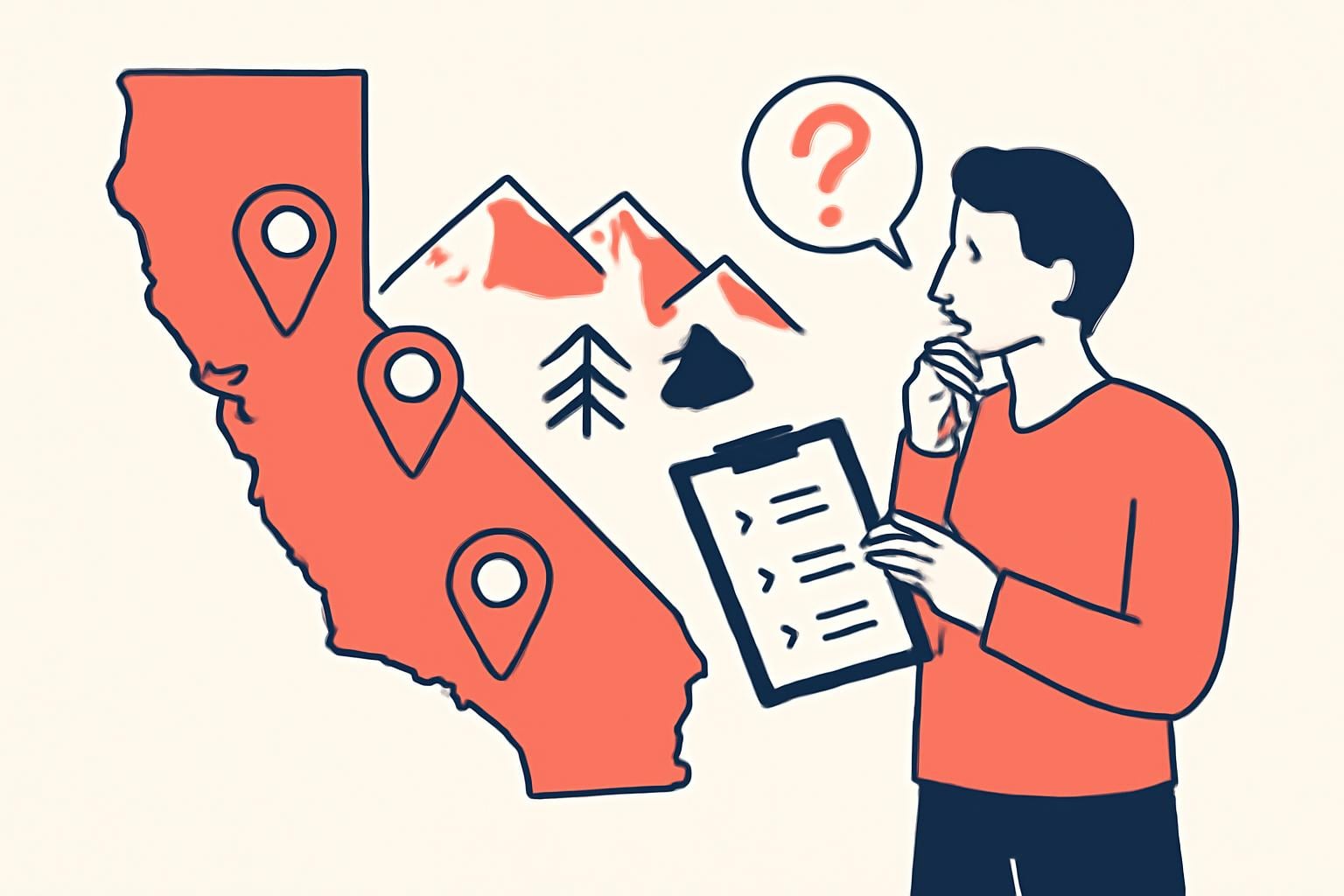
What Are the Best Locations in California for Off-Grid Living?
Northern California offers forested lands with good water availability and supportive off-grid communities but can have higher land costs and wildfire risks. Southern California, especially inland counties, provides diverse climates but water scarcity is a major challenge. Desert areas have affordable land prices but demand careful planning for extreme heat and limited water.
Choosing a location involves balancing affordability, resource availability, climate comfort, and legal acceptance. Verify wildfire hazards and historic fire management requirements with the CAL FIRE website or local fire department.
How Do You Manage Waste Off-Grid in California?
Waste management typically uses composting toilets and septic systems, with greywater recycling for irrigation where permitted. These systems must comply with local health codes and environmental regulations.
Before purchase, verify local septic design standards and permits through the county environmental health office. Composting toilets are often acceptable alternatives but require maintaining compliance with sanitation standards.
What Alternative Housing Options Are Suitable for Off-Grid Living?
Earthships, shipping container homes, and yurts are popular off-grid housing options. Each offers different cost, building code, and zoning implications.
For a comprehensive overview of various structures and setups, explore our guide on Off-Grid, RV & Alternative Housing.
Verification tips:
- Consult local building departments to confirm whether these structures are considered permanent dwellings or accessory buildings.
- Review regulations for foundation requirements and utility connections.
- Assess whether alternative materials or designs are approved or require variances.
How Do You Stay Connected When Living Off Grid?
Internet can be accessed via satellite, fixed wireless, or cellular data, depending on coverage in the area. Cell service quality varies widely in rural California.
Check local coverage maps from major carriers and evaluate satellite internet options. Boosters or external antennas can improve connectivity. Staying connected is essential for emergencies and remote work.
How Do You Prepare for Emergencies Living Off Grid?
Prepare by assembling emergency kits with food, water, first aid, and communications gear; developing evacuation plans; and cultivating community support from neighbors or fellow off-grid residents.
Consult local emergency management agencies for area-specific risks like wildfire or floods. Engage neighbors for coordinated planning and resource sharing.
What Are Common Misconceptions About Off-Grid Living in California?
Many assume off-grid means complete isolation or a return to primitive living. In reality, off-griders often integrate modern technology and maintain community ties while reducing dependence on central utilities.
Verification involves talking to local residents or visiting off-grid communities to understand practical realities and limitations.
Summary Checklist: Verifications Before Buying Off-Grid Land in California
| Key Factor | Where/How to Verify | Red Flags / Trade-Offs |
|---|---|---|
| Zoning & Land Use | County Planning Department, Zoning Maps | Prohibition of residential/off-grid structures; minimum lot sizes |
| Building Permits & Codes | Local Building Official, Permit Office | Unreasonable code requirements for off-grid systems |
| Water Access & Rights | County Water Board, Well Logs, Permit Records | No water rights; poor aquifer; denied well permit |
| Legal Access | Title Company, County Recorder, Physical Inspection | No recorded easements or deeded access roads |
| Waste Management | County Environmental Health, Septic Permits | Unsuitable soil for septic; strict waste disposal rules |
| Energy Resources | Solar Maps, Installer Assessments, Wind Data | Poor solar exposure; restricted turbine permits |
| Community & Emergency Services | Local Fire Department, Neighbors, Emergency Management | High wildfire risk; poor emergency access |
Final Thoughts
Living off-grid in California is realistic for determined buyers who conduct detailed due diligence. The diversity of the state means conditions vary dramatically: what works in one county may be impossible or illegal in another. Prioritize verifying zoning, water, legal access, and building requirements at the parcel level. Factor in ongoing costs, emergency preparedness, and the challenges of rural isolation.
This cautious, fact-based approach will help you find off-grid land suited to your goals while avoiding costly surprises, making your off-grid dream a viable investment and lifestyle choice.