

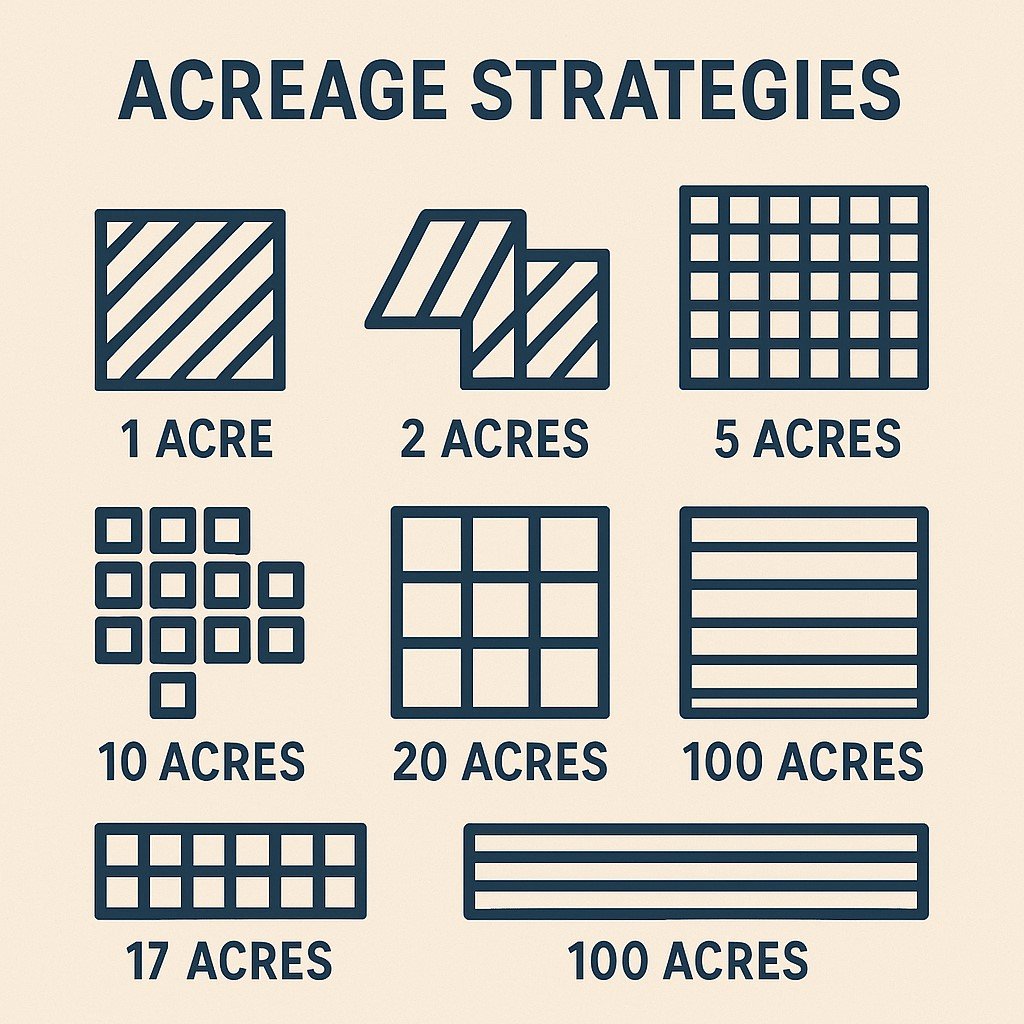

Land can make money at almost any acreage, but the best strategy is rarely “do the biggest thing possible.” It is the use that matches your parcel’s access, zoning, water, terrain, nearby demand, and your willingness to operate it. A small lot may be better suited to storage or a high-value garden than livestock. A large tract may have potential for grazing, timber, recreation, or a developer lease, but only if the physical and legal details support it.
The key is to start with the land’s constraints before choosing an income idea. Confirm permitted uses with the county or municipality, review deed restrictions and access, identify utilities and water, and understand what improvements would be required. Then choose a use with a clear customer, a manageable operational burden, and a realistic exit plan.
How can I make money with half an acre of land?
Half an acre can support income-producing activity when the property is in a location where convenience, specialty products, or secure space matter more than raw acreage. Focus on compact uses that do not require heavy equipment, broad road frontage, or extensive infrastructure.
For a usable small parcel, consider a market garden, specialty herbs, plant starts, cut flowers, a small nursery, or permitted storage. The right choice depends on the local buyer. A garden business needs dependable water, good drainage, and a reliable direct-sales outlet. Storage needs legal access, a layout that allows vehicles to turn safely, and a clear understanding of whether outdoor storage is allowed.
A common mistake is to plan the crop before checking the sales channel. Growing something is only one part of the business. Before preparing beds or buying materials, talk with local restaurants, farm markets, florists, landscapers, or residents to learn what they actually want to buy and how they prefer to receive it.
For parking or storage, do not assume a cleared field is enough. Verify zoning, setbacks, drainage, screening requirements, surface rules, insurance needs, and whether your access road can handle the intended vehicles. Secure fencing and a defined entry process may matter as much as the acreage itself.
How can I make money with one to three acres of land?
One to three acres can support a focused business or a carefully compatible mix of uses. This size is often large enough for garden plots, a nursery, a small orchard, workshops, limited recreation, or a low-intensity service use, but it is still small enough that parking, neighbors, and water capacity can become major constraints.
Community garden plots can work where nearby residents want growing space but lack a yard. The operator must think beyond assigning plots. Shared water access, rules for tools and waste, path maintenance, liability planning, and a process for abandoned plots all affect whether the project remains manageable.
A nursery or orchard can fit this acreage when climate, soil, irrigation, and market access line up. These uses require patience and consistent maintenance, so they are not a shortcut to cash flow. A practical approach is to begin with a limited area and prove that you can produce, market, and maintain the product before expanding.
Event-oriented uses, such as small classes or private gatherings, deserve extra caution. Noise, traffic, parking, sanitation, accessibility, permits, and neighbor impact can determine whether the use is viable. Talk with the planning department before advertising an event venue. If the land may eventually support a residence, review the local rules in this guide to land requirements for building a house before making improvements that could complicate future plans.
How can I make money with five to ten acres of land?
Five to ten acres provides more room to separate uses, but more acreage does not automatically make a project easier. This range can suit managed grazing, specialty agriculture, seasonal experiences, equipment storage where allowed, or recreational uses that fit the location and zoning.
Grazing can be a lower-touch option than operating livestock yourself, but it is not passive. The parcel needs appropriate fencing, water, shelter or shade where needed, a safe loading arrangement, and a written agreement that assigns maintenance and animal-care responsibilities. Soil conditions, forage quality, and seasonal conditions also affect whether grazing is sensible.
Agritourism can create demand around a farm, orchard, garden, or scenic setting, but it adds an events business to the land business. Visitor parking, traffic flow, restrooms, insurance, food service rules, emergency access, and neighborhood compatibility should be evaluated before creating a calendar. The practical way to think about it is this: if the experience requires people to arrive at the same time, your access and parking plan become part of the product.
If you intend to reshape ground, add pads, improve drainage, or build roads, investigate whether a grading permit may be needed for land improvements. Site work can create costly problems when drainage patterns, erosion controls, or permit requirements are ignored.
How can I make money with twenty acres of land?
Twenty acres can offer meaningful flexibility for recreation, managed timber, grazing, a rural homesite strategy, or a future land split, but every option depends on local rules and the parcel’s physical layout. Treat the acreage as a collection of usable and unusable areas, not as one uniform asset.
Start with a parcel map. Mark road frontage, legal access, flood-prone areas, steep terrain, wetlands, utility corridors, existing easements, water features, and the most buildable ground. A tract with less usable acreage may still be valuable if its best area has strong access and an allowed use.
Subdivision is a possibility in some locations, but it is never something to assume from acreage alone. Lot-size standards, frontage rules, septic suitability, utility availability, road requirements, survey work, and approval processes can all change the outcome. Consult the local planning authority, surveyor, and appropriate land-use professionals before marketing land as splittable.
For wooded property, a forestry professional can help assess species, stand health, access for harvesting, and a management plan. Do not rely on a casual timber estimate. Selective harvesting, road construction, erosion prevention, and regeneration obligations can materially affect both the land and its future marketability.
How can I make money with 100 to 600 acres of land?
Large acreage creates more possible income paths, including agricultural leases, timber management, hunting or recreation access where lawful, conservation-oriented arrangements, and renewable-energy discussions. The right opportunity is driven by location, transmission or utility considerations, topography, habitat, water, road access, and the type of demand in the region.
For a large tract, begin by separating what you control from what you do not. You control whether title is clean, boundaries are known, access is documented, property records are organized, and your land-use goals are clear. You do not control whether a solar developer, timber buyer, conservation organization, or agricultural operator finds the site suitable.
Renewable-energy proposals require careful review. A developer may evaluate sunlight or wind conditions, proximity to infrastructure, acreage configuration, environmental issues, and local approvals. Do not sign a long-term option, lease, or access agreement without an attorney who understands land and energy agreements in your state. Pay close attention to site control, restoration duties, access rights, assignment provisions, and what happens if a project never moves forward.
Conservation arrangements can also limit future uses of the land. Because those restrictions may affect ownership decisions, financing, heirs, and resale, obtain advice from qualified local legal and tax professionals before committing. The same principle applies to any timber, hunting, farming, or recreational agreement: put the responsibilities, insurance expectations, access terms, and termination process in writing.
What due diligence should you complete before choosing a land-income strategy?
The best land-income strategy is the one that survives due diligence. Before spending on improvements or advertising a use, work through the following checklist.
- Confirm zoning, permitted uses, overlays, and whether a special approval may be required.
- Review the deed, title work, plat, easements, and legal access.
- Walk the property and identify drainage, slopes, wetlands, soil conditions, vegetation, and boundary concerns.
- Verify water availability, power options, road condition, and communication service if the use depends on them.
- Identify the actual customer and validate demand before building infrastructure.
- Estimate the operating work involved, including maintenance, marketing, customer service, and compliance.
- Use written agreements for any tenant, operator, partner, or licensee.
Raw land often needs more preparation than buyers expect. This overview of the factors that affect raw-land improvement costs can help you identify the site-work questions to investigate before you commit.
Mini FAQ
Can I combine multiple income strategies on one parcel?
Yes, if the uses are compatible and locally permitted. A larger parcel may support separate areas for grazing, recreation, storage, or timber. Keep entrances, roads, utilities, customer traffic, and liability exposure in mind. Mixing uses without a site plan can create conflicts that reduce the value of each use.
Which acreage size is best for making money?
No acreage size is automatically best. A small, well-located parcel with legal storage or strong local demand may outperform a larger tract with poor access or restrictive zoning. The better question is which lawful use has proven demand and fits the property without requiring improvements you cannot reasonably manage.
Should I improve the land before finding a customer?
Usually, validate the intended use first. Some improvements are necessary for safety or access, but speculative improvements can narrow your options and consume capital. Ask potential users what they need, confirm requirements with local officials, and phase work so each improvement supports a clear plan.